
Clinically reviewed by Dr. Ponlawat Pitsuwan, Physician, Doctor Bangkok.
Last reviewed: November 2026
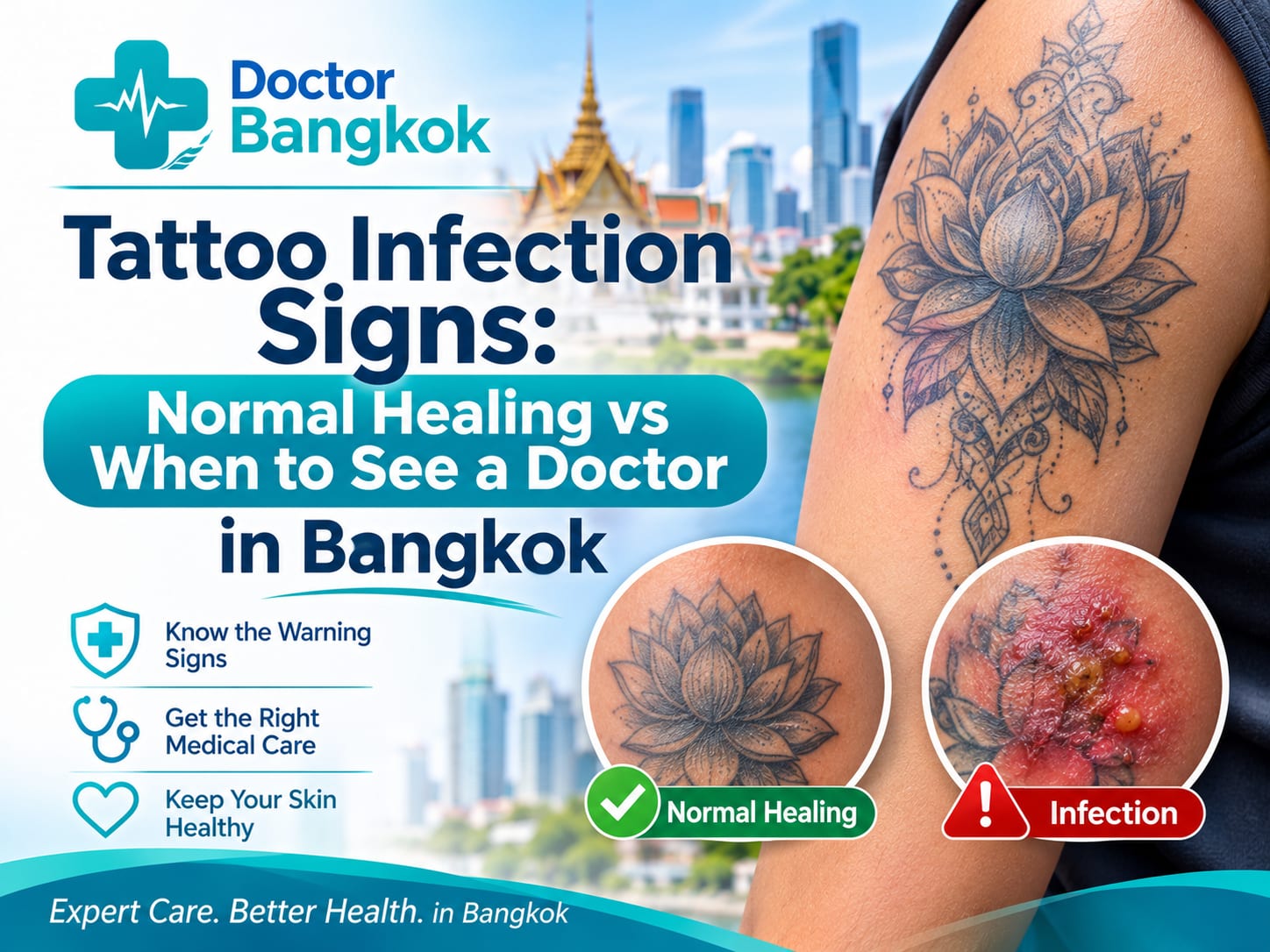
An infected tattoo typically shows redness spreading beyond the tattooed area, increasing pain after the first two days, pus or discharge, and sometimes fever. Normal healing involves mild redness, flaking, and itching that gradually improve. If symptoms are getting worse rather than better, get assessed. In Bangkok’s heat and humidity, infections can develop faster than in cooler climates.
You got a tattoo two days ago and now it looks angrier than it did yesterday. That is the detail worth paying attention to. Normal healing gets better over time. An infected tattoo gets worse.
Bangkok is one of the most popular cities in the world for tattoo work, from high-end studios on Sukhumvit to traditional sak yant at temples across the city. Most people heal without problems. But the tropical heat, the humidity, and the pace of travel here all create conditions where a fresh wound can go sideways faster than it would back home. Knowing what to watch for, and when to act, makes the difference between a one-day antibiotic prescription and a more complicated wound.

What Normal Tattoo Healing Looks Like
For the first day or two, some redness, warmth, and mild swelling around a fresh tattoo is normal. The skin has been punctured repeatedly, so it behaves like any other wound. You may also see some plasma or ink weeping from the surface. This is the wound closing, not infection.
Over the following week, the skin will peel and flake. It will likely itch. The redness should fade and the swelling should settle. If each day looks slightly better than the last, healing is on track.
Bangkok’s climate adds a layer of complexity. The heat and humidity here sit well above what most visitors are used to. Sweat around a fresh tattoo creates a warm, moist environment where bacteria multiply more easily. Mild inflammation can look more dramatic in the tropics than it would in a cooler, drier climate. The key question is always the direction of change: improving or worsening.
Signs of an Infected Tattoo
The clearest sign of an infected tattoo is symptoms moving in the wrong direction. Redness that spreads past the edge of the design, pain that increases after day two, or swelling that gets worse rather than better: these warrant attention.
Pus or cloudy discharge is a sign of bacterial infection, not normal healing. Red streaking extending away from the tattoo site suggests the infection is spreading into the lymph vessels, a condition called lymphangitis. This can accompany a spreading skin infection and needs prompt medical attention. Swollen lymph nodes near the tattoo, for example in your groin after a thigh tattoo or in your armpit after a sleeve, can indicate the body is fighting a spreading infection.
Fever with any of these local signs means you should be seen the same day. Red streaking combined with fever is a reason to seek care urgently, not monitor it overnight. If you are unsure, err on the side of getting it checked.

Allergic Reactions to Tattoo Ink
An allergic reaction to tattoo ink is different from an infection. The skin may become raised, intensely itchy, or develop a rash pattern that follows the ink colour exactly, particularly with red, yellow, or green pigments.
This can appear weeks or even months after the tattoo heals, not just in the acute phase. It will not respond to antibiotics. Treatment usually involves antihistamines or topical steroids, depending on severity. If you are unsure whether you are dealing with infection or an allergic reaction, a doctor can tell you quickly. Trying to treat one with the other wastes time and risks letting the real problem worsen.
Bamboo and Sak Yant Tattoo Risks in Bangkok
Bamboo tattooing and sak yant, the sacred geometric tattoos applied by monks or ajarns at temples, are part of what draws many people to Thailand. The method itself is not inherently less safe than a machine. The critical variable is hygiene.
The questions to ask before you sit down: is the needle tip single-use, opened in front of you? Is the metal rod sterilised between clients? At reputable studios and well-known temples, hygiene standards are taken seriously. At less established locations, standards vary significantly. If you cannot verify that sterile single-use needles are being used, the risk of bloodborne transmission becomes real.
Hepatitis and HIV Screening After Unsterile Needles
If you have any doubt about the sterility of the equipment used, hepatitis B, hepatitis C, and HIV screening are worth considering. These infections can be transmitted through shared or reused needles and may not produce obvious symptoms early on.
HIV exposure within 72 hours is a time-sensitive situation. Post-exposure prophylaxis, or PEP, can significantly reduce the risk of transmission if started quickly. Doctor Bangkok offers PEP, HIV testing, and hepatitis screening. If you are concerned about needle exposure, do not wait to see if symptoms appear. Get tested and ask about PEP at the same visit. See the full information on PrEP and PEP in Bangkok if you need to act on this today.
Swimming and Sun With a New Tattoo in Bangkok
Bangkok puts temptation directly in your path. Hotel pools, rooftop bars with splash pools, day trips to the Gulf of Thailand: none of these are good for a fresh tattoo.
Submerging a new tattoo in water, whether a pool, the sea, or a river, introduces bacteria to an open wound. Pool chlorine also irritates healing skin and can leach ink. Avoid full submersion until the skin has fully closed and peeled. Covering a tattoo with a waterproof dressing while swimming is not a reliable solution.
Sun exposure on a fresh tattoo can cause the ink to fade and the skin to react. Keep it covered when you are outside, especially in Bangkok’s direct midday sun. Once healed, high-SPF sunscreen over the tattoo helps preserve the ink long-term. If you need guidance on tattoo aftercare while travelling, the wound care page covers Bangkok-specific aftercare in detail.
Treatment for an Infected Tattoo in Bangkok
Mild infections, where redness is localised, there is no fever, and symptoms are caught early, are often managed with oral antibiotics. Common bacterial causes include Staphylococcus aureus. Some strains are resistant to standard antibiotics, known as MRSA, which is why a doctor needs to assess the wound rather than you guessing which treatment to use.
Do not use leftover antibiotics or buy antibiotics over the counter without a prescription. Incorrect antibiotic choice, or an incomplete course, risks pushing the infection deeper. A doctor will examine the wound, assess severity, and prescribe the right antibiotic for the presentation. For infections that are not responding to initial treatment, a wound swab can confirm which antibiotic will work.
Moderate infections with spreading cellulitis may need a longer course or a different antibiotic class. For more on how spreading skin infections are treated, see the cellulitis treatment page. Severe infections with high fever, red streaking, or rapidly spreading swelling require urgent assessment at an emergency department, not a clinic visit.
For most infected tattoos without systemic signs, Doctor Bangkok’s wound care service handles assessment, prescribing, and wound dressing in a single visit. If you are in a hotel and cannot easily travel, the doctor hotel visit service brings a physician to you within one hour, anywhere in Bangkok, day or night.
If your tattoo looks infected, do not wait to see if it gets better on its own. Doctor Bangkok is open 24 hours a day, seven days a week at Trendy Office, Soi Sukhumvit 13. Same-day walk-in assessment and wound care are available without an appointment. If you cannot travel to the clinic, a doctor can come to your hotel or condo anywhere in Bangkok within one hour. For concerns about bloodborne exposure after a tattoo with unsterile equipment, hepatitis and HIV testing are available at the same visit.
Frequently Asked Questions
Dr. Ponlawat Pitsuwan
Physician, Doctor Bangkok
a private medical clinic in central Bangkok open 24/7, with a doctor-on-call service that comes to your hotel or condo within one hour. He sees expats, residents, and medical tourists for wound care, tattoo infections, skin assessments, and general medical consultations. His focus is straightforward, evidence-based care delivered in plain language.
References
- Centers for Disease Control and Prevention. Tattoo-Associated Nontuberculous Mycobacterium Skin and Soft Tissue Infections. MMWR, 2012.
- Ferreira O et al. Tattoos and Piercings: Dermatological Complications and Diagnosis. Acta Dermato-Venereologica, 2009.
- Centers for Disease Control and Prevention / NIH HIVinfo. Post-Exposure Prophylaxis (PEP). NIH, 2025.
- Ridpath A et al. Antiretroviral Postexposure Prophylaxis After Sexual, Injection Drug Use, or Other Nonoccupational Exposure to HIV: CDC Recommendations, United States, 2025. MMWR Recommendations and Reports, 2025.
- World Health Organization. Hepatitis B fact sheet. WHO, 2024.
- Mayo Clinic. Tattoos and piercings: What to know before you get one. Mayo Clinic, 2024.
The information in this article is for educational purposes only and does not constitute medical advice. It should not be used to self-diagnose or replace a consultation with a qualified physician. If you have concerns about your health, contact a licensed medical professional. For appointments at Doctor Bangkok, visit doctorbangkok.co.th.
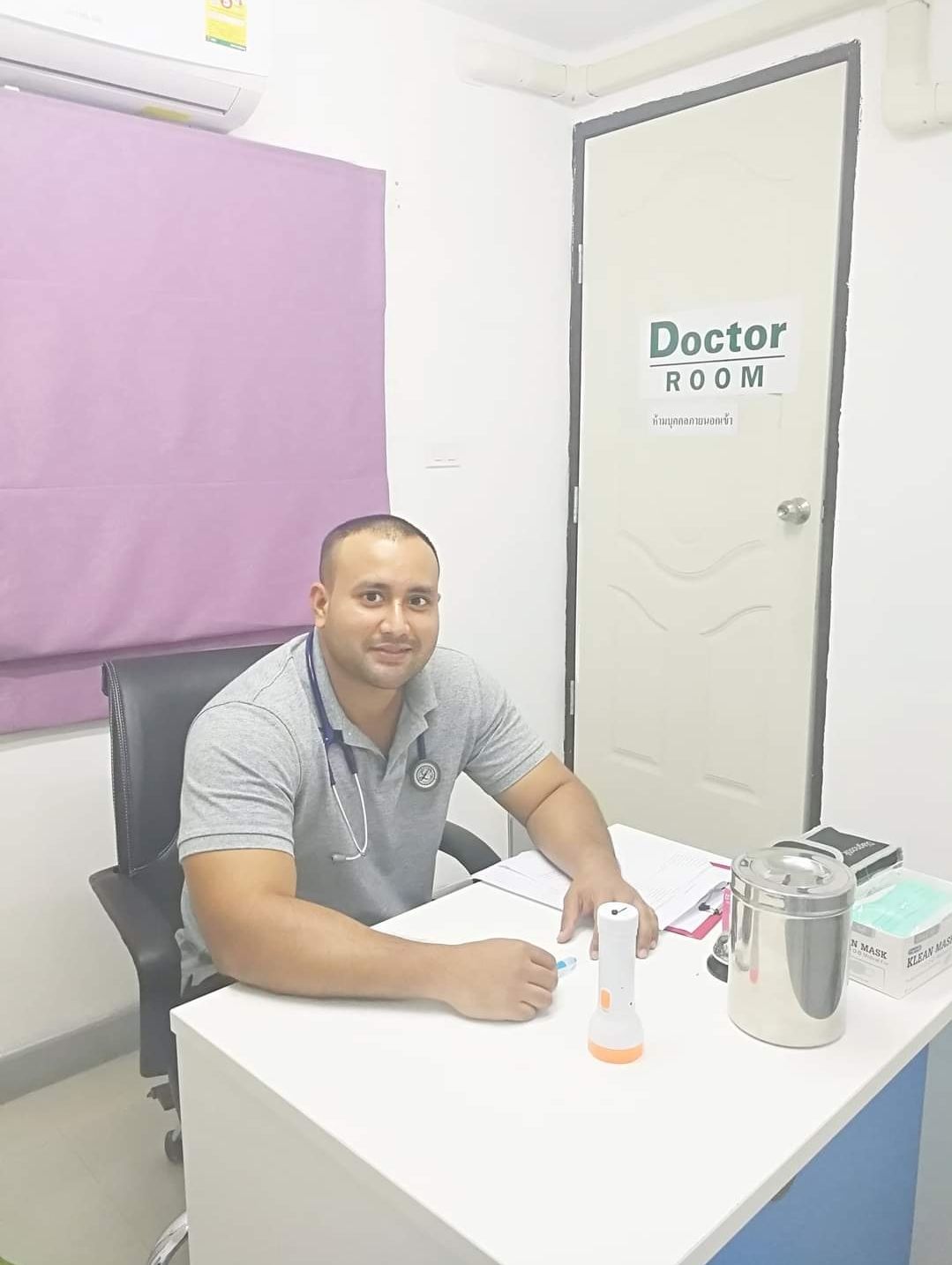
Dr. Ponlawat Pitsuwan is a physician at Doctor Bangkok, a private clinic in central Bangkok. He sees expats, residents, and medical tourists for general medicine, wellness consultations, and IV therapy. His focus is straightforward, evidence-based care delivered in plain language.