
Clinically reviewed by Dr. Ponlawat Pitsuwan, Physician, Doctor Bangkok.
Last reviewed: November 2026
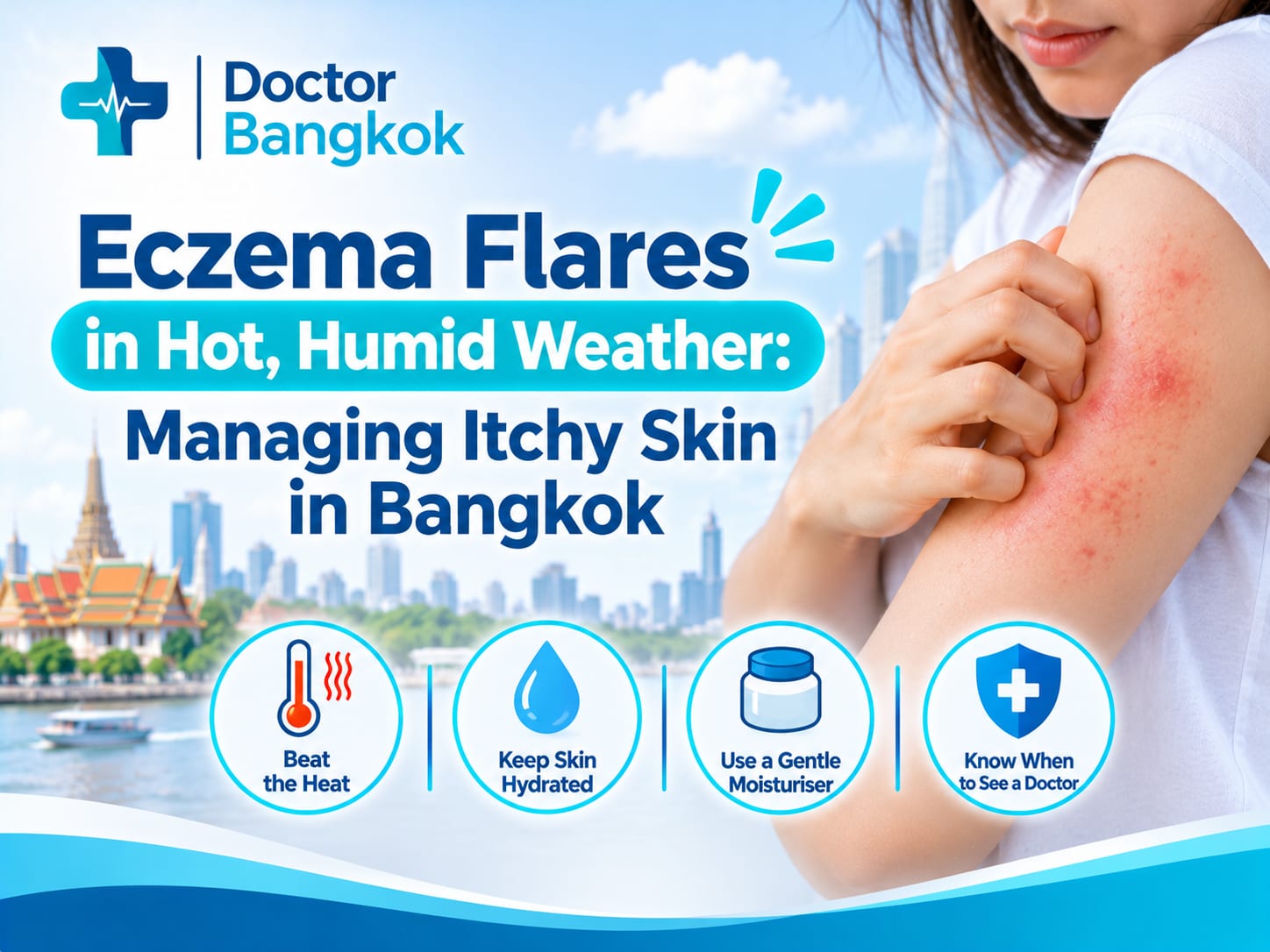
Heat, sweat, and high humidity all weaken the skin barrier and trigger eczema flares. Bangkok’s year-round tropical climate means there is no cool season to recover in. Daily emollient use, lukewarm showers, and prompt prescription treatment when OTC creams stop working are the core of managing eczema flare hot weather conditions here.
You moved to Bangkok, or landed for a few weeks, and your skin has turned on you. Eczema that was manageable back home is suddenly raw, itchy, and spreading. That is not a coincidence. Bangkok’s combination of daily heat, near-constant humidity, air-conditioned interiors, and some of the worst PM2.5 pollution in Southeast Asia creates a skin environment unlike anything in a temperate country.
The good news: this is manageable. You need a routine built for this city, not for a cooler climate. If your usual creams have stopped working or the skin is weeping and crusting, you need a prescription review, not more moisturiser.

Why Heat and Humidity Trigger Eczema Flares
Eczema, or atopic dermatitis, comes down to a damaged skin barrier. Healthy skin holds moisture in and keeps irritants out. In eczema, the barrier is leaky, so heat makes things worse in two ways: it drives sweat to the surface and speeds up water loss through the skin into the air.
Bangkok sits above 30°C for most of the year, and relative humidity regularly exceeds 80%. In that environment, sweat does not evaporate cleanly. The salt and minerals in sweat directly irritate already-sensitised skin. Skin folds, the backs of knees, the inside of elbows, the neck: these are where sweat pools and where Bangkok flares tend to hit hardest.
There is no winter reprieve here. If you were managing eczema seasonally in Europe or North America, Bangkok removes that reset entirely.
Aircon, Dry Air and Eczema Flares
Here is the problem with air conditioning in Bangkok: you need it to avoid sweating, but it creates a different trigger. AC strips humidity from indoor air. Set your unit below 23°C and you are essentially sitting in desert conditions indoors. That dry indoor air pulls moisture out of already-compromised skin and can drive a flare even when you are not sweating.
The practical answer is to set AC between 24°C and 26°C, not lower. Add a cool-mist humidifier to the bedroom and aim for 40 to 60 percent relative humidity indoors. Apply a fragrance-free emollient as soon as you come indoors from the heat, while your skin is still slightly warm. Skin absorbs moisturiser better at that point.
If you are moving between a 35°C street and a heavily air-conditioned BTS carriage multiple times a day, your skin barrier is under repeated stress. That cycle alone can push a borderline flare into a full one.
Sweat, Pollution and the Skin Barrier
Bangkok’s air quality adds another trigger. Fine particulate matter, PM2.5, has been linked to inflammatory responses in skin and may worsen atopic dermatitis through immune activation. Polycyclic aromatic hydrocarbons carried on PM2.5 particles from traffic and burning have been linked in published research to worsening atopic dermatitis. Bangkok regularly records PM2.5 levels above the WHO safe threshold, particularly between November and March.
You can check daily air quality at air4thai.com, Thailand’s official monitoring index. On red-flag days, an N95 mask outdoors reduces what lands on your face, neck, and arms. Shower and rinse exposed skin as soon as you are home.
Sweat and pollution together are worse than either alone. Sweat opens the barrier and PM2.5 enters more easily. If your eczema reliably worsens during haze season, that is the likely reason.
Daily Skin Care Routine for Eczema in Bangkok
Keep it simple and keep it consistent. A lukewarm shower rather than a hot one is the starting point. Hot water removes the skin’s natural oils faster. Use a fragrance-free, soap-free cleanser. Pat skin dry rather than rubbing, and apply a thick fragrance-free moisturiser within a few minutes of getting out.
Do this twice a day minimum: once after your morning shower and once after any significant sweat exposure. Light lotions evaporate too quickly in this climate. Creams and ointments hold better. If you have a product that worked before you moved here, stick with it. Changing products during a flare introduces new contact allergens.
Clothing matters. Loose cotton allows sweat to evaporate. Synthetic fabrics trap heat and moisture against the skin. Avoid tight waistbands and rough seams in areas prone to flaring. Night sweats in a bedroom that is not properly cooled are a common driver of waking up with new patches.
When You Need Prescription Treatment
Emollient alone controls mild eczema. When the itch is breaking your sleep, when new patches appear faster than the cream settles them, or when you have been without your usual prescription products since arriving in Thailand, you need a clinical review.
A general practitioner can assess your flare and prescribe topical corticosteroids at the right potency for the right body site. Face and groin need low-potency options. Thicker skin on the arms and legs can tolerate stronger preparations. Using the wrong potency is a common problem when people self-manage or buy creams over the counter without guidance.
For harder-to-control flares, non-steroidal options including calcineurin inhibitors such as tacrolimus and pimecrolimus are available in Bangkok on prescription. These are useful for sensitive areas where prolonged steroid use carries a risk of skin thinning. Dupilumab, a biologic injection for moderate to severe atopic dermatitis, is accessible in Thailand but requires specialist review.
If you are staying in a hotel or condo and do not have your usual prescription, you do not need to find a hospital and work through a referral chain. Doctor Bangkok’s doctor-on-call service comes to you anywhere in the city within one hour, day or night.
Infected Eczema: Warning Signs to Know
Not every worsening eczema flare is just a flare. When skin is broken and inflamed, infection becomes a real risk.
Bacterial infection, most commonly from Staphylococcus aureus, presents as golden-yellow crusting, pus-filled blisters, rapid worsening that does not respond to your usual cream, or pain out of proportion to what you can see. A fever can appear in more significant cases. This typically requires prescription treatment: topical fusidic acid for localised areas, or oral antibiotics for wider involvement.
Eczema herpeticum is different and more urgent. It is a viral superinfection caused by herpes simplex virus. It looks like clusters of small punched-out erosions or blisters spreading across a flare, often with fever and a sudden deterioration in how you feel. This needs same-day assessment and antiviral treatment, not antibiotics. If you see that pattern, do not wait until morning.
For eczema flares in Bangkok that have broken down into infected or weeping skin, Doctor Bangkok can assess and treat at the clinic or at your location. The key distinction matters: bacterial infection responds to antibiotics, viral infection to antivirals. Getting that wrong delays recovery.
If you are unsure whether a rash is infected eczema, a contact reaction, or something else, a skin rash assessment in Bangkok with same-day results is the fastest way to get the right treatment.
Eczema flared since arriving in Bangkok? If your usual creams have stopped working or you are seeing signs of infection, Doctor Bangkok can help today. Our walk-in clinic on Sukhumvit Soi 13 is open 24 hours a day, every day. If you cannot get to the clinic, our doctor-on-call service comes to your hotel or condo anywhere in Bangkok within one hour. No appointment needed, no referral required. English-speaking physicians, prescription treatment on the same visit.
Frequently Asked Questions
Dr. Ponlawat Pitsuwan
Physician, Doctor Bangkok
a private medical clinic in central Bangkok, open 24/7, with a doctor-on-call service that comes to your hotel or condo within one hour. He sees expats, residents, and medical tourists for skin conditions including eczema flares, infected rashes, and dermatological concerns that need prompt prescription care. His approach is straightforward, evidence-based care delivered in plain language.
References
- Weidinger S, Novak N. Atopic dermatitis. Lancet. 2016;387(10023):1109-1122.
- Chen G et al. Association between fine particulate matter (PM2.5) and eczema in a large US cohort. PLOS ONE. 2024.
- World Health Organization. WHO Global Air Quality Guidelines: particulate matter (PM2.5 and PM10). 2021.
- National Center for Biotechnology Information. Eczema Herpeticum. StatPearls. 2024.
The information in this article is for educational purposes only and does not constitute medical advice. It should not be used to self-diagnose or replace a consultation with a qualified physician. If you have concerns about your health, contact a licensed medical professional. For appointments at Doctor Bangkok, visit doctorbangkok.co.th.
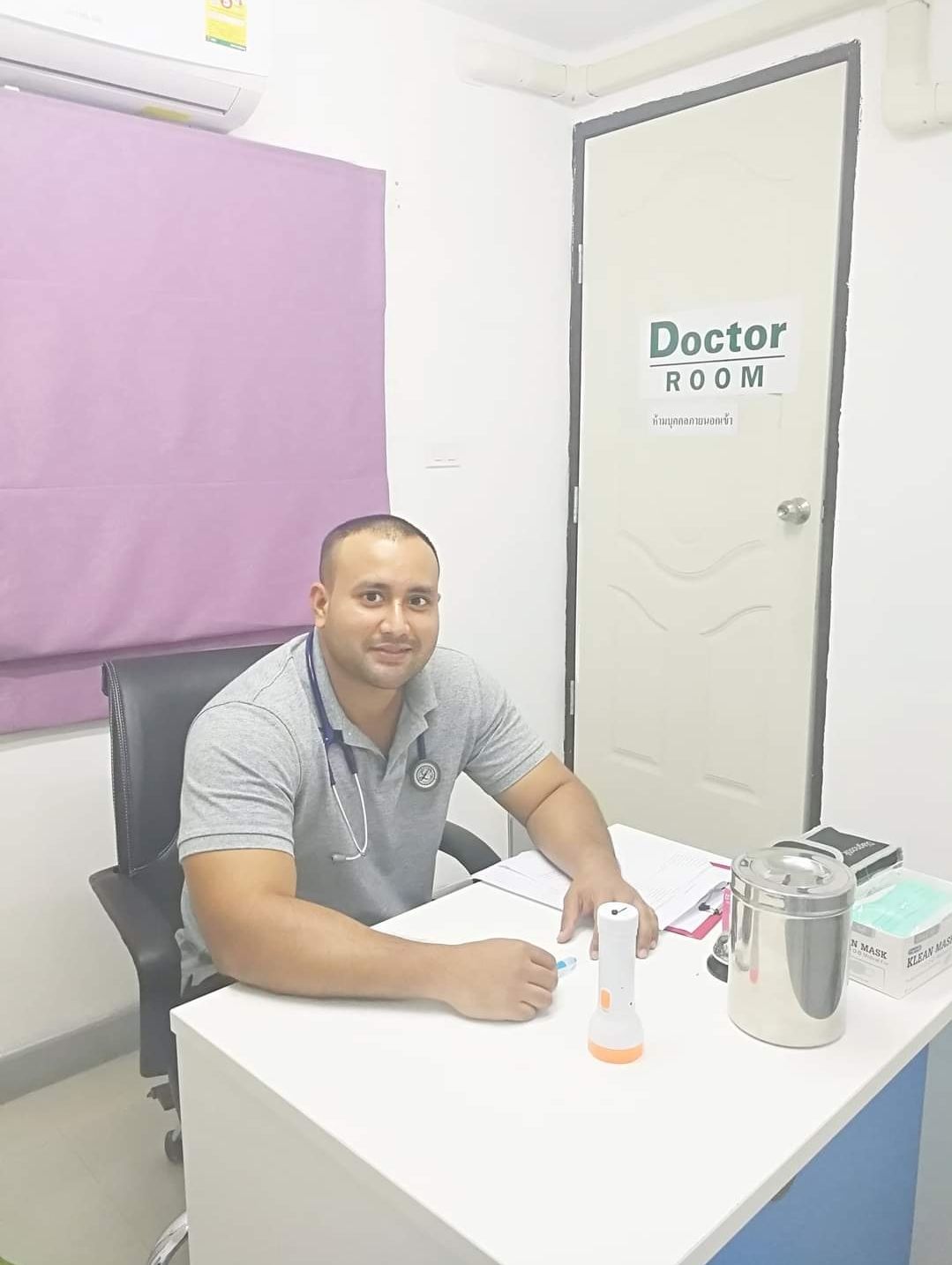
Dr. Ponlawat Pitsuwan is a physician at Doctor Bangkok, a private clinic in central Bangkok. He sees expats, residents, and medical tourists for general medicine, wellness consultations, and IV therapy. His focus is straightforward, evidence-based care delivered in plain language.