
Clinically reviewed by Dr. Ponlawat Pitsuwan, Physician, Doctor Bangkok.
Last reviewed: November 2026
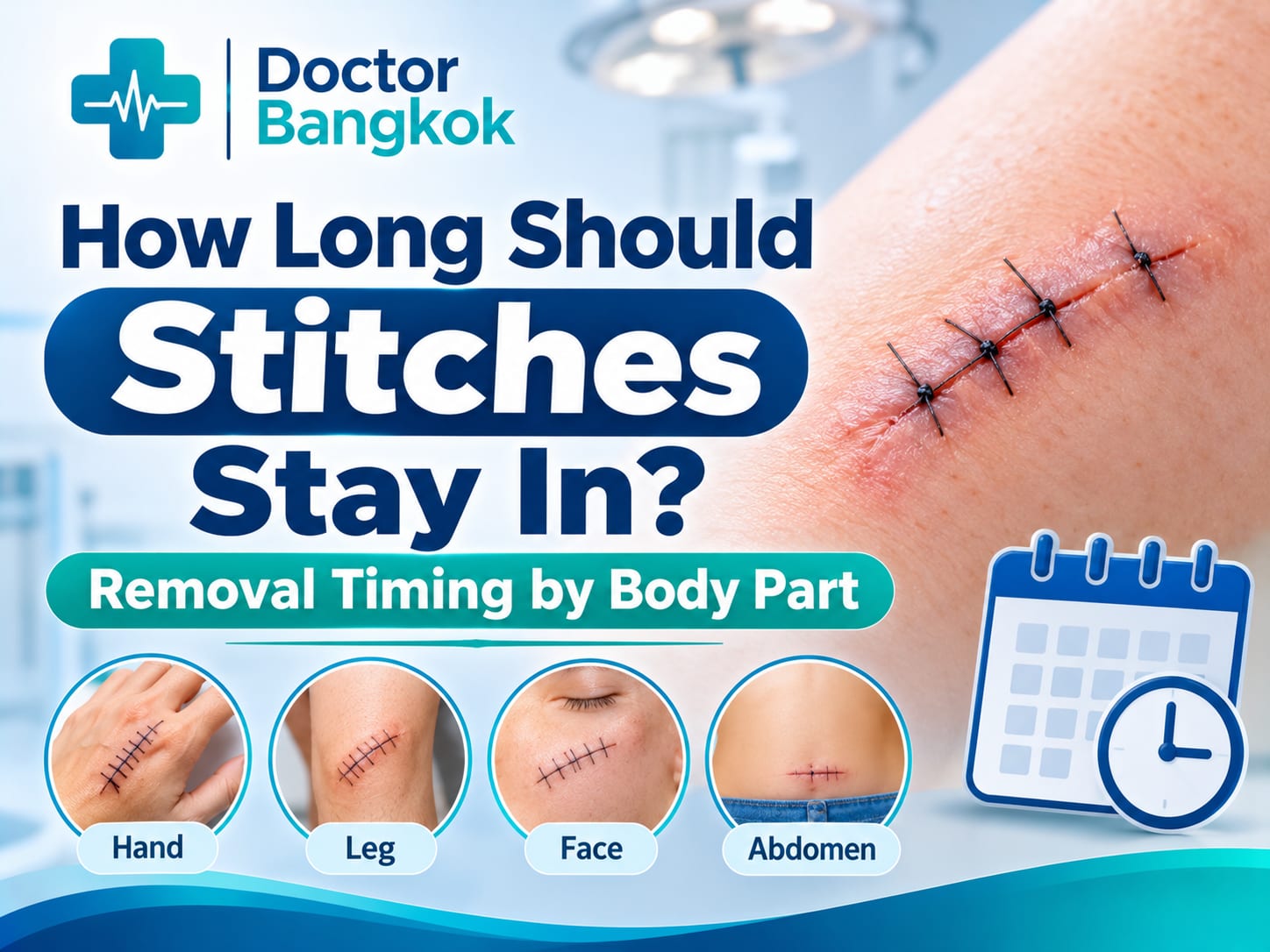
How long stitches should stay in depends on where they are on your body. Face stitches usually come out in 5 to 7 days. Scalp stitches in 7 to 10 days. Arms and legs typically 7 to 10 days. Joints and high-tension areas up to 10 to 14 days, and sometimes longer for very high-tension sites. Leaving them in too long causes scarring. Taking them out too early risks the wound reopening.
You got stitches somewhere in Bangkok, or you landed here with them already in. Now you are not sure when they should come out, or whether the redness you are seeing is normal. That question matters more in this climate than it does back home.
Bangkok’s heat and humidity change the equation. Sweat keeps wounds wet. Dressings peel off faster. Infections move quicker. The timing rules your doctor gave you elsewhere still apply, but how you care for the wound between now and removal day needs to account for where you actually are.

How Long Stitches Stay In by Body Part
The right time to remove stitches depends on how well the area heals. Blood supply, wound tension, and movement all affect how quickly skin knits back together. Remove too early and the wound can split open. Wait too long and the suture thread starts to become embedded in the skin, leaving marks that are harder to fade.
Face and Scalp
The face heals faster than almost anywhere else. Blood supply is rich, tension is low, and the skin regenerates quickly. Face stitches generally come out between 5 and 7 days. Scalp stitches follow at 7 to 10 days.
This is also where leaving stitches in too long does the most visible damage. After about 7 days on facial skin, the tissue can start to grow over the thread. The result is suture track marks, the small puncture scars on either side of the wound line. Get them out on time.
Arms, Legs and Joints
Arms and legs sit in the middle range: 7 to 10 days for most lacerations. Joints are different. Knees, elbows, knuckles, and ankles are under constant movement and tension. The skin there needs longer to build enough strength to hold without the suture. Expect 10 to 14 days for stitches over or near a joint, and your doctor may advise longer for very high-tension sites.
High-tension areas like the palm or the shin also run toward the longer end of that range. If you are unsure where your wound falls, the safest answer is to have a doctor check it rather than guess. You can find full stitch removal timing by body part at our wound care page.
What Happens If Stitches Are Left In Too Long
After the recommended window, the body begins to incorporate the suture thread into the healing tissue. Removing stitches at that point becomes a minor procedure rather than a simple snip. The scar also tends to be wider and more textured than it would have been with timely removal.
If you have lost track of the date or missed your removal appointment, do not wait further. Book a same-day assessment. The longer you leave it, the more likely you are to need a small additional procedure to lift the thread.
Dissolvable vs Removable Stitches
Not all stitches need to come out. Absorbable sutures break down on their own as the wound heals. They are common in deeper tissue layers and in areas where follow-up is inconvenient. You will not see them on the skin surface.
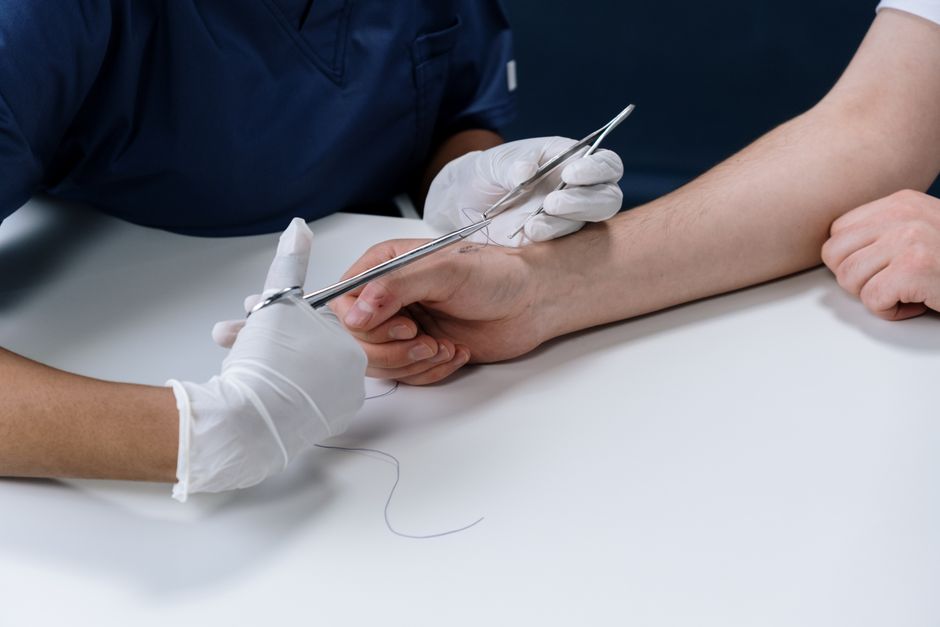
Non-absorbable sutures do not dissolve. These are the ones that need a clinic visit to remove. If you are not sure which type you have, check your discharge paperwork. If there is no paperwork, the safest assumption is that they need to come out, and a doctor can confirm quickly.
One point worth knowing: dissolvable stitches placed at skin level sometimes do not dissolve cleanly in Bangkok’s heat. If you can still see them past the expected window and the area feels firm or irritated, come in for a check.
Caring for Stitches in Bangkok’s Heat and Humidity
Bangkok sits above 30 degrees Celsius for most of the year. That heat means you sweat, and sweat keeps the wound area damp. Prolonged moisture against skin causes maceration, where the skin around the wound softens and breaks down. That breakdown creates an entry point for bacteria.
Change your dressing daily, or sooner if it gets wet. Use a breathable, waterproof dressing when you are outdoors. When you are inside in air conditioning, let the wound breathe for short periods if it is clean and there is no active discharge.
Stay out of pools, the Chao Phraya, and the sea until the wound is fully closed and the stitches are out. Bangkok’s outdoor water sources carry a bacterial load your open wound does not need. Even hotel pools present a soaking risk that can loosen suture knots and saturate the wound bed.
If your dressing keeps slipping due to sweat, a medical-grade adhesive dressing holds better than standard plasters. The wound dressing team at Doctor Bangkok can advise on the right type for your wound location and activity level.
Signs Your Stitches Are Infected
Some redness and mild swelling in the first 48 hours is normal. Pale yellow or clear fluid at the wound edge is also expected early on.
After that initial phase, watch for redness that spreads beyond the wound edges, increasing swelling after day three, thick yellow-green discharge, or a foul smell. A fever above 38°C alongside any wound changes should prompt a same-day visit.
The specific concern in Bangkok is cellulitis, a bacterial skin infection that spreads through the layers under the skin. It starts as a warm, spreading red patch around the wound and can progress quickly in hot weather. Red streaks running away from the wound toward the body are a more urgent sign: that indicates the infection is tracking along the lymph vessels. See a doctor the same day. If you are unsure, the 24-hour walk-in clinic on Sukhumvit can assess you without an appointment.
Removing Stitches While Travelling Through Bangkok
If you got stitches at a hospital in another country and landed in Bangkok before the removal date, you do not need to go back. Any qualified clinic can remove stitches placed elsewhere. Bring your discharge paperwork if you have it. A photo of the original wound at closure is also helpful if you do not have written records. Without those, a doctor will assess the wound directly and judge readiness based on what they see.
Attempting removal yourself in a hotel room is not advisable. The risk is not just cutting the wrong thing. It is dragging contaminated thread through the healing tissue channel, which can introduce bacteria into a wound that was otherwise clean.
Doctor Bangkok’s doctor-on-call service can come to your hotel or condo anywhere in Bangkok within one hour, day or night. If you are post-surgery, mobility-limited, or simply do not want to navigate the city with a wound, that option exists. For those who prefer to come in, the clinic is a short walk from BTS Nana on Sukhumvit Soi 13, open around the clock. Many travel insurance policies cover wound care and suture removal at private clinics in Bangkok, so check your policy before you pay out of pocket.
Need stitches removed in Bangkok? Doctor Bangkok handles suture removal at the clinic on Sukhumvit Soi 13, open 24 hours a day, seven days a week, with no appointment needed. If you cannot travel, a doctor can come to your hotel or condo anywhere in Bangkok within one hour. Bring your discharge paperwork if you have it. Walk in or call ahead.
Frequently Asked Questions
Dr. Ponlawat Pitsuwan
Physician, Doctor Bangkok
a private medical clinic in central Bangkok open 24 hours a day. He sees expats, residents, and medical tourists for wound care, suture removal, and general medical consultations. His focus is straightforward, evidence-based care delivered in plain language. Doctor Bangkok also runs a doctor-on-call service that comes to your hotel or condo within one hour.
References
- Northern Care Alliance NHS Trust. Care of Sutures/Stitches (patient leaflet). northerncarealliance.nhs.uk.
- NHS Wales (111 Wales). Wound Care advice leaflet. 111.wales.nhs.uk.
- Zuber TJ. The mattress sutures: vertical, horizontal, and corner stitch. American Family Physician. 2002;66(12):2231-2236.
- Pfenninger JL, Fowler GC. Laceration Repair: A Practical Approach. American Family Physician. 2017;95(10):628-636.
- Merck Manual (Consumer Version). Lymphangitis. merckmanuals.com.
The information in this article is for educational purposes only and does not constitute medical advice. It should not be used to self-diagnose or replace a consultation with a qualified physician. If you have concerns about your health, contact a licensed medical professional. For appointments at Doctor Bangkok, visit doctorbangkok.co.th.
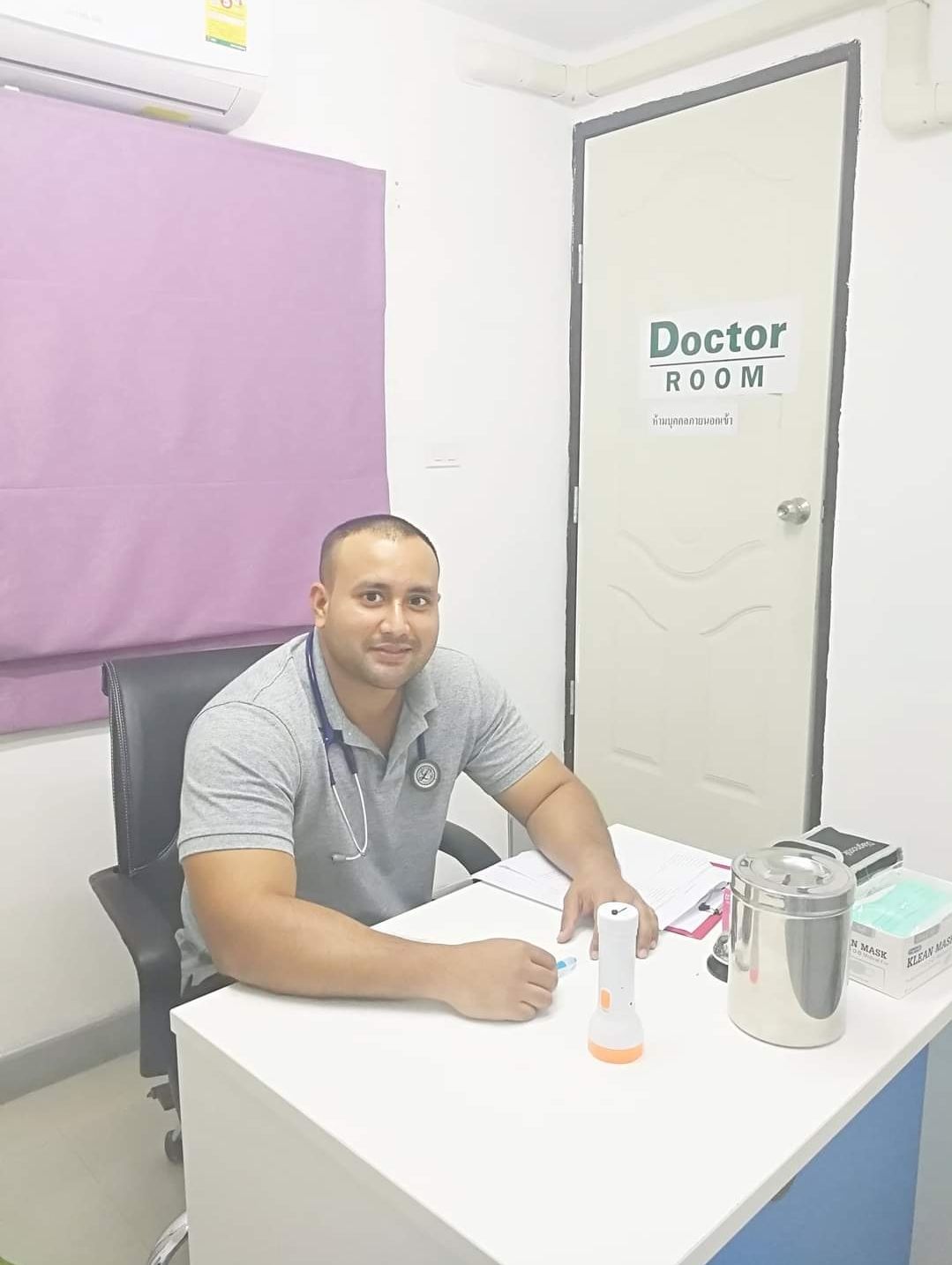
Dr. Ponlawat Pitsuwan is a physician at Doctor Bangkok, a private clinic in central Bangkok. He sees expats, residents, and medical tourists for general medicine, wellness consultations, and IV therapy. His focus is straightforward, evidence-based care delivered in plain language.