
Clinically reviewed by Dr. Ponlawat Pitsuwan, Physician, Doctor Bangkok.
Last reviewed: November 2026
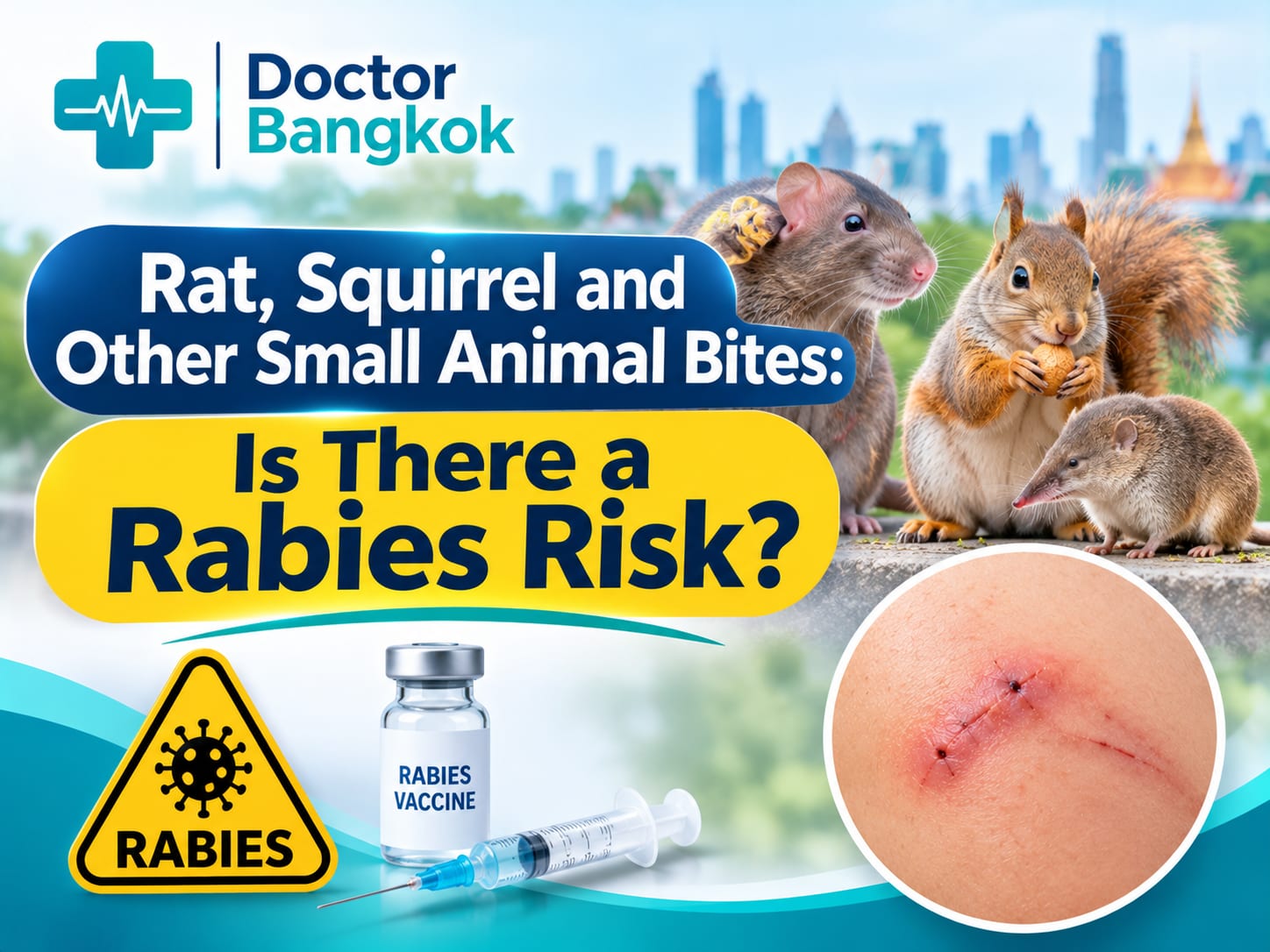
Rat bites carry a low but real rabies risk in Thailand. Rodents are not a confirmed rabies reservoir here, but no Thai health authority classifies them as zero-risk. Any bite that breaks the skin needs wound care and a clinical assessment the same day. Rat-bite fever, a bacterial infection from rat bites, is a separate and more likely concern, and it also needs treatment.
You felt something sharp in the dark. A rat in your hotel room, a squirrel at Lumpini Park, something small you could not quite identify near Yaowarat. Now you are sitting there wondering how serious this actually is.
In Bangkok, rats are not a confirmed rabies reservoir, so the rat bite rabies risk is low. It is not zero, and the wound still needs to be seen. The bigger immediate concern from a rat bite is rat-bite fever, a bacterial infection that is easy to treat but easy to miss if you do not know to look for it. Here is what matters.

Rodent Bites and Rabies Risk in Bangkok
Globally, rodents are considered low-risk for rabies transmission to humans. No human rabies case from a rodent bite has been documented in Thailand to date. That said, Thai health guidelines do not classify rodents as zero-risk, and the WHO recommends clinical assessment for any bite from a warm-blooded animal.
What matters in Bangkok is the circumstance, not just the species. An unprovoked bite from a sick-looking animal, a bite in a poorly lit alley, a rodent behaving strangely before it bit you: these details shape a doctor’s assessment of whether post-exposure prophylaxis is needed.
Post-exposure prophylaxis, or PEP, is a series of rabies vaccine injections given after a potential exposure. When indicated, it also involves rabies immunoglobulin injected around the wound site. If you have already had a full pre-exposure rabies vaccine course, the post-bite protocol is shorter and does not require immunoglobulin.
If you are unsure whether you need PEP, get assessed. That decision should not be made alone at midnight with a phone screen.
Rat-Bite Fever: The Risk Most People Miss
This is more likely than rabies from a rat bite in Bangkok.
Rat-bite fever is a bacterial infection. In Asia, including Thailand, it is most commonly caused by Spirillum minus. This differs from the form common in North America and Europe, which means Western medical sites may not describe what you are looking at.
Symptoms from Spirillum minus typically appear one to three weeks after the bite. The wound may appear to heal, then reopen. Fever returns in waves. Swollen lymph nodes near the bite are common, and a rash can develop. Without treatment, the infection can persist for months.
The good news is that it responds well to antibiotics. But you need a diagnosis first. When you see a doctor, do not leave out the detail that a rat bit you.
Bats Are a Different Category
Do not apply the same reasoning you use for rats.
Bats are a confirmed rabies reservoir in Thailand. Thai bat species have tested positive for bat lyssaviruses, and the WHO treats bat exposure as a higher-risk category regardless of whether a visible bite wound is present. Bat bites are often painless. The tooth is small. You may not feel it.
This can lead to what clinicians call cryptogenic rabies: cases where the person cannot recall a bite but had contact with a bat. WHO and CDC guidelines are explicit on this. If you wake up in a room with a bat, or find a bat near a sleeping child, that is treated as a presumed exposure.
You do not need a visible wound to warrant assessment. If a bat made contact with you, or was in an enclosed space while you were asleep, seek medical assessment the same day. By the time rabies symptoms appear, the outcome is almost always fatal.
Wound Care in the First 15 Minutes
What you do immediately matters.
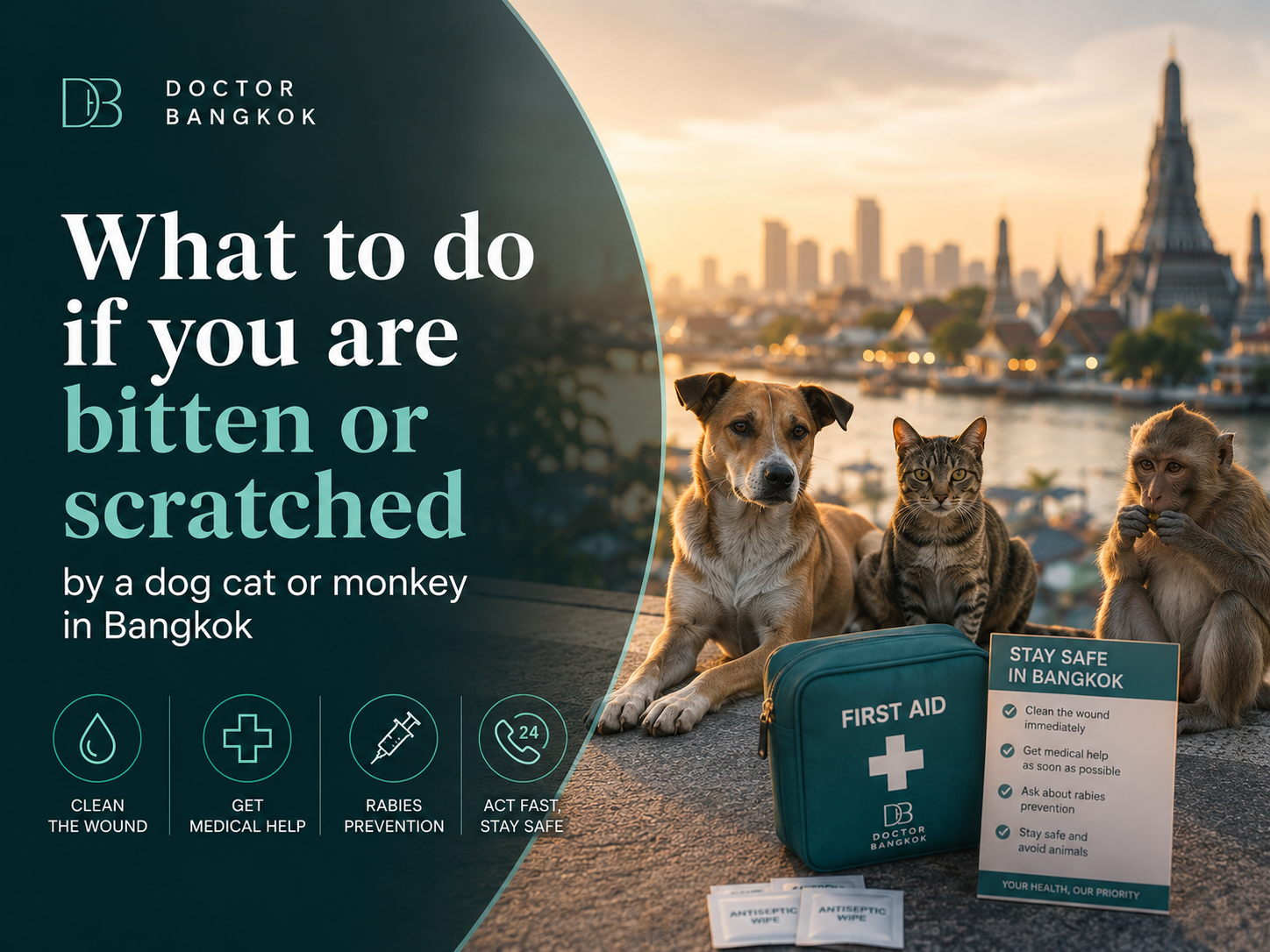
Wash the wound with soap and running water for at least 15 minutes. This is the single most effective immediate step for reducing viral load at the wound site, based on WHO guidance. Apply povidone-iodine if you have it. Do not tape the wound closed before a doctor sees it. Animal bite wounds are typically left open initially to reduce infection risk.
Thai doctors classify bite wounds using WHO categories. Category I is contact with intact skin only, which needs no treatment. Category II is minor scratches or abrasions without bleeding, or nibbling of uncovered skin, which warrants PEP. Category III is a wound that breaks the skin, any bite near the face or hands, or any bat exposure, which requires both PEP and rabies immunoglobulin. Knowing your category helps you understand the decisions being made.
After washing and applying antiseptic, get to a doctor. If you are in a Bangkok hotel or condo, Doctor Bangkok’s doctor-on-call service can send a physician to your location, day or night. The doctor can assess the wound, classify it properly, begin wound care, and start the right pathway for post-exposure vaccination if needed.
If you can travel, the walk-in clinic on Sukhumvit Soi 13 is open 24 hours. For bite wounds specifically, the wound care service at Doctor Bangkok handles cleaning, dressing, and assessment without an appointment. Confirm your tetanus status at the same visit. Rat bites can transmit tetanus, and a booster may be needed depending on when you were last vaccinated.
Been bitten or scratched by a rat, bat, squirrel, or any animal in Bangkok? Do not wait to see how it develops. Doctor Bangkok is open 24 hours. Our doctor-on-call service arrives at your hotel or condo to assess your wound, classify your rabies risk, provide wound care, and coordinate post-exposure vaccination the same day. Walk in anytime to our clinic on Sukhumvit Soi 13, or call us and we will come to you.
Frequently Asked Questions
Dr. Ponlawat Pitsuwan
Physician, Doctor Bangkok
a private medical clinic in central Bangkok open 24 hours, with a doctor-on-call service that comes to your hotel or condo. He sees expats, residents, and medical tourists for animal bite assessment, wound care, rabies risk evaluation, and post-exposure vaccination. His focus is evidence-based care delivered in plain language.
References
- World Health Organization. Rabies. WHO Fact Sheet. Updated September 2023.
- Centers for Disease Control and Prevention. Clinical Overview of Rat-Bite Fever. CDC, 2024.
- World Health Organization. WHO Expert Consultation on Rabies: Third Report. WHO Technical Report Series No. 1012, 2018.
- MSF Medical Guidelines. Rabies: Categories of exposure and post-exposure prophylaxis. Medecins Sans Frontieres, 2023.
The information in this article is for educational purposes only and does not constitute medical advice. It should not be used to self-diagnose or replace a consultation with a qualified physician. If you have concerns about your health, contact a licensed medical professional. For appointments at Doctor Bangkok, visit doctorbangkok.co.th.
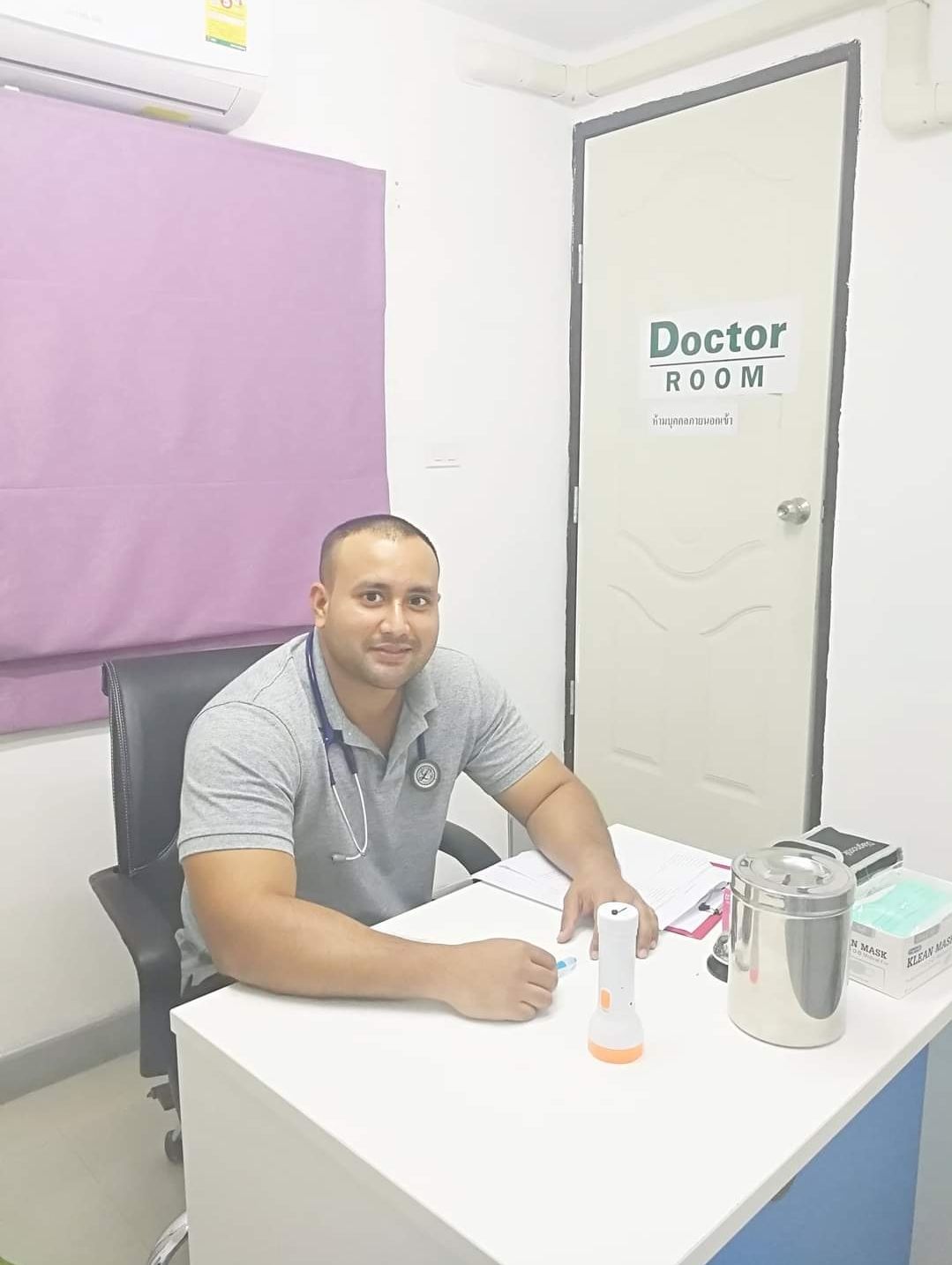
Dr. Ponlawat Pitsuwan is a physician at Doctor Bangkok, a private clinic in central Bangkok. He sees expats, residents, and medical tourists for general medicine, wellness consultations, and IV therapy. His focus is straightforward, evidence-based care delivered in plain language.