
Clinically reviewed by Dr. Ponlawat Pitsuwan, Physician, Doctor Bangkok.
Last reviewed: November 2026
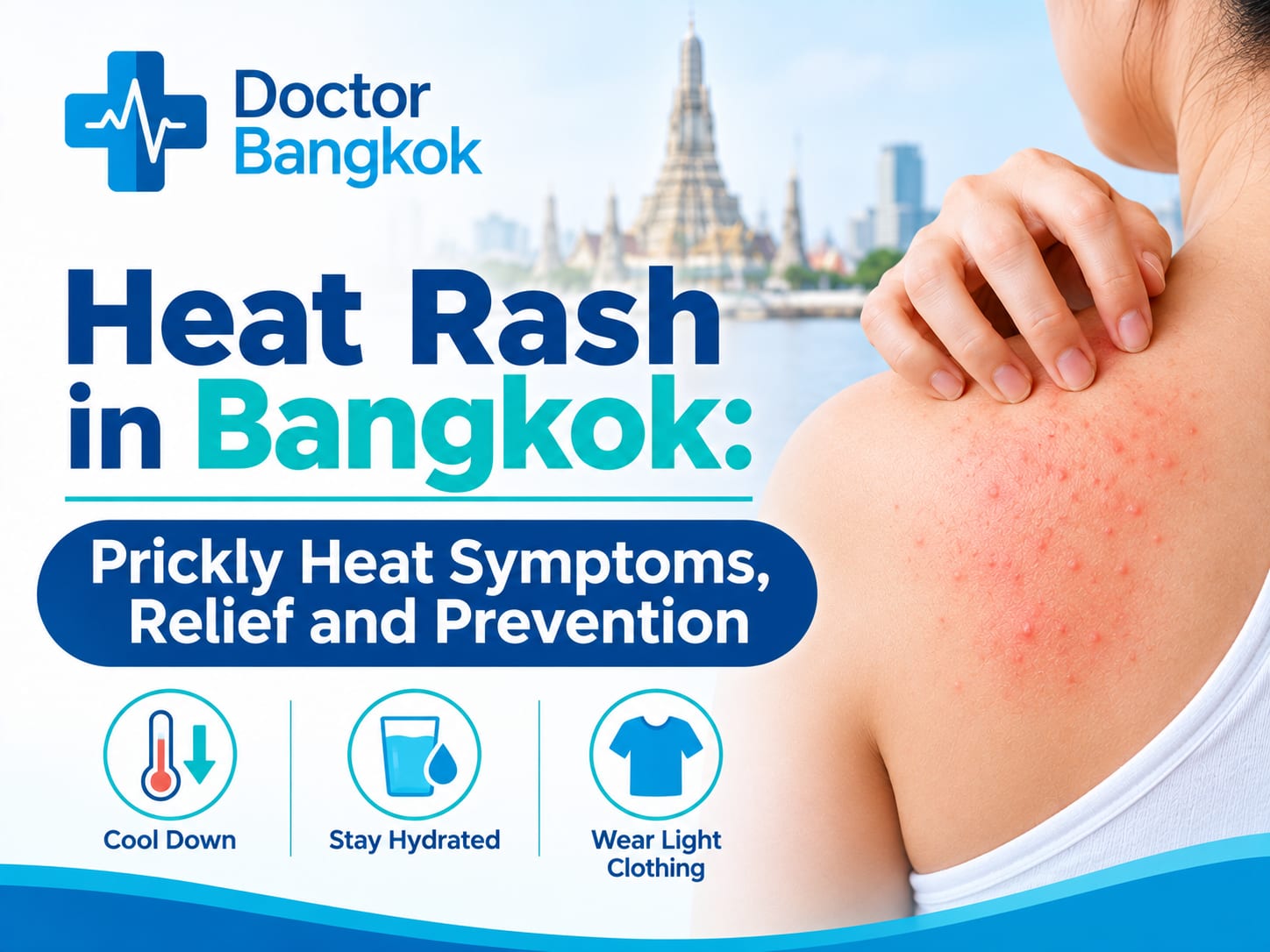
Heat rash, also called prickly heat or miliaria, happens when sweat gets trapped under the skin. In Bangkok’s year-round heat and humidity, it clears up in a few days with cool air, loose clothing, and cool showers. If the rash becomes painful, spreads, or comes with fever or pus, that is no longer simple heat rash and needs same-day medical attention.
You step off the BTS, walk two minutes to your condo, and your back is soaked. By day three in Bangkok, you have small red bumps across your chest, your neck is prickling, and you are wondering whether you need a doctor or just a cold shower. For most people, it is the second one. But knowing which is which matters.
Bangkok sits at around 30 degrees Celsius year-round, with average humidity often above 80 percent. Your skin’s sweat glands are working constantly. When those glands get blocked, sweat backs up under the skin and you get heat rash. The itch and prickling can be intense, but the condition itself is usually manageable at home. The sections below tell you what to do, what to watch for, and when to call a doctor.

What Causes Heat Rash in Bangkok
Your skin cools you down by releasing sweat. When sweat ducts get blocked, the sweat has nowhere to go. It pushes up under the skin layers and causes small blisters or red bumps.
Bangkok accelerates this. The humidity here slows evaporation, so sweat sits on the skin longer. Tight clothing, backpacks, and skin-to-skin contact in body folds all trap moisture and block ducts faster. The cycle of walking in 33-degree heat outside then sitting in a 20-degree air-conditioned office does not help: repeated temperature swings stress your skin’s ability to manage moisture.
Some medications can make this worse. Certain antipsychotics, anticholinergics, and some diuretics can suppress sweat gland function or raise core body temperature. If you are on a long-term medication and suddenly developing heat rash after moving to Bangkok, raise it with a doctor.
Types of Heat Rash
Miliaria Crystallina
This is the mildest form. The bumps are tiny, clear, and look almost like water droplets under the skin. They do not itch much. This version tends to clear on its own within a day or two once you cool down, and no specific treatment is usually needed beyond air conditioning and rest.
Miliaria Rubra
This is what most people mean when they say prickly heat. The bumps are red, inflamed, and itch or prickle intensely. This form sits deeper in the skin, which is why it takes longer to settle, often several days.
Miliaria Profunda
This is the least common form but the one worth knowing about. The bumps are flesh-coloured and firm. This type can reduce your skin’s ability to sweat normally. If your skin stops sweating in Bangkok’s heat, your body cannot cool itself properly and your risk of heat exhaustion rises. People who get repeated bouts of miliaria rubra without letting the skin recover are more likely to develop this.

Who Gets Heat Rash Most in Bangkok
New arrivals are most vulnerable, usually in the first few weeks before the body has begun adjusting to the climate. That adjustment is real: your body gradually produces more sweat and distributes it more efficiently over time.
Beyond new arrivals, people who are overweight, work outdoors, exercise heavily, or wear uniforms or equipment that trap heat are at higher risk. Infants are also very susceptible because their sweat ducts are not fully developed. The most common sites are skin folds: the groin, underarms, the back of the knees, and under the chest.
How to Calm Heat Rash Fast
The first priority is cooling the skin. Get into air conditioning. Take a cool shower without soap on the affected area, then air dry or pat dry gently. Do not rub.
Calamine lotion can reduce itch. A mild over-the-counter hydrocortisone cream, used briefly on affected areas, can reduce inflammation. Do not use hydrocortisone cream on children under 10 or if you are pregnant without first speaking to a doctor. Antihistamine tablets may ease itch at night. These are all available at pharmacies throughout Bangkok without a prescription.
Do not apply thick moisturisers or oil-based products to active bumps. These block ducts further. If the itch is severe or the rash is spreading despite these steps, that is the right time to see a doctor rather than adding more products.
Clothing, Air Con and Showering in Bangkok’s Heat
Linen and cotton are your best options here. They breathe, absorb moisture, and do not trap heat against the skin the way synthetics do. Loose fits matter as much as the fabric: a tight cotton shirt is still a problem.
The indoor-outdoor temperature contrast in Bangkok is a real issue. Stepping from 20-degree air conditioning into 34-degree humidity repeatedly throughout the day stresses the skin. Where possible, keep your room from going too cold. Sleeping in a room set around 25 degrees is easier on your skin than 18 degrees.
Shower after sweating, every time you can. Use a gentle, fragrance-free wash and avoid vigorous scrubbing, which irritates already-inflamed ducts. Prickly heat powders are widely sold in Thai pharmacies. Cornstarch-based versions are gentler than talc-based ones on irritated skin. Use powder to absorb surface moisture, not as a replacement for showering. In skin folds, powder can clump if moisture builds up, which worsens duct blockage.
When It Could Be Something Else
Heat rash does not blister in large patches, does not cause joint pain, and does not come with a high fever. If yours does, you are likely dealing with something different.
Folliculitis, an infection of the hair follicles, is common in Bangkok’s humid heat. The bumps look similar to miliaria rubra but are centred around individual hair follicles and may contain pus. Contact dermatitis, often triggered by local laundry detergents, sunscreens, or hotel toiletries, can produce red itchy patches that look like heat rash but do not follow a sweat-duct pattern. Drug-induced rashes are another common issue in expats on long-term medications.
Secondary bacterial infection is the most important complication to catch early. Constant sweating means broken skin from scratching gets colonised quickly. Signs of infection include increasing redness, warmth, swelling, pus, or fever. At that point, you are likely looking at infected miliaria or cellulitis, both of which need antibiotics.
Dengue fever can also produce a skin rash in its early stages, and dengue is active in Bangkok year-round. If your rash comes with high fever, severe headache, or pain behind the eyes, do not assume it is heat rash. Get assessed the same day. Our skin rash assessment service covers these differentials quickly.
If the rash is spreading fast, you have a fever, or there are signs of infection, Doctor Bangkok’s doctor-on-call service can come to your hotel or condo anywhere in Bangkok. There is no need to navigate a hospital system in an unfamiliar language. Book through the doctor hotel visit service or walk into our clinic on Sukhumvit Soi 13, open 24 hours. If you have travel insurance, see the cashless treatment page for details.
Heat rash usually settles with cool air and time. But if yours is spreading, infected, or came with a fever, do not wait. Doctor Bangkok is open 24/7 at Sukhumvit Soi 13 and can send a doctor to your hotel or condo. Walk in anytime or book a doctor call through our doctor hotel visit service.
Frequently Asked Questions
Dr. Ponlawat Pitsuwan
Physician, Doctor Bangkok
a private medical clinic in central Bangkok open 24/7, with a doctor-on-call service that comes to your hotel or condo. He sees expats, residents, and medical tourists for skin conditions, tropical illness assessment, general medical care, and travel health. His focus is straightforward, evidence-based care delivered in plain language.
References
- Haas N, Martens F, Henz BM. Miliaria crystallina in an intensive care setting. Clinical and Experimental Dermatology. 2004;29(1):32-4.
- NHS. Heat rash (prickly heat). NHS UK, reviewed 2023.
- Reamy BV, et al. Miliaria. StatPearls. StatPearls Publishing, 2024.
- WeatherSpark. Average Weather in Bangkok, Thailand Year Round. Based on 1991-2020 TMD normals.
- Wikipedia contributors. Miliaria. Wikipedia, The Free Encyclopedia, 2024.
- NI Direct (NHS). Heat rash (prickly heat). nidirect.gov.uk.
The information in this article is for educational purposes only and does not constitute medical advice. It should not be used to self-diagnose or replace a consultation with a qualified physician. If you have concerns about your health, contact a licensed medical professional. For appointments at Doctor Bangkok, visit doctorbangkok.co.th.
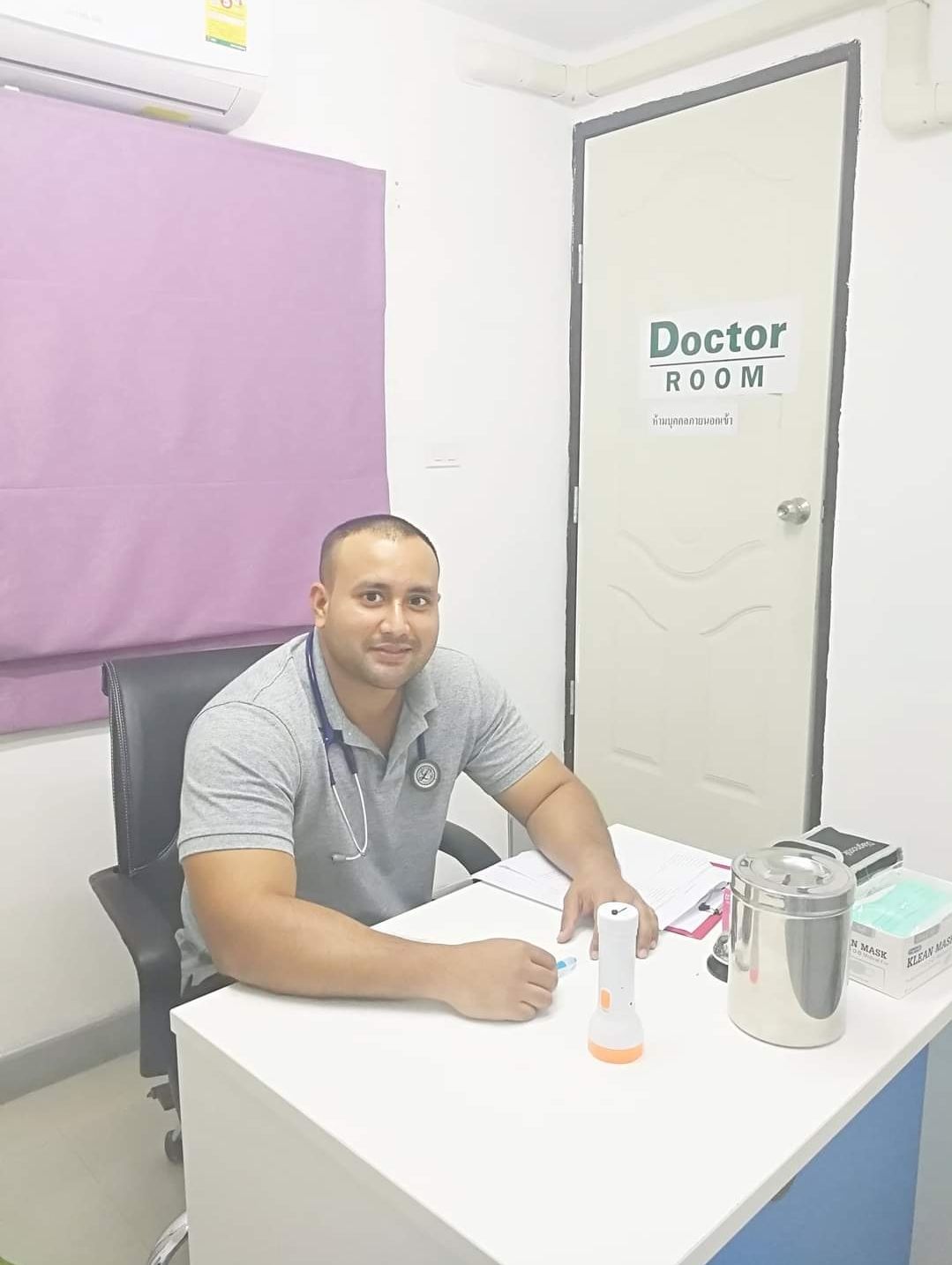
Dr. Ponlawat Pitsuwan is a physician at Doctor Bangkok, a private clinic in central Bangkok. He sees expats, residents, and medical tourists for general medicine, wellness consultations, and IV therapy. His focus is straightforward, evidence-based care delivered in plain language.