

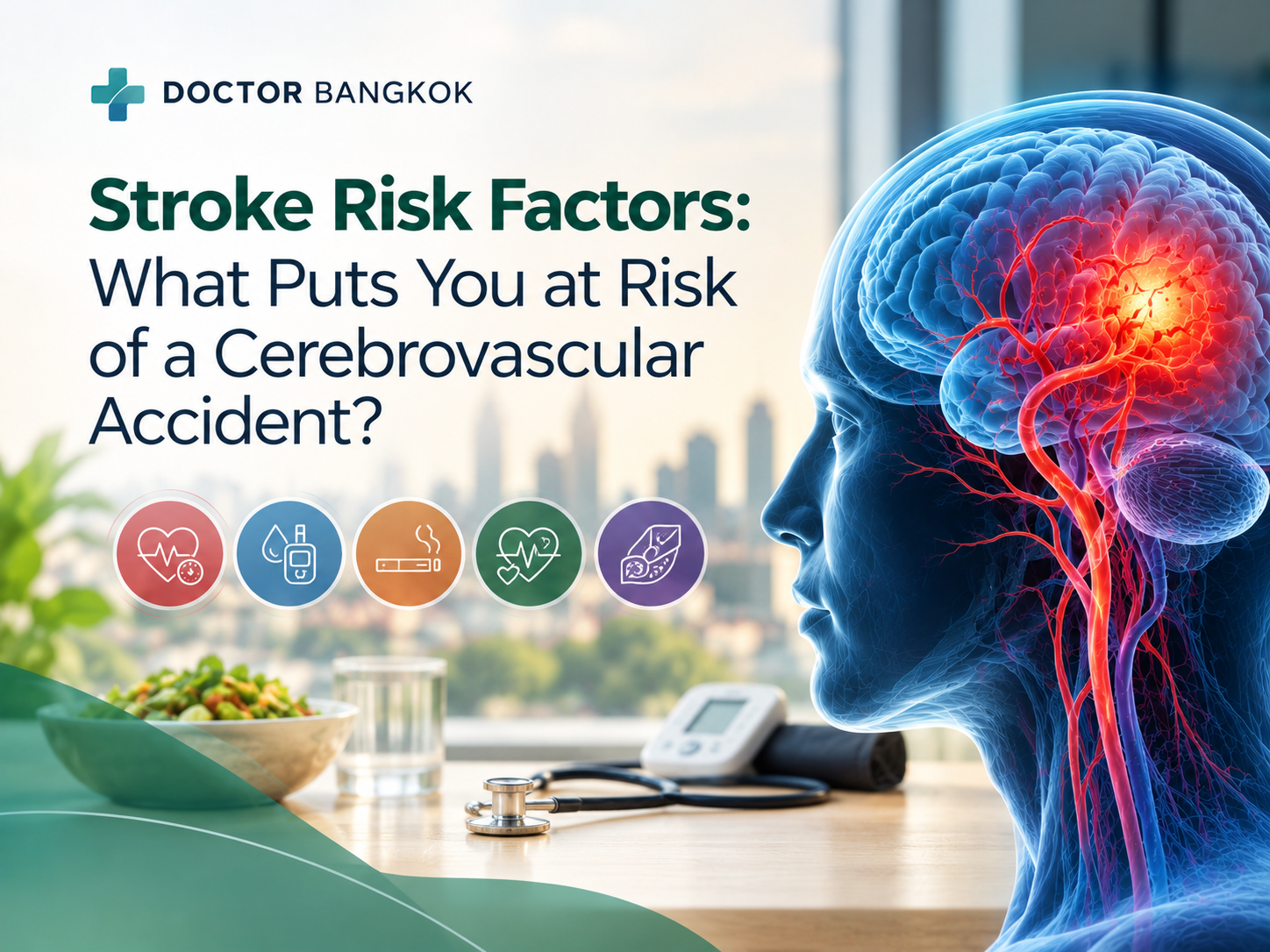
Clinically reviewed by Dr. Ponlawat Pitsuwan, Physician, Doctor Bangkok. Last reviewed: September 2026
The predisposing factors of CVA include high blood pressure, diabetes, high cholesterol, atrial fibrillation, smoking, obesity, and increasing age. Many cause no symptoms at all. A routine blood pressure check and blood panel can identify most of them before any damage is done.
I see patients every week who had no idea they were at risk. No warning signs, no family history they knew of. Then a blood test or ECG picks up something significant, and we have a conversation that should have happened years earlier. Stroke works like that. The conditions that set you up for one build silently over time.
A cerebrovascular accident, or CVA, is what most people call a stroke. It happens when blood supply to part of the brain is cut off, or when a blood vessel in the brain bursts. The reason some people are far more vulnerable than others comes down to predisposing factors, the underlying conditions and traits that stress your blood vessels long before anything acute happens. This article covers what those factors are, which ones are specific to life in Bangkok, and what you can do about them.

What a Predisposing Factor Actually Means
Not all risk factors work the same way. A predisposing factor is something that makes your blood vessels or heart vulnerable over time. Hypertension, diabetes, high cholesterol. Years of wear, slowly adding up. A precipitating factor is what pushes a vulnerable person into an actual event, a sudden pressure spike, a clot breaking loose, extreme physical stress.
Most people only hear about risk factors as a flat list. What that misses is this: each item on that list is quietly damaging your arteries right now. The goal of screening is to find them before a precipitating factor ever gets a chance.
The Two Types of CVA and Why the Distinction Matters
About 85 percent of strokes are ischemic, meaning a clot blocks blood flow to part of the brain. The rest are hemorrhagic, where a blood vessel ruptures. The predisposing factors overlap, but not completely.
Ischemic strokes are most closely linked to plaque build-up in arteries, atrial fibrillation, and diabetes. A subtype called lacunar infarction, where tiny deep arteries become blocked, is particularly common in Southeast Asian populations. Hemorrhagic strokes are driven heavily by uncontrolled high blood pressure. Knowing which type a patient is most at risk for shapes the prevention strategy. There is no single-size answer.

Modifiable Predisposing Factors of CVA
These are the ones you can change. And changing them genuinely reduces risk, in some cases dramatically.
High Blood Pressure
Hypertension is the single most important modifiable risk factor for both types of stroke. Chronic high pressure gradually damages artery walls, making them stiff, narrow, and prone to both blockage and rupture. It causes almost no symptoms until something breaks. Many patients I see with significantly elevated readings had no idea until we checked them.
Diabetes and Pre-Diabetes
High blood sugar damages blood vessel walls over years and accelerates artery disease. HbA1c, your average blood sugar over the past three months, is one of the most useful markers we test. People are often pre-diabetic for years before a formal diagnosis, and every one of those years adds to vascular stress.
High Cholesterol and Dyslipidaemia
Elevated LDL cholesterol drives plaque build-up in arteries, including the carotid arteries that supply your brain. Dyslipidaemia is the broader term for any abnormal balance of fats in your blood. A fasting lipid profile gives us your LDL, HDL, and triglycerides. Most expats I see have not had one since leaving their home country.
Atrial Fibrillation
Atrial fibrillation is an irregular heart rhythm where the upper chambers of your heart quiver instead of beating properly. This allows blood to pool and form clots. If a clot travels to the brain, the resulting stroke tends to be large and severe. An ECG detects it. It often causes no symptoms at all.
Smoking, Obesity, and Physical Inactivity
Smoking damages artery walls and raises clotting risk. Obesity and a sedentary lifestyle raise blood pressure, blood sugar, and cholesterol at the same time. Bangkok makes sedentary easy. If you are desk-based, commuting by taxi, and eating out every night, your risk profile can creep up faster than you realise.
Non-Modifiable Predisposing Factors of CVA
Some factors cannot be changed, but knowing them tells you how carefully to manage the ones you can.
Age is the biggest. Risk roughly doubles every decade after 55. Men have higher stroke risk at younger ages, though women catch up after menopause. A family history of stroke or early heart disease raises your baseline.
Ethnicity also plays a role that most English-language sources overlook. Southeast Asian populations, including Thais, have a higher proportion of hemorrhagic stroke and higher rates of intracranial atherosclerosis compared to Caucasian populations. If you are a long-term resident here with mixed lifestyle factors from two cultures, that background matters clinically.
Predisposing Factors That Often Get Missed
Hypercoagulability
Some people have blood that clots more easily than normal. Conditions like antiphospholipid syndrome raise stroke risk significantly, especially in younger patients. If you have had unexplained clots or a stroke with no obvious cause, a clotting screen is worth raising with your doctor.
Obstructive Sleep Apnoea
Sleep apnoea causes repeated drops in oxygen during the night, which stresses the cardiovascular system and pushes blood pressure up. It is significantly underdiagnosed in Bangkok expats, partly because people attribute the tiredness to lifestyle. The evidence linking it to both hypertension and stroke risk is strong.
Elevated Homocysteine
Homocysteine is an amino acid that, at high levels, damages the inner lining of blood vessels and promotes clotting. It is easily measured in a blood test but rarely checked unless someone asks. B-vitamin deficiency is a common cause and straightforward to address.
The Oral Contraceptive Pill
Oestrogen-containing contraceptives raise clotting risk, particularly in women who also smoke, have migraines with aura, or have high blood pressure. This does not mean the pill is unsafe for everyone, but the combination of risk factors matters and is worth a direct conversation with your doctor.
Why Living in Bangkok Adds Its Own Risk Layer
I get asked whether Bangkok itself is a risk factor. Honestly, some of it is.
The Thai diet is high in sodium. Street food, soups, and sauces all carry significant salt loads, and chronic high sodium intake drives hypertension. Bangkok’s air quality is a separate concern. Long-term exposure to fine particulate matter, PM2.5, has solid evidence linking it to both raised blood pressure and artery disease. On high-pollution days, it is not just your lungs taking the hit.
Then there is the expat pattern I see repeatedly. People who had annual health checks at home stop getting them once they move here. Life gets busy, the system feels unfamiliar, three years pass. Meanwhile, blood pressure climbs, blood sugar drifts, cholesterol goes unchecked. By the time something prompts a visit, the results are not what they expected.
How to Screen for Your CVA Risk in Bangkok
Screening is straightforward. A cardiovascular risk assessment at Doctor Bangkok typically includes a fasting lipid profile, blood glucose and HbA1c, full blood count, blood pressure measurement, and an ECG to check for atrial fibrillation. If there is a specific concern about clotting, homocysteine, or inflammation, we add those in the same visit.
Lipid and glucose results are usually back within a day. The ECG is immediate. From there, if something needs follow-up, we discuss lifestyle changes, medication where appropriate, or referral for further investigation.
Most patients are in and out in under an hour. The bigger barrier is usually just booking the appointment.
Recognising a CVA: FAST and What to Do in Bangkok
If you or someone nearby may be having a stroke, the FAST check covers the main signs. Face drooping on one side. Arm weakness or sudden numbness on one side. Speech that is slurred or hard to follow. Time to call for emergency help immediately.
In Bangkok, call 1669 for an emergency ambulance. For ischemic stroke, clot-dissolving treatment works best within roughly four and a half hours of symptoms starting. Do not drive yourself. Do not wait to see if it passes.
If symptoms resolve within minutes or hours, that is called a transient ischemic attack, or TIA. It is a serious warning and warrants same-day clinical assessment, not a watch-and-wait approach.
If you have not checked your blood pressure, cholesterol, or blood sugar recently, now is a good time. Doctor Bangkok offers cardiovascular risk screening in central Bangkok, accessible by BTS, with English-speaking physicians and same-day appointments. We run the tests that identify the silent predisposing factors of CVA before they become an emergency. Book a health check at Doctor Bangkok today.
FAQ
Dr. Ponlawat Pitsuwan
Physician, Doctor Bangkok
a private medical clinic in central Bangkok. He sees expats, residents, and medical tourists for cardiovascular risk screening, general health assessments, and chronic disease management. His approach is direct, evidence-based, and delivered in plain language.
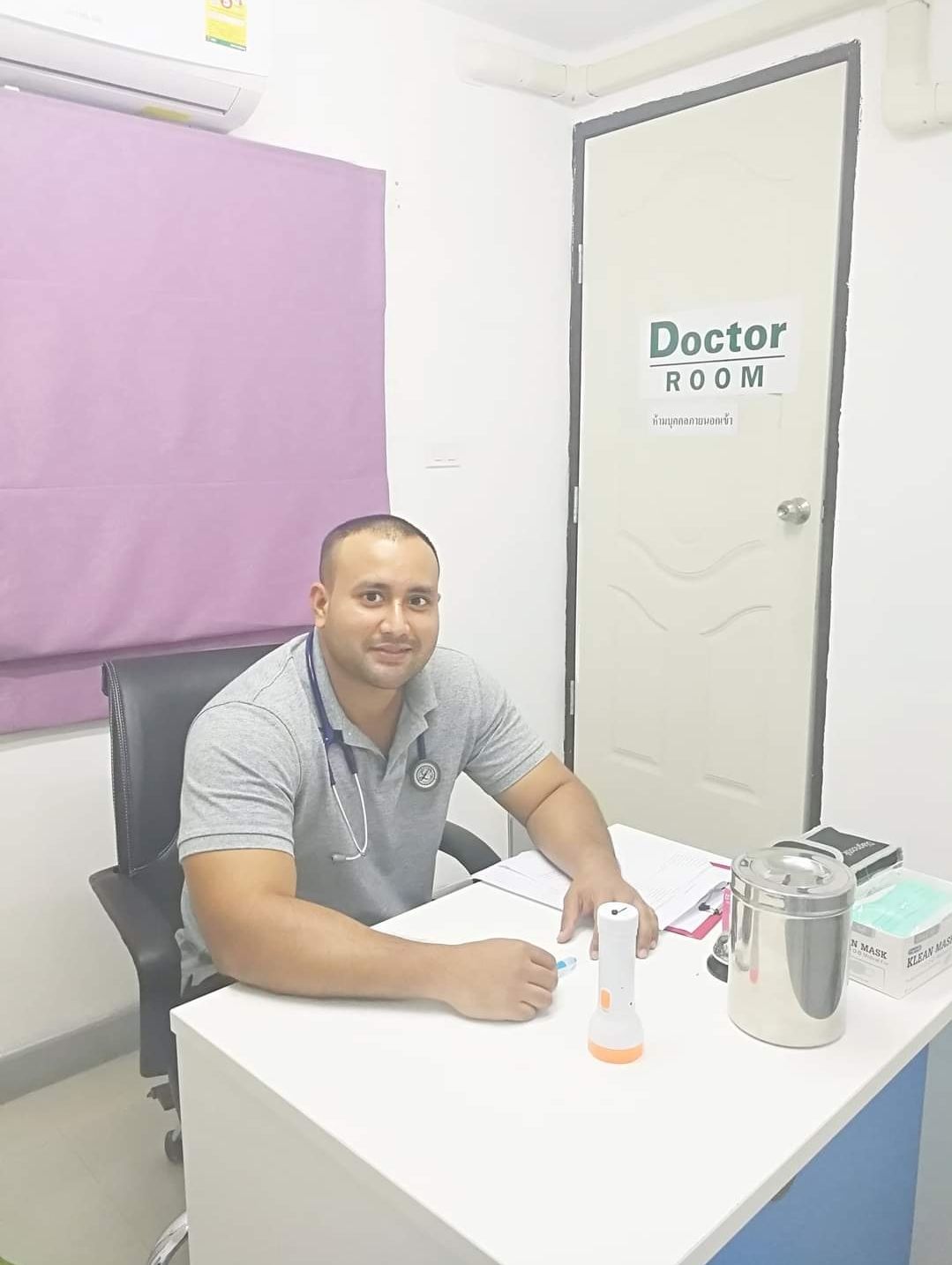
Dr. Ponlawat Pitsuwan is a physician at Doctor Bangkok, a private clinic in central Bangkok. He sees expats, residents, and medical tourists for general medicine, wellness consultations, and IV therapy. His focus is straightforward, evidence-based care delivered in plain language.