

Clinically reviewed by Dr. Ponlawat Pitsuwan, Physician, Doctor Bangkok.
Last reviewed: September 2026
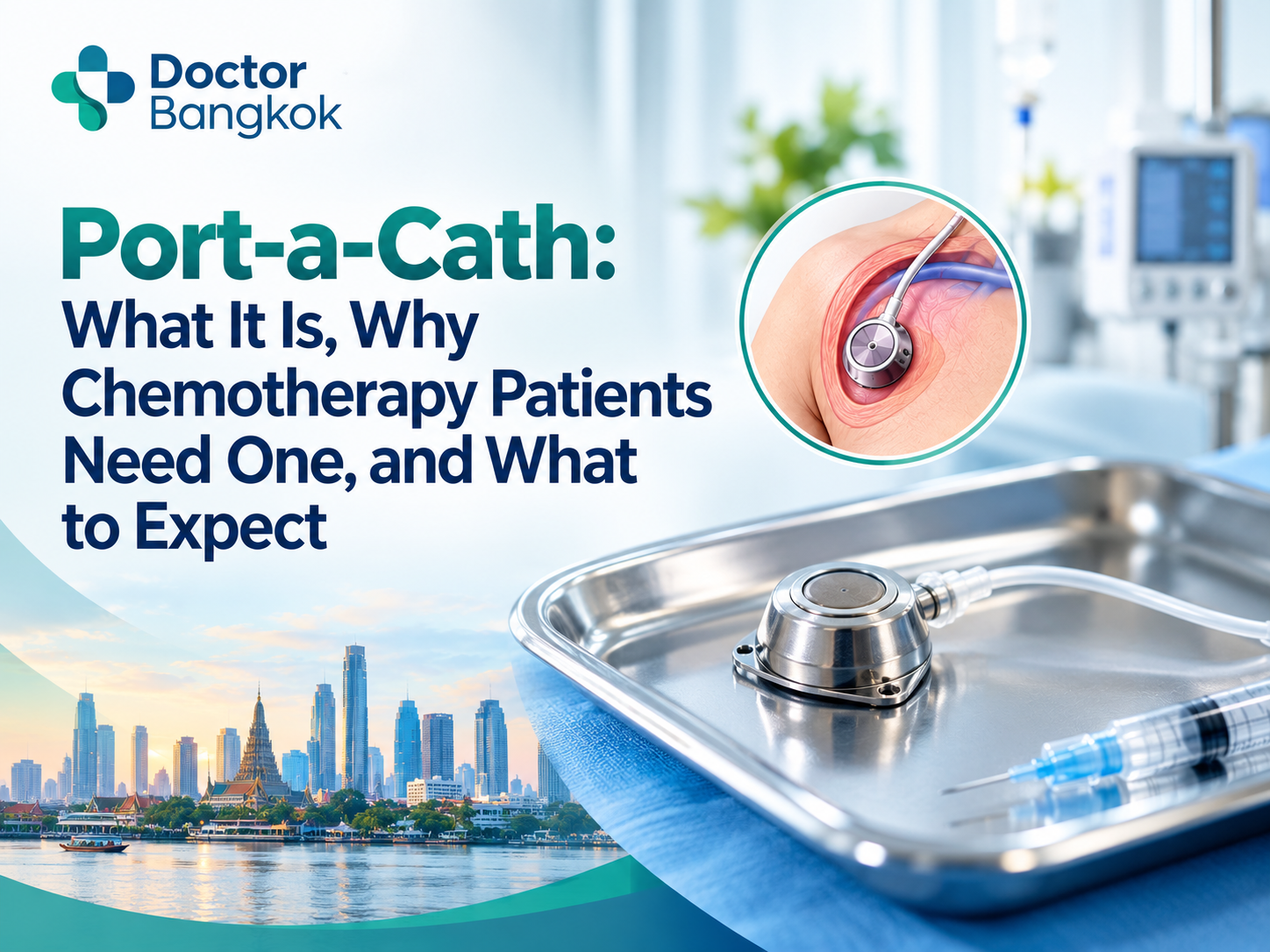
A port-a-cath is a small device implanted under the skin of your chest. It gives doctors reliable access to your bloodstream for chemotherapy, blood draws, and IV fluids without repeated needle sticks into your arm veins. Once healed, it sits flush under the skin, requires monthly maintenance when not in use, and can stay in place for several years. Removal is straightforward once treatment is complete.
Most patients I see for port-related questions are already mid-treatment. Their oncologist has recommended a port, it was placed somewhere else, and now they need help in Bangkok because something feels off, they have questions, or they need a routine flush. If you are reading this before placement, that is the better time. Knowing what you are getting into makes everything that follows easier.
The details matter here. The type of port you get, how to care for it in Bangkok’s heat, and the warning signs that mean you need to act fast: those are the things worth covering, in plain language, so you are not searching for answers at midnight when something does not feel right.

What a Port-a-Cath Actually Is
Under your skin, just below your collarbone, sits a small reservoir about the size of a large coin. That reservoir connects to a thin, flexible tube that threads into a large vein near your heart. When a nurse needs to give you chemotherapy or draw blood, they press a special needle through your skin into the reservoir. You feel a small prick, nothing like the searching sensation of a difficult arm vein.
The reservoir has a self-sealing centre that can be used thousands of times without failing. Drugs are diluted instantly in fast-moving blood, which is especially important for chemotherapy agents that damage tissue on contact.
Standard Port vs Power Port: Know Which One You Have
This is something I wish more patients were told before their first CT scan. There are two main types, and the difference matters.
A standard port handles chemotherapy, blood draws, and routine IV fluids without issue. It is not built for the high-pressure injection of contrast dye used in CT scans. Injecting contrast through a standard port under imaging pressure can crack the system.
A power port is built to withstand that pressure. It usually has a raised or triangular surface so nurses can identify it by touch. If you are having regular CT scans alongside chemotherapy, which most patients are, confirm with your doctor which type you have. Check your discharge papers. If it says "power port" or "power-injectable," you are covered. If you are not sure, ask before your next scan, not during it.

Why Your Oncologist Is Recommending One
Some chemotherapy drugs destroy tissue if they leak outside a vein. Delivering these through a small arm vein carries real risk of serious local damage. A central port removes that risk entirely.
Beyond the drugs themselves, repeated cannulation destroys veins over time. After a few months of treatment, finding a usable vein becomes increasingly difficult and painful. A port preserves your peripheral veins and makes every infusion session faster and less stressful.
For patients having treatment every two or three weeks over many months, the cumulative benefit is significant.
Port-a-Cath vs Other Venous Access Options
| Device | Placement | External Component | Maintenance | Best For |
|---|---|---|---|---|
| Port-a-Cath | Under the skin, chest | None | Monthly flush when not in use | Long-term chemotherapy, months to years |
| PICC Line | Arm vein, exits near elbow | Yes, external tubing | Daily dressing changes | Shorter courses, weeks to a few months |
| Hickman Catheter | Chest, tunnelled under skin | Yes, exits at chest | Daily flushing and dressing | Long-term use requiring frequent daily access |
| Peripheral IV | Arm or hand vein | Yes | Replace every few days | Short-term, in-hospital use only |
The key difference between a port and a PICC line is what you live with day to day. With a PICC, you have external tubing at your arm that needs daily attention and limits certain activities. With a port, once healed, there is nothing visible. You shower normally, dress normally. The only restriction is avoiding contact sports that could trauma the site.
For expats in Bangkok managing multi-month chemotherapy cycles, a port is almost always the more practical option.
The Insertion Procedure: What to Expect
The procedure takes about 30 to 60 minutes. You will be awake but comfortable, with local anaesthesia numbing the area and light sedation available if needed. Most patients describe pressure and movement, not sharp pain.
Two small incisions are made near the collarbone. The catheter is threaded into the vein using imaging guidance so the team confirms correct positioning in real time. The reservoir is placed in a small pocket under the skin, and everything is closed.
Before you leave, a chest X-ray confirms placement. You go home the same day. The site is sore for a few days, and most patients can use the port within 24 hours if needed, though it takes about a week to fully settle.
Caring for Your Port-a-Cath in Bangkok
When your port is not being used, it needs a flush roughly once a month to keep the catheter clear. Your oncology team handles this on treatment days. If you are between cycles and a flush is overdue, that needs to be sorted promptly.
Bangkok’s heat and humidity matter most when the port is actively accessed and a dressing is covering the site. Adhesive dressings can lift in tropical conditions. If your dressing is peeling or damp, change it. Do not leave a loose or wet dressing in place. For patients between oncology appointments who need a routine flush or dressing change in Bangkok, Doctor Bangkok can assist with port maintenance and wound care.
Once the insertion site is fully healed, usually within a week, you can shower and swim normally when the port is not accessed. When the port is accessed and a dressing is in place, keep the site dry and check the adhesion regularly in the heat.
Getting Port Care in Bangkok as an Expat or Medical Tourist
Most expats I see are being treated at one of Bangkok’s major oncology centres and come to Doctor Bangkok for support between appointments. That might be a routine flush, a dressing change, or a check when something does not feel right but they do not want to wait for their next scheduled visit.
If you had a port placed before arriving in Bangkok, bring your discharge papers. The port type, insertion date, and catheter position should all be documented. Without that, any clinic caring for your port is working with incomplete information.
Language is rarely a barrier at Doctor Bangkok. Our physicians speak English, and we are used to coordinating with external oncology teams when patients need that support.
Warning Signs: When to Act and How Urgently
Some warning signs mean come in soon. Others mean go to an emergency department now.
Redness, warmth, or mild swelling around the port site without fever: come in within 24 hours. It may be a minor reaction, but it needs to be assessed.
Resistance when the port is flushed, or inability to draw blood: do not force it. Come in for an assessment. A blockage can often be cleared, but forcing a flush can cause damage.
Fever or chills during or shortly after port access: go to an emergency department immediately. A fever with a port in place can mean a bloodstream infection. This is not a wait-and-see situation.
Pain, swelling, or redness spreading down your arm or neck from the port site: also urgent. This can indicate a clot in the vein. It needs imaging and treatment the same day.
Port Removal: When and How
Once treatment is complete, most oncologists recommend removing the port within a few months. Leaving it in place long-term raises the risk of infection and clot formation. Removal is simpler than insertion: a short procedure under local anaesthesia, usually 20 to 30 minutes.
If you had your port placed overseas and finished treatment in Bangkok, or the reverse, removal can be arranged here. Bring your original documentation so the treating team knows exactly what they are working with.
If you need a routine port flush, dressing change, or have concerns about your port-a-cath in Bangkok, Doctor Bangkok can help. Our English-speaking physicians provide port maintenance, wound care, and urgent assessments for expats and medical tourists managing ongoing treatment in the city. Contact us to book an appointment.
How long can a port-a-cath stay in place?
A well-maintained port can last five years or more. That said, most oncologists recommend removing it within a few months of finishing treatment. Leaving it in longer than necessary raises the risk of infection and blood clots, so removal once you are done is the right call.
Can I swim or exercise with a port-a-cath in Bangkok?
Once the insertion site is fully healed, usually within a week, you can swim and exercise normally when the port is not accessed. When the port is actively accessed and a dressing is in place, keep the site dry and check the dressing adhesion regularly given Bangkok’s heat and humidity.
What is the difference between a port-a-cath and a PICC line?
A port sits fully under the skin with no external parts, needs only a monthly flush when not in use, and places almost no restrictions on daily life once healed. A PICC line has external tubing at your arm requiring daily dressing changes and more activity limits. For multi-month chemotherapy in Bangkok, a port is almost always more practical.
What are the warning signs that my port may be infected or blocked?
Redness, warmth, or swelling at the site warrants a same-day or next-day assessment. If you develop fever or chills with a port in place, go to an emergency department immediately. Resistance during flushing or inability to draw blood suggests a blockage and should be assessed promptly, but never force a flush.
Can my port-a-cath be used for CT scans with contrast dye?
Only a power port is rated for the high-pressure contrast injections used in CT scans. Standard ports are not built for that pressure and can fail under it. Check your discharge papers before any imaging appointment. If you are unsure which type you have, ask your doctor before the scan.
Do I need to do anything to maintain my port between chemotherapy cycles in Bangkok?
Yes. When not in active use, your port needs a flush roughly once a month to keep the catheter clear. Your oncology team will usually handle this on treatment days, but if you are between cycles and your flush is overdue, Doctor Bangkok can take care of that. Keep your port documentation with you so any clinic knows exactly what they are working with.
Dr. Ponlawat Pitsuwan
Physician, Doctor Bangkok
a private medical clinic in central Bangkok. He sees expats, residents, and medical tourists for general medical consultations, wound care, IV therapy, and support care for patients undergoing ongoing treatment in the city. His focus is straightforward, evidence-based care delivered in plain language.
Dr. Ponlawat Pitsuwan is a physician at Doctor Bangkok, a private clinic in central Bangkok. He sees expats, residents, and medical tourists for general medicine, wellness consultations, and IV therapy. His focus is straightforward, evidence-based care delivered in plain language.