
Clinically reviewed by Dr. Ponlawat Pitsuwan, Physician, Doctor Bangkok. Last reviewed: September 2026
An AVM rupture is a medical emergency. It happens when an abnormal tangle of blood vessels in the brain bursts, causing bleeding that can be fatal or permanently disabling. The most common warning sign is a sudden, severe headache that reaches peak intensity within seconds. If this happens to you or someone near you in Bangkok, call 1669 immediately.
Someone comes in after three days of "the worst headache I have ever had" — put down to heat, a long night, or stress. They waited. That wait is the most dangerous part of a brain AVM rupture. If something felt very wrong, keep reading. If you are here to be prepared, that is exactly the right instinct.
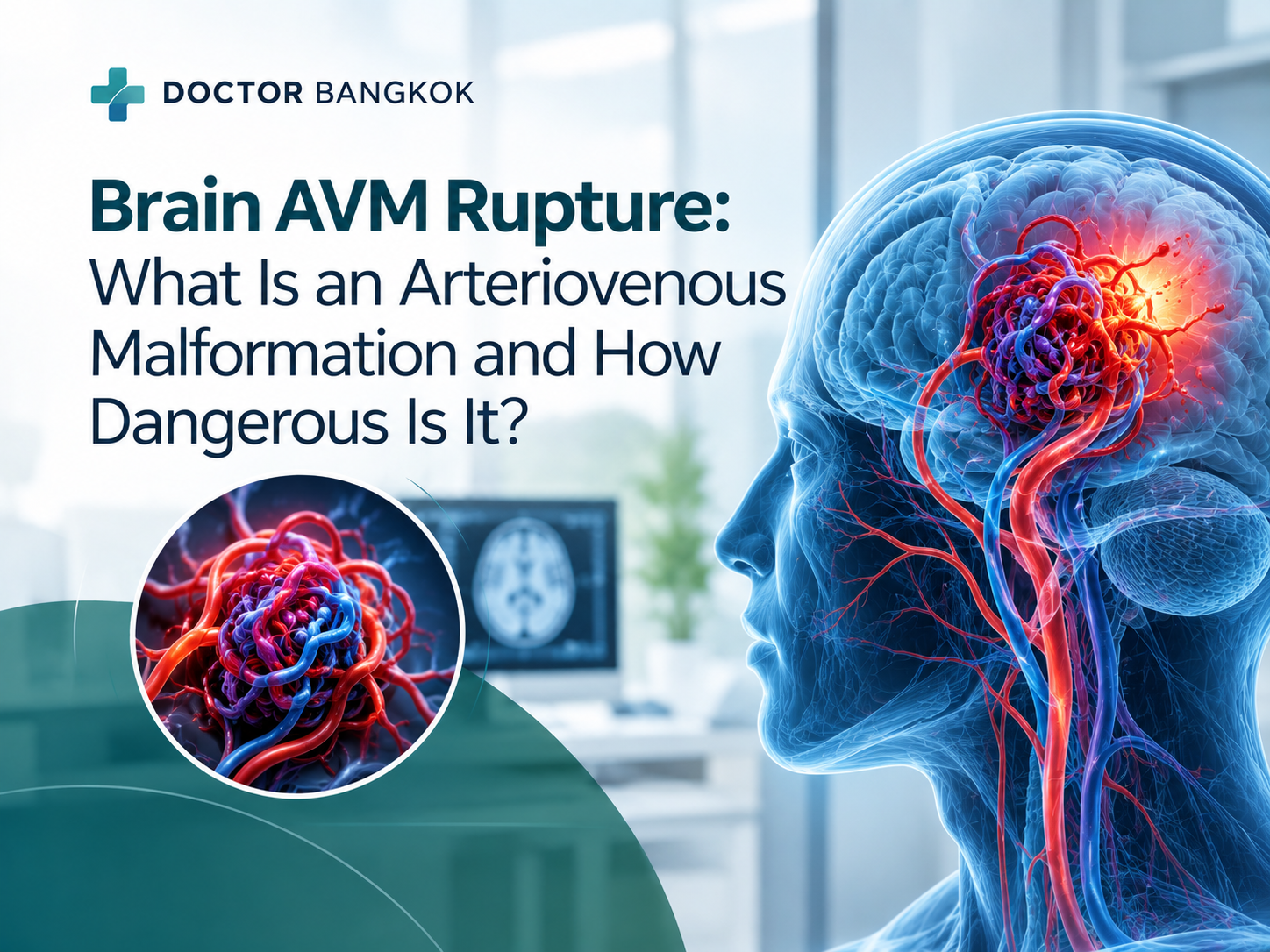
An arteriovenous malformation, or AVM, is a tangle of abnormal blood vessels that forms before birth. Most people have no idea they have one until it bleeds. When it does bleed, the consequences can be serious and fast-moving.

What Is an AVM and Why Does It Rupture
In a normal brain, blood travels from arteries through tiny capillaries before reaching the veins. The capillaries act as a pressure buffer. An AVM skips that buffer entirely. Arteries connect straight to veins, and blood moves through at a pressure those vessels were never built to handle.
The central mass of abnormal vessels is called the nidus. Think of it as a fragile knot sitting inside your brain under constant stress. When the vessel wall finally gives way, blood pours into brain tissue or the space surrounding it. That is the rupture.
For most patients, the rupture is the first sign that anything was ever wrong.
AVM Rupture Risk — The Numbers
The annual risk of a first rupture sits at roughly one to four percent per year. That sounds modest. Over decades, it adds up significantly. After a first bleed, the re-rupture risk rises two to five times above baseline.
Thirty-day mortality varies widely depending on bleed location and size. Published figures range from twelve percent to over fifty percent for severe ruptures. Among survivors, a significant proportion are left with lasting neurological problems. These are not rare worst-case outcomes.
What makes re-bleed risk especially relevant for expats in Bangkok is the temptation to wait. To fly home first. To see a specialist when things settle down. I understand that instinct. I would urge you not to act on it.

Warning Signs Before a Full AVM Rupture
Some patients get a warning. It is called a sentinel bleed: a small early leak that causes a headache, sometimes briefly, before the vessels reseal. The headache may ease after a few hours. Patients often feel relieved and assume it was nothing serious.
That partial resolution is dangerous, not reassuring. A sentinel bleed can come days or weeks before a major rupture. If you had a sudden severe headache that then improved, that history still warrants urgent evaluation.
Other pre-rupture signs include brief episodes of limb weakness, tingling, or vision changes. These may come and go. They are not just migraines. They need investigation.
AVM Rupture Symptoms — What to Do First
The classic symptom is a thunderclap headache. It comes on in seconds and immediately feels like the worst headache of your life. No slow build. No warning. Just sudden, severe pain.
Other signs include seizure, sudden weakness or numbness on one side of the body, difficulty speaking, vision loss, confusion, or loss of consciousness. Use the BE FAST framework: Balance, Eyes, Face drooping, Arm weakness, Speech difficulty, Time to call for help.
In Bangkok, call 1669. That is the Thai emergency medical service number. Tell them the person may be having a brain bleed and you need the nearest hospital with a neurosurgery unit. Do not drive yourself. Do not wait to see if it passes.
AVM Rupture vs Brain Aneurysm — Key Differences
Patients confuse these two constantly, and that is understandable. Both can rupture and cause a brain bleed. They are not the same thing.
An AVM is an abnormal tangle of multiple vessels present from birth. A brain aneurysm is a bulge in a single artery wall, often developing over time. AVMs tend to present at a younger age, typically between twenty and forty. Aneurysms more commonly appear later, though not exclusively.
The distinction matters for treatment planning. It does not matter for whether you call for help. You always call. One more thing worth knowing: aneurysms can form on the vessels of an AVM itself, which raises rupture risk further.
What to Do If You Suspect AVM Rupture in Bangkok
Call 1669 first. If you are in a hotel on Sukhumvit or near a BTS station, give your exact address. Language can be a barrier — ask hotel staff to call on your behalf if needed. Many hotels in central Bangkok have staff trained to assist in medical emergencies.
Keep the patient still. No food or drink. Note the exact time symptoms started, because that information directly affects treatment decisions at the hospital. Bumrungrad, Samitivej, and Bangkok Hospital are the major private neurosurgical centres accessible from central Bangkok.
If you are unsure whether what happened is serious, or a family member had a sudden headache that resolved and you do not know what to do next, contact Doctor Bangkok for urgent triage guidance. We can assess the situation, coordinate referral to the right specialist, and make sure you are not navigating this alone in an unfamiliar system.
Treatment Options for Ruptured and Unruptured AVMs
Three main treatments exist: microsurgical resection, endovascular embolisation, and stereotactic radiosurgery, commonly called Gamma Knife. For most significant AVMs, the approach combines more than one.
Embolisation uses a catheter threaded through blood vessels to partially block the AVM before surgery or radiosurgery. Surgery then removes the nidus directly. Radiosurgery uses precisely targeted radiation to gradually shrink the AVM over two to three years, best suited to smaller or deep-seated lesions.
Which treatment is chosen depends on AVM size, location, drainage pattern, and overall health. Neurosurgeons use a grading system called the Spetzler-Martin scale to assess surgical risk. All of this is a specialist conversation, not something to assess yourself.
For unruptured AVMs, the decision is genuinely complex. The ARUBA trial suggested that in some cases, observation may carry less risk than intervention. But that requires ongoing monitoring and a specialist’s judgment, not inaction.
Recovery After AVM Rupture
Recovery depends on how much bleeding occurred, where in the brain it happened, and how quickly treatment began. It resembles stroke recovery in many ways.
Some patients recover fully. Others are left with lasting weakness, speech difficulty, memory problems, or seizures. Rehabilitation typically involves physiotherapy, speech therapy, and occupational therapy over months, sometimes longer.
If you have been treated acutely in Bangkok and are planning to continue recovery abroad, make sure your treating team provides a full discharge summary and imaging reports. Your doctors at home will need them to continue your care without gaps.
If you or someone near you has had a sudden severe headache, neurological symptoms, or a possible first seizure in Bangkok, do not wait to see if it resolves. Doctor Bangkok offers urgent medical consultations with English-speaking physicians who can assess your symptoms, arrange emergency referral to the appropriate neurosurgical centre, and help you navigate Bangkok’s hospital system. We are centrally located and BTS accessible. Contact us now for urgent triage support.
Frequently Asked Questions
Dr. Ponlawat Pitsuwan
Physician, Doctor Bangkok
a private medical clinic in central Bangkok. He sees expats, residents, and medical tourists for urgent medical assessment, triage consultations, and referral coordination for neurological and other acute conditions. His focus is straightforward, evidence-based care delivered in plain language.
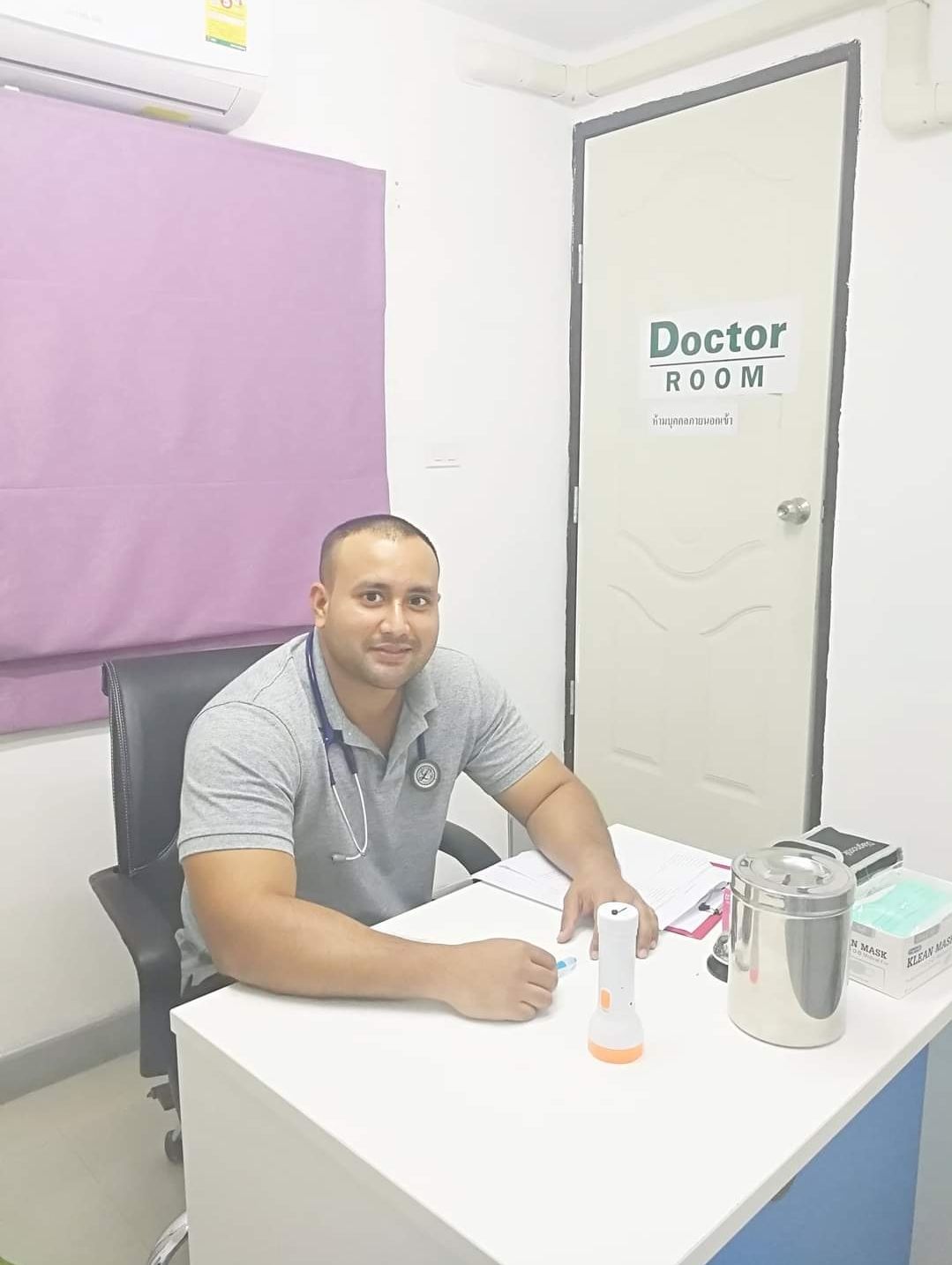
Dr. Ponlawat Pitsuwan is a physician at Doctor Bangkok, a private clinic in central Bangkok. He sees expats, residents, and medical tourists for general medicine, wellness consultations, and IV therapy. His focus is straightforward, evidence-based care delivered in plain language.