
Clinically reviewed by Dr. Ponlawat Pitsuwan, Physician, Doctor Bangkok. Last reviewed: August 2026
The O positive blood type diet is based on Peter D’Adamo’s theory that Type O people do best on a high-protein, meat-forward diet low in grains and dairy. There is no strong clinical evidence that your blood type changes how food affects you. That said, many people feel better on this eating pattern, likely because it cuts processed food and increases lean protein. If you are curious about it, here is what you actually need to know.
If you are O positive and have been reading about the blood type diet, you are probably wondering whether there is anything real to it. That is a fair question, and I will give you a straight answer rather than a list of superfoods and vague promises.
The short version: the science does not support the idea that blood type alone determines your best diet. But the eating pattern itself, leaning toward lean meat, vegetables, and less processed food, is reasonable advice for most people. Here is what the diet actually recommends, what the research says, and how to think about it practically if you are living in Bangkok.

O Positive vs. O Negative: Is There Actually a Difference?
I get asked this a lot. People land on blood type diet articles and then worry that the O positive versus O negative distinction changes everything.
It does not. D’Adamo’s original protocol treats all Type O blood as one category. The Rh factor, the positive or negative part, matters for blood transfusions and pregnancy compatibility. It has nothing to do with how your body responds to food. If you are O negative, the food recommendations are identical.
What the Research Actually Says
A 2013 systematic review in the American Journal of Clinical Nutrition looked at over 1,400 studies and found no evidence that blood type-specific diets produce different outcomes for different blood types. When people on the Type O diet lost weight or felt better, those results were not tied to their blood type.
A 2014 study from the University of Toronto, involving over 1,400 participants, found that the Type O diet did improve certain heart and metabolic markers. But it improved them equally across all blood types. The benefit came from the diet quality, not from any blood type match.
That is the honest answer. The diet is not harmful for most people. The theory behind it is not well supported.

Best Foods to Eat on the O Positive Blood Type Diet
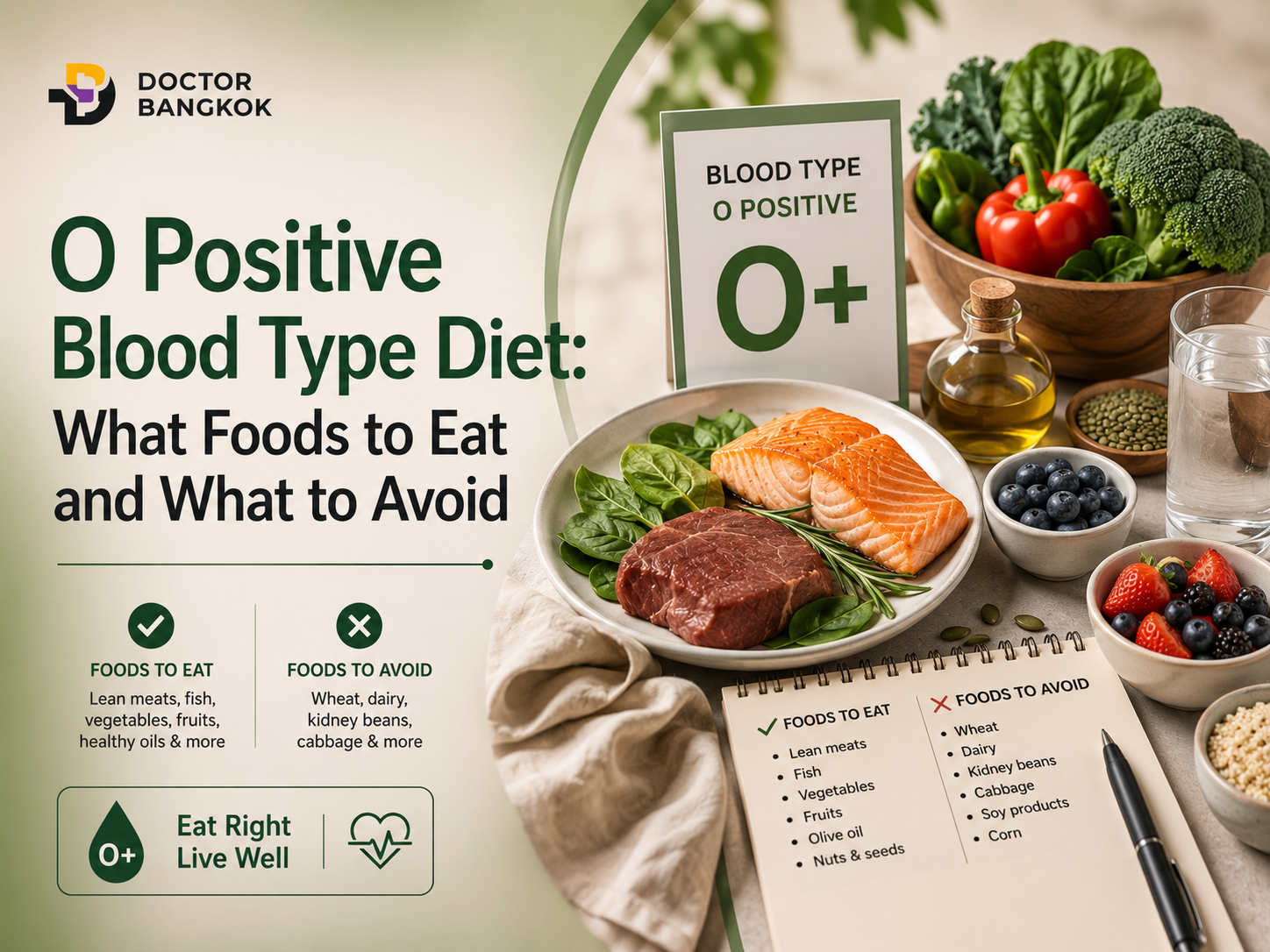
The diet centres on animal protein and vegetables. Lean beef, lamb, and poultry are the core proteins. Seafood gets a strong recommendation, particularly cold-water fish like cod, mackerel, and salmon. Kelp and seaweed appear on the approved list for their iodine content, which the diet links to thyroid support. Most vegetables are encouraged, especially leafy greens, broccoli, sweet potato, and artichoke. Olive oil and flaxseed oil are the preferred fats.
In Bangkok, this part of the diet is manageable. Fresh seafood and lean meats are widely available at wet markets, Villa Market, and Tops. Grilled fish, seafood soups without noodles, and stir-fried greens are all easy to find.
Foods to Avoid on the O Positive Blood Type Diet
Wheat and most gluten-containing grains are out. So are oats, corn, most legumes including lentils and peanuts, and most dairy. Pork and smoked meats are also on the avoid list.
D’Adamo flags certain vegetables as potentially problematic for Type O individuals because they may suppress thyroid hormone production. These include cabbage, cauliflower, Brussels sprouts, and mustard greens. If you already have a thyroid condition, talk to your doctor before cutting or adding anything significant. A health check at Doctor Bangkok can include thyroid markers if you are unsure where you stand.
Coffee and alcohol are recommended in limited amounts, though the reasoning here is less specific than for the dietary components.
Following the O Positive Blood Type Diet in Bangkok
Bangkok is one of the easier cities in Asia to eat plenty of protein and vegetables. It is also one of the harder ones to avoid rice and noodles, because they appear in almost everything.
The practical challenge is that Thai street food is built around rice and noodle bases. Pad Thai, khao man gai, boat noodles, and most one-plate dishes come with a significant grain base. You can ask for dishes without rice or noodles, but it is not always simple.
What works well: grilled fish from street stalls, larb without sticky rice, seafood soups requested without noodles, and stir-fried vegetables with beef. Upscale supermarkets stock quality cuts and imported fish. In areas with high expat traffic, most restaurants are used to modification requests.
Exercise Recommendations for Blood Type O
D’Adamo pairs the Type O diet with vigorous physical activity. The exercise types he recommends include running, cycling, aerobics, and martial arts. The general advice to get regular vigorous exercise is sound regardless of blood type.
If you have not had a health check recently and you are planning to start a high-intensity programme, it is worth getting your baseline numbers first. Doctor Bangkok can run a standard panel before you begin.
Potential Risks and Who Should Be Cautious
This is the section most diet articles skip. When you remove dairy, most grains, and legumes at the same time, you lose significant sources of calcium, fibre, vitamin D, and B vitamins. Deficiencies can develop over months without obvious symptoms. A blood panel a few months into any major dietary change will show whether you are actually getting what you need.
A high red meat intake brings its own considerations. Saturated fat, iron overload in those prone to it, and kidney load in people with underlying renal issues are all real factors. This diet needs modification for people with kidney disease, thyroid conditions, or a history of cardiovascular disease.
Fibre is the other gap that catches people off guard. Removing grains and legumes sharply reduces fibre intake. Vegetables help, but often not enough to fully compensate. Digestive changes are common in the first few weeks.
Children, pregnant women, and older adults should not follow a diet this restrictive without close medical supervision.
When to See a Doctor: Getting Personalised Nutrition Advice in Bangkok
If you are considering a significant dietary change, knowing your baseline first is the smart approach. A simple blood test can confirm your blood type if you are not certain. It can also check thyroid function, iron, vitamin D, and other markers that become relevant when you are restricting food groups.
Food intolerance testing is also available if you suspect something specific is driving digestive symptoms, something the blood type theory does not reliably identify. If you are an expat trying to build a sustainable eating pattern in Bangkok, a 20-minute consultation is often more useful than hours of searching online.
Doctor Bangkok is located on Sukhumvit Soi 13, with BTS access and English-speaking physicians available every day. You can walk in or contact us via WhatsApp to book.
Thinking about a dietary change or want to know your actual health baseline before you start? Doctor Bangkok offers blood type testing, thyroid panels, vitamin levels, and general health checks at our clinic on Sukhumvit Soi 13. BTS accessible, English-speaking doctors, no long waits. Contact us via WhatsApp or visit doctorbangkok.co.th to book.
FAQ
Is there a difference between the O positive and O negative blood type diet?
No. D’Adamo’s diet covers all Type O blood as one category. The Rh factor affects blood transfusion and pregnancy medicine, not food responses. The dietary recommendations are exactly the same for O positive and O negative.
Is the O positive blood type diet actually backed by science?
Not strongly. A 2013 systematic review in the American Journal of Clinical Nutrition found no evidence that blood type determines how your body responds to food. That said, the diet promotes whole foods, lean protein, and fewer processed carbohydrates, which are broadly healthy habits that benefit most people regardless of blood type.
Can I follow the O positive blood type diet in Bangkok?
Yes, with some effort. The protein and vegetable elements are easy to find at Bangkok’s wet markets and supermarkets. The harder part is avoiding rice and noodles, which are central to Thai street food. Focus on grilled fish, meat-forward dishes, and stir-fried vegetables, and ask restaurants to skip the rice where possible.
What are the biggest risks of following this diet long-term?
Cutting dairy, grains, and legumes together removes important sources of calcium, fibre, vitamin D, and B vitamins. These deficiencies develop slowly and are not always obvious. A blood panel before you start and again a few months in is the sensible way to check you are not developing gaps you cannot feel yet.
Where can I get my blood type tested in Bangkok?
Doctor Bangkok on Sukhumvit Soi 13 can confirm your blood type with a simple blood test. We can also check thyroid function, iron, vitamin D, and other markers relevant to anyone making a significant dietary change. Walk in or contact us via WhatsApp.
Should I try the blood type diet if I have a thyroid condition?
Talk to your doctor first. The diet recommends limiting certain vegetables such as cabbage, cauliflower, and Brussels sprouts due to their potential effect on thyroid hormone production, while also emphasising iodine-rich foods like seaweed. If your thyroid is already being managed, changes like these need to be coordinated with whoever is treating you.
Dr. Ponlawat Pitsuwan
Physician, Doctor Bangkok
a private medical clinic in central Bangkok. He sees expats, residents, and medical tourists for general health consultations, health checks, and nutrition-related concerns. His focus is straightforward, evidence-based care delivered in plain language.

Dr. Ponlawat Pitsuwan is a physician at Doctor Bangkok, a private clinic in central Bangkok. He sees expats, residents, and medical tourists for general medicine, wellness consultations, and IV therapy. His focus is straightforward, evidence-based care delivered in plain language.