Clinically reviewed by Dr. Ponlawat Pitsuwan, Physician, Doctor Bangkok. Last reviewed: August 2026
The blood type diet claims that your ABO blood type determines the best foods for your body. No clinical evidence supports this. A large 2013 systematic review found no proof that eating for your blood type improves health outcomes. The dietary patterns recommended, such as eating more whole foods and cutting processed food, can help anyone feel better, regardless of blood type.
You have probably heard someone swear by it. They found out their blood type, changed what they eat, and say they feel completely different. Now you are wondering whether there is something to it. I understand why it is appealing. A personalised roadmap for eating, based on something as specific as your blood type, sounds logical. The problem is that when we look at the research, the blood type part does not hold up.
That said, I am not going to dismiss this in one line and leave you with nothing useful. A lot of patients who come into Doctor Bangkok asking about this have real questions about nutrition, energy, and weight. Those questions deserve real answers. So let me walk you through what the diet actually claims, what the science found, and what I would actually recommend instead.

What Is the Blood Type Diet? Origins and Core Claims
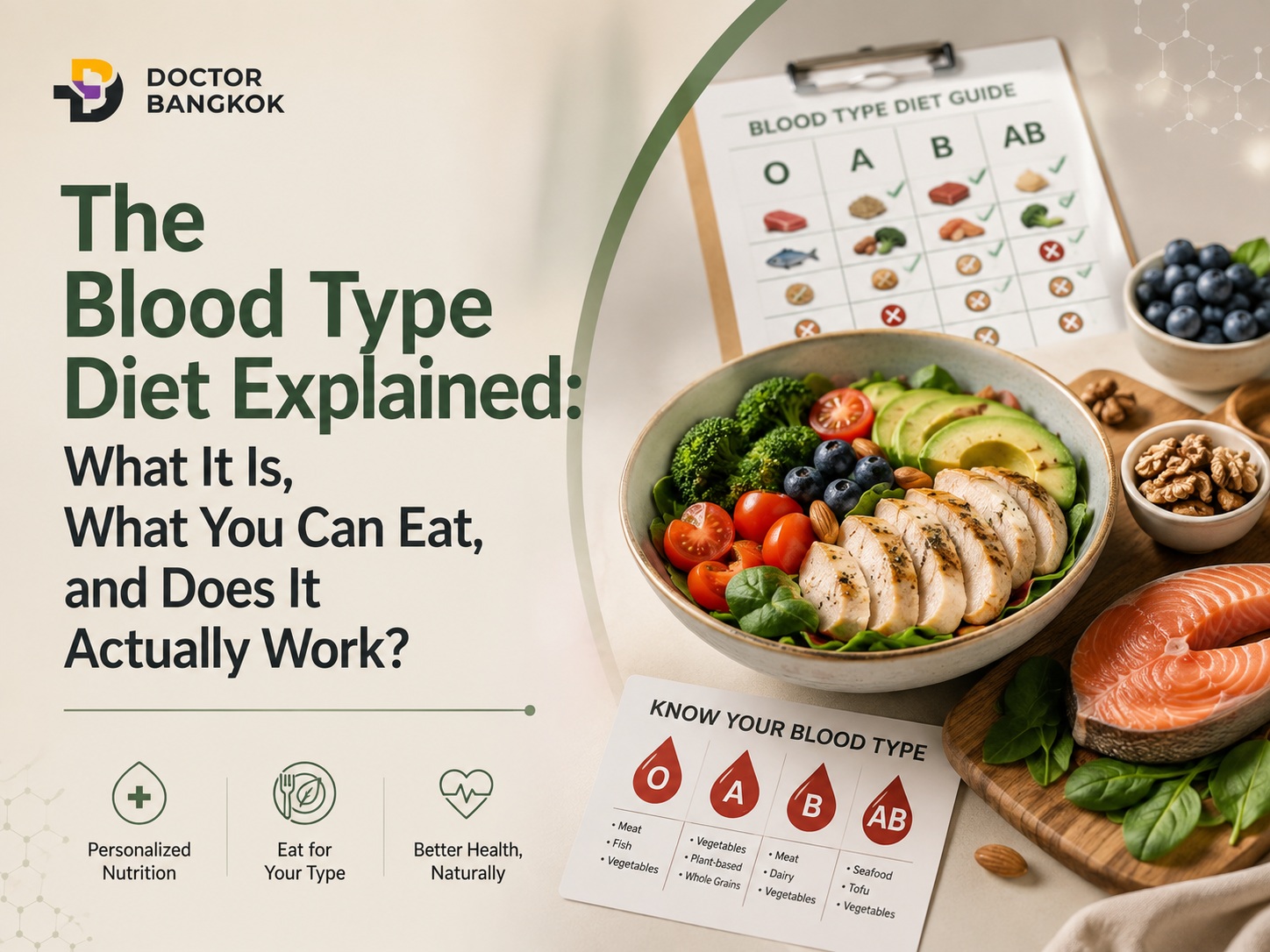
The diet comes from a 1996 book called "Eat Right 4 Your Type" by naturopath Peter D’Adamo. The central idea is that your ABO blood type, the same system used to match blood for transfusions, determines how your body processes food. D’Adamo linked each blood type to a different ancestral human population and argued that ancient dietary patterns are still encoded in our biology today.
The theory sounds compelling on first read. The problem is that blood type genetics and dietary evolution do not connect the way D’Adamo describes. ABO blood types predate human dietary history by millions of years and are found across all populations regardless of what those populations ate. When researchers looked for the biological mechanism, it was not there.
What Each Blood Type Is Told to Eat
Here is the basic breakdown of what each blood type is supposed to eat according to D’Adamo.
| Blood Type | Ancestral Label | Encouraged Foods | Foods to Avoid |
|---|---|---|---|
| Type O | Hunter-gatherer | Meat, fish, vegetables | Grains, dairy, legumes |
| Type A | Agrarian | Vegetables, tofu, grains, legumes | Red meat, dairy |
| Type B | Nomadic | Dairy, meat, some grains | Chicken, corn, wheat, lentils |
| Type AB | Mixed | Tofu, seafood, dairy, some meat | Red meat, kidney beans, corn |
Type O is directed toward high protein and told to avoid wheat. Type A is pushed toward a near-vegetarian pattern. Type B is one of the few groups encouraged to eat dairy. Type AB sits somewhere between A and B.

The Lectin Theory: Plausible Idea, Weak Evidence
The mechanism D’Adamo uses to explain all of this is lectins. Lectins are proteins found in many foods. Some lectins do react with blood cells. D’Adamo argued that certain lectins react specifically with certain blood types, causing cells to clump together and leading to poor digestion and health problems.
Here is where it falls apart. Most dietary lectins react the same way across all blood types. They are not selective. Most are also destroyed by cooking or broken down in the gut before they reach the bloodstream. The lectin-blood type interaction that the diet depends on has not been shown in human clinical studies.
What Does the Science Actually Say?
In 2013, a systematic review in the American Journal of Clinical Nutrition looked at all available studies on the blood type diet. The reviewers found no evidence that eating for your ABO blood type produces any specific health benefit. Not one study met their criteria for proving ABO-specific effects.
Then in 2014, researchers at the University of Toronto studied over 1,400 participants across all four blood type diet patterns. They found that some of the diets were linked to better cholesterol and blood pressure results. But those benefits appeared in people of all blood types, not just the blood type each diet was designed for. The improvement had nothing to do with ABO. It came from the dietary pattern itself, mostly the shift toward whole foods and away from processed ones.
What Tests Actually Tell You More Than Your Blood Type
If you genuinely want to eat in a way that matches your biology, there are tests that actually do that. Your ABO type tells us almost nothing about your nutritional needs. A basic wellness blood panel tells us a great deal more.
A fasting lipid panel shows your cholesterol and triglyceride levels. Fasting blood glucose and HbA1c, which reflects your average blood sugar over three months, show whether your carbohydrate tolerance is a concern. Thyroid function affects metabolism and weight in ways that diet alone may not fix. Vitamin D, B12, and iron levels are frequently low in expats living in Bangkok, especially those eating very differently from home.
A GP consultation combined with a targeted blood panel at Doctor Bangkok gives you data that is actually specific to you. That is a far more useful starting point than a food list based on blood type. Our health check and wellness services can get you started.
Eating for Your Blood Type in Bangkok: What Happens in Practice?
I have had patients try this diet while living in Bangkok and it gets complicated quickly. Take Type O. The diet pushes high protein and tells you to cut grains. Thai cuisine is built around rice, at almost every meal and every street food stall. Avoiding grains here takes significant effort and constant social negotiation.
Type B is supposed to thrive on dairy, which is not a big part of traditional Thai food. Type A leans vegetarian and adapts reasonably well to Thai cuisine. Tofu, soy-based dishes, and legumes are easy to find. Type O expats trying to follow the plan strictly will find eating out in Bangkok a constant negotiation.
There is also the ingredient transparency problem. Street food does not come with labels. You often do not know exactly what is in a dish. Any significant dietary change, especially a restrictive one, is worth discussing with a doctor before you commit.
What Are the Real Takeaways From the Blood Type Diet?
Here is my honest clinical verdict. The blood type diet is not supported by evidence. The ABO-specific claims have been tested and have not held up. I would not recommend following it on the basis that your blood type determines your ideal food.
But I do not think people who say they felt better on it are wrong. Most of the four blood type patterns share one thing: they cut ultra-processed food and increase whole foods. That shift helps almost everyone feel better, regardless of blood type. If you were eating processed food and switched to lean meat and vegetables because your blood type told you to, you probably will feel different. The blood type was not the reason. The food quality was.
Eating more whole foods, less sugar, less processed food, and paying attention to how you feel after meals is evidence-based and effective. You do not need to know your blood type to do any of it.
How Doctor Bangkok Can Help
If you want actual personalised nutrition guidance, start with real data. A GP consultation and blood panel at Doctor Bangkok will tell you far more than your ABO type. We check your lipids, blood sugar, thyroid, and nutrient levels, and talk through what the results mean for how you eat.
If you do want to know your blood type, for curiosity, travel safety, or any other reason, that is a simple blood test we can run at the same visit. It is the same test used before surgery and during pregnancy, so it is completely reliable. For expats and visitors in Bangkok trying to make sense of their health, this is exactly the kind of conversation we have every day.
Want to know what your body actually needs? At Doctor Bangkok, our English-speaking physicians offer GP consultations and wellness blood panels that give you real, personalised health data. We can also confirm your blood type in the same visit. BTS accessible, central Bangkok. Book at doctorbangkok.co.th.
Frequently Asked Questions
Is there any scientific proof that the blood type diet works?
No. A 2013 systematic review in the American Journal of Clinical Nutrition found no evidence that eating for your ABO blood type improves health. A 2014 University of Toronto study confirmed that any benefits from the dietary patterns worked across all blood types, not just the intended one. The improvement comes from eating whole foods, not from matching food to blood type.
Can I find out my blood type at a clinic in Bangkok?
Yes, it is a simple blood test available at Doctor Bangkok. It is the same ABO and Rh typing used for transfusion safety and pregnancy. Results come back quickly and you only need one blood draw.
If the blood type diet lacks evidence, what should I do instead?
A GP consultation with a blood panel is a much better starting point. Lipid levels, fasting glucose, HbA1c, thyroid function, and nutrient markers like Vitamin D and B12 give you real data about how your body is working. That information is genuinely specific to you in a way that blood type is not.
Is the blood type diet safe to follow while living in Bangkok?
It is not dangerous for most people, but it is restrictive and practically difficult in Bangkok. Thai cuisine is grain-heavy, which clashes with Type O guidelines. Street food offers little ingredient transparency, making any strict food framework hard to apply consistently. If you want to make a significant dietary change, talk to a doctor first.
Why do some people feel much better on the blood type diet if there is no evidence it works?
All four blood type eating plans share one thing: they cut ultra-processed food and increase whole foods. That shift alone explains why people feel better. The 2014 University of Toronto study found exactly this. The improvement is real, but the blood type is not the reason for it.
Does knowing my blood type tell me anything about my nutrition needs?
Very little, from a clinical standpoint. ABO blood type is useful for transfusion matching and some pregnancy considerations, but it does not reliably predict how your body handles carbohydrates, fats, or protein. A fasting glucose test or lipid panel gives you far more actionable nutritional information than your blood type alone.
Dr. Ponlawat Pitsuwan
Physician, Doctor Bangkok
a private medical clinic in central Bangkok. He sees expats, residents, and medical tourists for general medical consultations, wellness assessments, and health checks. His focus is straightforward, evidence-based care delivered in plain language.

Dr. Ponlawat Pitsuwan is a physician at Doctor Bangkok, a private clinic in central Bangkok. He sees expats, residents, and medical tourists for general medicine, wellness consultations, and IV therapy. His focus is straightforward, evidence-based care delivered in plain language.