
Clinically reviewed by Dr. Ponlawat Pitsuwan, Physician, Doctor Bangkok. Last reviewed: August 2026
The blood type A diet recommends a plant-forward eating pattern with limited red meat, dairy, and wheat. The foods on the list are genuinely healthy. The idea that your blood type is the reason they work has not been proven. This article explains what the science actually shows and how to eat well in Bangkok if you want to follow this approach.
A lot of patients come in already knowing their blood type, or at least thinking they do. Some have read about the blood type A diet online and want to know whether it is worth following. Others are just looking for a practical eating plan that fits life in Bangkok, where food choices are overwhelming and not always obvious.
Here is my honest take: the diet recommends foods that are good for most people. The science behind why it supposedly works for Type A specifically is not there. But that does not mean following it is a waste of time. Here is what the research actually shows, what to eat, what to limit, and how to make this work in a city where you can eat a different cuisine every day of the week.

What Is the Blood Type A Diet?
This diet comes from a book called "Eat Right 4 Your Type," published in 1996 by Dr Peter D’Adamo, a naturopathic physician. His core idea is that your ABO blood group tells you something about how your ancestors ate. Type A blood, according to D’Adamo, evolved with agricultural communities. So Type A people are supposed to do best on a plant-based, grain-heavy, meat-light diet, much like early farmers.
The theory argues that some foods react badly with Type A blood, causing inflammation and poor digestion. It is an interesting theory. The problem is that is mostly what it remains.
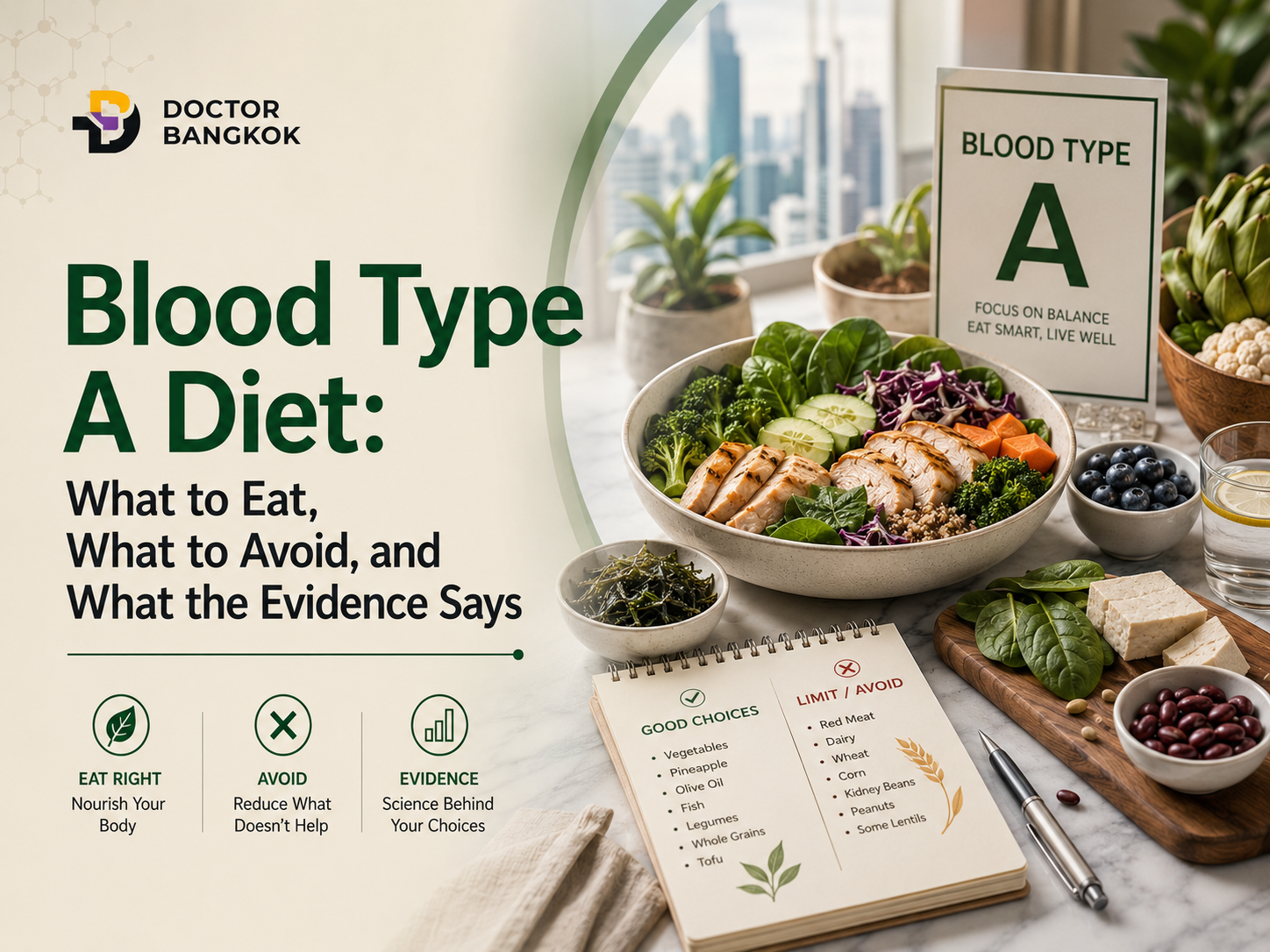
Blood Type A: Recommended Foods and What to Limit
Here is a practical breakdown of where foods sit on this plan.
For protein, tofu, tempeh, sardines, salmon, and tuna are all recommended. Red meat, pork, and shellfish are on the avoid list. For grains, brown rice, oats, rye, and buckwheat are fine. Large amounts of wheat and refined white bread are not.
Vegetables that fit well include broccoli, spinach, kale, garlic, onions, and carrots. Tomatoes, eggplant, peppers, and potatoes are flagged as problematic. For fruit, berries, plums, apricots, figs, grapefruit, and lemon all get the green light. Oranges, bananas, mangoes, and melons in large amounts do not.
Olive oil is the recommended fat. Corn oil, sunflower oil, and sesame oil are out. Soy milk and rice milk replace cow’s milk. Most dairy, including ice cream, is on the avoid list. Among legumes, lentils, black-eyed peas, and green beans work well. Kidney beans, lima beans, and chickpeas do not.
Salmon and sardines matter here beyond just protein. If you are cutting out red meat, fatty fish becomes one of your best sources of both protein and healthy fats. Tofu is the other major option, and in Bangkok, you will find it in most markets and restaurants.

What Does the Science Actually Say?
I want to be fair here, not just dismiss the diet outright and not oversell it either.
The most cited critical review, published in the American Journal of Clinical Nutrition in 2013, found no proof that following a blood-type-specific diet produced health outcomes linked to that blood type. If the Type A diet helps you, it is not because you are Type A.
But there is a nuance most diet articles miss. A 2014 study in PLOS ONE looked at people following each of the four blood type diet patterns. The Type A pattern, which is essentially a plant-rich, low-meat diet, did improve cardiometabolic markers across participants. Lower BMI, better cholesterol, better blood pressure. These improvements showed up in everyone who followed it, regardless of their actual blood type.
So the foods work. The blood type explanation for why they work does not hold up. That distinction matters when you are deciding whether to follow this.
Type A Blood and Cardiovascular Risk
People with Type A blood do have a modestly higher risk of cardiovascular disease compared to Type O, based on large population studies. This appears to be linked to higher levels of certain clotting factors and slightly higher cholesterol tendencies. It is not about diet.
This does not mean Type A people should panic. It means eating a heart-healthy diet matters a bit more. And here is where the blood type A food recommendations actually line up well with real evidence. Cutting red meat, increasing plants, choosing fish over processed protein, eating more fibre: all of these reduce cardiovascular risk regardless of blood type. If you are Type A and want a practical reason to follow this eating pattern, that is probably your best one.
Nutritional Risks to Watch On This Diet
This is something most blood type diet articles skip.
If you follow the Type A plan strictly, you are eating very little animal protein. Over time, that raises the risk of B12 deficiency, since B12 is found almost entirely in animal products. Iron deficiency is also a concern, because plant-based iron absorbs less efficiently than iron from meat. Protein intake needs watching too, especially if you are active.
In Bangkok’s heat, fatigue and poor concentration from low B12 or iron can build up faster than you expect. I tell patients who follow plant-heavy diets to get a blood panel every six to twelve months. Catching deficiencies early is much easier than correcting them once symptoms appear.
If levels are already low, IV nutrient therapy can correct deficiencies faster than oral supplements. This is an option at Doctor Bangkok for patients who need a quicker correction after a blood test confirms the gap.
Eating This Way in Bangkok
Bangkok is actually a good city for eating this way. Thai cuisine has a strong vegetable base, uses tofu and fish widely, and offers fresh fruit in abundance. The challenge is knowing which dishes work and which do not.
Traditional Thai dishes that align well with the Type A list include pad pak ruam (stir-fried mixed vegetables), tom yum with tofu or fish, steamed rice with grilled fish, and most green salads. Fresh fruit is everywhere. Berries are not traditional here but are available in most large supermarkets.
Dishes to approach carefully include shellfish-heavy curries, very rich coconut-based dishes in large portions, and street food that is mostly pork-based. Northern Thai food, which leans heavily on pork and fermented sausage, is harder to navigate on this diet than central or coastal Thai cooking.
For expats eating out frequently, the simplest rule is this: order fish or tofu over meat, choose rice over noodles when you can, and load up on the vegetable dishes that most Thai restaurants include by default.
Finding Out Your Blood Type in Bangkok
Many expats genuinely do not know their blood type. In some countries it is not routinely tested, and unless you have needed surgery or donated blood, you may have never been told.
A blood type test is simple. One blood draw, results the same day. At Doctor Bangkok, we run this as part of a broader health check panel that can include cholesterol, blood pressure, and metabolic markers. These are all directly relevant if you are thinking about cardiovascular risk and long-term diet. Our central Bangkok clinic is accessible from BTS, which makes it easy to fit into a day in the city.
If you want dietary guidance grounded in evidence rather than theory, a general consultation at Doctor Bangkok is a practical starting point. We can review your current diet, flag any deficiency risks, and help you build an eating plan that actually fits your life here.
Want to know your blood type or check your cardiovascular health markers? Doctor Bangkok offers same-day blood type testing and full health check panels at our central Bangkok clinic, accessible from BTS. We also see patients for wellness consultations if you want evidence-based dietary guidance tailored to your situation. Book online at doctorbangkok.co.th or walk in during clinic hours.
Frequently Asked Questions
Is the blood type A diet actually backed by science?
The foods on the list are backed by solid evidence for heart health. A plant-heavy diet with limited red meat and plenty of fibre benefits most people. What is not supported is the idea that blood type A specifically determines how your body responds to these foods. A 2013 clinical review found no evidence for the blood-type mechanism, but a 2014 study confirmed that people following the Type A food pattern had better cholesterol and blood pressure regardless of their actual blood type.
What foods should blood type A people avoid on this diet?
The main ones are red meat, most dairy, wheat in large amounts, kidney beans, lima beans, tomatoes, eggplant, and shellfish. In Bangkok, this means being selective with certain street foods and pork-heavy dishes. It does not mean avoiding Thai food entirely. Most traditional Thai vegetable and fish dishes fit the list quite well.
Can I follow the blood type A diet eating Thai food in Bangkok?
Better than you might think. Tofu stir-fries, steamed fish, jasmine rice, fresh fruit, and vegetable-based soups all align with the Type A recommendations. The trickier areas are shellfish-heavy dishes, large amounts of pork, and very rich coconut-based curries. Northern Thai food is harder to navigate on this diet than central or coastal Thai cooking.
What nutritional deficiencies should I watch for on the blood type A diet?
B12 is the main one, since a near-vegetarian diet has very limited natural sources of it. Iron deficiency is also common because plant-based iron absorbs less efficiently than iron from meat. If you are active or managing Bangkok’s heat, fatigue from these deficiencies can build quickly. A blood panel every six to twelve months is a sensible precaution if you follow this diet long-term.
Where can I find out my blood type in Bangkok?
A simple blood draw at Doctor Bangkok will give you your blood type, usually the same day. We can combine this with a broader health check covering cholesterol and metabolic markers, which is useful if cardiovascular risk is part of why you are thinking about diet. Our clinic is in central Bangkok and easy to reach from BTS.
Does the blood type A diet help with weight loss?
It can, but not for the reason the theory suggests. A plant-heavy diet with limited processed food and red meat tends to reduce calorie density and improve metabolic markers in most people, regardless of blood type. The diet’s food pattern is a reasonable starting point if weight loss is your goal. It works best combined with regular movement and enough protein to prevent muscle loss over time.
Is there a difference between blood type A positive and A negative for this diet?
No practical difference. The Rh factor, which is the positive or negative part of your blood type, is a separate antigen system and is not part of D’Adamo’s dietary theory. For dietary purposes, A positive and A negative follow the same recommendations.
Dr. Ponlawat Pitsuwan
Physician, Doctor Bangkok
a private medical clinic in central Bangkok. He sees expats, residents, and medical tourists for general health consultations, wellness assessments, and nutritional health reviews. His focus is straightforward, evidence-based care delivered in plain language.

Dr. Ponlawat Pitsuwan is a physician at Doctor Bangkok, a private clinic in central Bangkok. He sees expats, residents, and medical tourists for general medicine, wellness consultations, and IV therapy. His focus is straightforward, evidence-based care delivered in plain language.