
Clinically reviewed by Dr. Ponlawat Pitsuwan, Physician, Doctor Bangkok. Last reviewed: September 2026
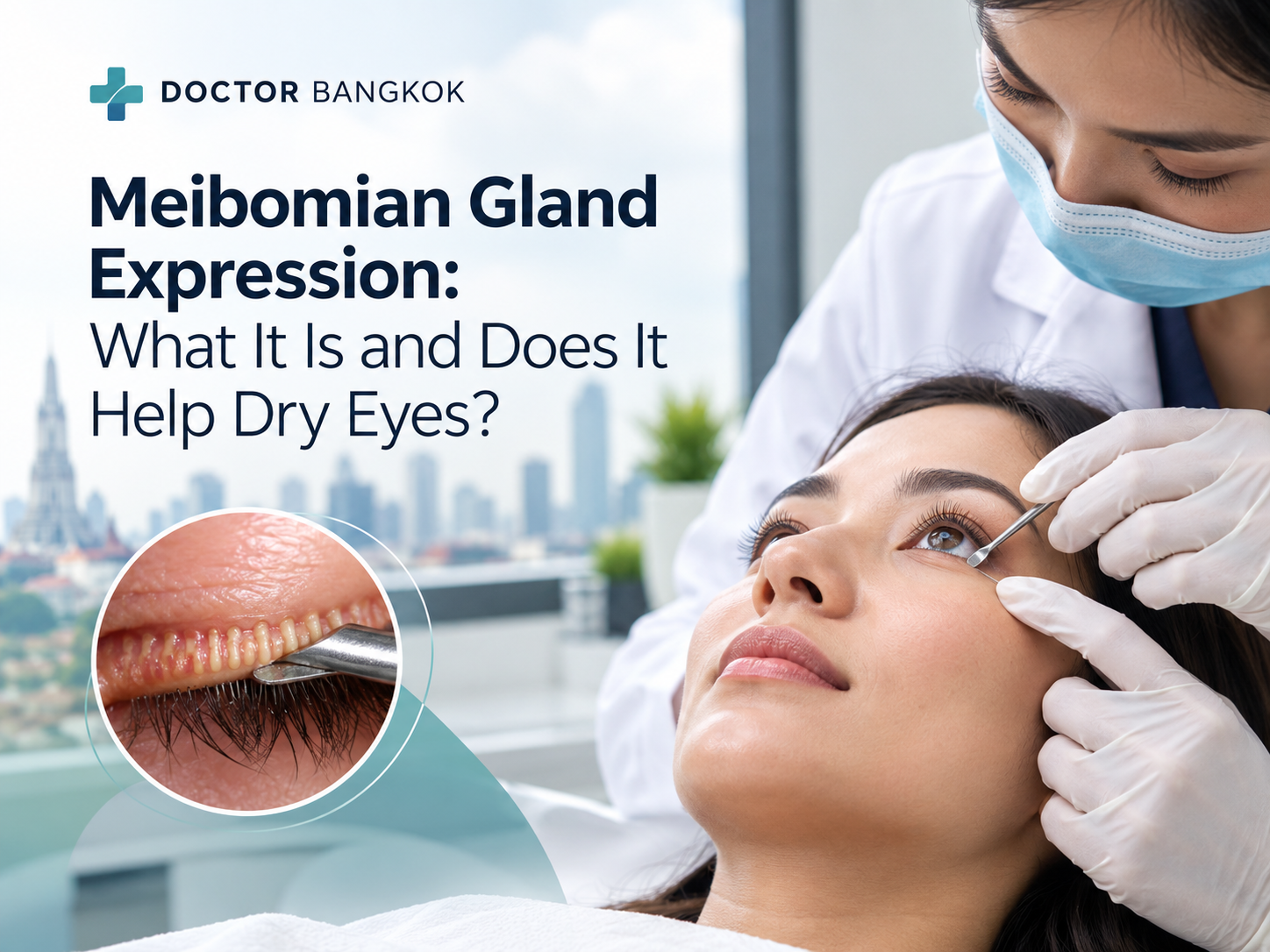
Meibomian gland expression is a clinical procedure that clears blocked oil glands along your eyelid margin to restore the oily layer of your tear film. It directly treats the root cause of evaporative dry eye, the most common type. Most patients feel relief the same day. It works best when combined with heat treatment or IPL therapy, and it does things that eye drops and home warm compresses simply cannot.
If your eyes burn, sting, or feel gritty by noon and drops are doing nothing, you are not imagining it. The drops are not fixing the real problem. I hear this from expats in Bangkok constantly. They have tried every brand on the shelf and their eyes are still a mess by the end of the workday.
In most of these cases, the glands along the eyelids are blocked. They stop releasing the oily layer that keeps your tear film stable, and without that layer, your tears evaporate too fast no matter how many drops you use. Meibomian gland expression clears those blockages manually. It needs to be done properly and after a proper assessment, not offered as a quick add-on.

Why Bangkok Is Hard on Your Eyelid Glands
Bangkok is genuinely one of the worst environments for meibomian gland health. You move between outdoor heat and heavily air-conditioned offices, malls, and apartments all day. That constant shift in humidity stresses your tear film every time you walk through a door.
Add in PM2.5 air pollution, long screen hours, and for many expats, contact lenses worn through all of it. I see more meibomian gland dysfunction here than I expected. The environment is not the only cause, but it accelerates things noticeably.
If you are post-LASIK, your risk goes up further. Laser eye surgery can reduce corneal sensation temporarily, which changes how often you blink fully. Incomplete blinking means the glands do not get properly cleared throughout the day, and blockages build faster.
What Meibomian Gland Expression Actually Does
Your meibomian glands sit inside your upper and lower eyelids. They produce a clear oily secretion that forms the outermost layer of your tear film. That layer slows evaporation and keeps your eyes comfortable between blinks.
When the glands get blocked, the secretion thickens and solidifies. It cannot flow out, the oily layer thins, and your tears evaporate too fast. This is evaporative dry eye, and it accounts for the majority of dry eye cases.
Expression means applying controlled pressure to the eyelid to physically push that thickened material out. Heat is applied first to soften it. The two steps together are what makes clinical expression work. Home warm compresses cool down too quickly and provide no real follow-up pressure. They rarely clear a significant blockage.
Who Actually Needs This Procedure
The clearest candidates are people whose dry eye symptoms do not respond to lubricating drops. If you have been using drops for weeks and still wake up with sticky lids, still get burning by midday, or notice your vision going slightly blurry and then clearing when you blink, that is your tear film breaking down too fast.
Blepharitis, inflammation along the eyelid margin, is often present alongside blocked glands and makes things worse. Demodex blepharitis, caused by microscopic mites in the eyelash follicles, is more common in humid tropical climates. It is something I check for specifically in Bangkok patients.
Contact lens intolerance that has crept up on you is another strong indicator. If lenses that were comfortable two years ago now feel dry and irritating by afternoon, the glands are likely involved. Ocular rosacea, a skin condition that affects the eyelids, is also a known cause and is common in fair-skinned expats.
How We Assess MGD at Doctor Bangkok Before Treatment
I do not go straight to expression without knowing what we are dealing with. The assessment matters.
We start with a short symptom questionnaire to measure how much your dry eye affects daily life. We check how quickly your tear film breaks down between blinks, which tells us how unstable things are. We also grade the quality of what comes out of the glands when gentle pressure is applied.
Where available, infrared imaging lets us see whether the glands have shortened or dropped out entirely. Gland dropout is permanent, which is why we take early presentation seriously. This full picture tells us what treatment is right and how urgent it is.
What to Expect During the Procedure
The procedure is straightforward. We apply heat to the eyelid for several minutes to soften the blocked material. We can apply a topical anaesthetic beforehand to reduce discomfort, and for most patients I recommend it, especially if the blockages are significant.
Once the glands are warm, I use a standardised instrument to apply controlled pressure along the eyelid margin. You will feel pressure and possibly mild discomfort. You will not feel sharp pain. What comes out ranges from clear and liquid in healthy glands to cloudy or thick in more severely blocked ones.
The whole procedure takes around 15 to 20 minutes. Your eyes may feel a little irritated immediately after. Most patients notice improvement within a day or two, and some feel better the same afternoon.
Meibomian Gland Expression Combined With IPL
Expression alone works. Combining it with intense pulsed light therapy produces better outcomes, and the evidence for this is solid. IPL applies controlled pulses of light to the skin around the eyelids, reduces inflammation, improves gland function, and softens the blocked material before expression.
The usual protocol is three to four sessions at roughly four-week intervals. Mild cases sometimes respond after two. This is not a one-off fix for most people. MGD is a chronic condition, and a course of treatments followed by maintenance is the realistic plan.
What Happens If You Leave MGD Untreated
This is the part people do not hear often enough. Meibomian glands can permanently shrink and stop functioning if MGD goes untreated for too long. Lost gland tissue does not come back. Once it is gone, the options become much more limited.
Shorter term, blocked glands can form a chalazion, a firm lump inside the eyelid that often needs a minor procedure to drain. Chronic tear film instability also damages the eye surface over time in ways that drops cannot fully reverse.
Getting assessed early is the right call here.
After Your Treatment: Keeping the Results
Clinical expression clears the blockages, but it does not change the underlying tendency for your glands to block again. Home care keeps the results lasting longer.
A good-quality heat mask used at home, one that holds temperature long enough, helps maintain gland flow between sessions. Eyelid hygiene, gently cleaning the lid margin to reduce inflammation and mite load, is something I discuss with every patient. Omega-3 supplementation has moderate evidence behind it for improving the quality of the gland secretion over time.
In Bangkok specifically, a small humidifier in your bedroom and conscious blinking during long screen sessions makes a real difference. If you are in air conditioning for eight or more hours a day, your glands are working against the environment constantly.
If your eyes are dry, burning, or not responding to drops, the problem is likely in the glands. Doctor Bangkok offers meibomian gland assessment and expression at our central Bangkok clinic, with English-speaking doctors and same-week appointments available. We see a lot of expats and medical tourists for exactly this. Ask about our eye assessment when you get in touch. We are BTS accessible and open seven days a week.
Is meibomian gland expression painful?
There is some pressure involved, and if your glands are significantly blocked, it can feel uncomfortable. We apply a topical anaesthetic beforehand for most patients, which makes a real difference. The procedure is brief, and the majority of patients tolerate it well.
How many sessions will I need?
It depends on how blocked your glands are and whether we are combining expression with IPL. Mild cases often improve after one or two sessions. Moderate to severe MGD typically needs three to four sessions spaced about a month apart, followed by maintenance two or three times a year.
Can Bangkok’s air conditioning and pollution cause MGD?
Yes, directly. Air conditioning lowers indoor humidity, which accelerates tear evaporation and puts ongoing stress on the glands. Bangkok’s air pollution adds further irritation to the eyelid margin. Expats here often develop or worsen MGD faster than they would in a milder climate.
What is the difference between clinical expression and warm compresses at home?
Home compresses soften the blocked material but rarely hold the right temperature long enough or apply enough pressure to clear a real blockage. Clinical expression uses standardised instruments and controlled, consistent pressure to physically expel thickened secretion that no home treatment will shift. The two work together, not as substitutes.
How do I know if I have MGD?
The most common signs are burning or stinging eyes, blurry vision that clears when you blink, redness along the eyelid margin, crusty or sticky lids in the morning, and dry eye symptoms that do not improve with drops. MGD can also be present with minimal symptoms early on. If you have not had an eye assessment recently and you have been in Bangkok for a year or more, it is worth getting one.
Can I wear contact lenses after the procedure?
I usually recommend avoiding contact lenses for 24 hours after treatment while any mild irritation settles. After that, most patients return to normal lens wear without issues. If contact lens discomfort was what brought you in, you should notice an improvement in comfort over the weeks following your sessions.
Dr. Ponlawat Pitsuwan
Physician, Doctor Bangkok
a private medical clinic in central Bangkok. He sees expats, residents, and medical tourists for general medical consultations, eye assessments, and ocular surface conditions including meibomian gland dysfunction and dry eye. His focus is straightforward, evidence-based care delivered in plain language.
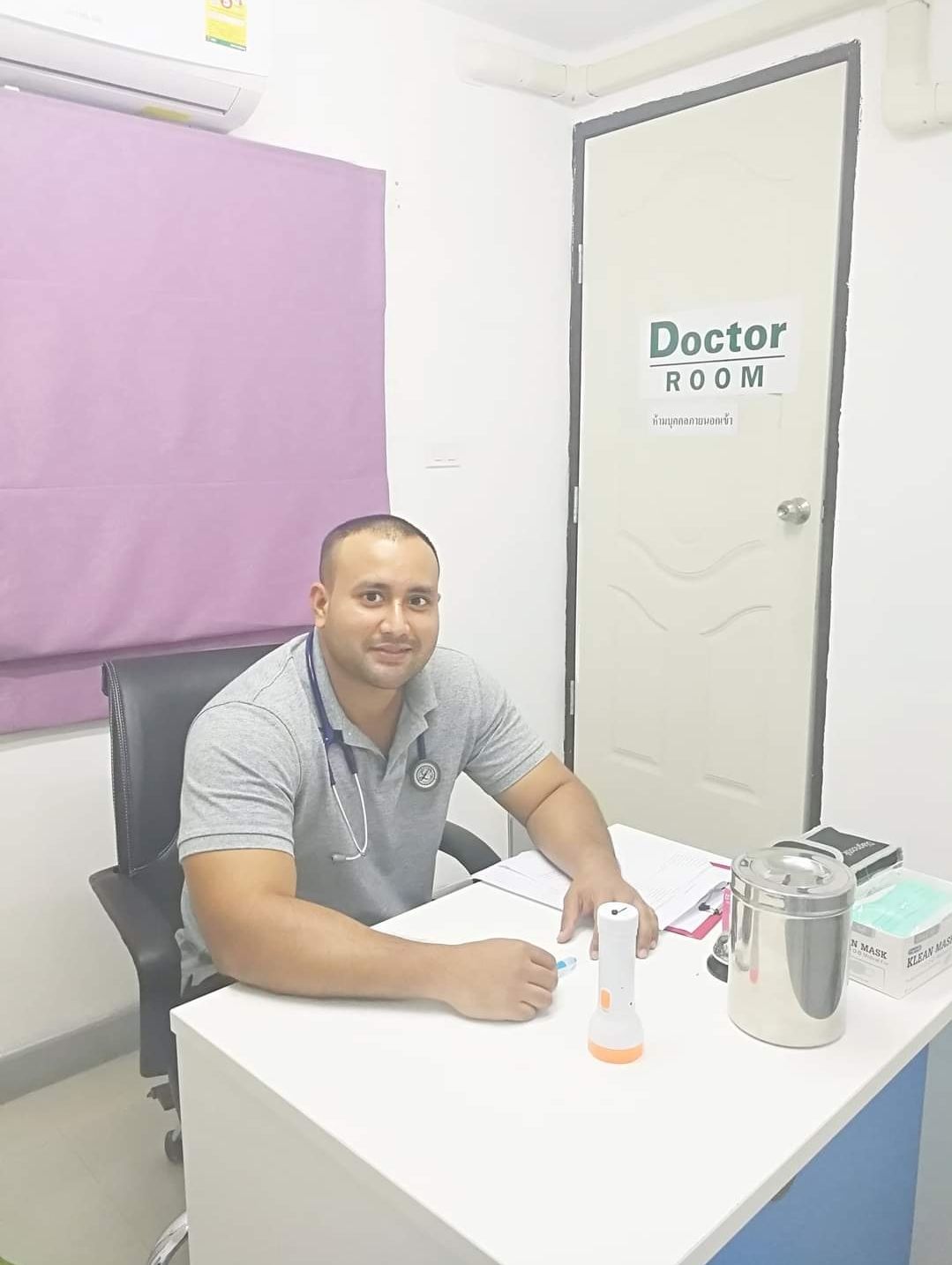
Dr. Ponlawat Pitsuwan is a physician at Doctor Bangkok, a private clinic in central Bangkok. He sees expats, residents, and medical tourists for general medicine, wellness consultations, and IV therapy. His focus is straightforward, evidence-based care delivered in plain language.