

Clinically reviewed by Dr. Ponlawat Pitsuwan, Physician, Doctor Bangkok. Last reviewed: September 2026
A blocked oil gland on the eyelid usually appears as a firm, painless lump on the upper or lower lid. Most cases improve with warm compresses applied three times daily for two to four weeks. If the lump is growing, affecting your vision, or unchanged after three weeks, see a doctor. In Bangkok, a private GP can assess and treat this without a hospital referral.
You noticed a lump on your eyelid a week ago. It does not really hurt. You figured it would go away. Now it is still there, maybe slightly bigger, and you are Googling it between meetings. This is one of the most common eyelid problems I see at the clinic, especially in expats who have been in Bangkok a few months.
Most blocked eyelid oil glands are not serious and respond well to simple treatment. The catch is that Bangkok’s environment — the relentless air conditioning, the screens, the pollution — makes them more likely to keep coming back if you only treat the lump and not the cause.

What the Meibomian Glands Do and Why They Block
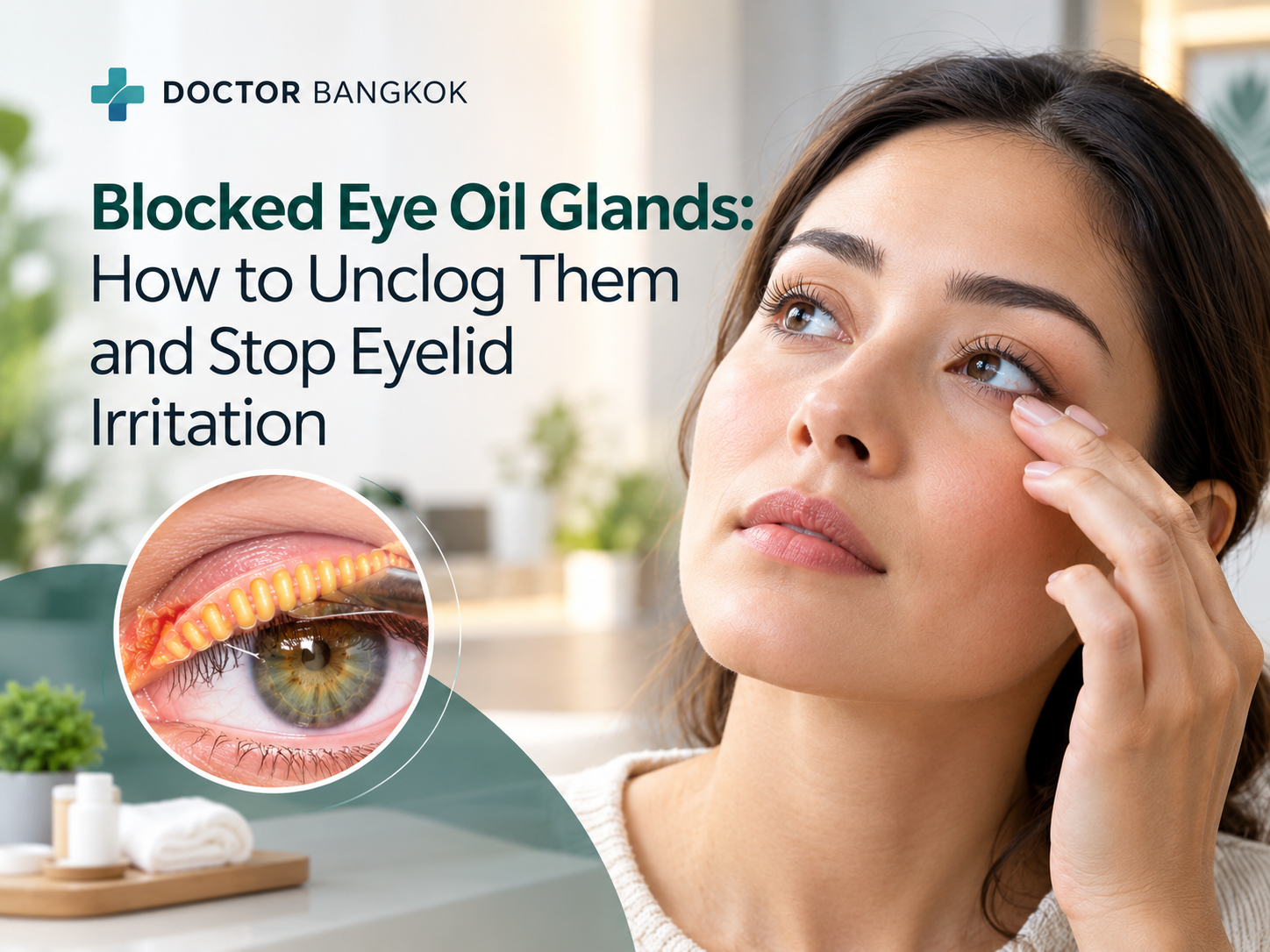
Your eyelids contain around 25 to 40 small oil glands on each lid. These are called meibomian glands. Every time you blink, they release a thin oil onto the surface of your eye that slows tear evaporation. Without it, your eyes dry out fast.
When those glands block, the oil thickens and backs up. The gland swells. Sometimes the body reacts to the trapped oil and forms a firm lump called a chalazion. If bacteria infect the blocked gland instead, you get a stye — more painful and tender to touch.
When the glands are not working properly, you often feel gritty, tired eyes even before any visible lump appears. Many patients treat the dryness without realising the glands are the root cause.
What a Blocked Eyelid Oil Gland Actually Feels Like
Most people describe a pea-sized bump they notice when rubbing their lid. It is usually not painful unless infected. The skin over it may look slightly red or swollen, and sometimes both eyes are affected.
Other signs include burning, grittiness, a feeling that something is in the eye, and crusty eyelids in the morning. These point to the whole gland system under stress, not just one blocked duct.
If your vision blurs when you press on the lump, the chalazion may be pressing against the eyeball. That warrants a prompt medical assessment.

Chalazion vs Stye: How to Tell the Difference With a Blocked Oil Gland
I get asked this constantly. Here is the clearest way to tell them apart.
A chalazion sits further back on the lid, away from the lash line. It is firm, usually painless, and grows slowly over days to weeks. There is no head, no pus. A stye sits right at the lash line or just inside the lid margin. It hurts, may have a visible white or yellow tip, and feels warm from day one.
Both involve the eyelid oil glands, but they are treated differently. A stye may need antibiotic drops or ointment. A chalazion usually does not respond to antibiotics and needs warm compresses, and sometimes a minor drainage procedure if it persists.
| Chalazion | Stye | |
|---|---|---|
| Location | Mid-lid, away from lash line | At or near lash line |
| Pain | Usually painless | Painful, tender |
| Appearance | Firm lump, no head | Red, may have white tip |
| Cause | Blocked oil gland | Bacterial infection |
| Antibiotics help? | Rarely | Often yes |
| Resolves on its own? | Often, over weeks | Usually within one to two weeks |
Why Bangkok’s Environment Makes a Blocked Oil Gland Worse
This is something I do not see discussed much, but it matters for people living here.
Bangkok air conditioning is extreme. Offices, malls, the BTS, restaurants — you move between cold dry air and hot humid outdoor air dozens of times a day. That constant shift puts heavy demand on the meibomian glands. Over time, the oil they produce thickens and blocks the gland openings.
Add screen use. Most expats I see are on a laptop for six to eight hours, then checking their phone for another two. Screen use reduces your blink rate, which means the glands are not expressed regularly through normal blinking. The oil stagnates. Bangkok air pollution adds another layer — fine particles settle on the eyelid margins and can block the tiny gland openings directly.
If you already have a blocked oil gland on your eyelid and it keeps coming back, your environment is very likely part of the reason.
Who Is More Likely to Get a Blocked Eyelid Oil Gland
Meibomian gland function declines gradually with age and gland secretions become thicker. Hormonal changes, including androgen deficiency, affect oil production — which is why this is more common after middle age and in post-menopausal women.
Rosacea and seborrheic dermatitis are both strongly linked to meibomian gland dysfunction. If you have either condition and keep getting chalazia, they are almost certainly connected. Treating your skin without addressing the eyelid glands will not break the cycle.
Contact lens wearers are at higher risk. A less obvious cause is Demodex mites — microscopic mites that live in eyelash follicles and, at high numbers, inflame the lid margin and clog gland openings. This is more common than most people realise and is a treatable cause of recurrent blocked glands.
At-Home Management for a Blocked Oil Gland on the Eyelid
Warm compresses are the foundation. Apply a clean warm cloth to the closed eyelid for ten to fifteen minutes, three times a day. The heat softens the thickened oil so it can drain. Do this consistently for two to four weeks before concluding it is not working.
One thing worth knowing in Bangkok: the heat outside does not count. You need direct, sustained warmth on the lid itself. A microwavable eye mask works better than a flannel because it holds heat longer. After the compress, gently massage the lid toward the lash line with clean hands to help the softened oil express.
Eyelid hygiene matters too. A diluted baby shampoo wash or purpose-made eyelid wipes along the lash line once daily reduce the debris that blocks glands. Omega-3 supplementation has moderate supporting evidence for improving oil quality over several months — not a quick fix, but worth adding if you get recurrent chalazia.
What does not work: squeezing, poking, or trying to pop the lump. That risks introducing infection or causing scarring.
Clinic Treatments Available in Bangkok
If home treatment has not worked after three weeks, or the lump is large and uncomfortable, it is time to be seen.
At Doctor Bangkok, the first step is a clinical assessment to confirm whether this is a chalazion, a stye, or something else. Options from there include in-clinic gland expression under controlled conditions, or prescription topical or oral medication where appropriate.
For a persistent chalazion, a minor procedure called incision and curettage can be done under local anaesthetic. A small opening is made on the inside of the eyelid, the blocked material is cleared, and the gland is drained. It sounds more alarming than it is — most patients return to normal activity the same day.
For recurrent cases where meibomian gland dysfunction is the underlying problem, some specialist eye clinics in Bangkok offer intense pulsed light therapy, which improves oil flow over a course of sessions. A GP assessment first helps determine whether that referral is appropriate for your situation.
When to Stop Waiting and See a Doctor About Your Eyelid Lump
Two to three weeks of consistent warm compresses with no improvement is a clear signal to get assessed. Prolonged blocked glands can cause permanent gland dropout, where those glands stop producing oil altogether.
See a doctor sooner if the lump is growing quickly, your vision is affected at all, the surrounding area becomes increasingly red or painful, or this is the third or fourth time you have had a chalazion in the same location. Recurrent chalazion in the same spot is occasionally associated with sebaceous gland carcinoma — rare, but important not to miss. A doctor will know when a biopsy is warranted.
At Doctor Bangkok, you can be assessed by an English-speaking physician the same day in most cases, without navigating a large Thai hospital. If an ophthalmology referral is needed for a drainage procedure or specialist investigation, we arrange that directly.
Got a lump on your eyelid that has not gone away, or recurring eyelid irritation you cannot shake? Doctor Bangkok offers same-day general medical consultations in central Bangkok, BTS accessible, with English-speaking doctors. We assess blocked eyelid oil glands, advise on treatment, prescribe where needed, and refer you to the right specialist if a procedure is required. No large hospital, no long wait. Book at doctorbangkok.co.th.
Is the lump on my eyelid a stye or a chalazion, and does it matter?
It matters because they are treated differently. A stye is a bacterial infection at the lash line, usually painful, and may respond to antibiotic drops. A chalazion is a blocked oil gland further back on the lid, usually painless and firm, and rarely responds to antibiotics. Treating the wrong one the wrong way delays recovery.
How long should I try warm compresses before seeing a doctor?
Give it two to three weeks of consistent use — ten to fifteen minutes, three times a day. If there is no improvement by then, the lump is growing, or your vision is affected at all, get assessed. In Bangkok, a private GP can see you the same day without a referral.
Can Bangkok’s air conditioning make a blocked oil gland on the eyelid worse?
Yes, and I see this regularly. Cold dry air conditioning causes meibomian gland secretions to thicken over time, which blocks the gland openings. Combined with long screen hours and Bangkok’s pollution, it is a significant driver of recurrent eyelid problems for people living here.
Will my chalazion go away on its own, or do I need a procedure?
Many do resolve without intervention over one to three months with consistent warm compress use. Those that persist, enlarge, or press on the eyeball may need in-clinic drainage or a minor incision under local anaesthetic. If you keep getting them in the same place, underlying gland dysfunction needs to be addressed, not just the individual lump.
Can I be seen at Doctor Bangkok for this, or do I need to go straight to a specialist?
A GP assessment at Doctor Bangkok is the right first step. We confirm the diagnosis, advise on treatment, prescribe where appropriate, and refer to an ophthalmologist if a drainage procedure is needed. Most patients do not need to go straight to a specialist, and we help you avoid the wait times of larger Thai hospitals.
Could Demodex mites be causing my recurring eyelid problems?
Yes, and it is more common than most people expect. Demodex mites live in eyelash follicles and at high numbers they inflame the lid margin and block gland openings. It is a treatable cause of recurrent blocked eyelid oil glands, but it needs to be confirmed by a doctor before starting specific treatment.
Dr. Ponlawat Pitsuwan
Physician, Doctor Bangkok
a private medical clinic in central Bangkok. He sees expats, residents, and medical tourists for eyelid conditions, general medical concerns, and a wide range of acute and ongoing health issues. His focus is clear, evidence-based care delivered in plain language.
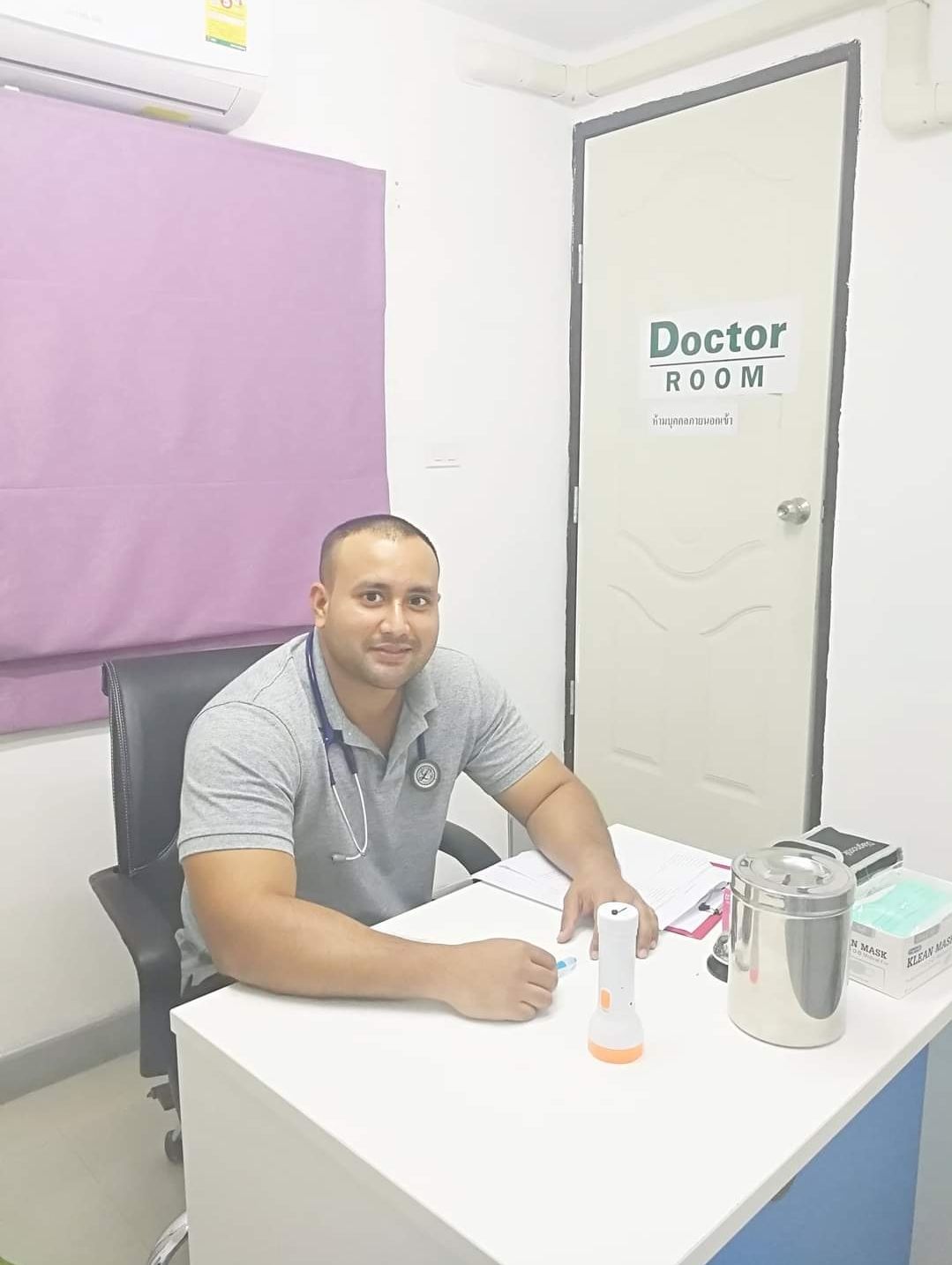
Dr. Ponlawat Pitsuwan is a physician at Doctor Bangkok, a private clinic in central Bangkok. He sees expats, residents, and medical tourists for general medicine, wellness consultations, and IV therapy. His focus is straightforward, evidence-based care delivered in plain language.