

Clinically reviewed by Dr. Ponlawat Pitsuwan, Physician, Doctor Bangkok. Last reviewed: September 2026
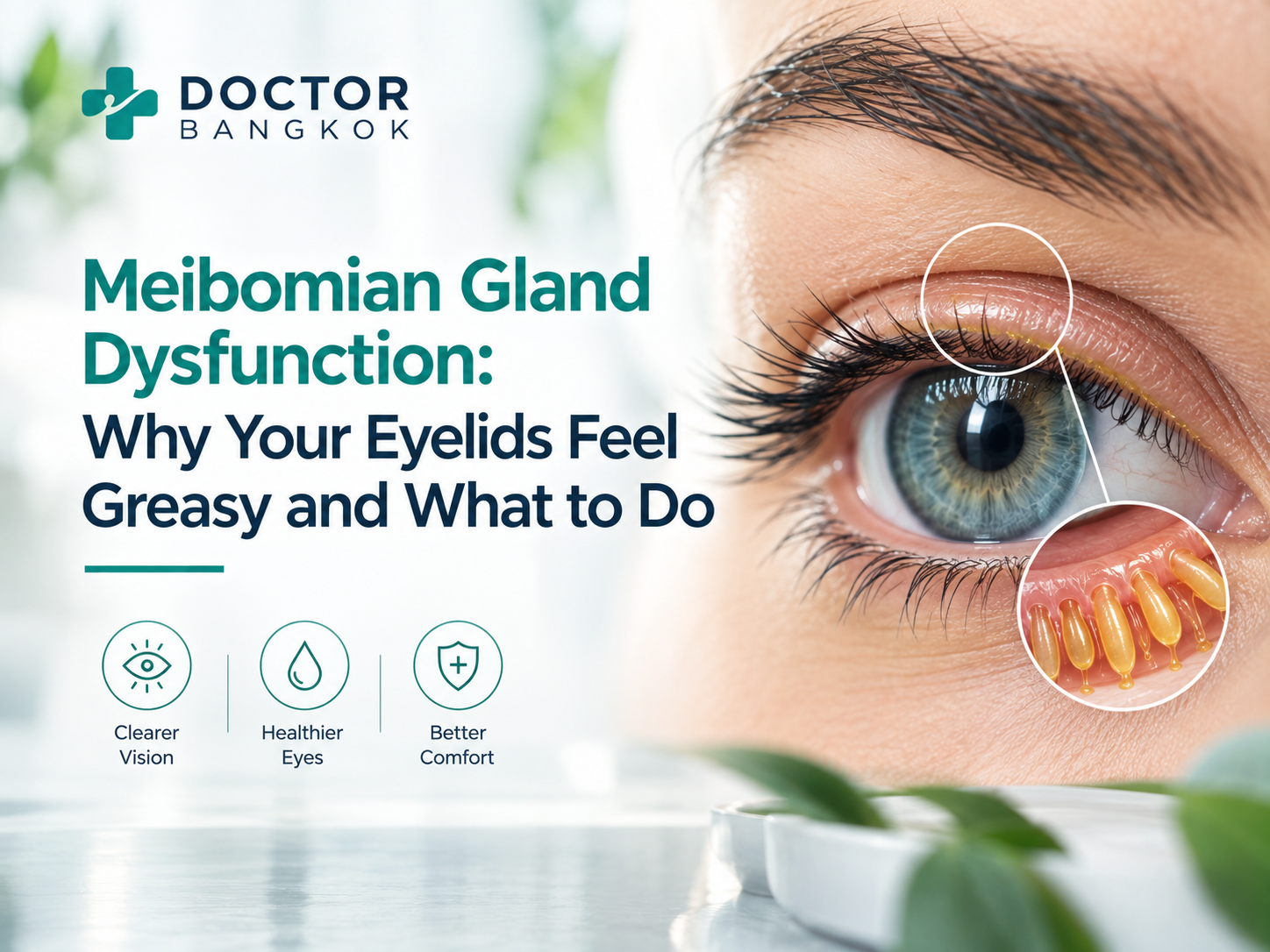
Meibomian gland dysfunction (MGD) is the most common cause of dry, gritty, and uncomfortable eyes. The oil glands along your eyelid margins become blocked, your tear film breaks down faster than it should, and your eyes feel worse indoors and in air conditioning. It is a chronic condition, but with the right treatment it is very manageable. Most people just need someone to diagnose it properly first.
If your eyes feel gritty every morning, or you keep getting styes in the same spot, or your contact lenses stopped being comfortable months ago, this is something I see multiple times a week. Most of the time the answer is the same: the oil glands in your eyelids are blocked, and nobody has told you yet.
That condition is called meibomian gland dysfunction, or MGD. It is not serious the way infections are serious, but left alone it gets worse over time, and the gland damage that builds up cannot be reversed. Getting a diagnosis early matters. Here is what you need to know.

What Your Eyelid Oil Glands Actually Do
Your tear film is not just water. It has an outer oily layer that stops your tears evaporating between blinks. That oil comes from the meibomian glands, a row of small oil glands embedded in each eyelid. When they work properly, you do not notice them at all.
When they block up or the oil quality changes, your tears evaporate too fast. Your eye surface dries between blinks. The result is that persistent gritty, burning, or heavy-lid feeling that most patients describe as just dry eyes.
What Causes Meibomian Gland Dysfunction
The most common pattern is obstructed gland openings along the eyelid margin. The oil inside backs up, thickens, and eventually the gland stops working.
Several things speed this up. Screen time reduces your blink rate, and incomplete blinking means the glands never fully push out their oil. Long-term contact lens wear can alter the lid margin over time. Demodex mites, tiny parasites that live in eyelash follicles, can block gland openings and cause persistent lid inflammation. Hormonal shifts, particularly around menopause, change the quality of the oil. Certain medications, including antihistamines and isotretinoin, also impair gland function.
In Bangkok, there is one more factor I see almost universally: relentless air conditioning.

Why Bangkok Makes MGD Worse
Bangkok is genuinely one of the harder environments for your eyes. Most of my patients with MGD have been blaming themselves for years, thinking they just have sensitive eyes.
The air conditioning here is aggressive. Offices, malls, the BTS, condos, taxis: you spend most of your day in a cold, dry environment. This drops your blink rate and speeds up tear evaporation, putting the meibomian glands under constant stress. Bangkok’s PM2.5 air pollution adds lid margin irritation on top of that. Then you step outside into heat and humidity and back inside into dry cold again. That cycle, repeated every day, is hard on eyelid tissue.
Expats who work long hours at screens in air-conditioned offices and commute through polluted air are running almost every risk factor at once. It is not a coincidence that many of my patients developed symptoms within their first year or two of living here.
Symptoms: What Patients Actually Describe
The most common things I hear: eyes that feel worse in the morning, a greasy or crusty residue on the lashes, a heavy or gritty sensation behind the eyelids, and vision that goes slightly blurry and then clears when you blink.
Some people describe burning that is worse indoors than outside. Some notice redness along the lid margin. Contact lens wearers often say their lenses became intolerable before they noticed anything else.
Recurrent styes or chalazia in the same eye are a strong signal. A stye is not bad luck. It usually means the gland in that spot is chronically blocked and keeps becoming infected. If it keeps happening in the same location, the gland needs to be assessed, not just the stye treated.
MGD, Dry Eye, and Blepharitis: What Is the Difference
These three conditions overlap constantly, which is why patients often confuse them.
MGD is a structural problem with the eyelid oil glands. Dry eye is what happens when those glands fail to protect the tear film. Blepharitis is inflammation of the eyelid margin that often coexists with MGD and can be caused by it or cause it.
Most patients have elements of all three. What matters clinically is identifying which is driving the others, and that requires an exam, not a symptom checklist.
How MGD Is Diagnosed
At Doctor Bangkok, a proper MGD assessment is straightforward. I examine the eyelid margins under magnification for signs of thickening and blocked gland openings. I then apply gentle pressure to the gland area to assess what comes out. Clear oil is healthy. Cloudy or paste-like secretion is not.
I also assess how long your tear film holds together between blinks. A healthy tear film should last 10 seconds or more. In significant MGD it often breaks up in under 5. In some cases I will look at the structure of the glands beneath the lid to assess how much gland tissue has already been lost.
The whole assessment takes about 15 minutes and gives a clear picture of how advanced the condition is.
Who Gets MGD More Often
Research consistently shows that MGD is substantially more common in Asian populations than in Western ones. Population-based studies have reported rates of 46 to 69 percent in Asian adults, compared to figures typically below 30 percent in Western cohorts.
People with acne rosacea have a significantly higher risk. Rosacea commonly affects the facial skin and the eyelid margins together, and many patients do not know their skin condition is connected to their eye discomfort. Older age, female sex, long-term contact lens use, and prolonged screen exposure are all associated with higher rates.
How MGD Is Treated
Treatment is stepped. Where you start depends on how severe your MGD is.
Warm compresses are the foundation of home management. You need sustained heat at around 40 to 45 degrees Celsius for at least five minutes, followed by gentle massage along the lid margin. A damp washcloth cools too fast and rarely works well. Reusable heated eye masks maintain temperature much better and are easier to use correctly. This daily routine, done properly, makes a real difference in mild to moderate MGD.
Lid hygiene, cleaning the eyelid margins with dilute baby shampoo or purpose-made lid scrub wipes, removes debris and helps keep gland openings clear. If Demodex mites are suspected, tea tree oil-based lid scrubs at a specific concentration may be recommended. Preservative-free artificial tears help manage surface discomfort while the glands are being treated.
For moderate to severe MGD, in-clinic treatment becomes relevant. Oral doxycycline taken at a low dose over several weeks reduces lid inflammation and improves oil quality. Topical azithromycin drops work by a similar mechanism applied directly to the lid margin. Thermal pulsation therapy delivers controlled heat and pressure to the glands together, clearing blockages more effectively than a home compress. Intense pulsed light therapy targets lid margin inflammation and has strong evidence for patients with concurrent rosacea. Omega-3 fatty acid supplementation has moderate evidence for improving oil composition over several months.
The key point: home care alone is often not enough once MGD is past the early stage. The glands need to be physically cleared and the inflammation driving the blockage needs to be addressed.
What Happens If You Leave MGD Untreated
This is the part most people do not hear until it is too late to reverse. When a gland is chronically blocked and inflamed for long enough, the gland tissue dies off and stops producing oil permanently. That capacity does not come back.
Untreated MGD also leads to recurrent chalazia, corneal surface damage from chronic dryness, and progressive contact lens intolerance. The longer it runs, the harder it is to manage.
Catching this early, before gland loss progresses, is exactly why a proper assessment matters.
When to See a Doctor in Bangkok
Home care is a reasonable place to start if your symptoms are mild and recent. Two to four weeks of consistent warm compresses and lid hygiene is fair. If you see no improvement, or if your symptoms are moderate to severe from the start, come in.
See a doctor sooner if you have a stye that is not resolving after two weeks, if the same stye keeps returning, if your vision is being affected, or if the lid margin looks significantly red or thickened. These findings suggest the underlying gland problem needs clinical treatment, not just home care.
A general medical consultation at Doctor Bangkok is a sensible first step. I can assess the lids, confirm the diagnosis, and refer you directly to an ophthalmologist if specialist treatment is needed. You do not need to start with a specialist. A proper initial assessment tells us what level of care is actually required.
If your eyes have been dry, gritty, or uncomfortable for weeks, or if you keep getting styes in the same spot, come and have your eyelid glands properly assessed at Doctor Bangkok. Our English-speaking physicians can evaluate your symptoms, confirm whether MGD is the cause, and put together a treatment plan that fits your life in Bangkok. We are centrally located and BTS accessible. Book a general medical consultation at doctorbangkok.co.th.
FAQ
Dr. Ponlawat Pitsuwan
Physician, Doctor Bangkok
a private medical clinic in central Bangkok. He sees expats, residents, and medical tourists for general medical consultations including eye and eyelid assessments, chronic condition management, and referral coordination. His focus is straightforward, evidence-based care delivered in plain language.
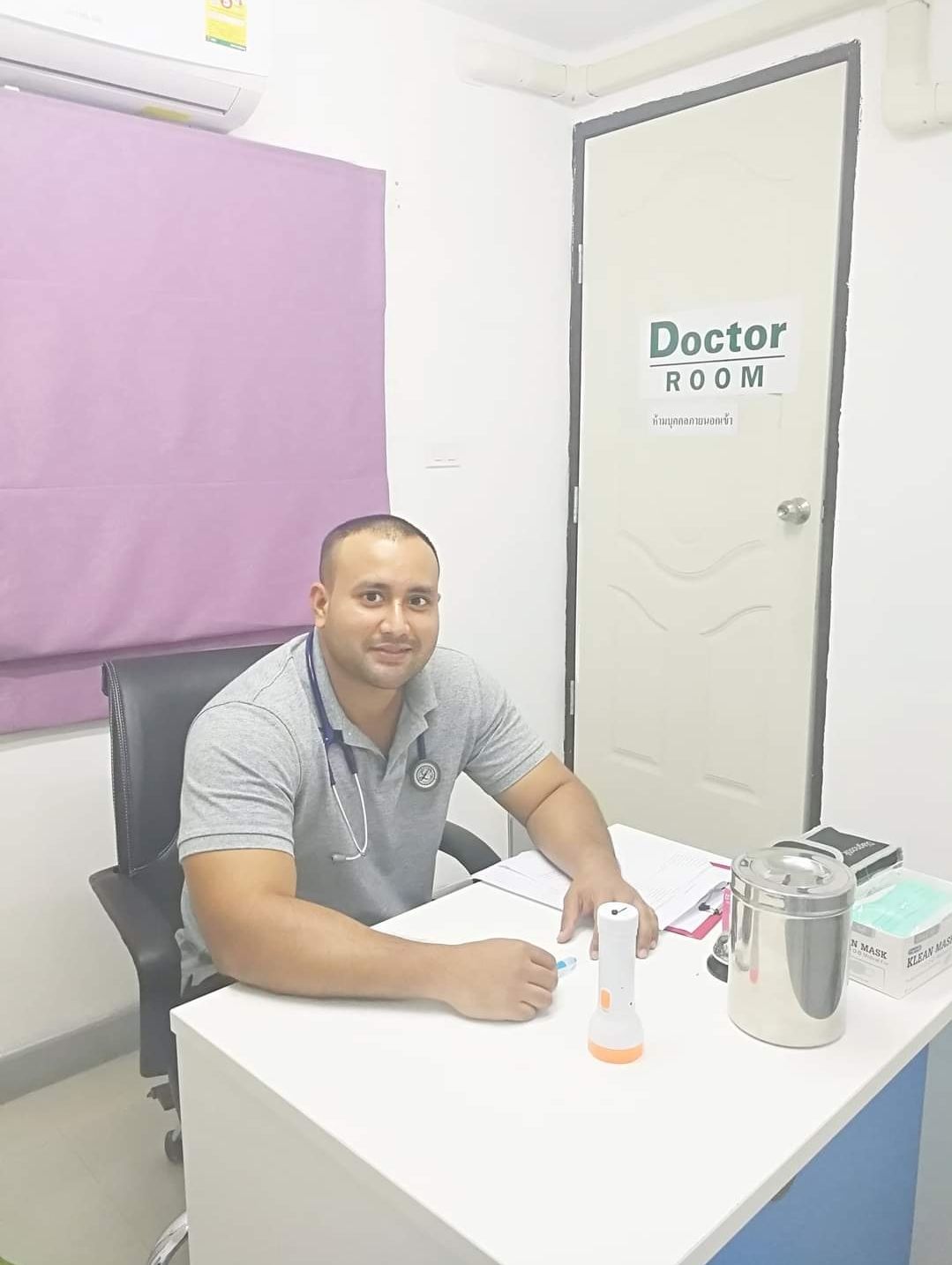
Dr. Ponlawat Pitsuwan is a physician at Doctor Bangkok, a private clinic in central Bangkok. He sees expats, residents, and medical tourists for general medicine, wellness consultations, and IV therapy. His focus is straightforward, evidence-based care delivered in plain language.