
Clinically reviewed by Dr. Ponlawat Pitsuwan, Physician, Doctor Bangkok.
Last reviewed: September 2026
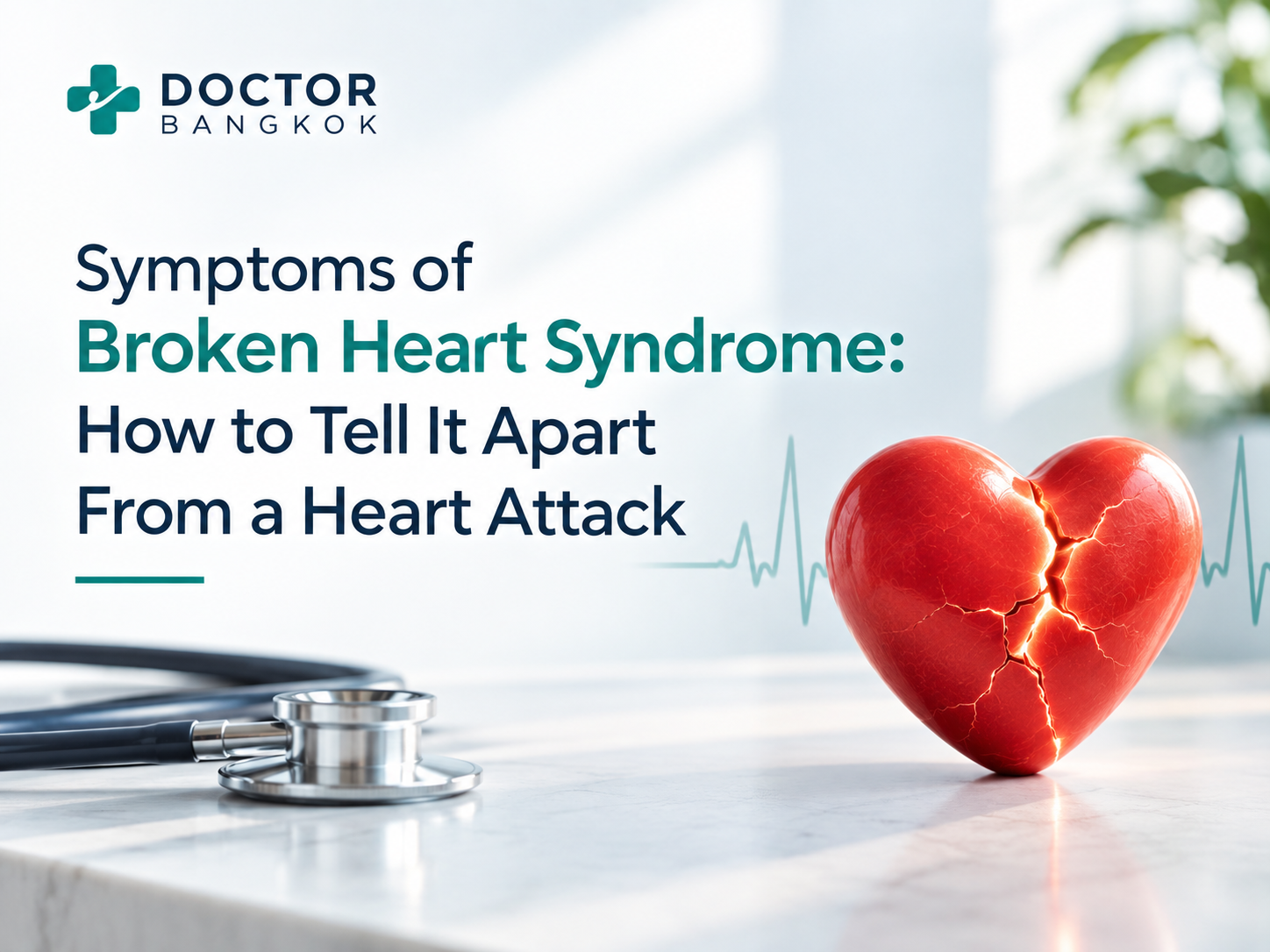
Broken heart syndrome causes real chest pain, breathlessness, and ECG changes that look almost identical to a heart attack. The difference is this: a heart attack involves a blocked artery. Broken heart syndrome does not. You cannot tell them apart without proper testing, which is why sudden chest pain after any major stress needs immediate medical evaluation, never a wait-and-see approach.
Chest pain that comes on after something devastating is something I see more than people expect, especially in expats living far from their support networks. A bereavement, a sudden shock, a bad diagnosis. The heart does not separate emotional pain from physical threat. When stress hormones flood your system, your heart can be temporarily stunned, in a way that looks clinically identical to a cardiac event.
The formal name is takotsubo cardiomyopathy, also called stress cardiomyopathy. Most people know it as broken heart syndrome. What matters clinically is that its symptoms overlap so closely with a heart attack that no one, including a doctor, can tell the difference from symptoms alone. If you are reading this because you had chest pain after something stressful, keep reading, and then come in.

What the Symptoms of Broken Heart Syndrome Actually Feel Like
The symptoms hit fast, usually within minutes of the triggering event. Sudden chest pain is the most common. It can feel tight, heavy, or like pressure, exactly the way patients describe a heart attack. Shortness of breath often comes with it.
Some patients also feel their heart racing or fluttering. Others feel dizzy or faint. A small number collapse. These are not mild symptoms to sleep off. They are the same red flags we use to triage a cardiac emergency.
What throws people off is the assumption that grief cannot physically affect the heart. It can. Not permanently in most cases, but the acute episode is a real cardiac event that needs real evaluation.
Broken Heart Syndrome vs Heart Attack: Key Differences
This is the question I get most often, and the honest answer is that you cannot tell them apart on symptoms alone. Both cause chest pain, breathlessness, ECG changes, and elevated troponin, the protein that leaks into the blood when heart muscle is under stress.
The defining test is a coronary angiogram, where we look directly at the arteries supplying your heart. In a heart attack, we find a blockage. In broken heart syndrome, the arteries are clear. An echocardiogram, an ultrasound of the heart, also shows a distinctive pattern where the tip of the left ventricle balloons outward while the base contracts normally.
| Feature | Broken Heart Syndrome | Heart Attack |
|---|---|---|
| Chest pain | Yes | Yes |
| Shortness of breath | Yes | Yes |
| ECG changes | Yes, often similar to STEMI | Yes |
| Troponin elevation | Mild to moderate | Often higher |
| Coronary angiogram | Clear arteries | Blocked artery |
| Echocardiogram | Apical ballooning pattern | Regional wall motion abnormality |
| Left ventricular ejection fraction | Temporarily reduced | May be reduced |
| Recovery timeline | Days to weeks | Depends on damage |
| Recurrence risk | Around 5% | Varies |

What Causes It: The Stress-Heart Connection
A surge of stress hormones, primarily adrenaline and noradrenaline, overwhelms the heart during an intense shock. These hormones flood the receptors in the left ventricle and temporarily paralyse part of the heart muscle. The arteries stay open. The muscle just stops working properly for a period of time.
This is why it feels and looks like a heart attack without actually being one. The heart is stunned, not destroyed. In most cases, it recovers fully.
It Is Not Always About Grief: Physical Triggers Matter Too
Most people picture broken heart syndrome as something that follows a breakup or a bereavement. That is part of the picture, but not all of it. A severe asthma attack, major surgery, sepsis, a stroke, or a serious infection can trigger the same hormonal surge.
Research from Johns Hopkins found that up to 30% of patients had no clear emotional trigger at all. I mention this because patients, men especially, tend to dismiss the possibility when their trigger was physical rather than emotional. That is exactly when they wait too long to get checked.
Who Gets Broken Heart Syndrome
Postmenopausal women make up the majority of cases. Oestrogen appears to offer some protection against the hormone surge that triggers this condition, and after menopause that protection drops. Women over 50 account for the largest share of diagnoses.
Men do get it. When they do, the trigger is more often physical rather than emotional, and the evidence suggests their in-hospital outcomes tend to be worse. Pre-existing anxiety and depression also appear to increase risk for both sexes. Chronic stress is not a neutral background condition for your heart.
Getting a Cardiac Evaluation in Bangkok
If you are an expat or visitor in Bangkok and you have had sudden chest pain after a stressful event, your first step should not be searching for answers online. It should be an ECG and a troponin blood test, as soon as possible.
At Doctor Bangkok, we perform an initial ECG, draw troponin levels, and assess you clinically with English-speaking doctors on Sukhumvit, BTS accessible. If your results suggest something more serious, we coordinate your referral to a cardiac centre immediately. The goal of that first visit is to rule out a life-threatening cause and work out what your heart is telling you.
Expat life in Bangkok comes with its own pressures. Long hours, an unfamiliar environment, distance from family, chronic low-level stress. These are exactly the conditions that make this syndrome more likely. Do not talk yourself out of coming in.
Treatment and What Recovery Looks Like
Treatment depends on what your heart needs in the moment. Beta blockers and ACE inhibitors are commonly used to support heart function while the left ventricle recovers. These are often tapered once cardiac function returns to normal, which for most patients happens within days to a few weeks.
Full recovery typically occurs within two months. Most patients regain completely normal heart function. A small number are left with some lasting change to the heart’s shape or function, but this is not the norm. The recurrence rate is around 5%, which is why follow-up matters even after you feel well.
Psychological support is not optional in recovery. It is part of treatment. If the trigger was grief, trauma, or a period of severe stress, addressing that is as clinically important as the medications. We discuss this with every patient at Doctor Bangkok who comes through with a stress-related cardiac presentation.
If you had sudden chest pain after emotional or physical stress, do not wait to see if it passes. Doctor Bangkok offers ECG testing, troponin blood tests, and clinical assessment by English-speaking physicians in central Bangkok on Sukhumvit, BTS accessible. We can evaluate your symptoms, give you a clear picture of what is happening, and refer you urgently if needed. Walk-ins welcome. Evening appointments available.
Frequently Asked Questions
Dr. Ponlawat Pitsuwan
Physician, Doctor Bangkok
a private medical clinic in central Bangkok. He sees expats, residents, and medical tourists for cardiac symptom assessment, general medical consultations, and stress-related health concerns. His focus is straightforward, evidence-based care delivered in plain language.
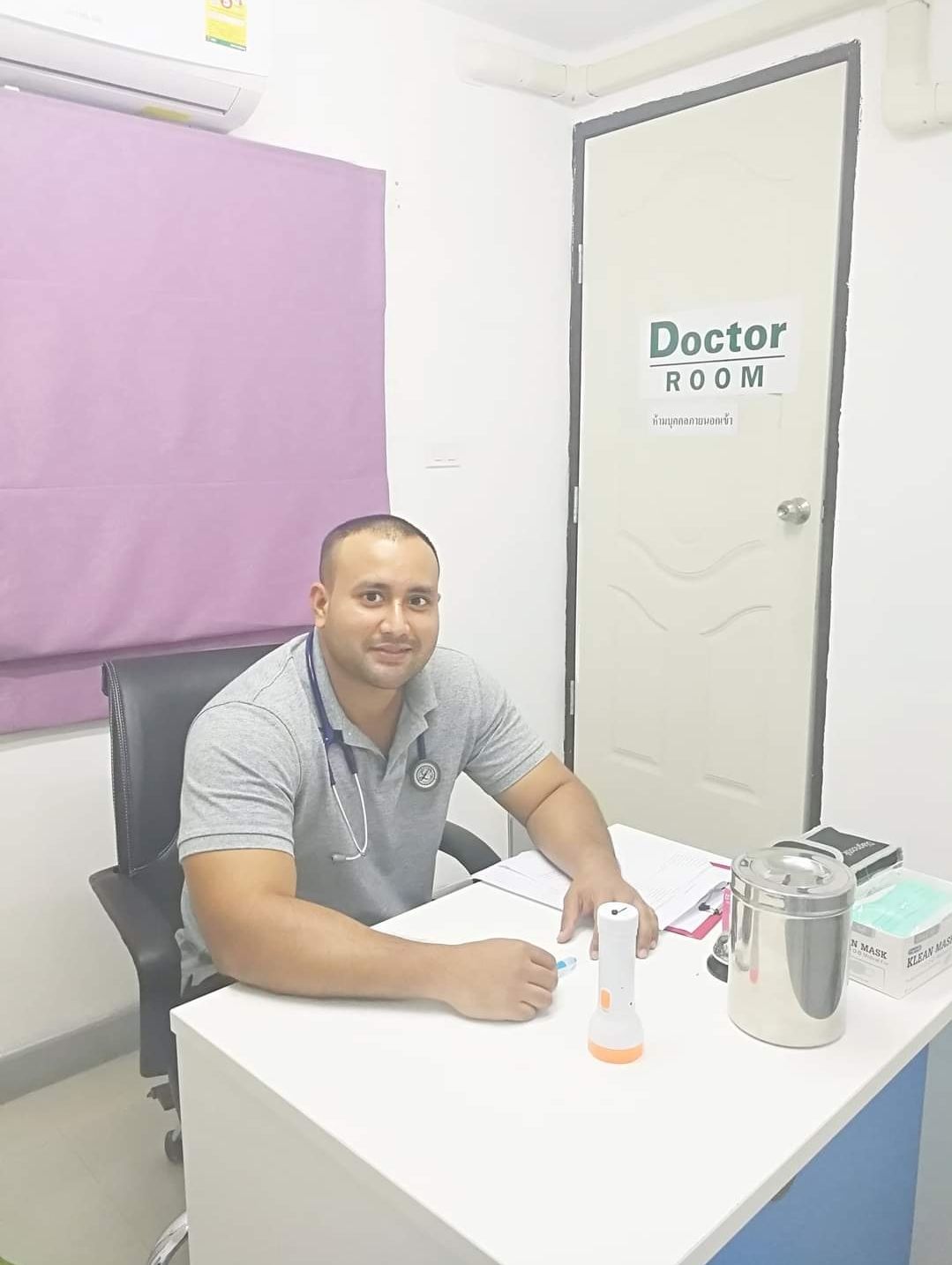
Dr. Ponlawat Pitsuwan is a physician at Doctor Bangkok, a private clinic in central Bangkok. He sees expats, residents, and medical tourists for general medicine, wellness consultations, and IV therapy. His focus is straightforward, evidence-based care delivered in plain language.