
Clinically reviewed by Dr. Ponlawat Pitsuwan, Physician, Doctor Bangkok. Last reviewed: July 2026
High cholesterol has no symptoms. Most people find out through a blood test, or after a heart attack or stroke. A full fasting lipid panel measures your LDL, HDL, triglycerides, and total cholesterol. It is the only reliable way to know where you stand. If you have not had one in the last few years, now is the time.
You got your blood results back and one of the numbers is flagged. Or maybe you have been meaning to check for years and just never got around to it. Either way, you want to know what your cholesterol levels actually mean and whether you should be worried.
Here is the honest answer: high cholesterol is one of the most common reasons people have a heart attack or stroke, and it gives you no warning before that happens. No chest pain, no dizziness, nothing. That is what makes it dangerous. The good news is that a single blood test tells you exactly where you stand, and if your levels are off, there is a lot you can do about it.

What the Cholesterol Numbers Actually Mean
When you get a lipid panel, you are not just getting one number. You are getting four, and each one tells a different part of the story.
LDL is the one most people have heard of. It is often called "bad" cholesterol because it builds up in your artery walls over time. The lower your LDL, the better. HDL does the opposite: it helps clear cholesterol out of your arteries, so higher HDL is protective.
Triglycerides are a type of fat in your blood. When they run high, often from too much sugar, refined carbs, or alcohol, they raise your cardiovascular risk on their own. Some panels also check Lp(a), a type of LDL particle strongly linked to early heart disease, especially if you have a family history.
Reference Ranges You Can Use
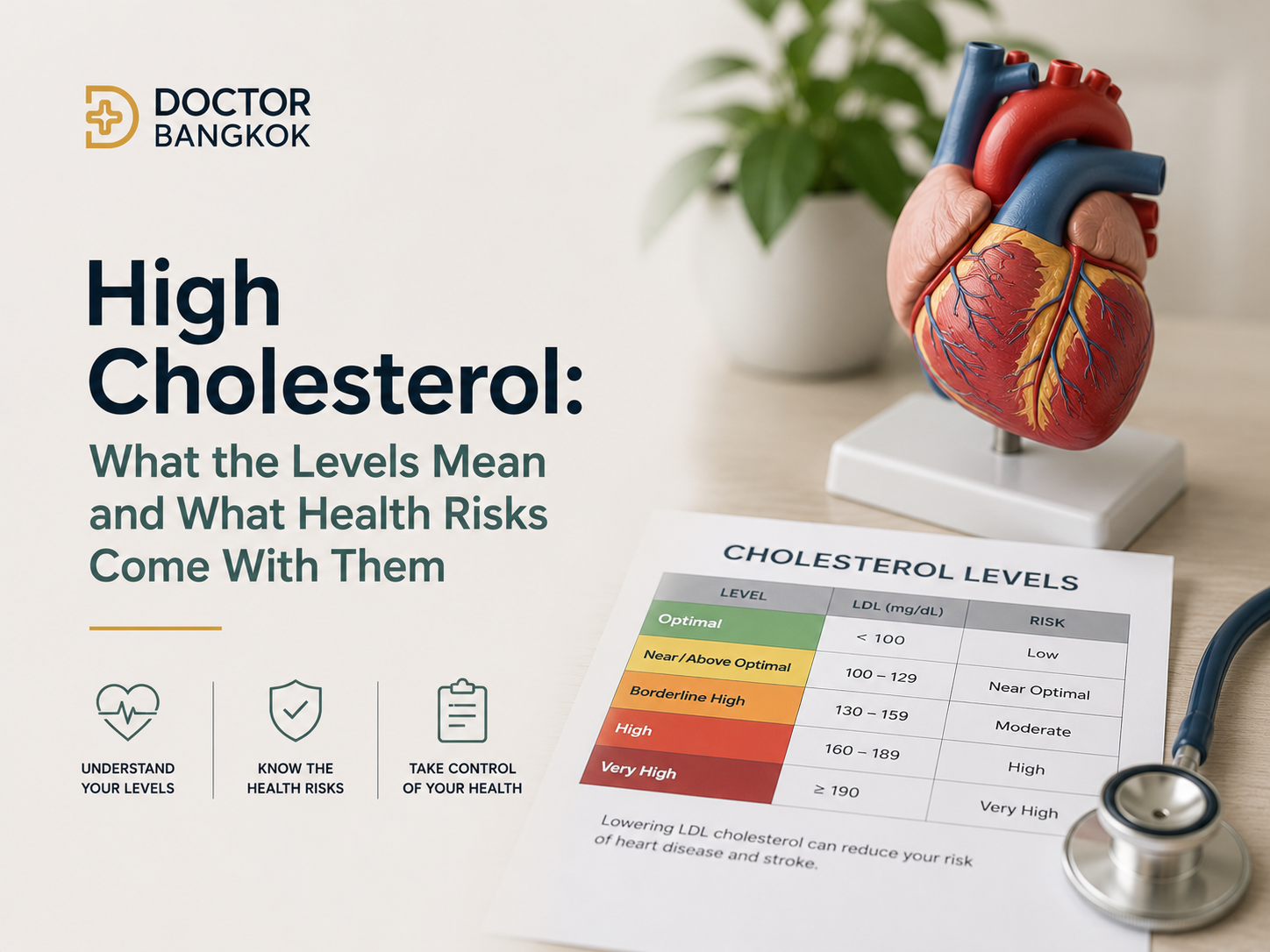
Thai labs use the same mg/dL units as international guidelines. Here is how to read your results.
| Marker | Optimal | Borderline | High / At Risk |
|---|---|---|---|
| Total Cholesterol | Below 200 mg/dL | 200–239 mg/dL | 240 mg/dL and above |
| LDL Cholesterol | Below 100 mg/dL | 130–159 mg/dL | 160 mg/dL and above |
| HDL Cholesterol | Above 60 mg/dL (protective) | 40–59 mg/dL | Below 40 mg/dL (risk) |
| Triglycerides | Below 150 mg/dL | 150–199 mg/dL | 200 mg/dL and above |
If your LDL is above 190 mg/dL, that is considered very high risk. At that level, medication is often the right call regardless of other factors. If you have existing heart disease or diabetes, your LDL target is stricter, often below 70 mg/dL.
The Health Risks of High Cholesterol
Most people know high cholesterol is linked to heart attacks. Fewer understand that the risks go well beyond the heart.
When LDL stays high over years, it deposits inside your artery walls. The walls thicken and narrow. When a deposit breaks open, a clot forms. If that clot blocks a heart artery, you have a heart attack. If it blocks a brain artery, you have a stroke. This process builds silently over years, which is exactly why people feel nothing until it is too late.
Risks Beyond the Heart and Brain
The same narrowing can happen in the leg arteries. You might notice leg pain when walking, or feet that feel cold or numb. In severe cases it can lead to tissue damage.
Very high triglycerides, above 500 mg/dL, carry a separate serious risk: pancreatitis, which is severe inflammation of the pancreas. This is painful, can be dangerous, and often requires hospital admission. Levels in that range warrant urgent treatment.
High cholesterol also connects to metabolic syndrome, a cluster of conditions including high blood pressure, high blood sugar, and excess abdominal fat. Having metabolic syndrome significantly raises your combined risk of type 2 diabetes and cardiovascular disease.

Why Living in Bangkok Can Quietly Push Your Levels Higher
I see this regularly in patients who have been here six months or more. They feel fine. They are eating out, enjoying the food, maybe drinking more than they did at home. Then the lipid panel comes back and the numbers have shifted.
Bangkok’s food environment is genuinely challenging for cholesterol. Coconut milk curries, fried street foods, dishes cooked in repeatedly heated oil, and refined carbohydrate staples all carry high saturated fat. Eaten regularly over months, they move LDL up.
The dietary shift many expats experience on arrival is real and measurable. At home you may have cooked more, eaten more vegetables, drunk less. In Bangkok, eating out three times a day is normal. Add alcohol, reduced exercise, and the stress of relocation, and you have a real recipe for rising lipid levels.
I tell patients: Bangkok is not the place to assume your numbers are still where they were two years ago.
Who Should Get Tested and How Often
If you have never had a cholesterol test, or if it has been more than a few years, you need one. That applies to most adults reading this.
For adults with no risk factors, every four to five years from age 20 is a reasonable baseline. If you have a family history of heart disease, diabetes, high blood pressure, obesity, or you smoke, annual testing makes more sense. The same applies if you are on cholesterol medication and need monitoring.
For expats in Bangkok: if you have had a gap in care since arriving, use that as your reason to get a baseline now. By the time many patients come in, the numbers are already moving in the wrong direction.
Familial hypercholesterolaemia is a genetic condition where LDL is very high from birth regardless of diet. If a parent or sibling had a heart attack before age 55, mention that when you come in. It changes how we approach your results.
Checking Your Cholesterol in Bangkok
Getting tested here is straightforward. At Doctor Bangkok, a full fasting lipid panel is part of our wellness check, and results are reviewed with you in English on the same visit. You do not get a number printout and a shrug. You get a clear explanation of what it means for your health and what, if anything, to do about it.
The test requires a 9 to 12 hour fast beforehand. Water is fine. No food, no coffee, no juice. Come in the morning if you can.
If your levels need treatment, the approach depends on how high the numbers are and what other risk factors you carry. Lifestyle changes, diet adjustment, and regular exercise are the right starting point for borderline levels, and the evidence behind them is solid. For higher levels, statin therapy is the most well-supported medication option, with decades of evidence behind it.
Our clinic is BTS accessible and English-speaking physicians are available every day. You can book a lipid panel or full health check through our cardiovascular wellness page.
Concerned about your cholesterol levels? Doctor Bangkok offers a full fasting lipid panel with same-day results and English-language clinical review at our central Bangkok clinic. Whether you are an expat due for a check, a medical tourist fitting in a health screen, or someone who just received a result they do not understand, we can help. Book your cholesterol test at doctorbangkok.co.th/wellness/ or walk in during clinic hours. BTS accessible. English-speaking physicians every day.
Frequently Asked Questions
What cholesterol level is considered dangerously high?
Total cholesterol of 240 mg/dL or above is classified as high and roughly doubles your heart attack risk compared to 200 mg/dL. LDL above 190 mg/dL is considered very high risk and often requires medication regardless of other factors. Thai lab results use the same mg/dL units, so you can compare your results directly to the table above.
Can you have high cholesterol with no symptoms at all?
Yes, and this is exactly why it is dangerous. High cholesterol causes no pain, no visible signs, and no warning until something serious happens. The only way to know is a blood test, and at Doctor Bangkok we can run a full lipid panel with results the same day.
Does eating Thai food raise your cholesterol?
Traditional Thai food is not the problem, but certain staples eaten daily can be. Coconut milk curries, fried street food, and dishes cooked in repeatedly heated oil all carry significant saturated fat. The dietary shift expats experience on arrival in Bangkok is real and can show up in blood work within months.
How often should I get a cholesterol test in Bangkok?
Every four to five years from age 20 if you have no risk factors. Annually, or as advised by your doctor, if you have diabetes, high blood pressure, obesity, a family history of heart disease, or you smoke. Expats with a gap in care since relocating should treat arrival as a reason to establish a baseline.
What is the difference between a cholesterol test and a full lipid panel?
A basic cholesterol test may only return your total cholesterol number. A full fasting lipid panel includes LDL, HDL, triglycerides, and total cholesterol, giving a complete picture of your cardiovascular risk. At Doctor Bangkok, your lipid panel result is reviewed with you in clinic, not just handed to you as a printout.
Can high cholesterol be managed without medication?
For borderline levels, yes. Reducing saturated fat, increasing fibre, exercising regularly, and cutting back on alcohol can meaningfully lower LDL, and the evidence for this is strong. For higher levels, especially LDL above 160 to 190 mg/dL or where other risk factors are present, statin therapy is usually needed alongside lifestyle changes. Your doctor will advise based on your full lipid panel, not one number alone.
Dr. Ponlawat Pitsuwan
Physician, Doctor Bangkok
a private medical clinic in central Bangkok. He sees expats, residents, and medical tourists for general health checks, cardiovascular risk assessment, lipid panel testing, and chronic disease management. His focus is straightforward, evidence-based care delivered in plain language.
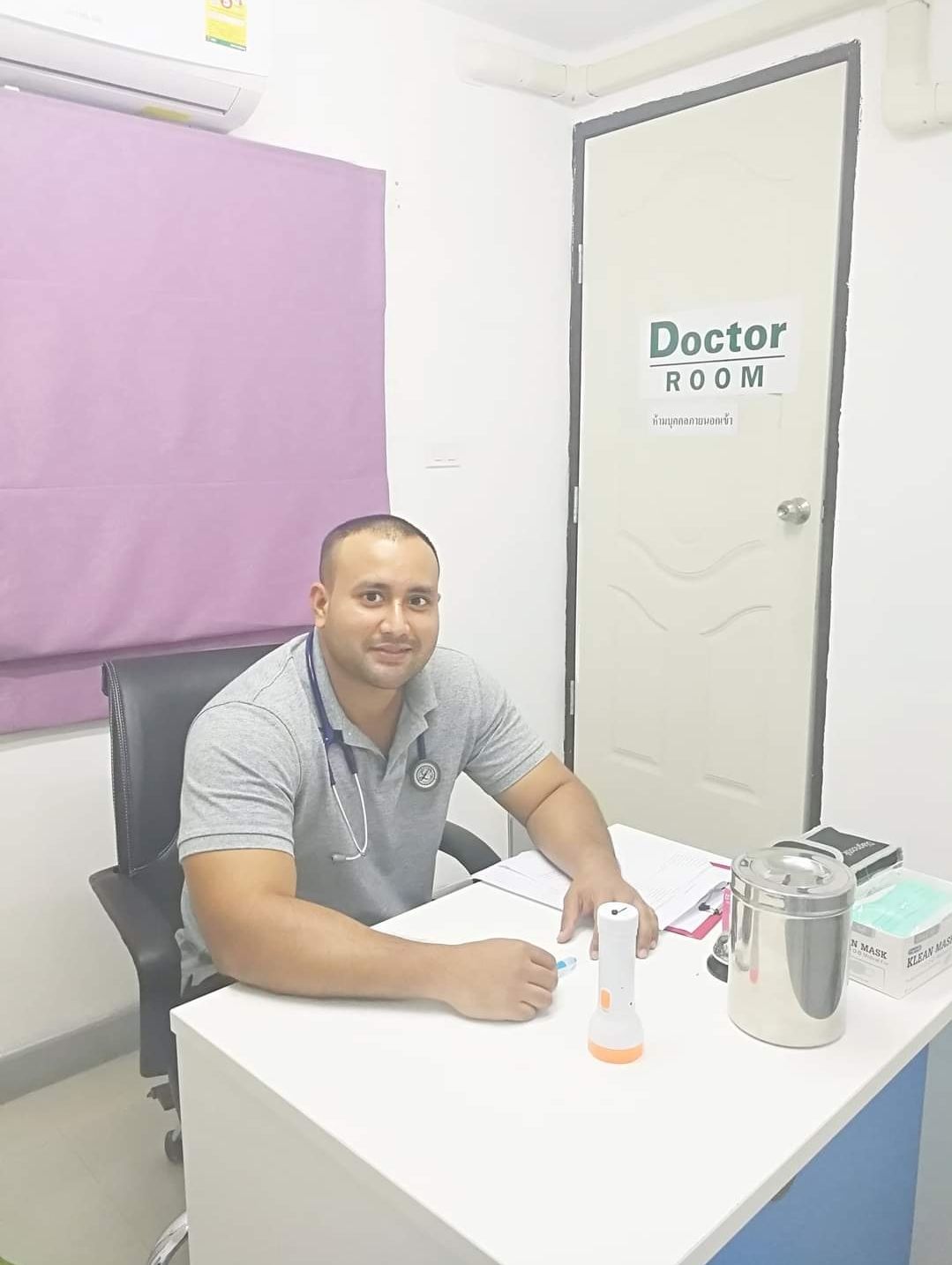
Dr. Ponlawat Pitsuwan is a physician at Doctor Bangkok, a private clinic in central Bangkok. He sees expats, residents, and medical tourists for general medicine, wellness consultations, and IV therapy. His focus is straightforward, evidence-based care delivered in plain language.