

Clinically reviewed by Dr. Ponlawat Pitsuwan, Physician, Doctor Bangkok. Last reviewed: July 2026
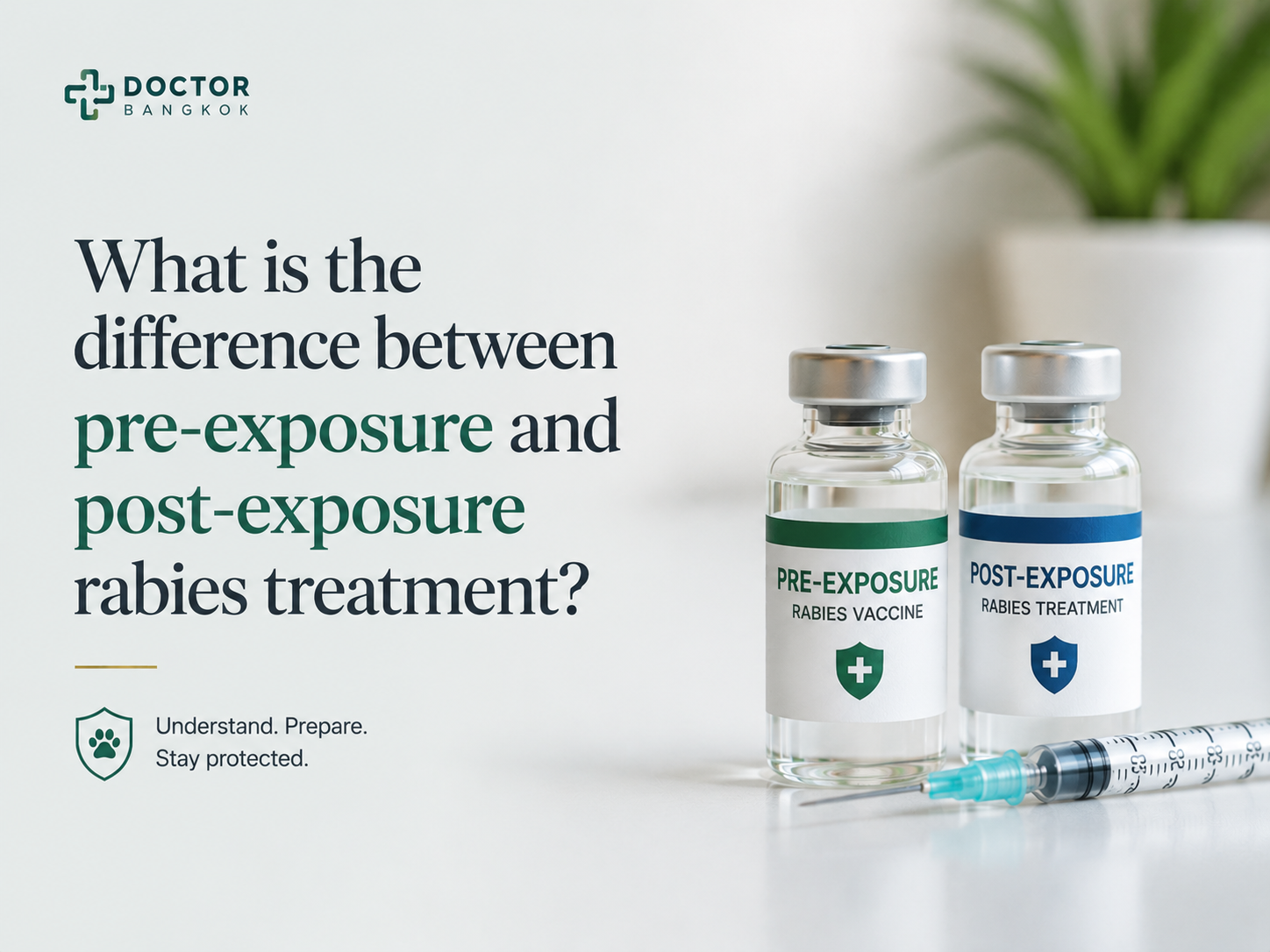
Pre-exposure prophylaxis (PrEP) means getting vaccinated before any animal contact. Post-exposure prophylaxis (PEP) means getting treated after a bite or scratch. The biggest practical difference: if you had PrEP, you only need two vaccine doses after a bite and no immunoglobulin injection. Without PrEP, you need up to four doses plus an expensive weight-based immunoglobulin injection on the same day.
If you are reading this after a dog bite in Bangkok, you are in the right place. If you are trying to decide whether to vaccinate before anything happens, you are also in the right place. Rabies is a genuine risk here. Bangkok has a large stray dog population, temple monkeys in central tourist areas, and parts of the city have been classified as temporary rabies epidemic zones by Thai health authorities. The question I hear most often is: "Does it matter that I never got the rabies vaccine before coming here?" The honest answer is yes, and this article explains exactly why.

The Core Difference Between PrEP and PEP
PrEP is vaccination before exposure. PEP is treatment after exposure.
That sounds simple, but the clinical gap between the two is large. When you get PrEP, your immune system learns to recognise the rabies virus. If you are later bitten, that memory responds fast. You need two booster doses and nothing else. No wound injection. No immunoglobulin. Done in three days.
Without PrEP, your immune system has no memory of rabies. After a bite, you need a full course of vaccines over two weeks, plus an injection called rabies immunoglobulin (RIG) directly into the wound on day one. RIG is dosed by body weight, which makes it expensive and harder to source at short notice.
Who Should Be Getting PrEP in Bangkok
I get asked this a lot. My answer is usually: more people than you think.
The standard answer covers veterinarians, wildlife workers, and travellers going to rural areas. But in Bangkok specifically, the risk profile is broader. If you run or cycle in Lumpini Park, Chatuchak, or along the canals, you will encounter stray dogs. If you visit Wat Arun, the Grand Palace area, or any temple complex, you are near macaque monkeys. If you have young children who may approach animals without thinking, PrEP is worth having before it becomes urgent.
Long-term expats accumulate exposure risk over months and years. The question is not whether you will encounter a potentially rabid animal in Bangkok. The question is when.

Why PrEP Removes the Need for Rabies Immunoglobulin
This is the part that actually changes the treatment equation.
RIG provides ready-made antibodies at the wound site on day one, buying time before the vaccine takes effect. When you have had PrEP, your immune system already has that memory and responds to a booster dose quickly. RIG is simply not needed.
In Bangkok, RIG is available at major hospitals and private clinics, but stock varies by facility. It is also expensive, particularly if you weigh over 70kg. Skipping it entirely because you had PrEP is both clinically sound and practically significant. The savings in cost, time, and logistics are real.
What Happens After a Bite — WHO Exposure Categories
Not every animal contact carries the same risk. The WHO uses three categories to guide treatment.
Category I is touching an animal or being licked on intact skin. No treatment is needed. Category II is minor scratches or bites without bleeding. Wound washing plus vaccination is required. Category III is deep bites, scratches that break the skin, or contact with mucous membranes. This is the highest risk level and requires immediate wound care, a full vaccine course, and RIG if you have not been previously vaccinated.
If you are not sure which category applies, come in and let us assess it. Do not guess.
Immediate Steps Before You Reach a Clinic
The single most important thing you can do after a bite or scratch is wash the wound. Use soap and running water for at least 15 minutes. WHO guidance indicates this step alone reduces transmission risk significantly. Apply an antiseptic if you have one.
After that, get to a clinic the same day. Do not wait to see if it swells. Do not wait until morning if it happened at night. Rabies is almost universally fatal once symptoms appear. The window for effective treatment closes before symptoms start. At Doctor Bangkok, we can assess your wound, determine your exposure category, and start treatment immediately. We stock cell-culture rabies vaccines, which are the modern, safe standard.
Vaccine Schedules Side by Side
Here is how the two treatment paths compare.
| PrEP (Before Exposure) | PEP — Previously Vaccinated | PEP — Not Previously Vaccinated | |
|---|---|---|---|
| Doses | 3 doses | 2 doses | 4 doses |
| Schedule | Days 0, 7, 21–28 | Days 0 and 3 | Days 0, 3, 7, 14 |
| RIG required | No | No | Yes, Day 0 |
| RIG cost | None | None | High (weight-based) |
| Clinic visits | 3 visits, planned | 2 visits, urgent | 4 visits, urgent |
| Time to complete | 3 to 4 weeks | 3 days | 2 weeks |
Two doses over three days, no immunoglobulin, no urgent scramble to find a facility that carries RIG. That is what PrEP buys you.
How Long Does PrEP Protection Last
PrEP gives you immune memory, and that memory is long-lasting for most people.
Long-term Bangkok residents with ongoing animal contact, or anyone in a higher-risk occupation, may benefit from a periodic antibody test. This is a blood test that measures whether your immune response is still strong enough. A doctor can advise whether a booster is needed based on that result.
If you had PrEP years ago and cannot remember when, it is worth checking. Come in for a consultation and we can review your vaccination history and advise on next steps.
Costs and What to Expect at a Bangkok Clinic
PrEP is planned and affordable. Three vaccine doses spread over three to four weeks, with no emergency visits and no immunoglobulin bill.
PEP without prior vaccination is a different story. The vaccine course alone means multiple urgent visits. RIG on top of that, dosed by body weight, adds substantially to the total. Travel insurance may cover PEP, but policies vary, and not every insurer reimburses rabies treatment without pre-authorisation.
Getting vaccinated at Doctor Bangkok before any exposure is the more straightforward path. It also means that if something does happen, your post-exposure treatment is fast, simple, and does not depend on RIG availability on the day.
Worried about a recent bite or scratch in Bangkok? Or ready to get vaccinated before something happens? Doctor Bangkok offers rabies pre-exposure vaccination and full post-exposure assessment at our central Bangkok clinic, with English-speaking doctors and same-day appointments. Book or learn more on our rabies vaccine page.
Frequently Asked Questions
If I already had the pre-exposure rabies vaccine, do I still need treatment after a dog bite in Bangkok?
Yes, but much less. You need two vaccine doses only, on days 0 and 3, and no rabies immunoglobulin. Unvaccinated patients need four doses plus RIG on the first day. That simplified course is one of the strongest clinical reasons to get vaccinated before any exposure occurs.
What is rabies immunoglobulin and why does it matter?
RIG is a ready-made antibody product injected into and around the wound on day one of post-exposure treatment. It provides immediate protection while the vaccine builds your immune response. It is dosed by body weight, which makes it expensive, and not every clinic carries it in stock. If you had pre-exposure vaccination, you do not need it at all.
Is rabies actually a risk in Bangkok, or is it mainly a rural Thailand problem?
Bangkok carries genuine rabies risk. Parts of the city and adjacent areas have been declared temporary epidemic zones by Thai health authorities. Stray dogs, temple macaques, and neighbourhood cats are real exposure vectors even in central Bangkok. Treating this as a rural-only concern is a mistake I see people make, often after a bite.
I was scratched by a cat in Bangkok, not bitten. Do I still need treatment?
Possibly yes. A scratch that breaks the skin can transmit rabies if saliva is present. Wash the wound immediately with soap and water for 15 minutes, then get assessed the same day. Whether treatment is needed depends on wound depth and the animal’s status, and a doctor should make that call.
How long does rabies pre-exposure vaccination protect me?
Immune memory from pre-exposure vaccination is long-lasting, often many years. If you are a long-term Bangkok resident with regular animal exposure, a periodic antibody test can confirm your protection level. A booster may or may not be needed depending on that result, not on a fixed time interval.
Can I get post-exposure treatment in Bangkok if I was not vaccinated before travelling?
Yes. Bangkok has facilities that provide full post-exposure treatment, including cell-culture vaccines and RIG. The key is acting fast, ideally the same day as the exposure. At Doctor Bangkok, we can assess your wound, determine your exposure category, and start treatment without delay. Do not wait to see how the wound looks the next morning.
Dr. Ponlawat Pitsuwan
Physician, Doctor Bangkok
a private medical clinic in central Bangkok. He sees expats, residents, and travellers for travel medicine, vaccinations, animal bite assessment, and post-exposure rabies treatment. His focus is straightforward, evidence-based care delivered in plain language.
Part of our guide to travel vaccinations for Thailand.
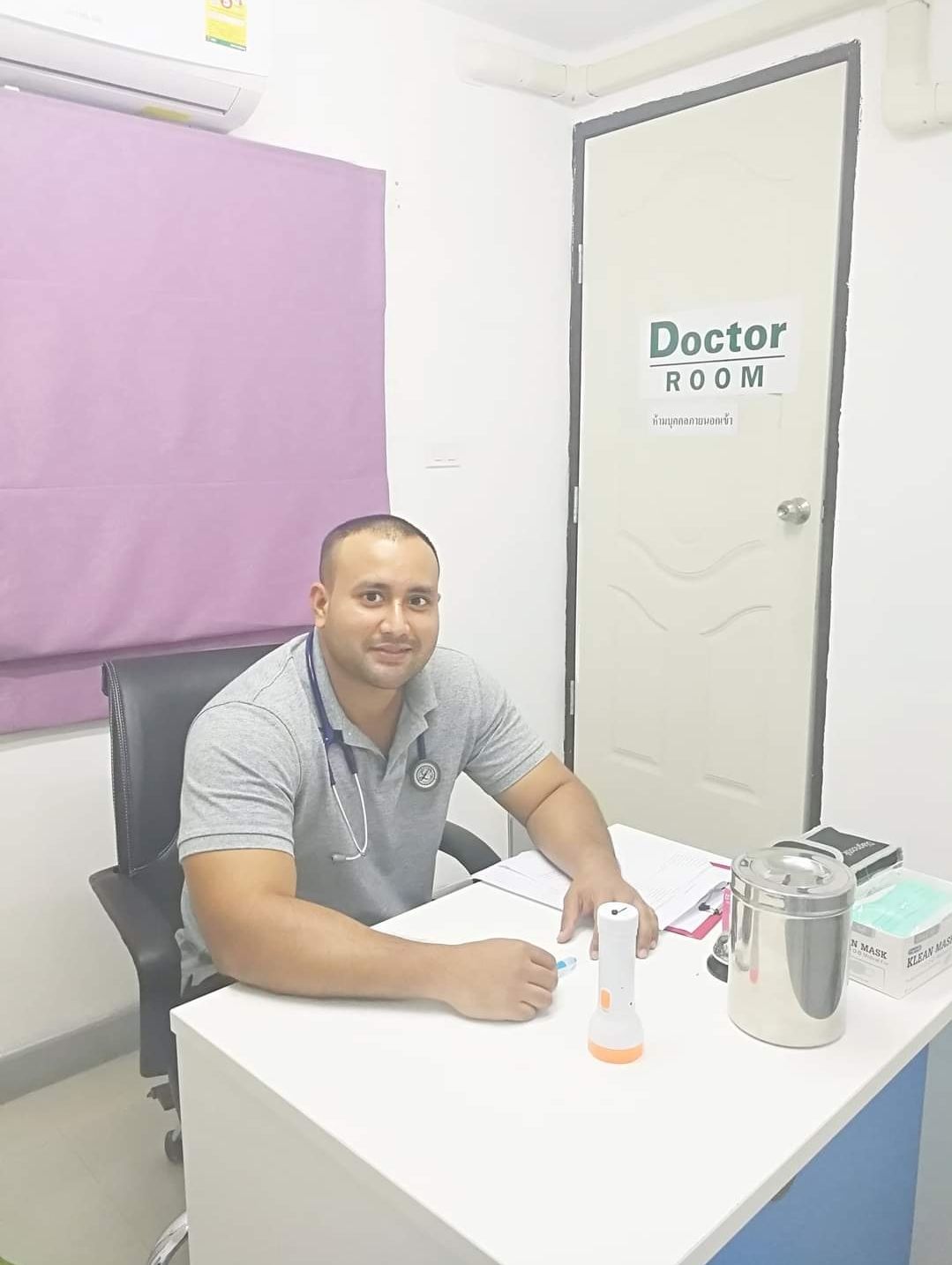
Dr. Ponlawat Pitsuwan is a physician at Doctor Bangkok, a private clinic in central Bangkok. He sees expats, residents, and medical tourists for general medicine, wellness consultations, and IV therapy. His focus is straightforward, evidence-based care delivered in plain language.