

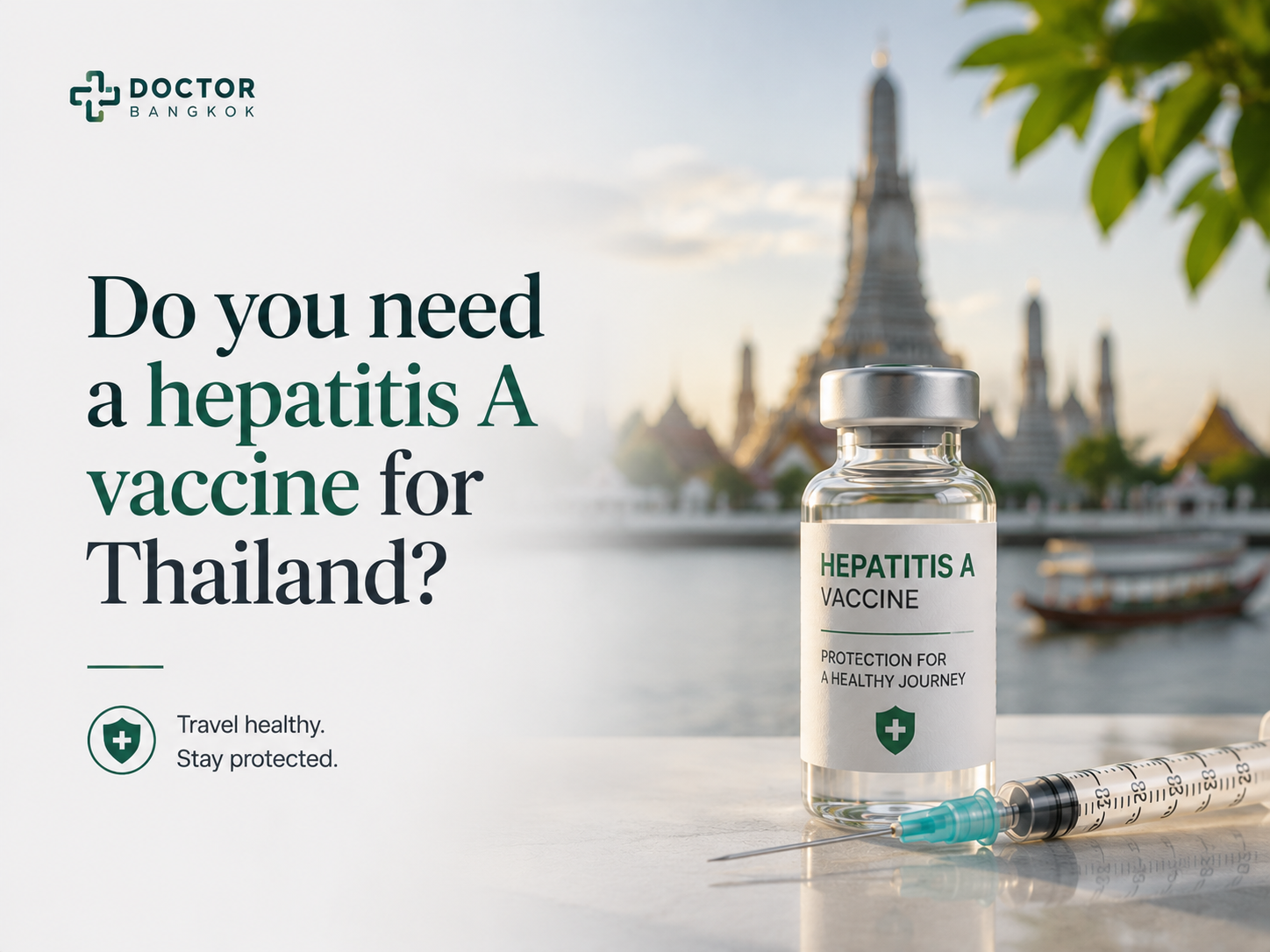
Clinically reviewed by Dr. Ponlawat Pitsuwan, Physician, Doctor Bangkok. Last reviewed: July 2026
Yes. The hepatitis A vaccine is strongly recommended for all unvaccinated travellers to Thailand, including people already living in Bangkok. A single dose gives good short-term protection and can be given the day you travel. A second dose at six to twelve months extends that protection for decades.
If you are flying to Thailand soon and working through a travel vaccine checklist, hepatitis A is not one to skip. Thailand sits in a moderate-to-high risk zone for hepatitis A, and Bangkok is seeing more cases this year than last. This is not a rural-only risk. It is happening in the city.
If you are an expat who has been living in Bangkok for a year or two and never thought about this vaccine, you are in good company. Most patients I see about this have been eating street food daily without any hepatitis A protection. Getting vaccinated now still makes sense.

Is hepatitis A actually a risk in Thailand right now?
Yes, and the numbers are getting harder to ignore. Between January and April 2026, Thailand recorded over 670 confirmed hepatitis A cases, roughly double the figure from the same period the year before. Bangkok and Chonburi were among the hardest-hit provinces.
This is not a remote-village problem. It is an urban, food-driven outbreak happening in the same city where most of you reading this live or are heading to. That context matters when you are deciding whether this vaccine is worth your time.
How do you catch hepatitis A in Thailand?
Hepatitis A spreads through contaminated food and water. You swallow a tiny amount of the virus, usually without knowing it, and weeks later you feel sick.
Street food is the most commonly cited risk, but that framing is a bit misleading. The risk is any situation where food or water has been handled by someone carrying the virus. That includes restaurants at every price point. Bangkok’s food scene is one of the best in the world, but hygiene conditions behind the counter vary enormously, and you rarely know what you are getting.

The "nice hotel" myth
I hear this a lot. "I’m staying at a five-star hotel, so I should be fine." I understand why people think that. But hepatitis A does not care about your hotel rating.
You eat at a market. You grab something from a food court. You share a meal with friends at a local restaurant. Any of those moments carries the same risk as eating from a street cart. The 2026 outbreak data shows cases concentrated in Bangkok’s urban areas, not in rural provinces. That should correct the assumption that upscale travel means zero risk.
What if you already live in Bangkok?
This is the question no travel vaccine website ever answers, because they are all written for people planning a two-week holiday. But a big part of my practice is expats who have been here for years and simply never got around to this.
If you have never had the vaccine and have never had hepatitis A, you should get vaccinated regardless of how long you have lived here. Long-term residents eat the same food and face the same exposure as any tourist. Possibly more, because you eat here every single day.
If you are over 40 and grew up somewhere with less reliable water infrastructure, there is a chance you have natural immunity from childhood exposure. A simple blood test, an anti-HAV antibody check, can tell us whether you are already immune before you pay for the vaccine. At Doctor Bangkok we sometimes recommend this for older patients before going straight to vaccination. It is worth asking about.
What if your trip is in a few days?
Get vaccinated today. It is not too late.
The hepatitis A vaccine can be given on the day you travel. One dose starts building protection within days, and by two weeks that protection is meaningful. It is not as complete as the full two-dose course, but it is substantially better than nothing. Most adults who get a single dose before travel are well protected for the trip.
You do not need to have booked six weeks in advance. If you are flying out of Suvarnabhumi in three days and you have never had this vaccine, come in, get the first dose, and eat a little more carefully while your immune system ramps up. Doctor Bangkok sees last-minute vaccination requests regularly and can usually offer same-day or next-day appointments.
What does the vaccine schedule look like?
The standard course is two doses. You get the first dose now and return for the second dose anywhere from six to twelve months later. After both doses, protection is estimated to last at least 25 years, possibly longer.
If you want hepatitis A and B protection together, the combined vaccine Twinrix covers both in a three-dose course. There is also a combined hepatitis A and typhoid option, which suits travellers who want to cover both in fewer injections. These are worth discussing at your appointment depending on your travel plans and vaccine history.
What does hepatitis A actually feel like?
Most adults feel quite sick. You get fever, nausea, stomach pain, and then jaundice, where your skin and the whites of your eyes turn yellow. That happens because your liver is inflamed and struggling to do its job.
Most people recover fully, but it can take weeks to months before you feel normal again. There is no specific treatment. You rest, stay hydrated, and wait it out. Serious liver complications are less common but do happen, particularly in older adults. This is a vaccine-preventable illness that can derail your life for months. The vaccine is straightforward and the protection is excellent.
Should you get tested for immunity before vaccinating?
For most first-time travellers under 40, no. Just get the vaccine. It is safe to give even if you already have immunity, and testing first adds time and cost without much benefit in that group.
For older adults, long-term Bangkok residents, or anyone who grew up somewhere hepatitis A was common in childhood, testing first can make sense. If the blood test shows you are already immune, you save the cost of the vaccine and have confirmation you are protected. Ask your doctor about this at your appointment.
Hepatitis A vaccination is available at Doctor Bangkok, our private clinic in central Bangkok, a short walk from the BTS. We stock the vaccine year-round and offer same-day appointments for travellers who need it quickly. Whether you are heading to Thailand next week or you have been living here for years and never got around to it, book a consultation at doctorbangkok.co.th or visit our hepatitis A vaccine page to check availability.
Is the hepatitis A vaccine mandatory to enter Thailand?
No. Thailand does not require hepatitis A vaccination for entry. The only vaccine that can be a formal entry requirement is yellow fever, and only if you are arriving from a country where yellow fever is present. Hepatitis A vaccination is strongly recommended by the CDC, WHO, and most national travel health bodies, but it is not a legal requirement.
Can I get the hepatitis A vaccine if I am already living in Bangkok?
Yes, and you should if you have never had it. Being in Bangkok already does not reduce your risk. You can visit Doctor Bangkok and get vaccinated without a prior appointment in most cases. The first dose starts building protection within a couple of weeks.
How long does the hepatitis A vaccine last?
One dose gives solid short-term protection. Two doses, with the second given six to twelve months after the first, gives protection estimated to last at least 25 years. Most healthy adults who complete both doses do not need further boosters.
I am flying to Thailand in two days. Is it too late to get vaccinated?
No. Get vaccinated today. One dose given even on the day of travel still provides meaningful protection, especially by week two of your trip. Pair it with sensible food choices in the first few days and you are in a significantly better position than if you skip it.
Is hepatitis A only a risk in rural Thailand, or is Bangkok a problem too?
Bangkok is a problem too. The 2026 outbreak data shows Bangkok as one of the hardest-hit areas in Thailand, with cases roughly doubling year-on-year. Staying in tourist areas or upscale hotels does not eliminate the risk. The exposure comes from food and water, which you encounter everywhere regardless of where you sleep.
What is the difference between the single hepatitis A vaccine and Twinrix?
Twinrix covers both hepatitis A and hepatitis B in one combined vaccine and requires three doses over six months. The standalone hepatitis A vaccine is two doses. If you have not been vaccinated against hepatitis B either, Twinrix is often the more practical choice and worth discussing at your appointment.
Dr. Ponlawat Pitsuwan
Physician, Doctor Bangkok
a private medical clinic in central Bangkok. He sees expats, residents, and medical tourists for travel medicine, vaccinations, and general health consultations. His focus is straightforward, evidence-based care delivered in plain language.
Part of our guide to travel vaccinations for Thailand.
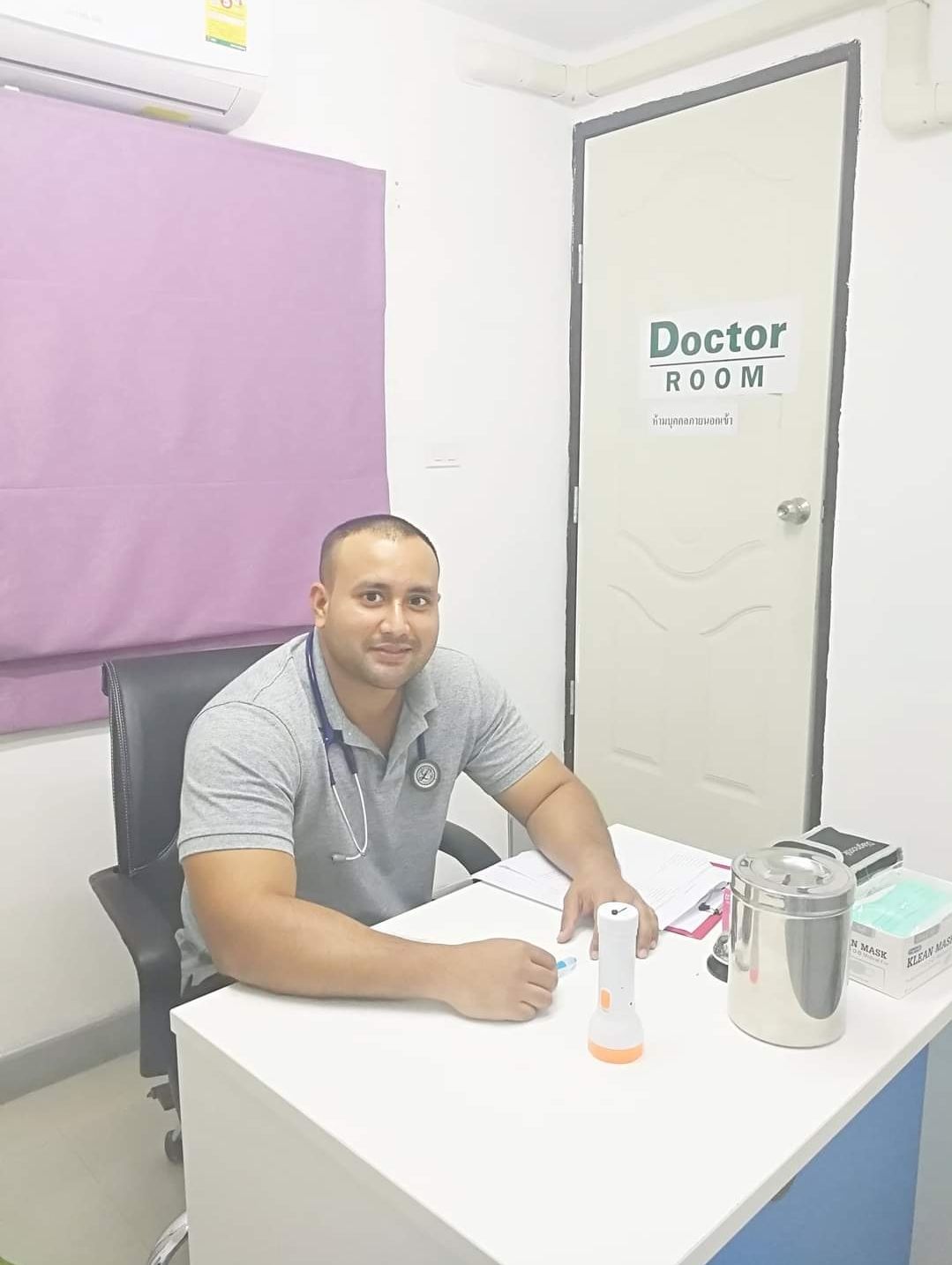
Dr. Ponlawat Pitsuwan is a physician at Doctor Bangkok, a private clinic in central Bangkok. He sees expats, residents, and medical tourists for general medicine, wellness consultations, and IV therapy. His focus is straightforward, evidence-based care delivered in plain language.