


Clinically reviewed by Dr. Ponlawat Pitsuwan, Physician, Doctor Bangkok. Last reviewed: July 2026
Most travel vaccines need at least four to six weeks before departure to work properly. For multi-dose courses like hepatitis B or rabies pre-exposure, you need six to eight weeks minimum. If your trip is sooner than that, do not skip vaccines entirely. Come in anyway. Partial protection is still real protection, and a doctor can help you prioritise what matters most for your itinerary.
Most people think about travel vaccines about two weeks before their flight. I see this constantly at the clinic. Someone has a trip booked to Vietnam, India, or rural Thailand. They Googled "do I need vaccines." Now they are sitting across from me, slightly anxious, wondering if they have left it too late.
The good news is that it is almost never too late to do something useful. But the earlier you come in, the better your options. Here is what you actually need to know about timing, and what is at stake if you wait.

Why Timing Matters
Your immune system needs time after a vaccine to build protection. For most vaccines, that takes around two weeks after the final dose. This is why the standard advice from the CDC and WHO is to start your pre-travel vaccines four to eight weeks before you leave.
Some vaccines need two or three doses spaced weeks apart. You cannot compress a three-dose hepatitis B course into a single week and expect the same result. Yellow fever also has a legal timing requirement on top of the biological one. Your international certificate is not valid until ten days after the injection.
Vaccine-by-Vaccine Timing Breakdown
This covers the vaccines most relevant to travellers coming to or departing from Bangkok.
| Vaccine | Minimum Lead Time | Doses Needed | Protection Duration |
|---|---|---|---|
| Hepatitis A | 2 weeks | 1 (+ booster at 6–12 months) | 1 year after first dose; 20+ years after booster |
| Hepatitis B | 6–8 weeks | 3 (standard schedule) | Long-term, likely lifelong |
| Typhoid (injectable) | 2 weeks | 1 | 2–3 years |
| Typhoid (oral) | 2 weeks | 4 doses over 7 days | 5 years |
| Yellow Fever | 10 days (legal minimum) | 1 | Lifelong (ICVP valid indefinitely) |
| Japanese Encephalitis | 4 weeks | 2 doses, 28 days apart | Booster at 1 year if ongoing risk |
| Rabies (pre-exposure) | 4 weeks | 3 doses over 21–28 days | Booster based on titre testing |
| MMR | 4 weeks | 2 (if not already completed) | Long-term |
| Tdap | 2 weeks | 1 booster | 10 years |
This is a general guide. Your specific needs depend on your destination, your itinerary, your age, your medical history, and what you have already had. A face-to-face consultation is the only way to get this right.

Required vs. Recommended vs. Routine
These three categories mean different things, and mixing them up causes real problems.
Required means legally mandated for entry. Yellow fever is the main example. If you are arriving in Thailand from a yellow-fever endemic country, authorities can ask to see your International Certificate of Vaccination or Prophylaxis, your ICVP. If you are leaving Bangkok for sub-Saharan Africa or parts of South America, many countries will not let you in without one. This is a border requirement, not a clinical suggestion.
Recommended means a doctor advises it based on your destination and activities. Hepatitis A, typhoid, Japanese encephalitis, and rabies pre-exposure all fall here for travellers to Southeast Asia. There is no legal obligation, but the risk is real.
Routine means vaccines you should already have regardless of travel. Measles, tetanus, COVID-19. Many adults I see, particularly expats who have not seen a doctor in years, find they are overdue for boosters. Travel is a good prompt to catch up.
Thailand-Specific Considerations for Expats and Visitors
If you are travelling to Thailand, here is what I would actually prioritise. Hepatitis A and typhoid are the two most common vaccine-preventable infections I see in travellers here. Both spread through contaminated food and water, even in good restaurants, even when you are careful.
For Bangkok city trips, those two plus a tetanus check covers most of your risk. For rural Thailand, the picture changes. Northern Thailand, border areas near Myanmar and Cambodia, and forested regions bring Japanese encephalitis and rabies into the equation. Malaria is relevant in some border zones too, though that is managed with medication rather than a vaccine.
Dengue and Zika circulate in Thailand and have no widely recommended preventive vaccine for travellers at this time. Your main protection is insect avoidance: long sleeves, DEET-based repellent, and a mosquito net if you are outside the city. If you develop a high fever in Bangkok or after returning from Thailand, get a dengue test the same day. Do not wait.
Living in Bangkok and Travelling Onward
This is a situation I see often with the expat community here. You have been in Bangkok for a year or two. You are used to the food and the city. Now you are flying to India for a wedding, doing an overland trip through Cambodia and Laos, or heading to East Africa for a safari.
The vaccines you had when you first arrived may be due for review. Typhoid protection lasts two to three years for the injectable version. If your last shot was three years ago and you are heading somewhere higher-risk, a booster is worth doing before you go.
Bangkok is a practical place to sort this out. Vaccines are available, the access is straightforward, and English-speaking doctors at Doctor Bangkok can complete a full pre-travel review without a long wait. A lot of expats do not realise how simple this is to do here.
What to Do If Your Trip Is Less Than Four Weeks Away
Do not panic, and do not skip the appointment. Come in.
If you have two weeks, you can still get hepatitis A, injectable typhoid, and tetanus coverage, and they will have time to work before you leave. Yellow fever can be done as long as you have ten days before entry. Japanese encephalitis and full rabies pre-exposure are the courses hardest to complete on a short timeline.
For rabies, an accelerated schedule over seven to fourteen days is an option when time is short. It is not the standard schedule, but it still provides meaningful pre-exposure protection.
If you are genuinely short on time, the conversation shifts to prioritising based on your real risk. Where are you going exactly? Are you staying in a city or rural areas? Do you work with animals? Do you have easy access to a hospital during the trip? These answers shape what we do with the time you have.
Pregnancy, Children, and Immunocompromise
Vaccine timing is more complex in these situations, and you need an individual consultation rather than a general guide.
Pregnant travellers cannot receive most live vaccines, including yellow fever and MMR. Sometimes that means deferring travel to certain destinations rather than travelling without adequate protection.
Children follow different dosing schedules, and some vaccines are not approved below certain ages. If you are on immunosuppressive medication or have a condition affecting your immune system, some vaccines may not produce a strong enough response, and others may carry additional risk. This needs a direct conversation with a doctor before anything is given.
Planning a trip and not sure where to start with vaccines? Or leaving sooner than you planned? Doctor Bangkok offers pre-travel health consultations with English-speaking physicians in central Bangkok, accessible by BTS. We can review your itinerary, check your vaccine history, and get you protected before you go. Book an appointment at doctorbangkok.co.th.
Frequently Asked Questions
How long before travelling should I get vaccinated?
The standard recommendation is four to six weeks before departure, and six to eight weeks if you need a multi-dose course. That window gives each vaccine enough time to build full protection. If you have less time than that, come in anyway. A doctor can help you use whatever time you have well.
Is it too late to get travel vaccines if my trip is in less than two weeks?
Rarely. Single-dose vaccines like hepatitis A and injectable typhoid can still go in close to departure and will provide real protection. Yellow fever can be given as long as you have ten days before you enter the destination country. Come in for a consultation and we will work with the time you have.
Which vaccines do I need if I am already living in Bangkok and travelling elsewhere?
It depends on where you are going. Within Southeast Asia, hepatitis A, typhoid, and up-to-date routine vaccines cover most of the risk. For sub-Saharan Africa or South America, yellow fever documentation is often required for entry. A pre-travel consultation at Doctor Bangkok takes about twenty minutes and covers all of this based on your specific itinerary.
Do I need different vaccines for a Bangkok city trip versus rural Thailand?
Yes. For Bangkok, hepatitis A, typhoid, and a tetanus check are the priorities. For rural northern Thailand or border areas, Japanese encephalitis, rabies pre-exposure, and a malaria discussion become relevant. Your itinerary matters as much as your destination country.
Can I get multiple vaccines at the same appointment?
In most cases, yes. Combining vaccines in a single visit is safe and efficient, which is one good reason to book early. There are a few exceptions around live vaccines given by injection, which ideally need to be spaced. A doctor will check your full history before giving anything.
What is the yellow fever certificate and do I need one for Thailand?
The International Certificate of Vaccination or Prophylaxis, the ICVP, is proof that you have had a valid yellow fever vaccine. Thailand requires it if you are arriving from a country where yellow fever is endemic. The certificate only becomes valid ten days after the injection, so this is not one you can leave to the last minute.
Dr. Ponlawat Pitsuwan
Physician, Doctor Bangkok
a private medical clinic in central Bangkok. He sees expats, residents, and medical tourists for travel medicine, pre-travel consultations, and general health concerns. His focus is straightforward, evidence-based care delivered in plain language.
Part of our guide to travel vaccinations for Thailand.
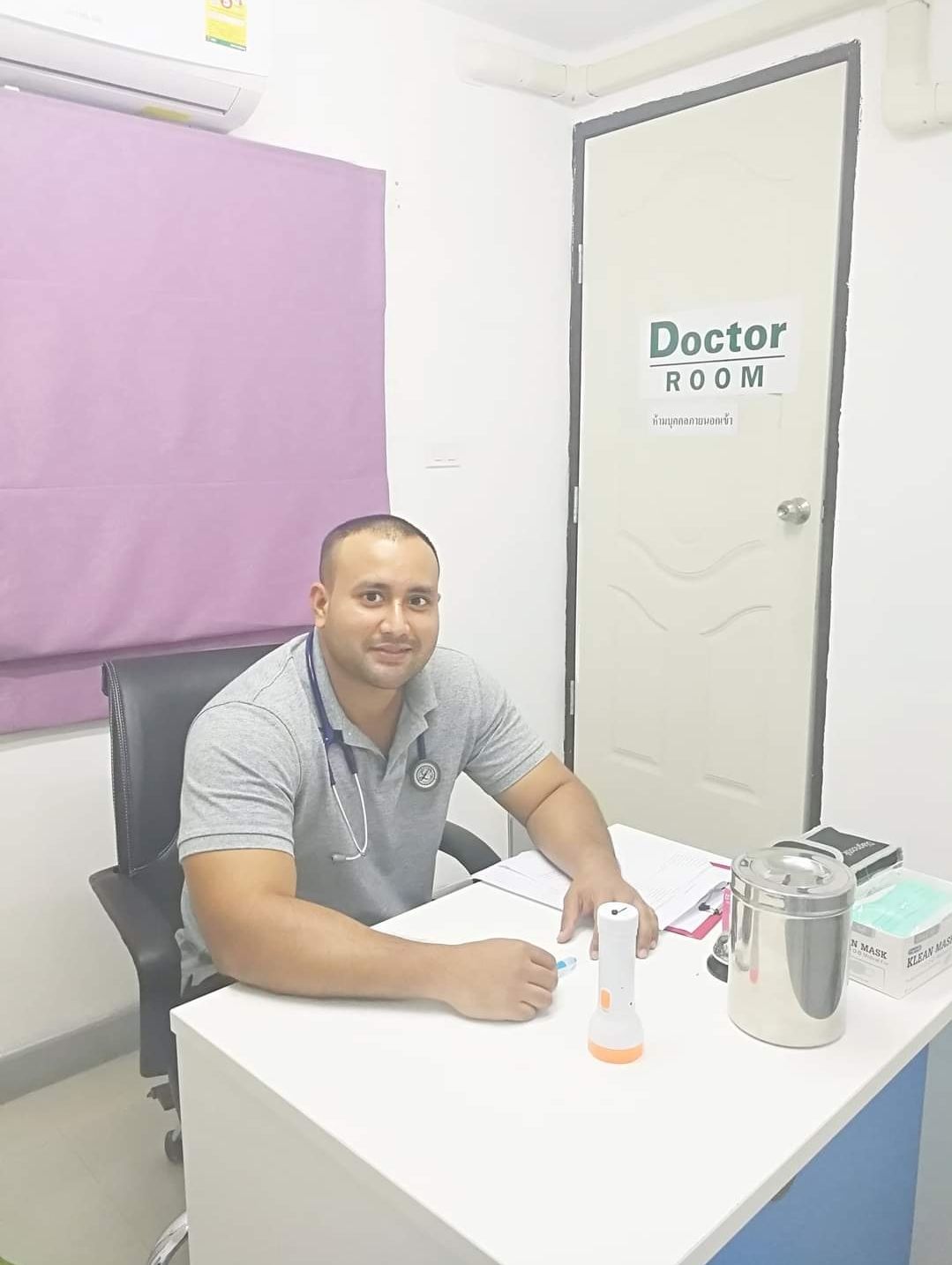
Dr. Ponlawat Pitsuwan is a physician at Doctor Bangkok, a private clinic in central Bangkok. He sees expats, residents, and medical tourists for general medicine, wellness consultations, and IV therapy. His focus is straightforward, evidence-based care delivered in plain language.