
Clinically reviewed by Dr. Ponlawat Pitsuwan, Physician, Doctor Bangkok. Last reviewed: July 2026
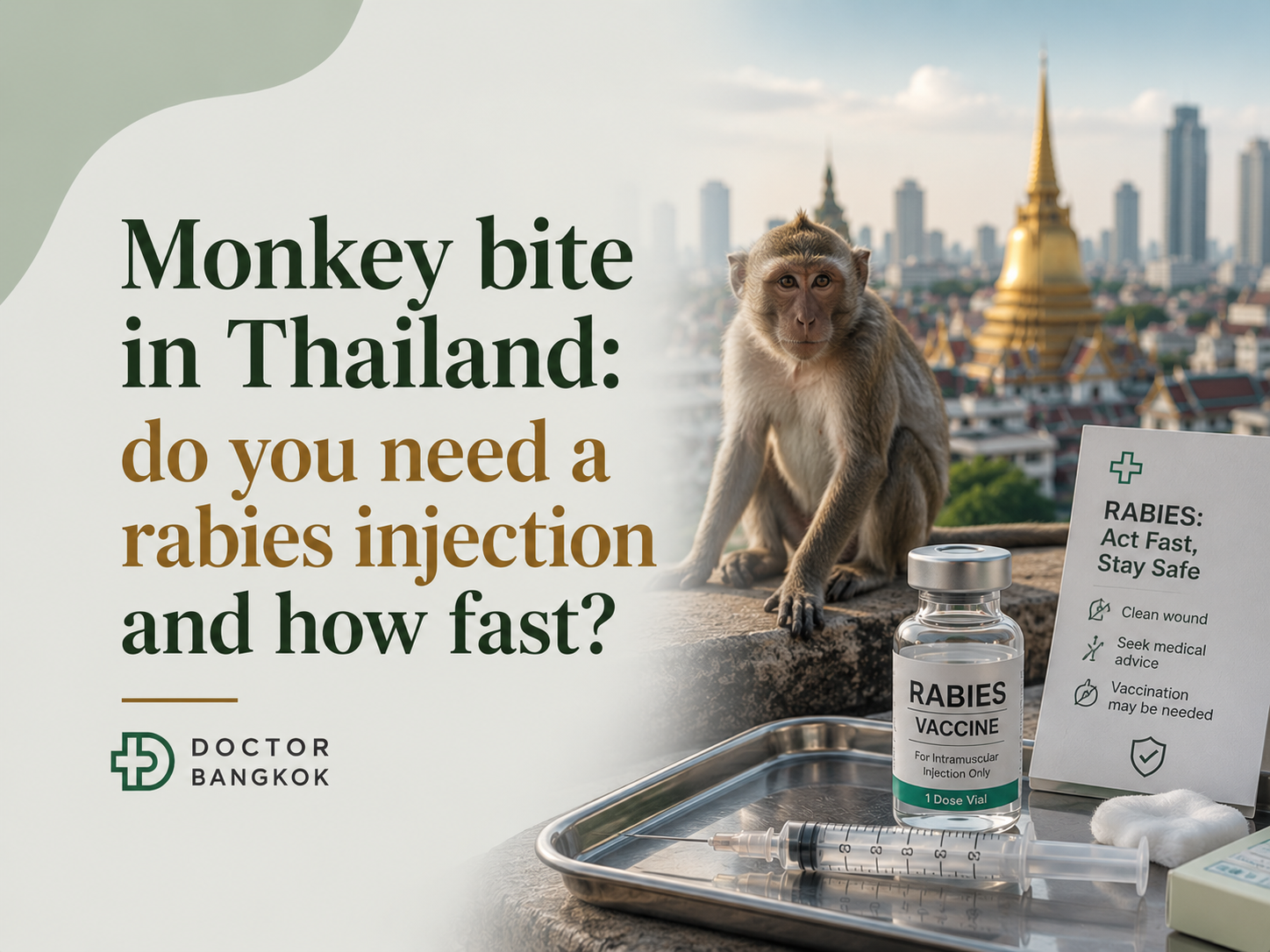
Yes, you need treatment, and you need it today. Any monkey bite or deep scratch in Thailand is treated as a rabies-risk exposure until proven otherwise. Wash the wound immediately with soap and water for at least 15 minutes, then get to a clinic the same day for a rabies vaccine, wound assessment, and antibiotic cover. Do not wait to see if symptoms develop.
If you are reading this after a monkey just bit or scratched you, stop and wash the wound right now. Soap and water, 15 minutes, under running water. Then come back and finish this. That wash is the single most important thing you can do before you reach a clinic.
Thailand has monkeys almost everywhere tourists go. Lopburi, Monkey Beach on Phi Phi, viewpoints in Phuket, trails in Krabi, temples across the country. Bites happen more than people expect. Treatment works extremely well when you start it fast. Waiting even a day or two makes everything more complicated.

Where in Thailand are monkey bites most common?
Lopburi tops the list. The monkey temple there is famous, and the macaques are aggressive, especially around food. Monkey Beach on Koh Phi Phi is another high-bite spot. Tourists wade ashore and the monkeys swarm them. Phuket’s Big Buddha area, Railay Beach in Krabi, and several temples in Chiang Mai also see regular incidents.
Bangkok itself is lower risk, but not zero. Lumpini Park has monkeys occasionally, and some canal-side temples attract them. If you are bitten anywhere in Thailand and make your way to the capital, Doctor Bangkok can assess your wound and start or continue your treatment the same day.
The real infection risks, and it is not just rabies
Monkey bites in Thailand carry three separate threats. Most people only think about one.
Rabies is the most serious. Thailand is a rabies-endemic country, meaning the virus circulates in the local wildlife population. The long-tailed macaques most common in Thai tourist areas can carry it. If the virus reaches your brain without treatment, it is fatal. This is not something to wait and see about.
The second risk is Herpes B virus. Macaques carry it and are unaffected, but it can cause severe brain infection in humans. The virus is widespread among Thai macaques. Transmission to tourists is very rare, but a deep bite or saliva contact with your eyes or mouth raises the concern, and your doctor needs to know how the bite happened.
The third risk is bacterial infection. Monkey mouths carry bacteria that can cause serious wound infections. This is why antibiotic cover is often prescribed after a bite, and why monkey bite wounds are typically not stitched closed straight away.

First aid before you reach the clinic
Wash the wound. Soap breaks down the outer layer of both the rabies virus and Herpes B virus, so a thorough wash is genuinely protective, not just precautionary. Fifteen minutes under running water with soap is the standard. Most people do about 30 seconds. That is not enough.
After washing, apply an antiseptic if you have one. Iodine or an alcohol-based solution works. Then get to a clinic. Do not apply a tight bandage. Do not wait until tomorrow.
What happens at the clinic
When you come in, your doctor will look at the wound and classify the exposure. The WHO uses three categories. Category I is contact with intact skin and no wound, so no treatment is needed. Category II is a scratch or minor bite that breaks the skin, and a vaccine course is required. Category III is a deep bite, multiple bites, or saliva contact with a mucous membrane, and that means vaccine plus rabies immunoglobulin.
Rabies immunoglobulin, or RIG, is injected into and around the wound. It gives your immune system immediate protection while the vaccine builds your own response over the following weeks. If your wound qualifies for Category III and you do not receive RIG at your first visit, it becomes much harder to use once the vaccine course has started. This is one of the main reasons same-day treatment matters so much.
Your doctor will also check your tetanus status and decide whether antibiotics are needed based on wound depth and location.
Already pre-vaccinated against rabies? Here is what changes
If you completed a full pre-exposure rabies vaccine course before coming to Thailand, your treatment after a bite is simpler. You do not need RIG. You only need two booster doses, one on the day of the bite and one three days later.
That is a significant difference in cost and stress. But you still need to come in the same day. The wound still needs proper care, and you still need tetanus and antibiotic assessment.
If you are not sure whether your previous vaccination was a full course, bring whatever records you have. If you cannot find them, we treat you as unvaccinated to be safe.
Getting treatment in Bangkok
Doctor Bangkok is in central Bangkok, BTS accessible, with English-speaking doctors available every day. If you have been bitten anywhere in Thailand and made your way to Bangkok, we can start or continue your rabies post-exposure treatment here.
We store rabies vaccine in proper cold-chain conditions, which matters more than people realise. Vaccines stored incorrectly lose effectiveness. We also carry rabies immunoglobulin for Category III exposures.
At your first visit, expect a wound assessment, WHO exposure classification, RIG if indicated, your first vaccine dose, tetanus review, and antibiotic prescription if needed. We provide a full written treatment record for travel insurance and for continuing your vaccine series elsewhere if you are leaving Thailand. You can find full details on our rabies vaccine page.
The vaccine course runs over four visits: day 0, day 3, day 7, and day 14. If you are leaving Bangkok between doses, we document exactly what you have received so any clinic abroad can continue without starting over.
Bitten somewhere else in Thailand and now in Bangkok?
This is one of the most common situations I see. Someone gets bitten on Koh Phi Phi, starts their vaccine series at the island clinic, then flies to Bangkok. They come to Doctor Bangkok to continue.
This works fine. Bring your vaccination record from the first clinic, even if it is a handwritten note with the vaccine name and date. We match the schedule and continue from where you left off. The key is not missing a dose window. If you are unsure whether your timing is still within range, come in and we will check.
Will travel insurance cover this?
In most cases, yes. Post-exposure rabies treatment after an animal bite is a medical emergency, and most international travel insurance policies cover it. Thailand works on a pay-and-claim model at private clinics: you pay at the time of treatment and claim reimbursement later.
Doctor Bangkok provides an itemised receipt and medical report that gives insurers what they need. Keep photographs of your wound if you can, and document where and when the bite happened.
Pre-exposure vaccination taken before travel is usually not covered because insurers treat it as elective. Emergency post-bite treatment is a different matter. Check your policy if you are unsure, and call your insurer from the clinic if needed.
How to avoid being bitten
Do not feed the monkeys. This is the biggest driver of bites. A monkey that links humans with food becomes bold and aggressive fast.
Do not make direct eye contact or bare your teeth. Both are threat signals to macaques. If a monkey approaches, stay still, avoid direct eye contact, and back away slowly. Do not run.
Male macaques are significantly more aggressive during mating season, roughly October to January. Be more cautious at popular monkey sites during those months.
If you are heading to a high-exposure area and have not been vaccinated, ask about pre-exposure rabies vaccination before you go. Three doses over a few weeks gives you a safety net and simplifies treatment if something does happen.
Been bitten or scratched by a monkey in Thailand? Do not wait. Doctor Bangkok offers same-day wound assessment, rabies post-exposure vaccination, rabies immunoglobulin for severe exposures, antibiotic cover, tetanus review, and full insurance documentation. English-speaking doctors, BTS accessible, open every day. Visit doctorbangkok.co.th or walk in to be seen today.
FAQ
Do I need treatment if a monkey only scratched me and did not draw blood?
If the scratch broke the skin at all, yes. A scratch that barely marks the surface is still a WHO Category II exposure, which means a full rabies vaccine course is recommended. Monkey claws carry saliva from grooming, so even a superficial scratch can transfer the virus. Come in the same day.
I was bitten on a Thai island and am now in Bangkok. Can I continue my rabies shots here?
Yes, this is something Doctor Bangkok handles regularly. Bring your vaccination record from wherever you started, and we continue the series from the correct point in the schedule. Do not restart from scratch. Just come in and we will sort out the timing.
I had a pre-exposure rabies vaccine series before coming to Thailand. Do I still need treatment after a monkey bite?
Yes, but the protocol is much simpler. You need two booster doses on day 0 and day 3, and you do not need rabies immunoglobulin. You still need to come in the same day for wound care, a tetanus check, and antibiotic assessment.
Will my travel insurance pay for rabies treatment after a monkey bite in Thailand?
Most international travel insurance policies cover post-exposure rabies treatment as a medical emergency. Thailand is generally a pay-and-claim system, so you pay at the clinic and claim reimbursement later. Doctor Bangkok provides a full itemised receipt and medical report to support your claim.
Should I be worried about Herpes B virus after a monkey bite?
The virus is common in Thai macaques, but transmission to humans in everyday settings is very rare. The risk for a tourist is low. Thorough wound washing is your best immediate protection, and your doctor will assess whether antiviral treatment is needed based on how the bite happened.
How long do I have to start rabies treatment after a monkey bite?
The same day is the goal. There is no hard cutoff, but treatment works by getting ahead of the virus before it reaches your nervous system. If it has been more than 24 hours, still come in. Do not skip treatment because you feel fine.
Can I just go to a Thai pharmacy and buy something after a monkey bite?
No. Rabies vaccine and rabies immunoglobulin require a prescription, proper cold-chain storage, and clinical administration. A pharmacy cannot provide what you need. You need a clinic, and you need it today.
Dr. Ponlawat Pitsuwan
Physician, Doctor Bangkok
a private medical clinic in central Bangkok. He sees expats, residents, and medical tourists for animal bite assessment, rabies post-exposure treatment, travel medicine, wound care, and general medical consultations. His focus is straightforward, evidence-based care delivered in plain language.
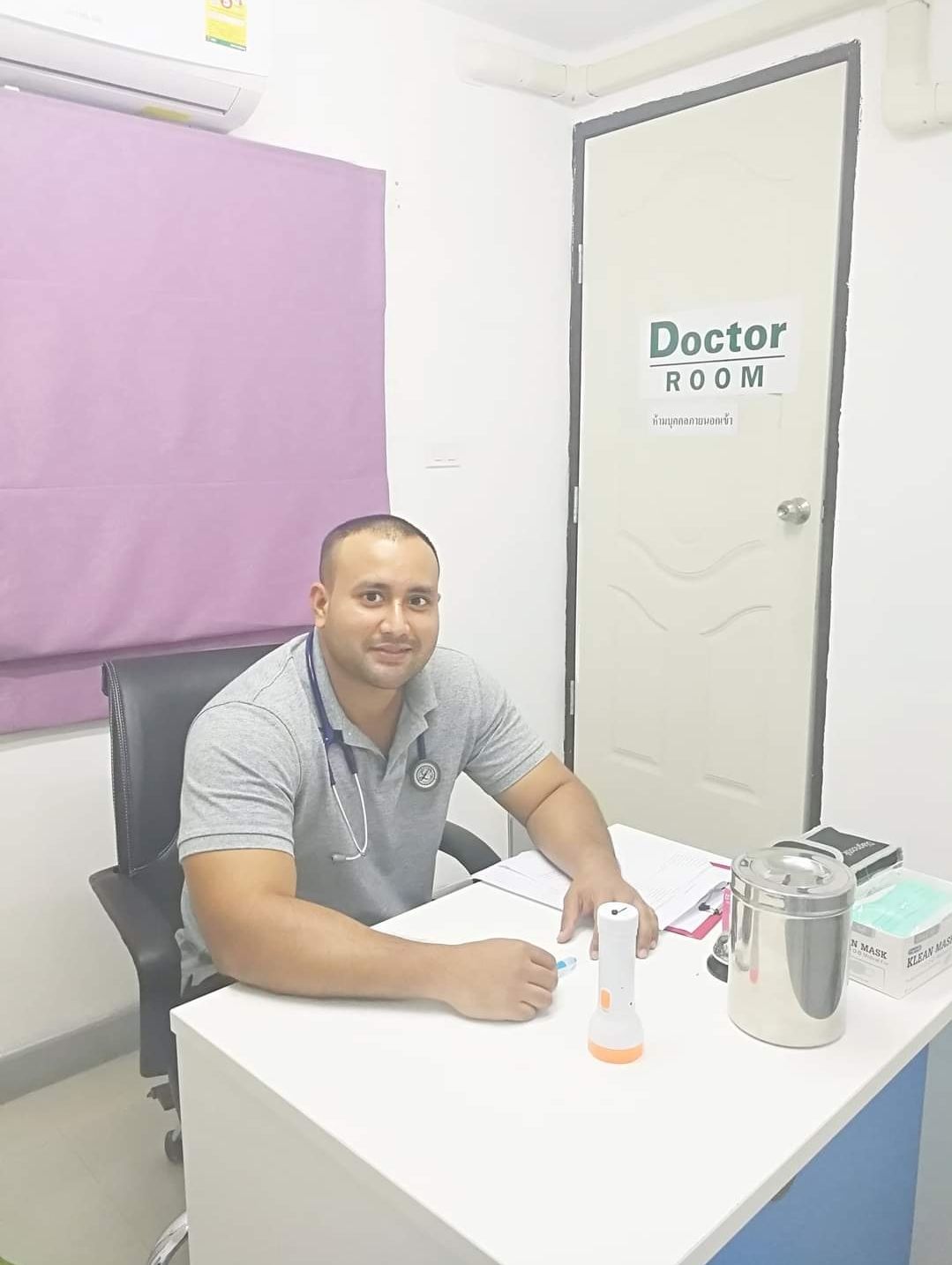
Dr. Ponlawat Pitsuwan is a physician at Doctor Bangkok, a private clinic in central Bangkok. He sees expats, residents, and medical tourists for general medicine, wellness consultations, and IV therapy. His focus is straightforward, evidence-based care delivered in plain language.