
Clinically reviewed by Dr. Ponlawat Pitsuwan, Physician, Doctor Bangkok. Last reviewed: July 2026
A cat bite that breaks the skin is a medical event, not something to watch and wait on. In Bangkok, where rabies is endemic and most street cats are unvaccinated, any bite that draws blood needs same-day clinical assessment. Bacterial infection can set in within hours. Rabies post-exposure treatment needs to start as soon as possible.
You were feeding a street cat, or playing with one at a guesthouse, or trying to move one off your balcony. It bit you. The wound looks small. Maybe you are not even sure it broke the skin. Now you are Googling at midnight wondering if you are overreacting.
You are not overreacting. Cat bites are genuinely more dangerous than they look, and Bangkok adds a layer of risk that most visitors and expats do not know about. This article tells you what to do right now, what to expect at the clinic, and how to figure out where your bite fits in terms of rabies exposure risk.

Why cat bites are more dangerous than dog bites
Most people assume a dog bite is worse. The wound is bigger, more dramatic. But cat bites carry a bacterial infection rate of roughly 30 to 50 percent, compared to 5 to 25 percent for dog bites.
Cat teeth are thin and needle-sharp. They punch deep into tissue and then the skin closes over the top, sealing bacteria inside. That sealed, low-oxygen environment is exactly where Pasteurella multocida thrives. This bacteria can cause significant swelling, redness, and pain within three to six hours of the bite.
If the bite is on your hand, the risk goes up further. Cat teeth can reach the narrow channels that tendons run through. Infection there can require surgery if not caught early. I see patients at Doctor Bangkok who waited two or three days because the wound looked fine, then arrived with a swollen, stiff hand that needed IV antibiotics. Do not be that patient.
The Bangkok-specific rabies risk you may not know about
Thailand is a rabies-endemic country. That means rabies circulates in the animal population here, including in Bangkok itself. This is not just a rural or border-region issue.
Bangkok’s Department of Disease Control has issued rabies epidemic alerts in specific districts, including Nong Bon, On Nut, Lat Krabang, Bang Na, and areas bordering Samut Prakan. If you live in or visit these parts of the city, the risk from street animal contact is real and documented.
The vast majority of street cats in Bangkok are unvaccinated. You cannot tell whether a cat has rabies by how it looks or behaves. A cat can appear completely normal and still be infectious. That is why the clinical default here is simple: if it bites and breaks the skin, you get assessed and you start the vaccine protocol.

First aid: what to do in the first 15 minutes
Stop and do this before anything else. Wash the wound with soap and running water for a full 15 minutes. Not a quick rinse. Fifteen minutes of active washing. This is the single most effective thing you can do to reduce infection risk right now.
After washing, apply povidone iodine or another antiseptic if you have it. Do not squeeze the wound deeply. Do not close it with tape or a bandage that traps anything inside.
Then get to a clinic. Rabies post-exposure treatment has no safe delay window. The sooner it starts, the better.
Understanding the WHO exposure categories
The WHO classifies animal bite exposures into three categories. Knowing where your bite fits tells you what treatment you need.
Category I means contact with an animal but no skin break. Touching, feeding, or the animal licking intact skin. Wound washing only, no vaccine needed.
Category II means a bite or scratch that breaks the skin, even slightly, without bleeding. This requires wound washing plus the rabies vaccine series.
Category III means any bite that causes bleeding, any scratch that bleeds, or animal saliva on broken skin or on the eyes, nose, or mouth. Category III requires wound washing, the rabies vaccine series, and rabies immunoglobulin (RIG). RIG is an antibody injection given around the wound that provides immediate protection while the vaccine builds your immune response.
Here is the part most people miss. A scratch from a cat claw that draws blood is automatically Category III. It does not matter how small the scratch is. If it bled, you need RIG, not just the vaccine.
| WHO Category | What happened | What you need |
|---|---|---|
| Category I | Contact, no skin break | Wash wound only |
| Category II | Bite or scratch breaks skin, no bleeding | Wound wash + rabies vaccine |
| Category III | Bite or scratch causes bleeding, saliva on broken skin | Wound wash + rabies vaccine + RIG |
What happens at the clinic
When you come in, the doctor will assess the wound, clean it properly, and check your tetanus status. If you are not up to date, that gets sorted at the same visit.
For rabies, the standard vaccine schedule used in Thailand is doses on day 0, day 3, day 7, and day 14. If you need RIG, it is given at the first visit, injected around the wound. For bacterial infection, the antibiotic most commonly used for cat bites is amoxicillin-clavulanate, taken for five to seven days.
The doctor will also ask whether the cat can be observed. If it is a known pet that can be monitored for 10 days and stays healthy, that information can affect decisions. With a street cat you cannot catch or identify, the default is to treat.
Cat scratch fever: a risk people forget
If a cat scratched rather than bit you, there is another infection worth knowing about. Cat scratch fever is caused by a bacterium called Bartonella henselae, which cats carry in their saliva and on their claws.
Symptoms usually appear one to two weeks after the scratch: a small bump at the scratch site, followed by swollen lymph nodes nearby. You may also get a mild fever and feel tired. In healthy adults it often resolves on its own, but some cases need antibiotic treatment.
If you develop swollen glands in your armpit, neck, or groin a week or two after a cat encounter in Bangkok, mention it to your doctor.
Should long-stay expats consider the pre-exposure rabies vaccine?
This comes up a lot with expats who have been in Bangkok a year or two and realise they interact with street cats regularly. The pre-exposure vaccine involves three doses given over a few weeks before any exposure happens.
If you have had it and then get bitten, you do not need RIG at all, and your post-bite vaccine schedule is shorter. Over a lifetime in a rabies-endemic city, it saves time, money, and the stress of needing RIG on a Saturday night when you are not sure what is available. The vaccination services at Doctor Bangkok cover the full pre-exposure schedule.
I recommend it to most expats who plan to stay more than six months, especially those with children, pets, or a habit of feeding street cats. You know who you are.
Insurance, cost, and what to bring
Rabies post-exposure treatment after an animal bite is emergency medical care and should be covered under most travel and international health insurance policies. In Thailand, the usual process is to pay the clinic and claim reimbursement from your insurer.
Doctor Bangkok provides an itemised receipt and a medical certificate with the clinical details your insurer needs. Bring your passport, your insurance card or policy number, and the emergency contact number for your insurer if you have it.
Pre-exposure vaccination is almost always classified as elective by insurers and is not typically covered. That is worth knowing before you decide when to get it done.
If you have been bitten or scratched by a cat in Bangkok, do not wait to see how it develops. Doctor Bangkok is open daily in central Bangkok, BTS accessible, with English-speaking physicians. We provide same-day wound assessment, rabies post-exposure prophylaxis, tetanus vaccination, and antibiotic prescribing for cat bites. We also offer the pre-exposure rabies vaccine series for long-stay expats. Walk in or contact us at doctorbangkok.co.th to arrange your visit.
FAQ
I was bitten by a cat in Bangkok. Do I definitely need a rabies vaccine?
If the bite broke the skin, yes, you need at minimum the rabies vaccine series. If it caused bleeding, you also need rabies immunoglobulin. In Bangkok, where most street cats are unvaccinated and rabies is endemic, the clinical default is to start treatment promptly rather than wait and see.
How is a cat bite different from a dog bite?
Cat teeth create deep, narrow puncture wounds that seal over quickly, trapping bacteria inside. This gives cat bites a much higher bacterial infection rate than dog bites. Bites to the hand can also reach tendon sheaths, which becomes a surgical emergency if infection sets in. The wound looking small is exactly why people underestimate them.
What should I do in the first 15 minutes after a cat bite?
Wash the wound with soap and running water for a full 15 minutes. Apply povidone iodine or antiseptic if you have it. Do not close the wound or compress it deeply. Then get to a clinic as soon as possible, as there is no safe window to delay rabies post-exposure treatment.
Does my travel insurance cover cat bite treatment in Bangkok?
Rabies post-exposure treatment after an animal bite is emergency medical care and should be covered under most travel and international health insurance policies. In Thailand you pay the clinic and claim reimbursement from your insurer. Doctor Bangkok provides the itemised receipt and medical certificate needed for your claim.
I live in Bangkok long-term and interact with street cats regularly. Should I get the pre-exposure rabies vaccine?
Yes, I would recommend it. Bangkok has active rabies epidemic zones and most street cats are unvaccinated. The pre-exposure vaccine means you will not need RIG if bitten, your post-bite schedule is shorter, and you have more time to reach a clinic. Our vaccination services page has the full schedule details.
A cat scratched me but did not bite. Do I still need to see a doctor?
If the scratch drew blood, it is a Category III exposure under WHO guidelines and needs the full vaccine plus RIG protocol. A scratch that did not bleed is Category II and still needs wound washing and the vaccine series. Come in and get assessed rather than trying to judge it by how small the wound looks.
What is cat scratch fever and could I have it?
Cat scratch fever is an infection caused by Bartonella henselae, a bacterium carried in cat saliva and on claws. Symptoms appear one to two weeks after the scratch and include a bump at the site, swollen lymph nodes nearby, and sometimes a mild fever. If you develop swollen glands in your armpit, neck, or groin after a cat encounter in Bangkok, mention it to your doctor.
Dr. Ponlawat Pitsuwan
Physician, Doctor Bangkok
a private medical clinic in central Bangkok. He sees expats, residents, and medical tourists for wound care, animal bite assessment, travel medicine, vaccinations, and general medical consultations. His focus is straightforward, evidence-based care delivered in plain language.
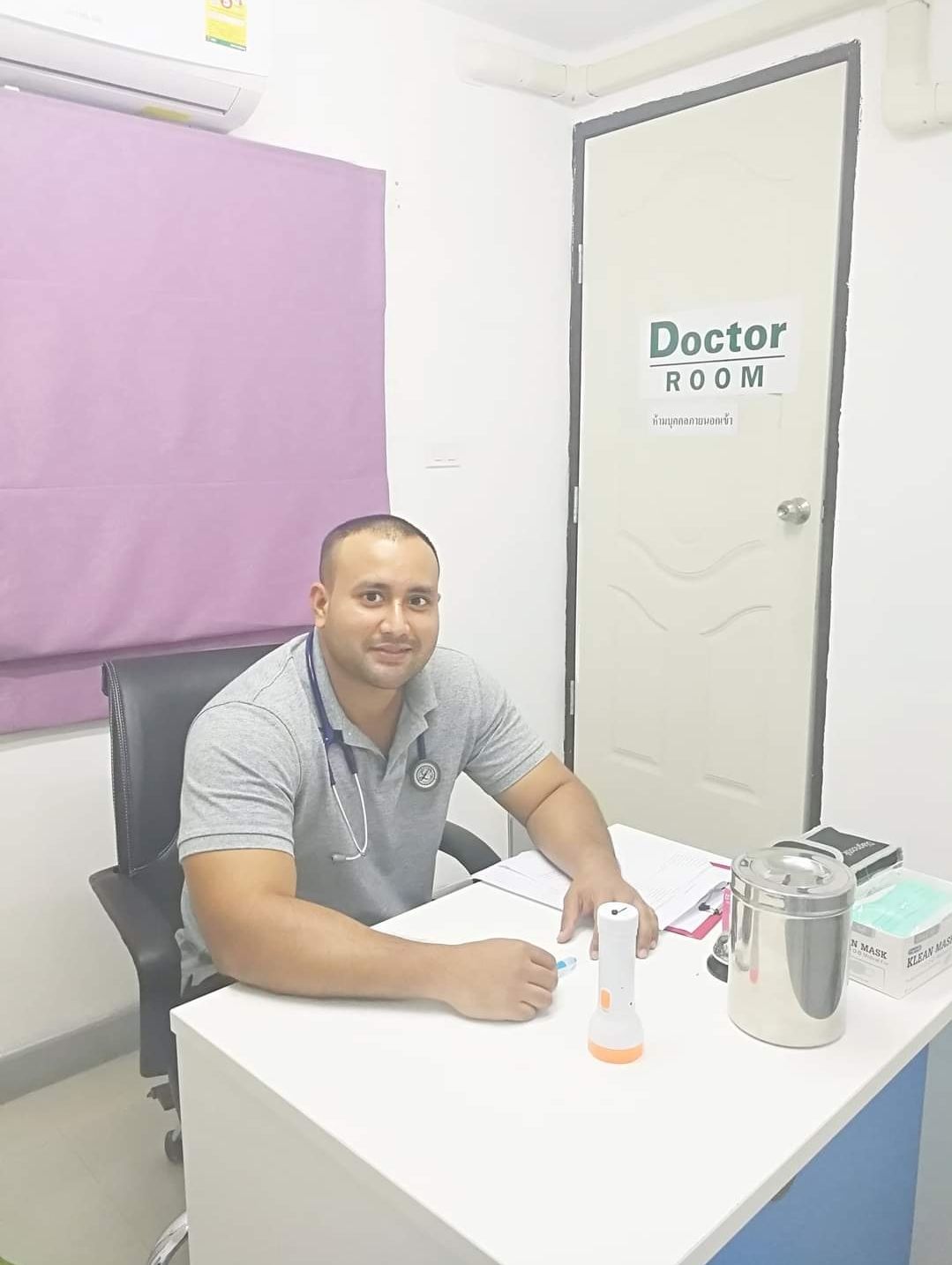
Dr. Ponlawat Pitsuwan is a physician at Doctor Bangkok, a private clinic in central Bangkok. He sees expats, residents, and medical tourists for general medicine, wellness consultations, and IV therapy. His focus is straightforward, evidence-based care delivered in plain language.