
Clinically reviewed by Dr. Ponlawat Pitsuwan, Physician, Doctor Bangkok. Last reviewed: July 2026
Symptoms after returning from Thailand, including fever, rash, stomach trouble, or unusual discharge, can take days to weeks to appear. Dengue symptoms typically start within 4 to 10 days of a mosquito bite. STIs like chlamydia or gonorrhoea may show up within a week or two, while HIV and syphilis need 3 to 12 weeks to show reliably on a test. If you have a fever above 38.5°C, a rash, or any symptoms within 14 days of your return, see a doctor that day.
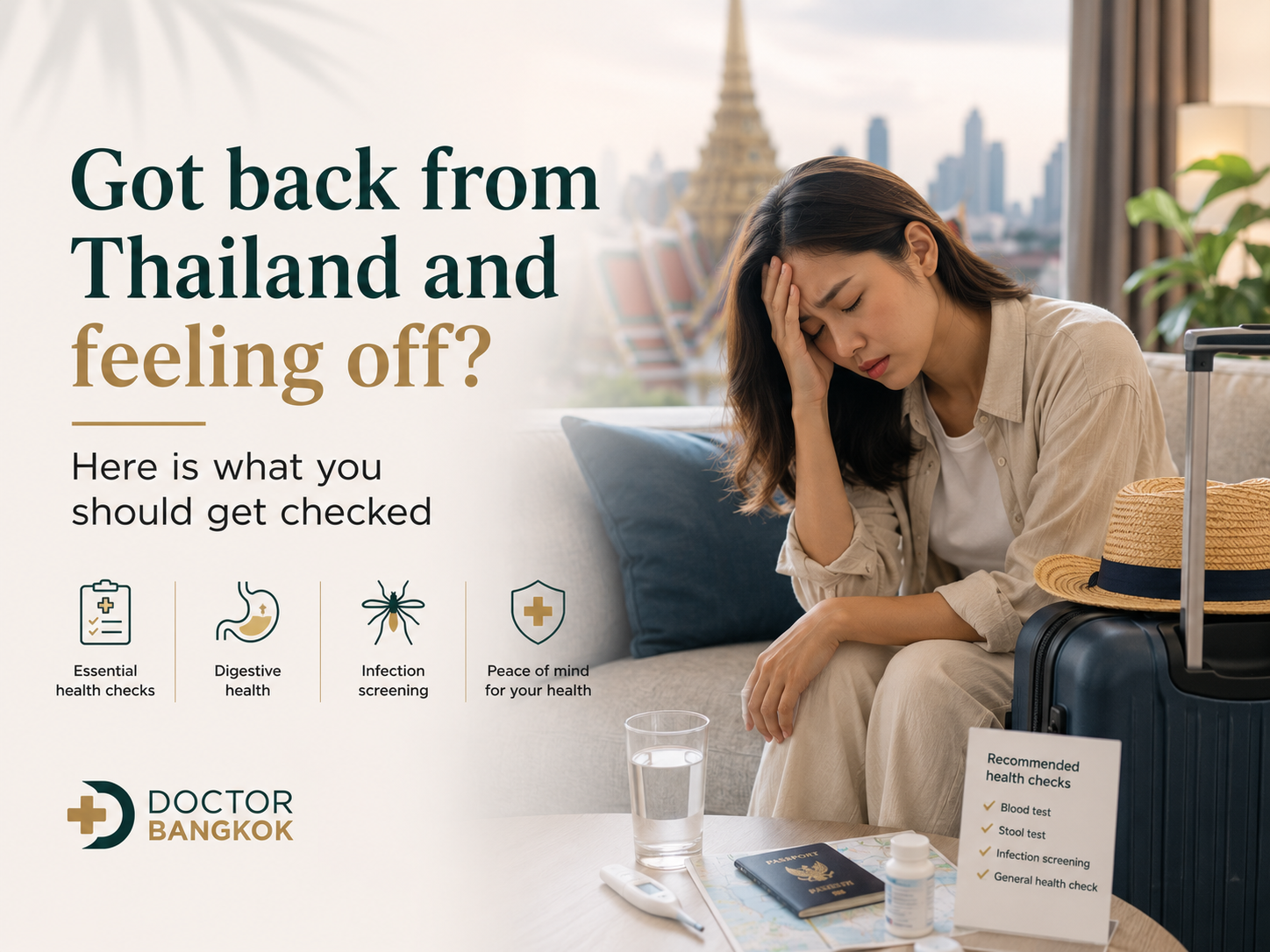
You had a good trip. Maybe a week in Bangkok, a few nights in Chiang Mai, a beach or two. Now you are back and something feels off. A fever that will not quit. A headache sitting behind your eyes. Your stomach has been strange since Tuesday. Or maybe you feel fine physically, but you had unprotected sex and you are Googling at midnight wondering if you should get tested.
I see this pattern every week, from expats living here and visitors who stayed longer than planned. Most of what travellers pick up after Thailand is treatable. What matters is not waiting too long to find out what you are dealing with.

When should you be worried? Red-flag symptoms that need same-day care
Most post-travel symptoms are manageable. But some need a doctor today, not next week.
Come in the same day if you have a fever above 38.5°C within 14 days of returning. That window covers dengue, malaria, typhoid, and chikungunya, all of which circulate in Thailand and all of which can worsen quickly if left alone.
A rash with joint pain is another one I take seriously. Chikungunya causes a distinctive combination of fever, rash, and joint pain that can be debilitating. Dengue can also cause a rash, usually a few days into the fever.
Other symptoms that need same-day attention: blood in your stool, severe abdominal pain, yellowing of the eyes or skin, confusion, or any unusual bleeding. These are not things to sleep on.
How long after Thailand should symptoms appear?
This is the question I get most from people searching their symptoms late at night. Here is a clear reference.
| Condition | Typical onset after exposure | Key symptoms |
|---|---|---|
| Traveller’s diarrhoea | 1 to 3 days | Loose stool, cramps, nausea |
| Dengue fever | 4 to 10 days | High fever, headache, eye pain, rash |
| Chikungunya | 3 to 7 days | Fever, severe joint pain, rash |
| Chlamydia / Gonorrhoea | 7 to 14 days | Discharge, burning, or no symptoms |
| Syphilis | 3 to 6 weeks | Painless sore, then rash |
| HIV (seroconversion) | 2 to 4 weeks | Flu-like illness, or no symptoms |
| Hepatitis A | 2 to 6 weeks | Fatigue, nausea, jaundice |
| Leptospirosis | 2 to 30 days | Fever, muscle aches, red eyes |
| Intestinal parasites | Days to weeks | Bloating, intermittent diarrhoea |
| Hepatitis B | 6 weeks to 6 months | Often none initially |
The key point here is timing. If you feel fine at day three and get tested, you may still test negative for something that has not shown up yet. Getting tested at the right time is what separates a useful result from false reassurance.

Conditions that Thailand travellers often miss
Most people know about dengue and traveller’s diarrhoea. A few conditions are easier to overlook.
Leptospirosis shows up in people who did outdoor activities near rivers, flooded areas, or waterfalls. It spreads through water contaminated with animal urine and causes fever, severe muscle aches, and sometimes red eyes. If you went trekking in the north or swam in natural water, mention it.
Cutaneous larva migrans sounds alarming but is one of the easier things to treat. It causes a moving, itchy red track under the skin, usually on the feet or legs, from walking barefoot on beaches where dogs or cats have been. One course of treatment clears it.
Melioidosis is rare in tourists but worth flagging if you had significant soil or water exposure in rural areas after rain. It can appear weeks later with fever, lung symptoms, or skin sores. It needs specific antibiotic treatment, so telling your doctor where you went matters.
Hepatitis A and B both circulate in Thailand. If you are unvaccinated and ate street food or had unprotected sex, both are worth including in a post-travel screen.
How long after Thailand should you get an STI test?
Testing too early can give a false negative result that feels reassuring but is not accurate.
For chlamydia and gonorrhoea, two weeks after exposure is usually enough for a reliable result. If you have symptoms before that, come in sooner. Both are bacterial infections and can be cured with the right antibiotics. Many people have no symptoms at all, which is exactly why testing matters.
For syphilis, I recommend waiting three to six weeks before your first test, then retesting at 12 weeks if the first is negative and you remain concerned. A negative result before six weeks does not reliably rule it out.
HIV is the one patients ask about most. A fourth-generation test detects both the virus itself and the antibody response, and is reliable from around four weeks after exposure. I still recommend a confirmatory test at three months. If you had high-risk exposure within the last 72 hours, that is a different situation entirely. You need PEP, post-exposure prophylaxis, urgently. Come in now.
If you travel to Thailand regularly or live here, PrEP is worth discussing. It is a daily tablet that reduces HIV transmission risk significantly, with strong clinical evidence behind it. The team at Doctor Bangkok can walk you through whether it is the right fit for your situation.
A sexual health screen after Thailand should not feel unusual. I run these consultations every day. There is no judgement, just a blood draw, a urine test, and results within a few days.
What does a post-travel health check actually include?
When a patient comes to me after returning from Thailand, either with symptoms or just wanting a full check, here is what I look at.
A full blood count shows whether there is active infection or anaemia. Liver function tests pick up hepatitis and some tropical infections early. If you have a fever or had mosquito exposure, I will run a dengue test. If you trekked in rural areas with any malaria risk, a blood film test checks for malaria parasites directly.
For stomach symptoms, a stool test covers parasites, bacteria, and ova. Hepatitis A and B serology checks both exposure and whether any prior vaccination has held. For anyone who had unprotected sex, a full sexual health screen covers HIV, syphilis, chlamydia, and gonorrhoea at minimum.
The exact panel depends on what you did during your trip. A week in a Bangkok hotel is a different risk profile from two weeks of jungle trekking, street food every night, and beaches in the south. Tell me where you went and what you did, and I will tailor the tests. You can book a post-travel check through Doctor Bangkok’s travel health service as a single appointment, and most basic results come back within 24 to 48 hours.
Still in Bangkok? Getting tested here is faster than waiting until home
If you are still in Bangkok or flew back to work here, do not put this off.
Most travel health content online assumes you have already landed back in the UK or US. Getting a GP referral to a travel medicine specialist at home can take weeks. By then, your dengue window has closed, an untreated STI may have progressed, and something that could have been handled in a day has become a months-long process.
Testing here is fast. Private clinic results come back within 24 to 48 hours for most panels. No referrals, no waiting lists. You come in, we run the tests, you have answers.
Our travel health clinic in Bangkok sees this exact situation regularly: expats who have been putting symptoms off, people who got sick mid-trip, and those who want a clean result before flying home. If you are in Bangkok and something feels off, this is the right time to come in.
Feeling off after travel in Thailand? Doctor Bangkok offers post-travel health checks, dengue testing, and full sexual health screening from a central Bangkok clinic with English-speaking doctors. Same-day appointments available. Visit doctorbangkok.co.th/travel-health-bangkok/ to book or ask a question.
FAQ
I feel fine but had unprotected sex in Thailand. Do I still need to get tested?
Yes. Chlamydia, gonorrhoea, and HIV are frequently asymptomatic, meaning you can carry and pass them on without knowing. A two-step approach works best: test at two weeks for bacterial infections like chlamydia and gonorrhoea, then retest at three months for HIV and syphilis to account for the window period.
How do I know if my fever after returning from Thailand is dengue or just a cold?
Dengue tends to hit harder, with a very high fever, a headache behind the eyes, and significant muscle and joint pain. A cold does not usually do that. Any fever within 14 days of returning from Thailand needs a dengue test, and avoid ibuprofen until dengue is ruled out, as it can increase bleeding risk in dengue cases.
What tests are included in a post-travel health check after Thailand?
A standard panel covers a full blood count, liver function tests, dengue antigen or serology, stool testing for parasites, hepatitis A and B serology, and a sexual health screen for HIV, syphilis, chlamydia, and gonorrhoea. The panel is adjusted based on your specific activities and exposures during the trip.
How long after returning from Thailand should I wait before getting an STI test?
For chlamydia and gonorrhoea, two weeks is usually enough. For syphilis, wait three to six weeks. For HIV, a fourth-generation test is reliable from around four weeks, with a confirmatory test at three months. Testing too early risks a false negative, which can create false reassurance rather than a useful answer.
Can symptoms from a Thailand trip appear weeks or months after returning?
Yes, and this is one of the most commonly missed points. Hepatitis B can take up to six months to appear. Intestinal parasites can cause on-and-off symptoms for weeks. Always tell any doctor about recent travel to Thailand, even if the trip was months ago, as it changes the picture for diagnosis significantly.
I had a mosquito bite in Thailand but no fever yet. Should I still get checked?
If you have no symptoms, there is no need to rush in, but stay alert for the next 10 to 14 days. Dengue symptoms typically start within 4 to 10 days of a bite. If you develop fever, headache, or eye pain during that window, come in the same day rather than waiting to see if it passes.
Is there anything specific to watch out for after visiting Thai beaches or doing water activities?
Walking barefoot on Thai beaches can cause cutaneous larva migrans, an itchy, moving track under the skin that clears easily with treatment. Swimming in rivers or flooded areas raises the risk of leptospirosis. Mention both activities when you come in, as each needs specific tests or a targeted treatment approach.
Dr. Ponlawat Pitsuwan
Physician, Doctor Bangkok
a private medical clinic in central Bangkok. He sees expats, residents, and medical tourists for post-travel health assessments, tropical disease evaluation, dengue testing, and sexual health screening. His focus is straightforward, evidence-based care delivered in plain language.
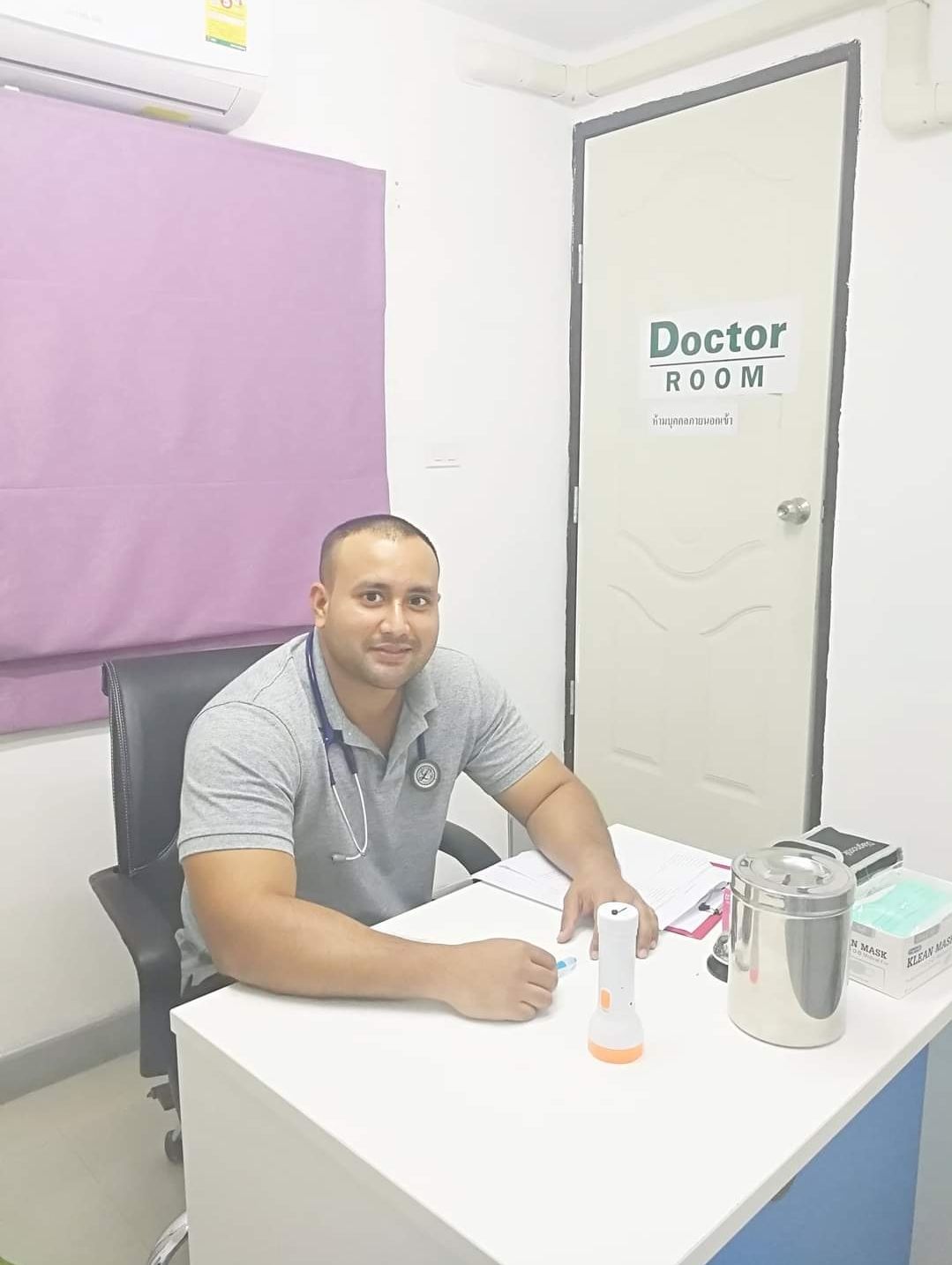
Dr. Ponlawat Pitsuwan is a physician at Doctor Bangkok, a private clinic in central Bangkok. He sees expats, residents, and medical tourists for general medicine, wellness consultations, and IV therapy. His focus is straightforward, evidence-based care delivered in plain language.