

Clinically reviewed by Dr. Ponlawat Pitsuwan, Physician, Doctor Bangkok.
Last reviewed: July 2026
If you have rolled your ankle in Bangkok, you do not need to go to a hospital emergency department. A private walk-in clinic can assess the injury, decide whether an X-ray is needed, strap or brace the ankle, and get you on your way — often within an hour. Most mild to moderate ankle sprains are managed without surgery, but getting a proper clinical assessment early makes a real difference to how fast you recover.
You were playing football near On Nut, running laps at Lumpini Park, or stepping off a kerb on Sukhumvit and your ankle went sideways. Now it is swollen, it hurts to walk, and you are sitting in your condo wondering whether this is serious enough to do something about. Ankle sprains are one of the most common injuries seen at Doctor Bangkok, and they come in from every direction: Muay Thai gyms, hash runs, HYROX training, beach volleyball at the weekend.
Most ankle sprains do not need surgery and do not need a hospital. What they do need is a proper assessment so you know what you are actually dealing with. A lot of expats either tough it out and re-injure themselves two weeks later, or spend three hours in a public hospital emergency room for something that could have been sorted in 45 minutes at a private clinic. This article tells you what to do, what to expect, and when to take it seriously.

Ankle sprain in Bangkok: walk-in treatment without the hospital wait
Bangkok is a genuinely great city to be active in. There are football leagues, running clubs, Muay Thai gyms on almost every soi, and more group fitness options than most cities in the world. There are also uneven pavements, sudden kerb drops, and pitch surfaces that are not exactly Wembley standard. Ankle sprains happen here constantly.
When you sprain your ankle, the ligaments on the outside of the joint stretch or tear. How badly they are injured determines how long you will be off your feet.
Grade I, II, and III: what they actually mean for you
Grade I is a mild stretch. You can usually walk on it, it aches, and it swells a little. Grade II is a partial tear. Walking is painful, swelling is more significant, and bruising often appears within a day or two. Grade III is a complete rupture. The ankle feels unstable, sometimes weirdly painless at first, and bearing weight is usually not possible.
Most patients fall into Grade I or II. Grade III is less common, but it is the one people most often underestimate. The initial pain can be deceptively low because the nerve endings are disrupted. If your ankle felt almost numb after the injury and then swelled rapidly, come in that day.
Should you go straight to a clinic or wait and see?
If you can put weight on it and the swelling is mild, resting and applying ice for the first 24 hours is reasonable. Use a compression bandage if you have one, keep the ankle elevated above hip height, and apply ice wrapped in a cloth for up to 20 minutes at a time.
Come in if you cannot take four steps without serious pain, if there is significant swelling within the first hour, or if the tenderness is focused on the bony parts of the ankle rather than the soft tissue. Those signs tell a clinician there may be more going on than a ligament stretch.
Sprain or fracture? How a doctor tells the difference
This is the question that matters most in the first 24 hours. A clinical decision tool called the Ottawa Ankle Rules guides doctors on whether an X-ray is actually needed. If you cannot bear weight at all, or if there is tenderness directly over the bony bump on either side of the ankle, imaging is warranted.
At Doctor Bangkok, this decision takes about five minutes of clinical assessment. If imaging is needed, it is arranged during the same visit. You do not need to queue at a separate hospital radiology department. For most straightforward sprains, the X-ray confirms no fracture and you leave with strapping, a compression bandage, anti-inflammatory medication if needed, and a clear plan.
When an MRI matters
X-ray shows bone. It does not show ligaments or cartilage. If you have had a significant ankle injury, re-injured the same ankle before, or your pain and instability are not improving after a few weeks of proper management, an MRI may be the right next step.
One injury worth knowing about is a cartilage and bone injury on the ankle joint surface that can occur during a bad sprain and is easily missed if imaging stops at X-ray. It tends to show up as ongoing deep ankle pain long after the soft tissue should have healed. If your ankle is still troublesome after six weeks of sensible management, tell your doctor.
Recovery: what actually gets you back to sport
Rest alone is not a recovery plan. People rest for two weeks, the swelling goes down, and they go straight back to the football pitch. Six weeks later they are back in the clinic with the same ankle, and it is worse.
The part of recovery most people skip is retraining the ankle’s balance and stability. After a sprain, these sensors are disrupted. Without specific exercises to retrain them, the ankle is much more likely to roll again. Single-leg balance work, progressing to unstable surfaces and then sport-specific movement, is the standard approach. Your doctor or a physio can give you a structured plan.
Grade I sprains usually allow a return to light activity in one to two weeks with correct management. Grade II takes three to six weeks. A complete ligament rupture often needs six to twelve weeks and occasionally a surgical review, depending on how the ankle responds to treatment.
Chronic ankle instability: the long-term risk of not treating it properly
A sprain that does not heal properly often becomes a recurring problem. The ankle feels loose, it gives way on uneven ground, and you keep rolling it every few months. This is entirely preventable with the right rehab after the original injury.
Left untreated over years, chronic instability increases the load on the ankle joint and raises the risk of cartilage damage. Eventually, ligament reconstruction can become a conversation. Nobody wants surgery on their ankle when it all started with a football game.
What happens when you walk into Doctor Bangkok
A lot of expats in Bangkok are unsure how a private clinic here actually works. It is simpler than you might think.
You walk in. No referral needed. The doctor does a clinical assessment: examining the joint, testing stability, and deciding whether imaging is needed. If an X-ray is warranted, it is arranged during the same visit. You leave with a diagnosis, a treatment plan, strapping or a brace if indicated, and medication if needed. A straightforward ankle sprain visit typically takes under an hour. All consultations at Doctor Bangkok are in English.
Insurance, direct billing, and what it costs to self-pay
Doctor Bangkok works with major international health insurers. Bring your insurance card and policy details. If your insurer requires reimbursement documentation rather than direct billing, the paperwork is provided at the visit.
If you are self-paying, a private clinic assessment in Bangkok costs a fraction of what an urgent care visit would run in the UK, US, or Australia for the same assessment and treatment. You do not need to make a financial decision about whether you can afford to get your ankle seen. For the kind of injury this article covers, it is very accessible.
If you are new to Bangkok and unsure how private healthcare works more broadly, the travel health page at Doctor Bangkok covers practical ground on using private medical care in Thailand as an expat or visitor.
Rolled your ankle in Bangkok? Doctor Bangkok is a private walk-in clinic in central Bangkok, BTS accessible, with English-speaking physicians. We assess sports injuries including ankle sprains, arrange same-day imaging when needed, and get you a clear diagnosis and treatment plan without the hospital queue. Walk in or book online at doctorbangkok.co.th.
Frequently asked questions
Do I need an appointment to be seen for a sprained ankle at Doctor Bangkok?
No referral or prior appointment is needed. You can walk in and be seen the same day. If an X-ray is clinically indicated, it is arranged during the same visit so you are not sent somewhere else to queue.
How do I know if my ankle is sprained or broken?
The signs that suggest a fracture include being unable to take four steps, tenderness directly over the bony parts of the ankle, and rapid swelling within the first hour. A clinical assessment, with an X-ray if needed, gives you a clear answer quickly without sitting in an emergency department for hours.
Will my international health insurance cover treatment at Doctor Bangkok?
Doctor Bangkok works with major international health insurers. Bring your insurance card and policy number to your appointment. If your insurer requires reimbursement documentation rather than direct billing, the paperwork is provided at the clinic.
How long will a sprained ankle take to heal?
Grade I sprains usually resolve in one to two weeks with correct management. Grade II takes three to six weeks. A complete ligament rupture can take six to twelve weeks or longer, and occasionally needs surgical review. Doing proper rehabilitation, not just resting, is the single biggest factor in how fast you get back to sport.
Is it safe to walk on a sprained ankle?
A mild Grade I sprain can usually tolerate some weight bearing. If it is Grade II or worse, or if you are not sure what you are dealing with, minimise weight bearing until you have been assessed. Walking on an undiagnosed fracture or a complete rupture risks making the injury significantly worse.
What sports in Bangkok most commonly cause ankle sprains?
Football and futsal are the most common culprits, followed by Muay Thai, running on uneven surfaces, and basketball. Hash runs on Bangkok’s more variable terrain also send a steady number of ankle injuries through the door. Any sport involving lateral movement, jumping, or uneven ground carries real ankle sprain risk.
Dr. Ponlawat Pitsuwan
Physician, Doctor Bangkok
a private medical clinic in central Bangkok. He sees expats, residents, and medical tourists for sports injuries, general medical consultations, and urgent care. His focus is straightforward, evidence-based care delivered in plain language.
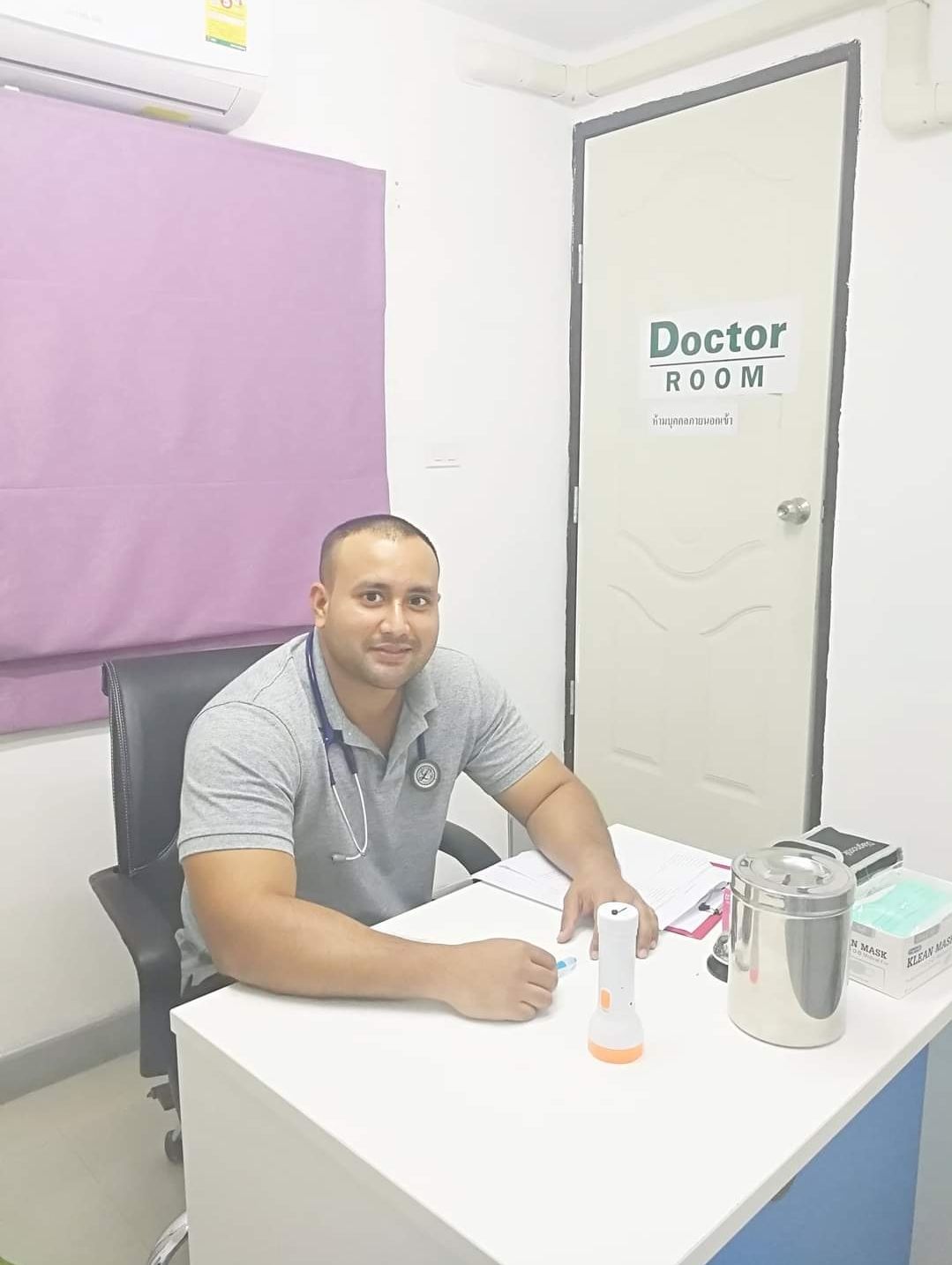
Dr. Ponlawat Pitsuwan is a physician at Doctor Bangkok, a private clinic in central Bangkok. He sees expats, residents, and medical tourists for general medicine, wellness consultations, and IV therapy. His focus is straightforward, evidence-based care delivered in plain language.