
Clinically reviewed by Dr. Ponlawat Pitsuwan, Physician, Doctor Bangkok. Last reviewed: July 2026
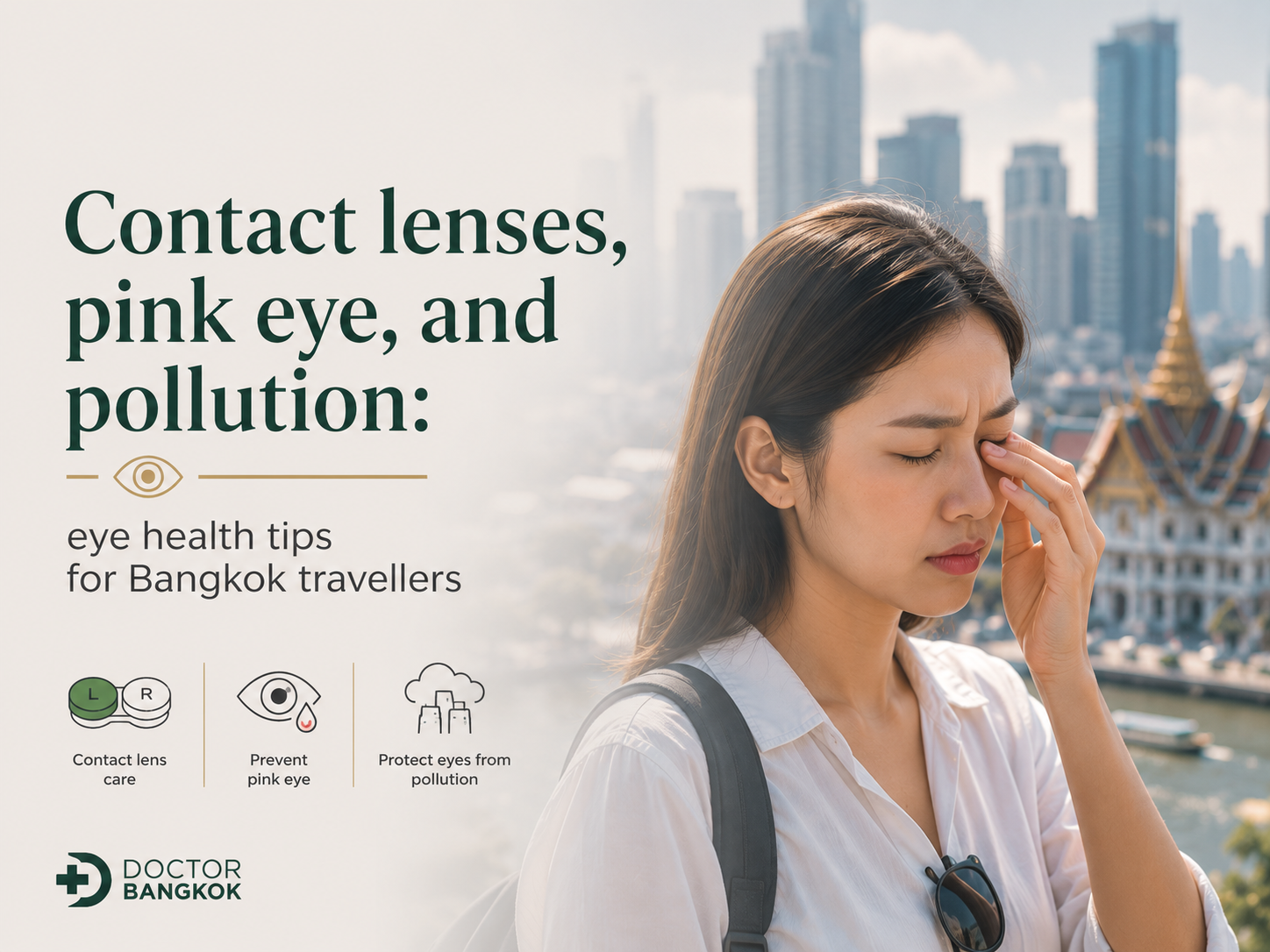
Eye infections are one of the most common reasons expats and visitors come to Doctor Bangkok. The city’s heat, humidity, PM2.5 pollution, and Songkran water exposure all raise your risk. Most cases are treatable quickly, but some, especially in contact lens wearers, can threaten your vision if left too long. If you have eye pain, blurred vision, or no improvement after 48 hours, see a doctor today.
You woke up this morning with a red, sticky, or painful eye. Maybe it started as mild irritation yesterday and now you cannot fully open it. If you are in Bangkok and searching for answers at 7am, you are not alone. Eye infections are something I see several times a week at the clinic, and expats are hit harder than most. They are adjusting to a new climate, new water, and often new contact lens habits all at once.
Most eye infections here are straightforward to treat. What matters is knowing when you can wait a day and when you need to come in today. This guide covers the infections I see most often in Bangkok, the local risks that catch people off guard, and exactly what to do next.

Types of eye infection common in Bangkok
The most common thing I see is conjunctivitis, which is inflammation of the thin clear layer covering your eye and inner eyelids. It comes in three forms, and they each need different treatment. That is why guessing at the pharmacy is not always safe.
Viral conjunctivitis is the most common type. Both eyes go red, you get watery discharge, and it usually follows a cold or sore throat. Antibiotic drops will not touch a virus. It clears on its own in one to two weeks with cool compresses, lubricating drops, and keeping your distance from others, as it spreads easily.
Bacterial conjunctivitis looks different. One eye is usually worse, the discharge is thick and yellow or green, and your eyelid may be stuck shut in the morning. This one does need antibiotic eye drops, and it clears up fast once you start them.
Allergic conjunctivitis is driven by Bangkok’s pollution, dust, and seasonal allergens. Both eyes itch intensely, you may sneeze, and the whites look red and swollen. Antihistamine drops help here, not antibiotics.
Blepharitis is one people often miss. It is an infection of the eyelid margins, the edges where your eyelashes grow. Your lids look crusty, red, and greasy, and it flares badly in Bangkok’s heat. It does not go away without proper lid hygiene treatment. I see many patients who have spent weeks treating it with the wrong drops.
Bangkok-specific risk factors you probably have not thought about
Bangkok raises your eye infection risk in ways that are genuinely different from most places people come from.
PM2.5 pollution is one of the biggest factors. Chronic fine particle exposure damages the surface cells of the cornea and breaks down your tear film, so your eyes stop protecting themselves as well as they should. This makes infection easier to catch and harder to shake. Contact lens wearers feel this most on high-pollution days.
Songkran is something I mention every April. Water guns are fun until the water comes from a canal, a bucket left in the sun, or an unknown street source. I see a spike in eye infections every year in the week after Songkran. If water got in your eyes during the festival and they are now red and painful, come in.
Bangkok tap water is a risk most people overlook. Building water tanks here vary a lot in how well they are maintained, and chlorine levels are not always adequate by the time water reaches your apartment or hotel room. This matters most if you wear contact lenses.
Hotel pools are worth a mention too. If your eyes are still red 24 hours after swimming and the irritation is not fading, it may not be just chlorine.

Contact lenses in Bangkok: how pollution and humidity affect your eyes
If you wear contact lenses in Bangkok, you are in a higher-risk environment than most cities. I tell every contact lens patient the same things.
PM2.5 particles collect on your lenses throughout the day. This breaks down your tear film, inflames the eye surface, and over time damages the corneal cells that protect against infection. On high-AQI days, which happen often in Bangkok, wearing glasses is the safer call.
The most serious risk is Acanthamoeba keratitis. Acanthamoeba is a microscopic organism found in tap water, soil, and poorly maintained water systems. It can cause a rare but sight-threatening corneal infection in contact lens wearers. A documented 2025 cluster of cases was linked to a residential building in Lardphrao where chlorine levels in the water tanks were too low. This was not a remote or unusual building. It was a standard central Bangkok apartment block.
The rules are clear. Never rinse your lenses with Bangkok tap water. Never shower or swim while wearing lenses. If you develop severe, escalating eye pain while wearing contacts, especially pain that feels worse than the eye looks, get seen that day. Acanthamoeba keratitis can be treated, but outcomes depend heavily on how early it is caught.
Daily disposable lenses carry lower risk than monthly lenses. If you are a monthly lens wearer staying in Bangkok for a while, switching to dailies is worth considering.
Red flag symptoms: when your eye infection needs same-day care
Mild pink eye can wait a day. These symptoms cannot.
Significant eye pain is the most important one. Grittiness and irritation are normal with conjunctivitis. Pain that wakes you up, gets worse when you move your eye, or feels like pressure from inside is not. That could be a corneal ulcer or uveitis, and both need urgent assessment.
Blurred or reduced vision that does not clear when you blink means something is affecting the cornea or deeper structures. Come in the same day.
Severe light sensitivity, where you cannot be comfortable in a normally lit room, suggests the infection may be deeper than the surface.
If you wear contact lenses and symptoms are getting worse despite stopping lens wear, do not wait. Bacterial keratitis and Acanthamoeba keratitis both move fast.
Any chemical splash to the eye, from cleaning products, pool chemicals, or anything else, is urgent regardless of how mild it feels at first. Rinse immediately with clean water for at least 15 minutes, then get to a clinic.
Over-the-counter eye drops in Bangkok pharmacies: what to use and what to avoid
This is the section I wish more people read before heading to Boots or a pharmacy on Sukhumvit.
Thailand allows pharmacies to sell some antibiotic eye drops without a prescription. That can work if you have a clear-cut bacterial conjunctivitis. The problem is that pharmacies here also sell steroid-containing eye drops without a prescription. These are often combination drops sold for redness and irritation. Using steroid drops on an undiagnosed bacterial or fungal infection can cause rapid, serious vision damage. It is a documented problem here and it is not rare.
My advice is simple. Preservative-free artificial tears are always safe and genuinely help with pollution-related dryness. For anything beyond that, get a diagnosis before you buy. Antibiotic drops work well for bacterial conjunctivitis, but they do nothing for viral infections and will not protect you from a corneal ulcer developing underneath.
What to expect at Doctor Bangkok
If you come in with a red or infected eye, here is what happens.
I examine your eye under a slit lamp, a magnifying microscope that lets me see the surface in detail. If I suspect a corneal scratch or ulcer, I use a small drop of orange dye that shows up under blue light and reveals any surface damage. It does not hurt.
Based on what I see, I will tell you whether this is viral, bacterial, or allergic and give you the right treatment. For bacterial infections, antibiotic drops usually bring fast improvement. For suspected Acanthamoeba, I refer urgently to an ophthalmologist, as that needs specialist management. Our pink eye treatment page has more detail on how we manage conjunctivitis.
I can also provide documentation for your travel insurance claim and a fit-to-fly note if you are planning to fly home. Doctor Bangkok is BTS accessible and offers same-day appointments. If you are new to Bangkok and unfamiliar with the healthcare system here, our travel health page is worth reading before your visit.
Red eye, discharge, pain, or contact lens irritation that is not settling? Doctor Bangkok offers same-day consultations for eye infections in central Bangkok. English-speaking physicians, BTS accessible, no referral needed. Visit doctorbangkok.co.th to book or check walk-in availability.
Frequently asked questions
How do I know if my eye infection is serious enough to see a doctor today?
If you have significant eye pain, blurred vision, severe light sensitivity, or you wear contact lenses and symptoms are getting worse, see a doctor the same day. Mild redness with watery discharge and no pain can often wait 24 to 48 hours. When in doubt, come in, as corneal infections can progress quickly.
Can I buy antibiotic or steroid eye drops at a Bangkok pharmacy without a prescription?
Yes, some pharmacies sell both antibiotic and steroid-containing drops without a prescription. The real risk is steroid drops: using them on an undiagnosed infection can cause rapid vision damage. Lubricating artificial tears are always safe to use. Anything stronger than that, get a diagnosis first.
Is it safe to wear contact lenses during Bangkok’s high-pollution season?
On high-AQI days, I recommend glasses over lenses. PM2.5 particles collect on lens surfaces, break down your tear film, and raise infection risk. Never rinse lenses with Bangkok tap water, and do not shower or swim while wearing them. Daily disposables carry lower risk than monthlies if you are here for an extended stay.
What is Acanthamoeba keratitis and why does it matter for Bangkok contact lens wearers?
Acanthamoeba is a microscopic organism found in tap water and poorly maintained water tanks. It can cause a rare but sight-threatening corneal infection in contact lens wearers. A documented 2025 cluster of cases in Bangkok’s Lardphrao district was linked to a building with insufficient chlorine in its tanks. Never rinse lenses with tap water, and see a doctor urgently if you develop severe eye pain while wearing lenses.
Can I fly home with an eye infection?
Mild viral conjunctivitis usually does not prevent flying, though dry cabin air will worsen irritation. Active bacterial infection with discharge, any corneal ulcer, or blurred vision needs medical clearance before you board. Come in and I can assess you, treat you, and provide the documentation your travel insurer will need.
Does travel insurance cover eye infections in Bangkok?
Most travel and expat health insurance policies cover acute eye infections as an acute illness or medical emergency. Keep your receipts, prescription record, and clinic notes. At Doctor Bangkok, we provide itemised receipts and clinical documentation in the format most insurers require.
How do I tell the difference between allergic and infectious conjunctivitis?
Allergic conjunctivitis almost always affects both eyes equally, causes intense itching, and often comes with sneezing or a runny nose. Infectious conjunctivitis tends to start in one eye, produces more discharge, and does not itch the same way. If you are unsure, a quick assessment at the clinic will give you a clear answer and the right treatment.
Dr. Ponlawat Pitsuwan
Physician, Doctor Bangkok
a private medical clinic in central Bangkok. He sees expats, residents, and medical tourists for eye infections, general illness, travel health consultations, and acute care. His focus is straightforward, evidence-based care delivered in plain language.
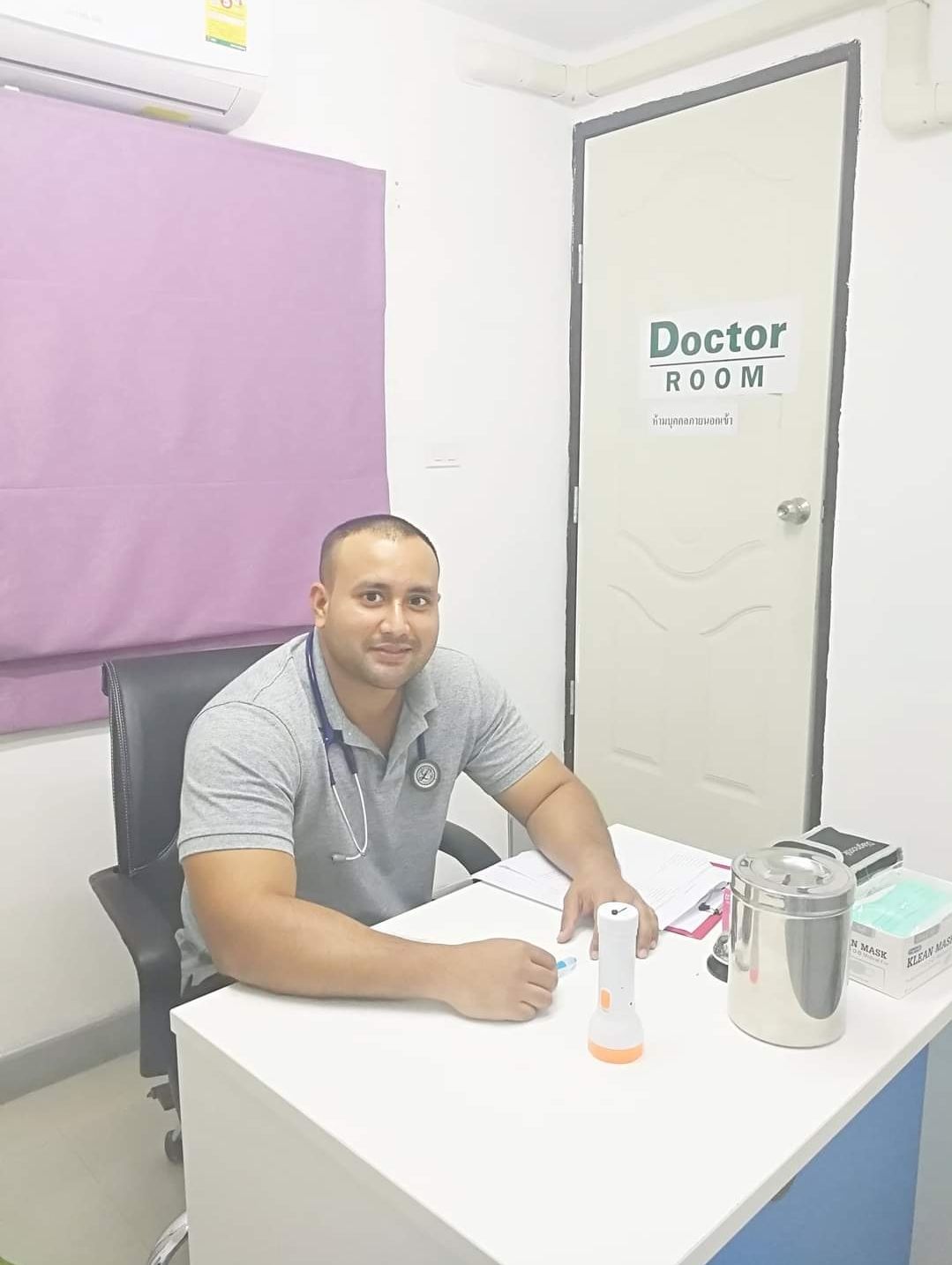
Dr. Ponlawat Pitsuwan is a physician at Doctor Bangkok, a private clinic in central Bangkok. He sees expats, residents, and medical tourists for general medicine, wellness consultations, and IV therapy. His focus is straightforward, evidence-based care delivered in plain language.