
Clinically reviewed by Dr. Ponlawat Pitsuwan, Physician, Doctor Bangkok. Last reviewed: July 2026
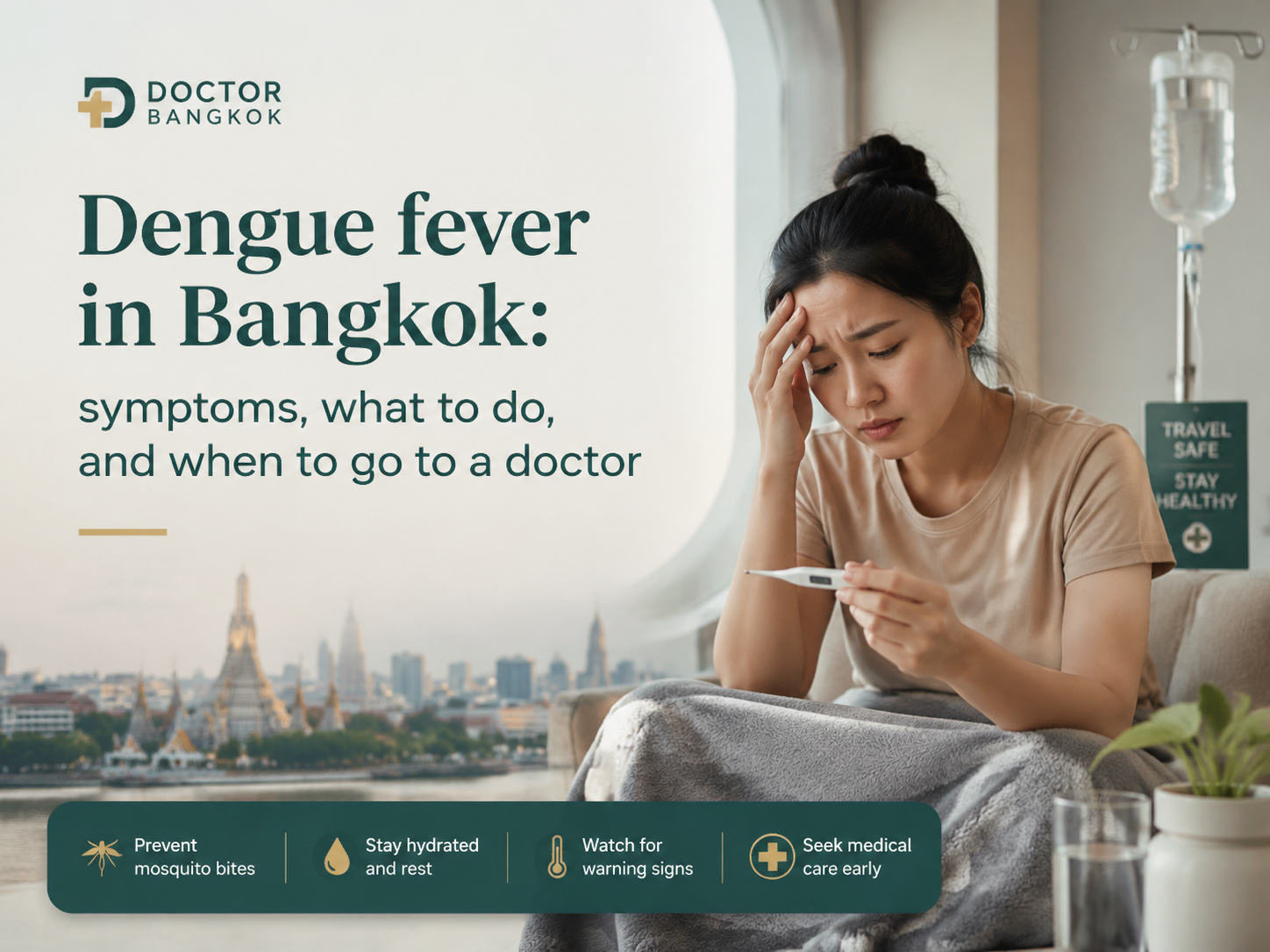
Dengue fever is a year-round risk in Bangkok, not just during the rainy season. The main symptoms are a sudden high fever, severe headache, pain behind the eyes, joint and muscle aches, and a rash that appears a few days in. There is no antiviral treatment, but early diagnosis matters: it changes how you manage fluids, activity, and medication. If you have had a fever for more than two days in Bangkok, get tested.
If you are lying in your Bangkok apartment with a 39-degree fever, every muscle aching, wondering if this is just a bad flu or something worse, you are not alone. This is one of the most common situations I see at the clinic. Dengue and flu can feel almost identical in the first day or two.
The short answer: yes, you should come in, and sooner is better. Not because every fever in Bangkok is dengue, but because missing it, or taking the wrong medication, can turn something manageable into something serious. Here is what you need to know.

Dengue risk in Bangkok: when and where
Bangkok is high-risk for dengue year-round. Urban density, standing water, and warm temperatures mean the Aedes aegypti mosquito breeds well here regardless of season.
Nationally, the peak runs May through October. Bangkok often peaks later, around October and November, which catches people off guard after the rains stop. In 2024, Thailand recorded over 105,000 confirmed dengue cases nationally, according to the Thai Ministry of Public Health. Do not assume the risk disappears because it stopped raining.
Symptoms of dengue fever
Dengue hits fast. One day you feel fine, the next you have a fever of 39 to 40 degrees that seems to come from nowhere.
Pain behind the eyes is one of the more distinctive features. It gets worse when you move your eyes. The joint and muscle pain can be severe enough that dengue is sometimes called breakbone fever, which gives you a sense of what patients describe.
A few days in, many people develop a rash on the chest that spreads outward. Some patients also notice small red dots on the skin, or bleeding from the gums or nose. Those are early warning signs that need assessment.

Warning signs that mean you need urgent care now
Most dengue cases are unpleasant but manageable with the right guidance. A smaller number progress to severe dengue, and the warning signs matter.
Go to a clinic or emergency department immediately if you develop severe abdominal pain, persistent vomiting, bleeding from any site, black or tarry stools, rapid breathing, or sudden faintness or confusion. Cold or clammy skin, or a sudden drop in fever combined with any of the above, are also reasons to go now. Do not wait until morning.
The critical phase: when the fever breaks
This is the part most people get wrong, and it genuinely matters.
When your fever drops, usually around day three to five, it feels like you are getting better. Many patients stop coming in for monitoring at exactly this point. But the 24 to 48 hours after the fever breaks is when the risk of serious complications is highest. Your platelet count may still be falling even as you feel more comfortable.
I tell every dengue patient the same thing: feeling better does not mean the illness is over. Keep your follow-up appointments. Keep drinking fluids. Watch for the warning signs above.
Dengue vs other fevers in Bangkok: how to tell the difference
A fever in Bangkok has several possible causes, and symptoms overlap more than people expect.
Flu typically brings a runny nose and cough from early on. Dengue rarely does. Chikungunya, another mosquito-borne illness, causes similar joint pain but with more prominent joint swelling. Typhoid builds gradually over several days and usually comes with stomach symptoms. COVID-19 remains in circulation and shares the fever, muscle ache, and fatigue picture.
The honest answer is that you cannot reliably tell these apart without a blood test. If you have had a fever for more than two days in Bangkok, come in. You can read more about how we approach fever assessment and treatment at Doctor Bangkok.
Dengue diagnosis: what blood tests are used
Which test you need depends on how many days you have been sick.
In the first one to five days of illness, the NS1 antigen test is most useful. It confirms active infection early. From day three onward, IgM and IgG antibody tests become relevant and help us understand whether this is your first dengue infection or a repeat one. Throughout the illness, we also monitor your full blood count to track your platelet levels and watch for signs of deterioration.
At Doctor Bangkok, we can arrange NS1 testing at your home or hotel in the early days, so you do not need to travel when you are feeling your worst.
The one medication rule you must know
Do not take ibuprofen, aspirin, or any anti-inflammatory painkiller for dengue fever. Not Nurofen, not Advil, not anything in that category. This is the most dangerous mistake I see, and these medicines are easy to buy over the counter at any Bangkok pharmacy.
Dengue lowers your platelet count. Ibuprofen and similar drugs make platelet function worse, which can cause serious internal bleeding. Use paracetamol, sold here as Panadol, for fever and pain. That is the only safe option. If you are already taking ibuprofen and you suspect dengue, stop now and come in.
Treatment and what to expect
There is no antiviral medicine that clears the dengue virus. Treatment means managing your symptoms and keeping you safe while your body fights the infection.
In practice, that means fluids, paracetamol, rest, and close monitoring of your blood count. Most patients with uncomplicated dengue recover at home. Patients with warning signs, severe vomiting, or dropping platelet counts need hospital admission for IV fluids and monitoring. Recovery typically takes seven to ten days from when symptoms start. Fatigue can linger for weeks after the fever is gone, which is normal. Mention it to your doctor rather than pushing yourself back to full activity too fast.
Can you get dengue more than once, and is the second time worse?
Yes to both. There are four dengue serotypes circulating in Bangkok. Getting infected with one gives you lifelong protection against that serotype only.
If you get infected with a different serotype later, your prior antibodies do not protect you. They can actually make the new infection more severe, which is why second dengue infections carry a higher risk of serious disease. If you have had dengue once and you live in Bangkok long-term, this is worth discussing with a doctor, particularly around the dengue vaccine.
Is there a dengue vaccine available in Bangkok?
Yes. The Qdenga vaccine is available in Bangkok and is given as two doses, three months apart.
For long-stay expats and residents with ongoing mosquito exposure, it is worth discussing, especially if you have already had dengue once. For short-stay tourists, the decision is less clear-cut. Whether the vaccine makes sense depends on your age, your exposure history, and your prior dengue status. Come in for a consultation and we can work through whether it is the right call for you.
Dengue prevention in Bangkok: practical steps
No single measure removes the risk entirely, but layering a few reduces it meaningfully.
Use a DEET-based repellent every time you go outside, especially at dawn and dusk. Wear long sleeves and trousers when you can. Inside your room, air conditioning and mosquito nets both help. Aedes mosquitoes breed in small amounts of standing water, so check around your home and remove anything that collects it. These mosquitoes bite during the day, which is what makes them different from malaria-carrying mosquitoes. Nighttime-only precautions are not enough.
Suspect dengue in Bangkok? Doctor Bangkok offers same-day fever assessment, NS1 antigen testing, and full blood count monitoring from our clinic in central Bangkok, BTS accessible. We also arrange home and hotel visits for patients too unwell to travel. If you have had a fever for more than two days, or you are not sure what to take, come in or book online at doctorbangkok.co.th. For more on how we approach fever in Bangkok, visit our fever assessment and treatment page.
FAQ
What should I do if I think I have dengue fever in Bangkok?
Stop any ibuprofen or aspirin immediately and switch to paracetamol only. Get an NS1 blood test within the first five days of symptoms: Doctor Bangkok can arrange this at the clinic or at your home or hotel. Early diagnosis shapes every decision about fluids, rest, and when to escalate care.
Can I take ibuprofen or aspirin for dengue fever?
No. Dengue lowers your platelet count, and ibuprofen and aspirin make platelet function worse, which can lead to serious internal bleeding. This is one of the most common and dangerous mistakes patients make in Bangkok, where Nurofen and Advil are sold at every pharmacy without a prescription. Paracetamol, sold as Panadol, is the only safe choice.
When is dengue season in Bangkok?
Dengue is present year-round in Bangkok. Nationally, cases peak between May and October, but Bangkok specifically tends to peak later, often in October and November. Risk never drops to zero in the city, so daily prevention measures matter throughout the year.
What blood tests diagnose dengue fever, and which one do I need?
The NS1 antigen test is the right choice in the first one to five days of illness. From day three onward, IgM and IgG antibody tests become useful alongside a full blood count to track platelet levels. Which test you need depends on how long you have been sick, so come in for assessment rather than guessing.
I had dengue before. Am I immune, and is a second infection more dangerous?
You are immune to the specific serotype you had before, but there are four serotypes circulating in Bangkok. A second infection with a different serotype carries a higher risk of severe dengue. If you have had dengue once and live in Bangkok long-term, talk to a doctor about whether the Qdenga vaccine makes sense for you.
How long does dengue fever last?
The acute phase, meaning the fever and worst symptoms, typically lasts five to seven days. Most people feel meaningfully better by day seven to ten. Fatigue can persist for several weeks after that, which is normal. Do not rush back to full activity.
Is dengue fever dangerous, and do I need to go to hospital?
Most cases are manageable without hospital admission. Hospital care is needed when warning signs appear: severe abdominal pain, persistent vomiting, any bleeding, sudden drop in fever combined with feeling faint or cold and clammy, or a platelet count your doctor is concerned about. If any of those apply, do not wait.
Dr. Ponlawat Pitsuwan
Physician, Doctor Bangkok
a private medical clinic in central Bangkok. He sees expats, residents, and medical tourists for fever assessment, dengue diagnosis, and general medical care. His focus is straightforward, evidence-based care delivered in plain language.
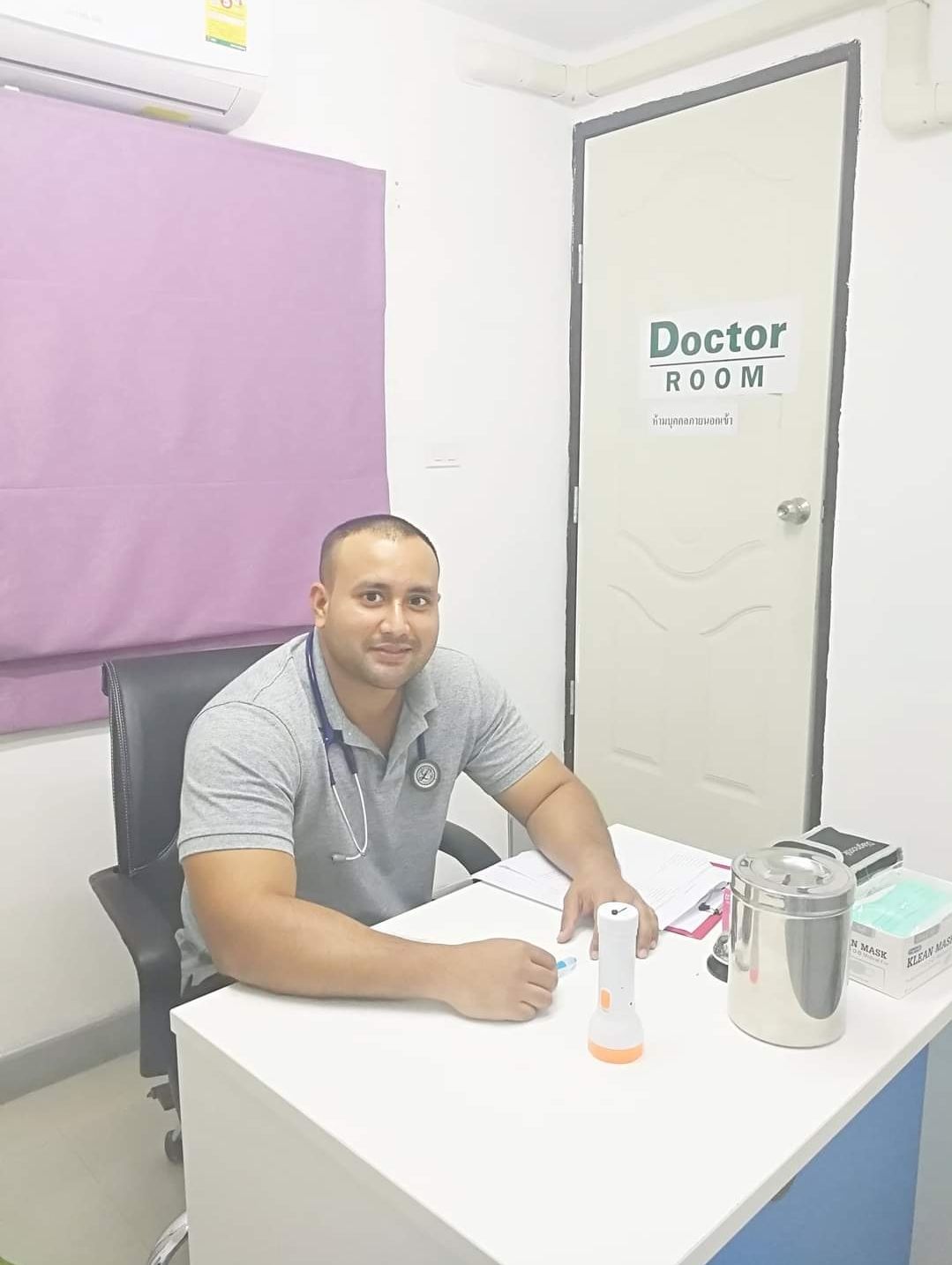
Dr. Ponlawat Pitsuwan is a physician at Doctor Bangkok, a private clinic in central Bangkok. He sees expats, residents, and medical tourists for general medicine, wellness consultations, and IV therapy. His focus is straightforward, evidence-based care delivered in plain language.