
Clinically reviewed by Dr. Ponlawat Pitsuwan, Physician, Doctor Bangkok. Last reviewed: July 2026
Thailand has several mosquito-borne diseases worth knowing about: dengue fever, malaria, Zika, chikungunya, and Japanese encephalitis. Dengue is the most common risk for Bangkok residents and visitors, especially May through September. If you develop a fever after a mosquito bite, get a blood test the same day. Do not take ibuprofen or aspirin until dengue has been ruled out.
If you are living in Bangkok or planning a trip upcountry, mosquito-borne illness is probably on your mind, and rightly so. This is not a theoretical risk. I see dengue cases from patients in Sukhumvit, Silom, and Thonglor, not just from people who went trekking near the Myanmar border. Bangkok mosquitoes bite during the day, and the rainy season from May to September makes exposure significantly worse.
The good news is that most of these diseases are either preventable or very treatable when caught early. What goes wrong is usually the delay: people wait too long, or they take the wrong medication before getting tested. This guide covers what you actually need to know, by disease, by location, and by symptom, so you know what to do and when to come in.

How Thailand’s Mosquitoes Behave
Most people get this wrong, and it matters for how you protect yourself.
The Aedes aegypti mosquito spreads dengue, Zika, and chikungunya. It bites during the day, mostly at dawn and dusk, but will bite any time in shaded or indoor spaces. The Anopheles mosquito spreads malaria and bites at night.
A bed net protects you against malaria. It does almost nothing for dengue, because you are getting bitten at the coffee shop, in your office lobby, or on your morning walk. For dengue prevention, daytime repellent use is what counts.
Dengue Fever in Bangkok — Symptoms, Warning Signs, and What NOT to Take
Dengue is the disease I see most often. Peak season is May to September, but cases come in year-round. You do not need to have been camping in the jungle. I see it regularly in people who live and work in central Bangkok.
What dengue feels like
The fever usually starts suddenly and hits hard: 39 to 40 degrees Celsius, severe headache, pain behind the eyes, and muscle and joint aches. It can feel like a very bad flu. Most people feel genuinely unwell within 24 to 48 hours of onset.
Warning signs that mean come in immediately
Severe abdominal pain, repeated vomiting, bleeding from the gums or nose, blood in urine or stool, and extreme fatigue are all signs that dengue may be getting serious. These warrant same-day assessment. Dengue can progress to a more severe form where platelet count, the blood cells that help clotting, drops dangerously low. This is rare but not something to manage at home.
The medication mistake that makes dengue worse
Do not take ibuprofen, aspirin, or naproxen if you think you might have dengue. These affect platelet function and raise your bleeding risk significantly. Paracetamol is the only safe over-the-counter option for fever here. This is one of the most common errors I see: people self-medicating with ibuprofen for three days before coming in. Get tested first. A blood test can detect dengue within the first few days of fever and gives you a result the same day. Once we know what we are dealing with, we can guide treatment properly.

Malaria in Thailand — Your Risk Depends on Where You Are Going
If you are staying in Bangkok, Chiang Mai city, Phuket, Koh Samui, or the major tourist islands, you do not need malaria tablets. Mosquito avoidance is enough.
The risk changes if you are heading into rural forested areas, particularly near the borders with Myanmar or Cambodia. Kanchanaburi trekking routes, Mae Hong Son border areas, and Chiang Rai rural homestays are the kinds of itineraries where preventive medication is worth discussing. The right choice depends on your exact route, how long you are going, and your medical history. If you are planning a rural trip, come in for a travel health consultation before you go. A short conversation can answer this for your specific itinerary.
Japanese Encephalitis — The Vaccine-Preventable Disease Most Expats Have Never Heard Of
Japanese encephalitis does not get enough attention. It is a viral brain infection spread by Culex mosquitoes, which breed in rice paddies and rural water sources. It is rare in Bangkok but endemic across rural Thailand, with seasonal peaks in northern provinces between May and October.
Most people who get infected have no symptoms or a mild illness. In a small number of cases, it causes severe brain inflammation with serious outcomes. There is no specific treatment once you have it. The vaccine works well and provides long-lasting protection. If you are living in Thailand long-term, volunteering in rural areas, or making regular upcountry trips, this vaccine is worth discussing at your next appointment.
Zika Virus in Thailand — What Pregnant Travellers Must Know
Zika is present in Thailand. For most healthy adults, it causes a mild illness: low fever, rash, joint pain, and red eyes, or sometimes no symptoms at all. The concern is much more serious if you are pregnant or trying to conceive.
Zika infection during pregnancy is linked to serious fetal brain abnormalities. If you are pregnant and travelling to Thailand, seek specific Zika advice from a doctor before you go. Zika can also be sexually transmitted. If your partner travelled to Thailand and you are pregnant or trying to conceive, ask about post-travel precautions even if they had no symptoms.
Chikungunya — The Disease That Feels Like Dengue but Stays Longer
Chikungunya is spread by the same Aedes mosquito as dengue, so the same daytime protection rules apply. The fever and rash can feel similar to dengue in the first few days. The difference is the joint pain.
With chikungunya, joint pain in the hands, wrists, ankles, and feet can be severe and can linger for weeks or months after the fever resolves. Most patients recover fully, but it takes longer than people expect. There is no specific antiviral treatment. Rest, fluids, and paracetamol are the mainstay. A chikungunya vaccine is now available and can be discussed at a travel health assessment.
Vaccines Available in Bangkok for Mosquito-Borne Diseases
Two dengue vaccines are now available in Thailand. One is for people who have had a confirmed prior dengue infection. The other is a newer option with broader eligibility. Neither is universally recommended: your prior infection history, length of stay, and individual risk profile all factor in. A consultation is the right first step.
The Japanese encephalitis vaccine is available and appropriate for anyone spending significant time outside Bangkok’s urban centre. If you are an expat on a long stay or planning rural travel, Doctor Bangkok can review your vaccination history and give you a clear, personalised recommendation.
Practical Mosquito Protection in Bangkok and Beyond
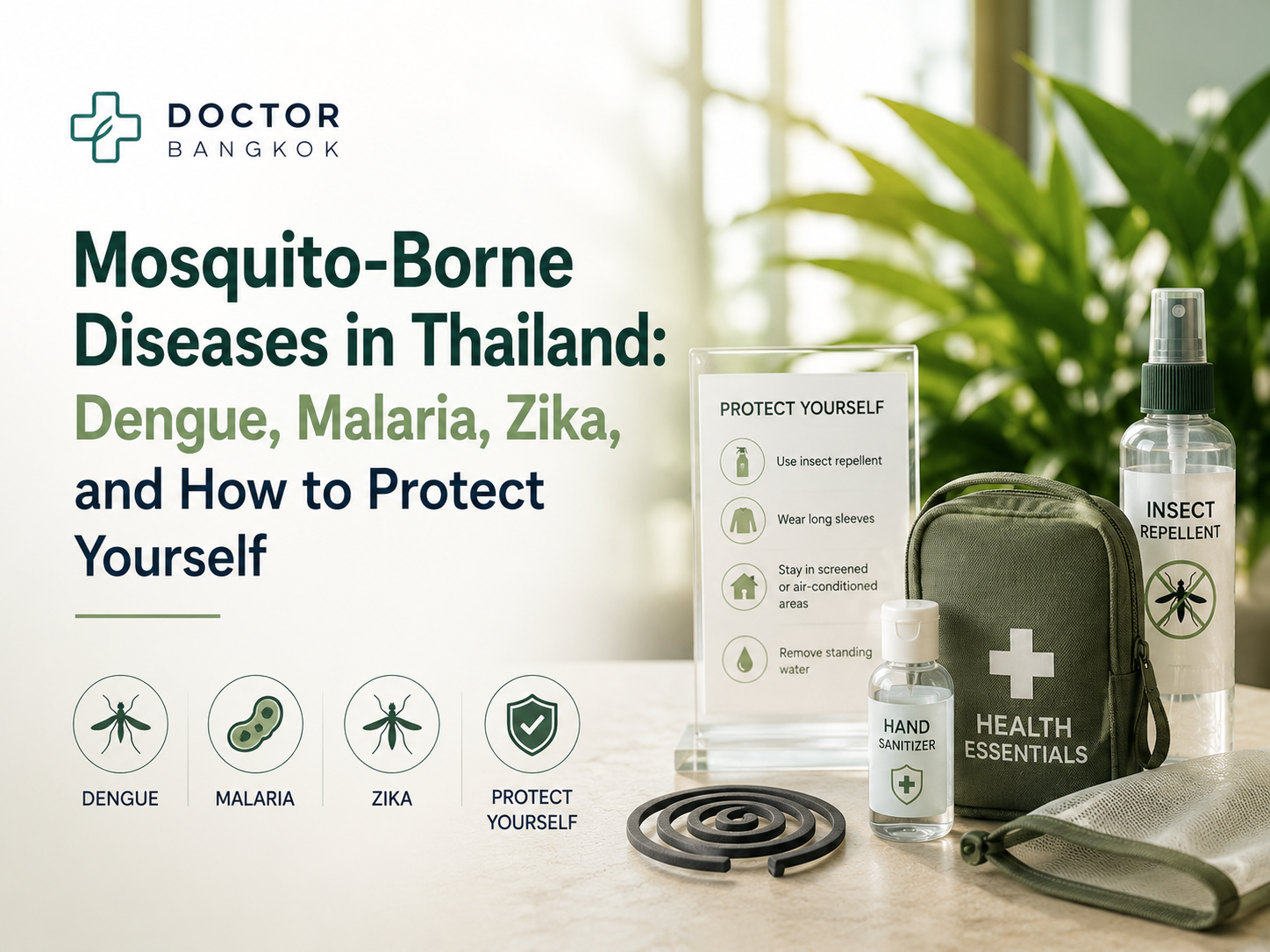
DEET-based repellents at 30 to 50 percent concentration are the most effective option, with strong evidence behind them. Picaridin is a good alternative if you find DEET irritating. Apply repellent during daylight hours in Bangkok, not just at dusk.
For trips to malaria-risk areas, apply permethrin to your clothing and gear before you travel. Permethrin is an insecticide treatment for fabric, not skin, and stays effective through multiple washes. Wear long sleeves and trousers in forested areas at night. In malaria-risk zones, a treated bed net does matter, unlike in urban Bangkok.
Air-conditioned indoor spaces offer meaningful protection against Aedes mosquitoes. Bangkok’s heavily air-conditioned environment is a genuine advantage, though not a reason to skip repellent outdoors.
When to See a Doctor in Bangkok for Mosquito-Borne Illness
See a doctor the same day if you have a fever of 38.5 degrees or above and you live in or have recently visited Thailand. Do not wait for a rash. Do not wait to see if the fever breaks on its own. Dengue can look unremarkable on day one and deteriorate by day three.
A same-day blood test can confirm or rule out dengue early in the illness. Depending on your travel history, we can also run a malaria rapid test or a broader fever screen. Results are available within hours, and English-speaking physicians are available for expats and visitors who need a consultation in plain language.
The biggest mistake I see is patients arriving on day four or five having taken ibuprofen throughout, unsure what they had. A quick blood test on day one changes everything.
Fever after a mosquito bite in Bangkok? Do not guess. Doctor Bangkok offers same-day dengue blood tests, malaria testing, and travel health consultations with English-speaking physicians in central Bangkok, BTS accessible. We also provide dengue and Japanese encephalitis vaccinations for long-stay expats and travellers heading upcountry. Book at doctorbangkok.co.th or visit our Thailand mosquito illness guide for more information.
FAQ
Do I need to worry about dengue in Bangkok, or only in rural Thailand?
Dengue is active in Bangkok year-round, with peak transmission from May to September. The Aedes mosquito thrives in urban environments: standing water in plant pots, drainage areas, and construction sites are all breeding grounds. I see dengue in patients who have not left Sukhumvit in weeks.
Can I take ibuprofen if I think I have dengue?
No. Ibuprofen, aspirin, and naproxen are all contraindicated if dengue is possible. They affect platelet function and increase bleeding risk. Take paracetamol for fever and get a blood test first to confirm what you are dealing with.
I am pregnant and travelling to Thailand. What do I need to know about Zika?
Zika circulates in Thailand and is linked to serious fetal brain abnormalities. Pregnant travellers and those trying to conceive should get pre-travel advice from a doctor, not just general travel websites. Zika can also be sexually transmitted, so partners returning from Thailand should take precautions if you are pregnant or trying to conceive.
Do I need malaria tablets for Chiang Mai or the islands?
Not for Chiang Mai city, Phuket, Koh Samui, or the major islands. Malaria prevention is recommended for forested border regions near Myanmar, Cambodia, and parts of the south. If you are going anywhere rural or upcountry, a travel health consultation will give you a specific answer based on your itinerary.
Is there a dengue vaccine available in Bangkok and should I get it as an expat?
Yes, two dengue vaccines are available in Bangkok. Eligibility depends on whether you have had a previous dengue infection, your length of stay, and your risk profile. This is a decision to make with a doctor after a proper assessment, not something to book without a consultation.
How is dengue different from a regular flu or fever?
The fever in dengue is typically abrupt and high, often with severe pain behind the eyes and muscle aches that feel disproportionately bad. But you cannot reliably tell from symptoms alone. A same-day blood test is the only way to know early.
What is the best mosquito repellent to use in Bangkok day to day?
DEET at 30 to 50 percent concentration has strong evidence behind it and is widely available in Thailand. Picaridin is a skin-friendlier alternative with similar effectiveness. Apply it during the day, particularly in the morning and late afternoon when Aedes mosquitoes are most active. For more detail on staying protected, see our travel health page.
Dr. Ponlawat Pitsuwan
Physician, Doctor Bangkok
a private medical clinic in central Bangkok. He regularly assesses and treats expats, residents, and medical tourists for dengue fever, tropical illness, and travel-related health concerns. His focus is straightforward, evidence-based care delivered in plain language.
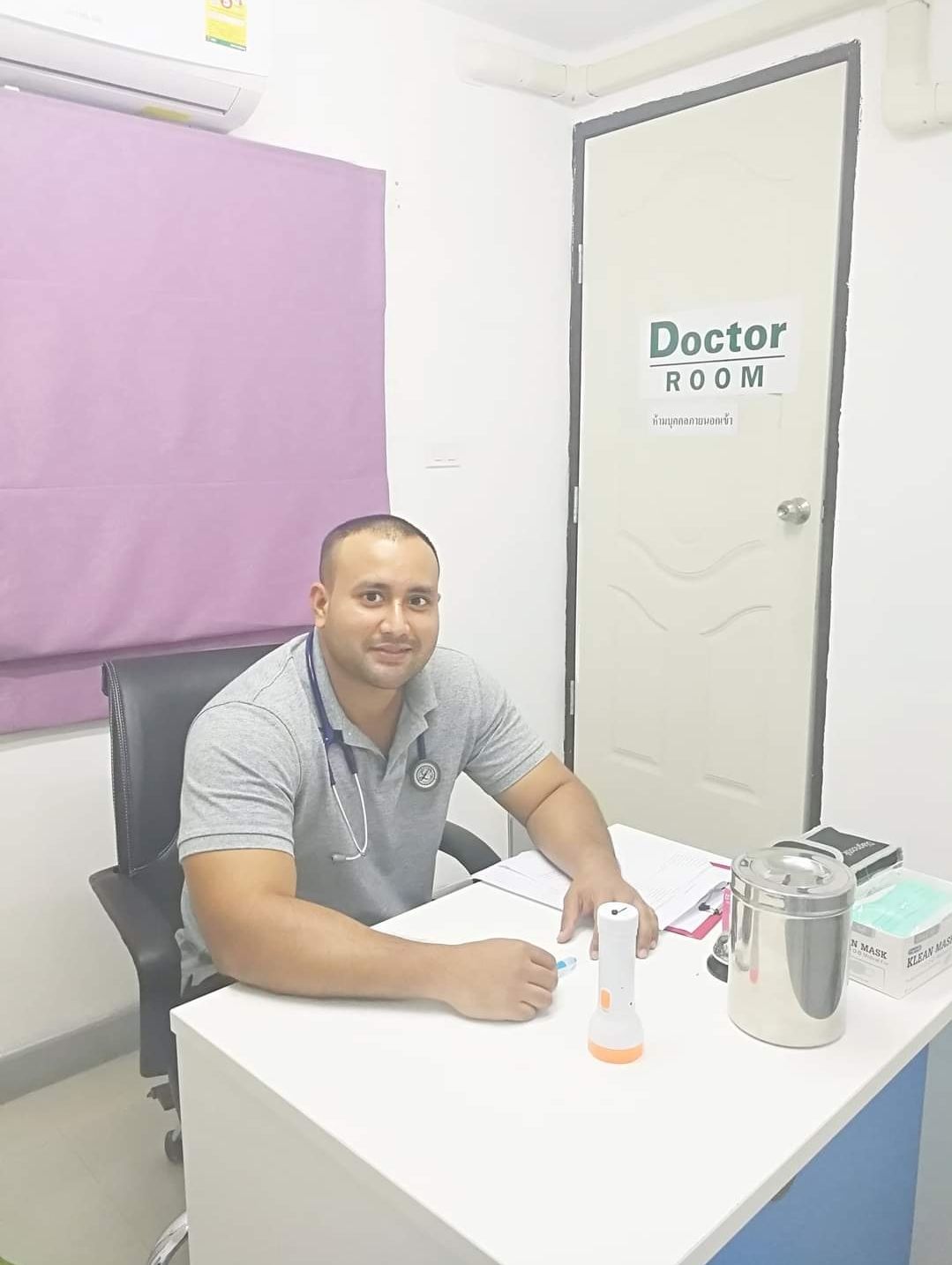
Dr. Ponlawat Pitsuwan is a physician at Doctor Bangkok, a private clinic in central Bangkok. He sees expats, residents, and medical tourists for general medicine, wellness consultations, and IV therapy. His focus is straightforward, evidence-based care delivered in plain language.