
Clinically reviewed by Dr. Ponlawat Pitsuwan, Physician, Doctor Bangkok. Last reviewed: July 2026
Malaria risk in Thailand is real but concentrated. Bangkok itself carries negligible risk. The danger zones are forested border regions near Myanmar, Cambodia, and parts of the deep south. If you develop fever or flu-like illness within 30 days of visiting any of these areas, get tested the same day. Do not wait it out.
If you have just come back from a trek in Chiang Rai, a few nights near the Myanmar border, or anywhere deep in the forest upcountry, and now you have a fever, I understand why you are searching this at midnight. Any fever after visiting a malaria-risk area in Thailand needs a blood test. Not tomorrow. Today.
Most expats in Bangkok never need to think about malaria. The city itself has no meaningful transmission. But the moment you go upcountry to certain provinces, sleep near the border, or trek through forested areas, the equation changes. This article explains where the real risk sits, how long it takes for symptoms to appear, and what to do if you are worried right now.

What Types of Malaria Are Found in Thailand?
Thailand has four malaria species that matter clinically. Most people have only heard of one.
Plasmodium falciparum is the most dangerous. It causes severe illness fast and, in parts of Thailand, has become resistant to several standard drugs. P. vivax is the second most common and carries a hidden risk I will explain shortly. P. malariae is rarer and slower moving. P. knowlesi is the one most doctors outside Southeast Asia have not encountered. It originally came from monkeys and is now increasingly seen in humans across the region. It can progress quickly.
Knowing which species you have matters because each one behaves differently, including when it makes you sick.
How Long After a Mosquito Bite Do Malaria Symptoms Appear?
This depends entirely on the species. The generic answer you will read elsewhere, somewhere between 7 and 30 days, is technically true but not very useful.
For the species actually found in Thailand: P. falciparum typically causes symptoms 9 to 14 days after the bite. P. knowlesi is similar, around 9 to 12 days. P. vivax usually takes 12 to 18 days, but with a major exception I cover below. P. malariae is the slowest, with symptoms appearing 18 to 40 days later.
The practical rule: if you visited a risk area and develop fever or flu-like illness within the next month, malaria needs to be ruled out. That means a blood test, not a wait-and-see approach.

The P. vivax Problem: Symptoms That Appear Months Later
This is the one that catches people off guard, and it is a real patient safety issue.
P. vivax can go dormant in your liver. These dormant forms sit there silently, sometimes for months, sometimes for up to two years, and then reactivate without warning. When they do, you get a full relapse with fever, chills, and everything else, long after you have forgotten about your trip.
I have seen patients in Bangkok who developed fever months after returning from a border area. Their travel was so far in the past they did not mention it at first. If you have ever visited a malaria-risk area in Thailand and you develop unexplained fever, tell your doctor, even if the trip was a year ago.
Treating this type of relapse requires a specific drug that targets the liver stage. Before prescribing it, we check for G6PD deficiency, a genetic condition that is common in Southeast Asia and can cause serious complications with these medications. This screening step matters, and some clinics outside Thailand skip it.
Malaria Risk by Region: Where Expats Actually Need to Be Careful
Bangkok is not a malaria zone. You do not need prophylaxis to live and work here.
The risk areas are specific. The Thai-Myanmar border provinces carry the highest burden: Mae Hong Son, Tak, Chiang Rai, and Kanchanaburi. The Thai-Cambodia border is also significant: Trat and Chanthaburi. Parts of the deep south near Malaysia carry some risk too. These are forested, rural, border-adjacent zones.
Seasonal timing matters as well. Transmission peaks during and just after the rainy season, roughly May through October, when mosquitoes are most active. A dry-season visit to Kanchanaburi carries much lower risk than a rainy-season trek in the same area.
If you are planning a trip to any of these provinces, talk to a doctor first. Doctor Bangkok’s travel health service covers pre-trip assessments and prophylaxis prescriptions if needed.
Can Symptoms Appear Even If I Took Prophylaxis?
Yes. This is called breakthrough malaria, and it is something many travel health pages do not address.
Antimalarial tablets significantly reduce your risk. They do not eliminate it entirely. Drug-resistant strains along the Thai-Myanmar and Thai-Cambodia borders are a documented clinical reality. Even patients who completed their full course correctly can still become infected.
Prophylaxis can also delay the onset of symptoms. You might finish your tablets, feel fine, and then develop fever two to four weeks later. Many people at that point assume it cannot be malaria because they took their medication. That assumption is wrong. If you are unwell after returning from a risk area, tell your doctor you took prophylaxis and still request a malaria test.
Symptoms: What Malaria Actually Feels Like
It usually starts like a bad flu. Fever, headache, chills, muscle aches, nausea. Nothing about the early presentation screams malaria specifically.
The classic pattern many people associate with malaria, cyclical waves of fever and chills every 48 to 72 hours, does occur but is not always present, especially early on. P. falciparum in particular does not follow a tidy cycle. It can cause persistent high fever and confusion, and it can deteriorate quickly.
Do not wait for a distinctive pattern to develop. A fever after visiting a risk area is enough to warrant testing.
How Malaria Is Diagnosed at a Bangkok Clinic
When you come in with a fever and a history of travel to a risk area, here is what actually happens.
We take a detailed travel history first: where exactly you went, how long you were there, whether you slept outdoors, whether you used repellent. Then a physical exam, which includes checking whether your spleen is enlarged. Then a blood test. We run either a blood smear examined under a microscope or a rapid test that gives a result in about 20 minutes. Species identification matters for treatment, and results at a private clinic are typically available the same day.
At Doctor Bangkok, we can run this assessment during a walk-in consultation.
When to Seek Care Urgently
If you have returned from any forested or border region in Thailand and you develop fever, seek care the same day. Not tomorrow.
P. falciparum can cause severe malaria, including effects on the brain, within 24 to 48 hours of symptoms starting. High fever, confusion, difficulty breathing, or an inability to keep fluids down is a medical emergency. Go to the nearest hospital immediately.
For fever without severe symptoms but with a clear travel history to a risk area, come to a private clinic for same-day testing. Bring as much detail as you can about where you went, when, for how long, and whether you took prophylaxis.
A negative test result does not always close the case. If your travel history is convincing and symptoms persist, we may repeat the test 24 hours later. Parasite levels can be too low to detect on day one.
Do You Need Malaria Tablets for Thailand?
For most Bangkok expats and tourists staying in urban areas: no. The city carries negligible transmission risk.
If you are travelling to high-risk provinces, the answer is usually yes. Mefloquine is no longer recommended in parts of Thailand due to documented resistance. Atovaquone-proguanil and doxycycline are the current preferred options for most travellers, but the right choice depends on your destination, trip length, other medications, and medical history.
Get a proper pre-travel consultation before you go. This is not something to sort out at an airport pharmacy. At Doctor Bangkok’s travel health clinic, we assess your specific itinerary and prescribe accordingly, taking drug resistance patterns by region into account.
Worried about a fever after visiting northern or border Thailand? Or planning a trip to a malaria-risk province and need prophylaxis? Doctor Bangkok offers same-day malaria testing and pre-travel health consultations in central Bangkok. English-speaking physicians. BTS accessible. Walk-ins welcome. Visit doctorbangkok.co.th/travel-health-bangkok/ to book or find out more.
FAQ
How quickly do malaria symptoms appear after a mosquito bite in Thailand?
It depends on the species. P. falciparum causes symptoms in 9 to 14 days. P. vivax takes 12 to 18 days on average. P. malariae can take 18 to 40 days. P. knowlesi typically causes illness in 9 to 12 days. Anyone developing fever within 30 days of visiting a risk area in Thailand should get tested promptly, not wait to see if the fever pattern becomes clearer.
Can malaria symptoms appear months after I return from Thailand?
Yes, and this is one of the most important points to understand. P. vivax can lie dormant in the liver for months to two years and then reactivate, causing a full relapse of symptoms long after travel. If you visited a border or forested area in Thailand and develop unexplained fever weeks or months later, tell your doctor about the trip and ask for a malaria test.
If I took malaria prevention tablets, could I still get malaria in Thailand?
Yes. Prophylaxis significantly reduces risk but is not fully effective, particularly against drug-resistant strains found along the Thai-Myanmar and Thai-Cambodia borders. It can also delay the onset of symptoms, so you may feel fine while taking the tablets and become unwell weeks after finishing the course. Always mention your prophylaxis history to the doctor and still get tested if you are unwell.
Is Bangkok safe from malaria, or do expats living there need to worry?
Bangkok itself carries negligible malaria transmission risk, and prophylaxis is not needed for urban residents or tourists staying in the city. The risk comes from travelling to forested border provinces like Chiang Rai, Mae Hong Son, Tak, Kanchanaburi, Trat, and Chanthaburi. If you are planning any upcountry or border-region trips, get a pre-travel consultation before you go.
What should I do if I have a fever after visiting northern or border Thailand?
Get a blood test the same day. Do not wait for a distinctive fever pattern to develop. Bring your travel history to the clinic, including exactly where you went, how long you stayed, and whether you took prophylaxis. At Doctor Bangkok, we can assess and test for malaria during a walk-in consultation, with same-day results.
Why is it important to check for G6PD deficiency when treating malaria?
Certain malaria treatments used against P. vivax relapse can cause serious red blood cell damage in people with G6PD deficiency, a genetic condition common in Southeast Asia. Before prescribing these drugs, we run a simple blood test to check. It is a step that changes which treatment is safe to use and protects you from a preventable complication.
Which parts of Thailand have the highest malaria risk right now?
The highest-risk areas are forested and border-adjacent zones along the Thai-Myanmar border (Mae Hong Son, Tak, Chiang Rai, Kanchanaburi) and the Thai-Cambodia border (Trat, Chanthaburi). Risk peaks during and after the rainy season, from around May through October. Coastal tourist areas and urban centres including Bangkok carry very low risk.
Dr. Ponlawat Pitsuwan
Physician, Doctor Bangkok
a private medical clinic in central Bangkok. He sees expats, residents, and medical tourists for travel health consultations, fever assessment, malaria testing, and post-travel care. His focus is straightforward, evidence-based care delivered in plain language.
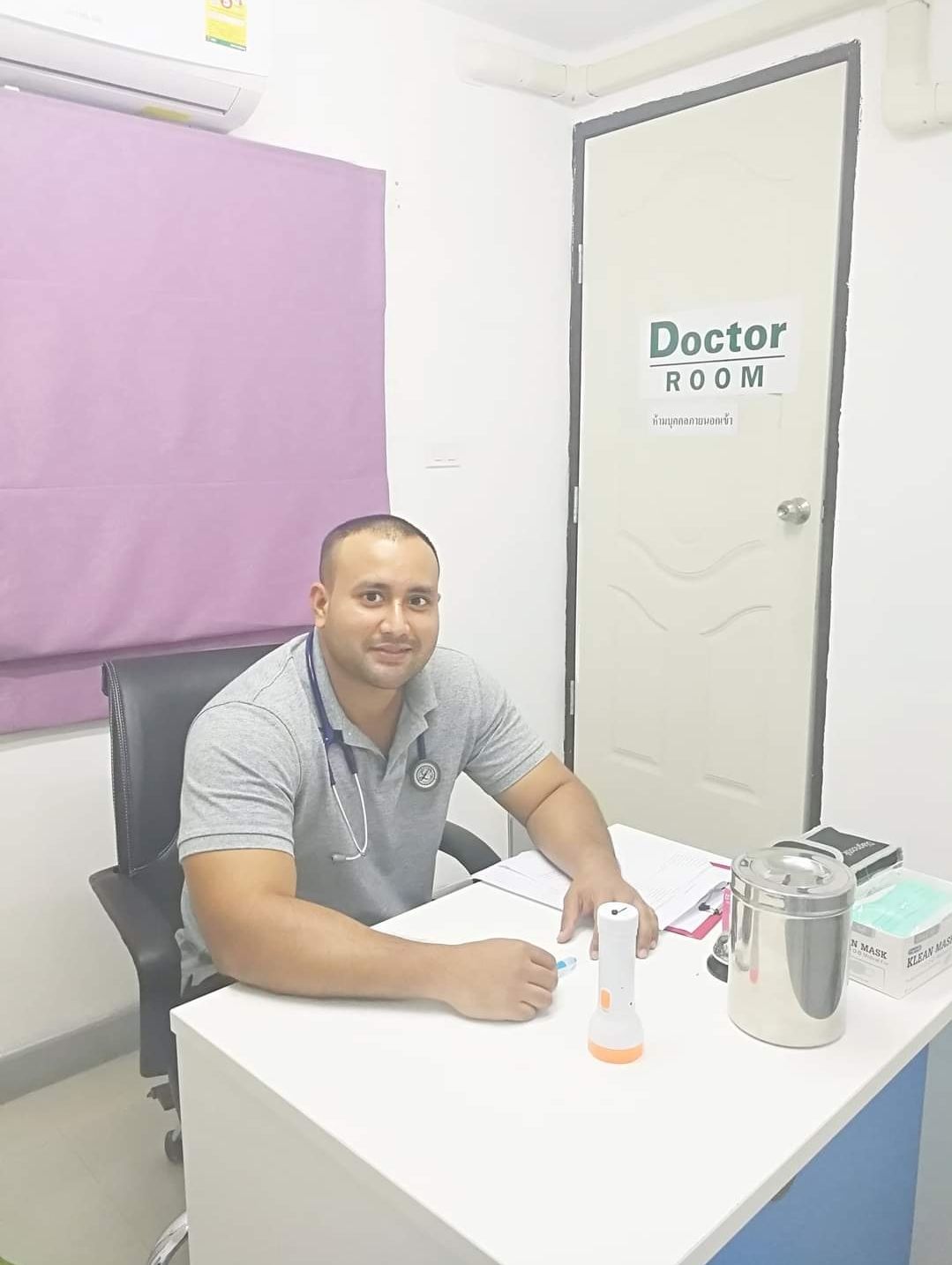
Dr. Ponlawat Pitsuwan is a physician at Doctor Bangkok, a private clinic in central Bangkok. He sees expats, residents, and medical tourists for general medicine, wellness consultations, and IV therapy. His focus is straightforward, evidence-based care delivered in plain language.