
Clinically reviewed by Dr. Ponlawat Pitsuwan, Physician, Doctor Bangkok. Last reviewed: October 2026
Wharton’s jelly stem cells come from umbilical cord tissue collected after a healthy birth. They are the most widely used stem cell type in Bangkok regenerative clinics because they are collected without harming anyone, they multiply reliably in a lab, and they are less likely to trigger an immune reaction than stem cells taken from an adult donor. If you are considering stem cell therapy in Bangkok, this is almost certainly the cell type you will be offered.
If you have been researching stem cell therapy in Bangkok, you have probably seen "Wharton’s jelly" or "UC-MSC" listed on clinic websites without much explanation. Most clinics here use this cell type, but few bother to say why. That leaves patients comparing clinics without understanding what they are actually comparing.
The short answer: Wharton’s jelly stem cells behave better than the alternatives, they are sourced without any invasive procedure on the donor, and they are practical to use at scale. This article explains what that means in plain terms, what Bangkok clinics are required to do to use them safely, and what you should ask before you commit to anything.
What Wharton’s Jelly Stem Cells Actually Are
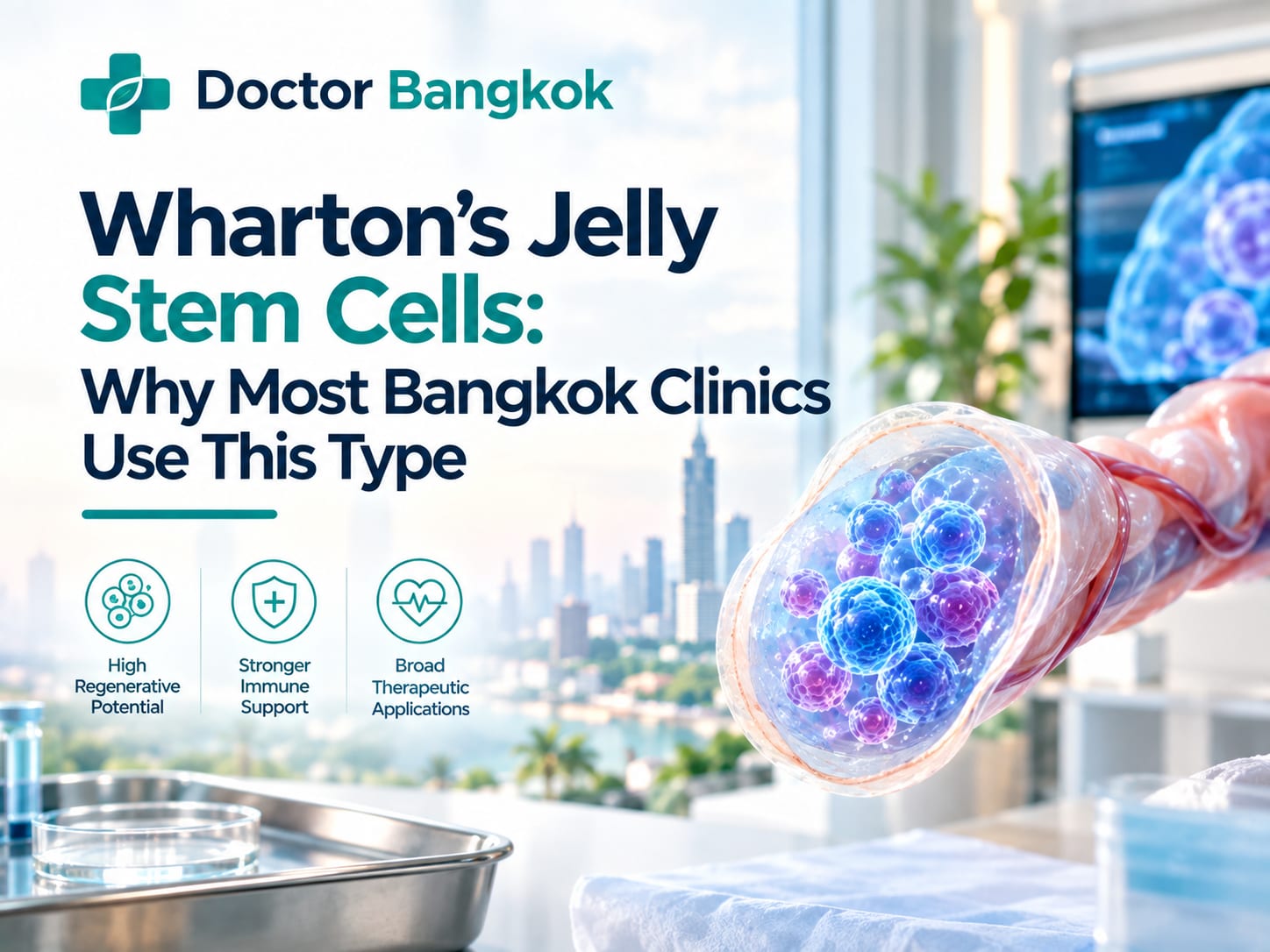
Wharton’s jelly is the soft tissue inside the umbilical cord. After a healthy birth, the cord is normally discarded. With proper donor consent and screening, that cord tissue is collected instead, and mesenchymal stem cells are extracted from it.
These cells are called UC-MSCs or WJ-MSCs. They are not embryonic stem cells, and there is no ethical controversy around how they are sourced. The donor is the mother, the process is painless, and nothing is taken from the baby. That matters to most patients who ask me about this directly.
Once in the body, these cells release signalling proteins that reduce inflammation and appear to support tissue repair. They do not replace damaged cells directly in most protocols. They communicate with surrounding tissue in ways that can shift the local environment toward healing. The evidence for this effect is moderate and still building.
Why Wharton’s Jelly Outperforms Bone Marrow and Fat-Derived Stem Cells
This is the question I hear from informed patients, and it is a fair one. Bone marrow and fat tissue are also sources of mesenchymal stem cells. But there are real differences that explain why Wharton’s jelly has become the dominant choice in Bangkok clinics.
Cell age matters. Wharton’s jelly MSCs come from tissue present at birth, so the cells are young. Bone marrow MSCs come from adult donors. Older cells divide less readily and stop functioning sooner. Published comparisons show WJ-MSCs have higher growth capacity and lower rates of cellular ageing.
The immune profile is also different. WJ-MSCs are less likely to trigger an immune reaction, which makes them better suited to allogenic therapy, treatment using cells from a donor rather than yourself. Adipose-derived MSCs are sometimes used from your own fat tissue, but that requires a minor liposuction procedure and the cells are already older from the moment they are collected.
On yield and consistency: a single umbilical cord can produce enough cells for multiple patients at a standardised dose. Bone marrow harvest is painful, invasive, and yields fewer cells. For a clinic running an IV infusion protocol at proper quality standards, Wharton’s jelly is the more practical choice without sacrificing biology.
How Wharton’s Jelly Stem Cells Are Sourced and Processed
Sourcing starts before the birth. The donor mother is screened for infectious diseases and other health markers. After delivery, the cord is collected with consent and transferred to a cell processing laboratory.
In a legitimate protocol, that lab should operate to GMP standards. GMP stands for Good Manufacturing Practice, a set of quality controls covering how cells are expanded, tested, stored, and released for clinical use. You should be able to ask for a batch certificate or quality report. If a clinic cannot produce one, that is a meaningful red flag.
The cells are grown from a small number into a much larger number under controlled conditions, then quality-tested, frozen, and stored until needed. On treatment day, they are thawed and prepared for infusion.
Regulation and Safety in Bangkok
Thailand’s FDA is developing a formal regulatory framework for advanced cell therapies. As of now, stem cell therapy in Thailand sits in a legally complex space. Legitimate treatment requires a licensed medical facility and a qualified physician overseeing the protocol. A proper pre-treatment consultation is not optional. It is the baseline.
What this means in practice: a genuine clinic will require blood tests before treatment, will review your medical history, and will tell you honestly whether you are a suitable candidate. A sales call is not a consultation. A wellness spa is not a licensed medical facility.
Regulatory oversight in this space is still maturing in Thailand, as it is in many countries. That is not a reason to avoid treatment. It is a reason to choose carefully and ask the right questions.
What to Expect at a Consultation and Treatment Session
Most clinic websites skip this entirely, so here is what a proper process actually looks like.
The first step is a clinical consultation, not a sales meeting. A physician reviews your history, discusses your goals, and assesses whether Wharton’s jelly stem cell therapy is right for your situation. At Doctor Bangkok, this includes a pre-treatment blood panel covering inflammatory markers, liver and kidney function, and baseline immune parameters. Those results shape the protocol.
Treatment is typically an IV infusion. A cannula goes in your arm and the cell dose is delivered over roughly one to two hours. It is not painful. Monitoring continues during and after the infusion for any immediate reaction, though reactions to WJ-MSCs are uncommon. You should be told exactly what dose you are receiving and why that dose was chosen for your specific case.
Honest Expectations: What the Evidence Supports
This is where most Bangkok clinic websites get it wrong, and I would rather be straight with you.
Wharton’s jelly stem cell therapy shows genuine clinical promise. There is moderate-quality published evidence supporting anti-inflammatory and immune-modulating effects. Early-phase trial data is encouraging in areas like joint conditions, autoimmune modulation, and neurological support.
What it is not: a guaranteed treatment for any specific condition. Most applications outside early-phase clinical trials are not yet standard-of-care. If a clinic is making confident cure claims for serious conditions, that should concern you.
Come in, get a proper assessment, understand the evidence level for your specific situation, and make an informed decision. You can review the broader approach to stem cell therapy in Bangkok before your appointment, including what the evidence actually supports.
What Medical Tourists and Expats Should Ask Before They Start
If you are leaving Bangkok within a few days of treatment, continuity of care matters. A legitimate clinic provides full treatment records in a format your home physician can use. Observable effects, if any, typically emerge over three to six months rather than days or weeks.
Before committing to any clinic, ask these questions directly. Where are the cells sourced and processed? Is the laboratory GMP-certified? What donor screening was conducted? Can you see a batch certificate? What is the clinical basis for recommending this protocol for your specific case?
At Doctor Bangkok, English-speaking physicians handle the entire process. For expats and medical tourists making decisions quickly before a flight home, that is not a small detail. If you want an independent assessment before starting any protocol elsewhere in the city, we offer that consultation without obligation. Find out what a stem cell therapy consultation at Doctor Bangkok involves before your first appointment.
Considering Wharton’s jelly stem cell therapy in Bangkok? Doctor Bangkok offers clinical consultations with English-speaking physicians who will assess your suitability honestly, review your blood results, and explain what the evidence actually supports for your situation. We are BTS accessible and see expats, residents, and medical tourists. Contact us to schedule your consultation.
FAQ
Dr. Ponlawat Pitsuwan
Physician, Doctor Bangkok
a private medical clinic in central Bangkok. He sees expats, residents, and medical tourists for regenerative medicine consultations including Wharton’s jelly stem cell therapy assessment, general health checks, and complex medical questions requiring clear English-language communication. His focus is straightforward, evidence-based care delivered in plain language.
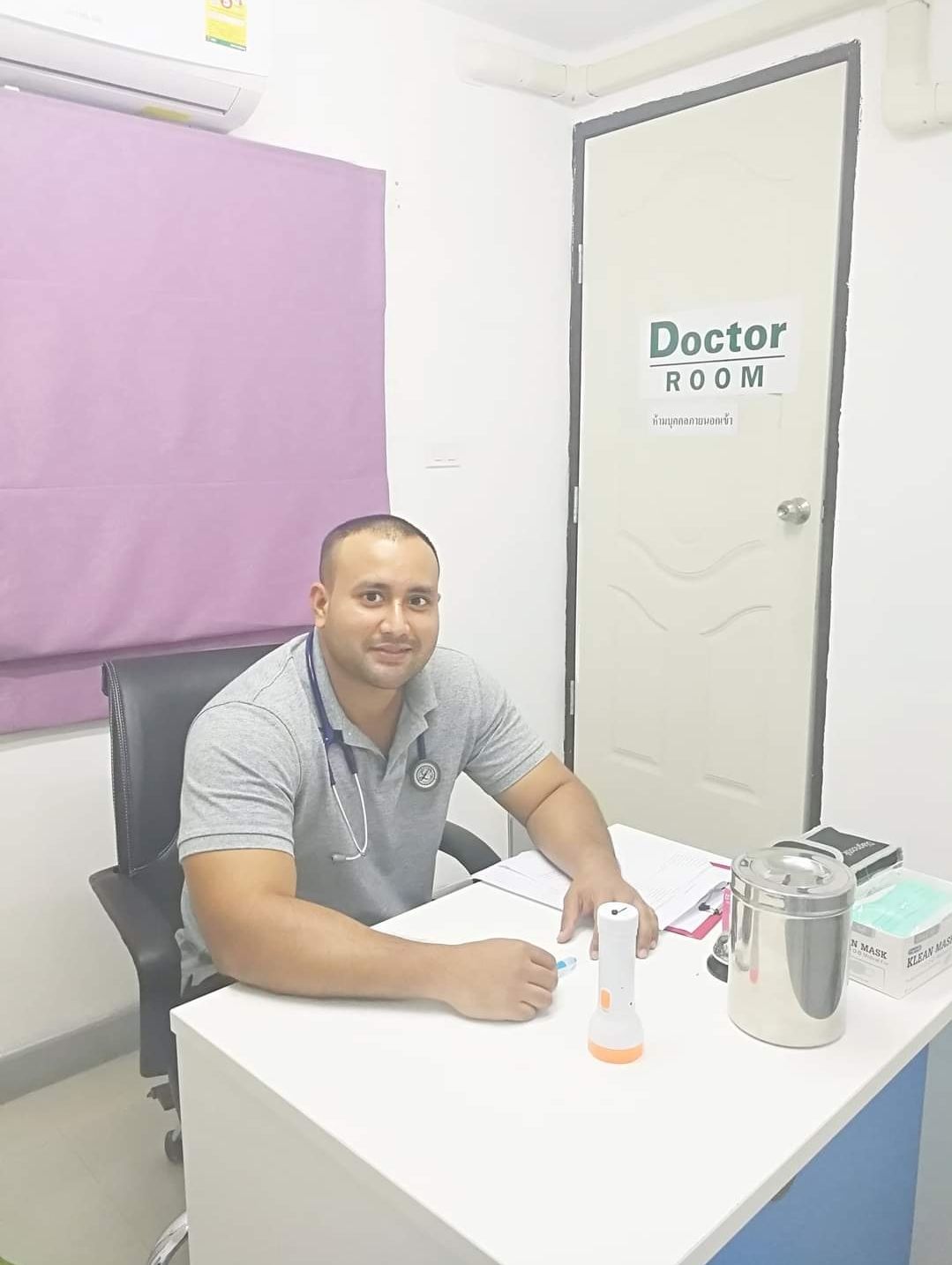
Dr. Ponlawat Pitsuwan is a physician at Doctor Bangkok, a private clinic in central Bangkok. He sees expats, residents, and medical tourists for general medicine, wellness consultations, and IV therapy. His focus is straightforward, evidence-based care delivered in plain language.