Clinically reviewed by Dr. Ponlawat Pitsuwan, Physician, Doctor Bangkok. Last reviewed: September 2026
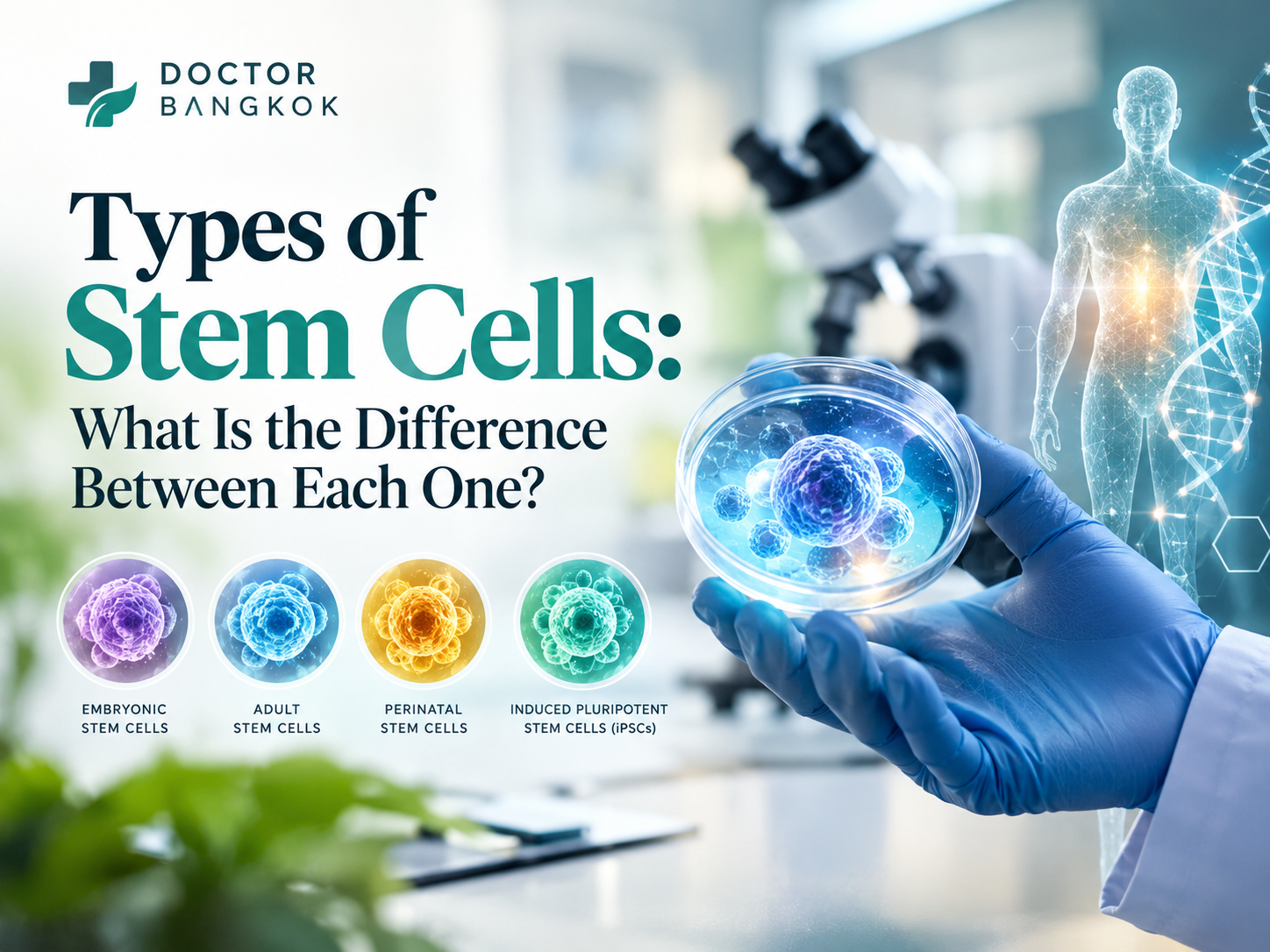
There are four main types of stem cells: embryonic, adult, umbilical cord, and induced pluripotent stem cells. Each has a different ability to develop into other cell types in the body. For most treatments available in Bangkok clinics today, mesenchymal stem cells sourced from donor cord tissue or a patient’s own fat or bone marrow are the type you are most likely to encounter.
Most patients who ask me about stem cells have already done a lot of Googling. They arrive with a mix of real information and marketing language, and they cannot always tell which is which. The core question is usually simple: what type of stem cells would I actually be getting, and does it matter?
It does matter. The type determines what it can do, where it comes from, and whether it carries any risk. This guide cuts through the classification system so you can ask the right questions before you commit to anything.

The Potency Spectrum: From Totipotent to Unipotent
The key concept here is potency. Potency describes how many different cell types a stem cell can become.
| Potency Level | What It Means | Example |
|---|---|---|
| Totipotent | Can become any cell in the body, including placenta | Fertilised egg (first few divisions) |
| Pluripotent | Can become almost any cell except placenta | Embryonic stem cells, iPSCs |
| Multipotent | Can become several related cell types | Mesenchymal stem cells, hematopoietic stem cells |
| Unipotent | Can only produce one specific cell type | Muscle stem cells |
Think of it as a narrowing funnel. The earlier in development a cell is, the more options it has. By the time a stem cell lives in your bone marrow or fat tissue, it is already specialised to a degree.
Embryonic Stem Cells
These come from a very early-stage embryo, around four to five days after fertilisation. They are pluripotent, meaning they can become nearly any cell type in the body. That makes them scientifically powerful.
The problem is ethical. Harvesting these cells destroys the embryo. Their use in clinical treatment is tightly regulated across most countries, including Thailand. You will not encounter embryonic stem cells in standard clinic protocols here. Their role today is in laboratory research, not in treatments offered to patients.

Induced Pluripotent Stem Cells
Induced pluripotent stem cells, or iPSCs, were developed partly in response to the ethical issues around embryonic stem cells. Scientists take ordinary adult cells, often from skin or blood, and reprogram them in a laboratory back to a pluripotent state. The result behaves similarly to an embryonic stem cell.
iPSCs are not in routine clinical use. Pluripotent cells, whether embryonic or iPSC, carry a risk of forming a tumour called a teratoma if introduced into the body before they are fully guided into a target cell type. Clinical applications are coming, but they are not what you will find offered in Bangkok clinics today.
Adult Stem Cells
Adult stem cells are found throughout the body across a person’s entire lifetime. They are multipotent, which means they can develop into several related cell types but not any cell in the body. They are the backbone of regenerative medicine right now.
The two most clinically relevant subtypes are hematopoietic stem cells and mesenchymal stem cells.
Hematopoietic Stem Cells
Hematopoietic stem cells live mainly in your bone marrow. They produce all the different types of blood cells: red cells, white cells, and platelets. Bone marrow transplants, used for decades to treat certain blood cancers and immune disorders, are built around these cells. This is one of the most established uses of stem cell therapy in medicine.
Mesenchymal Stem Cells
Mesenchymal stem cells, or MSCs, are the type most commonly used in the regenerative and wellness treatments you will see advertised in Bangkok. They can develop into bone, cartilage, fat, and muscle cells. They also have anti-inflammatory effects that researchers believe contribute to many of their reported benefits.
MSCs can be harvested from several sources: bone marrow, fat tissue, umbilical cord tissue, and placenta. Fat-derived MSCs are popular for treatments using the patient’s own cells because fat is relatively easy to collect. Umbilical cord-derived MSCs are widely used in donor-based protocols because cord tissue is collected at birth without harm to the donor.
Umbilical Cord and Cord Blood Stem Cells
These deserve their own mention. Cord blood stem cells are mostly hematopoietic. Umbilical cord tissue stem cells are mesenchymal. Both are collected at birth from donated cord tissue with no ethical concerns attached.
Cord-derived MSCs are young cells. They have not been exposed to years of environmental stress the way adult tissue cells have. Many Bangkok clinics source MSCs from GMP-certified laboratories that process donated umbilical cord tissue under strict quality controls. GMP stands for Good Manufacturing Practice. It is the quality standard you should ask about before accepting any cell-based treatment.
Autologous vs Allogeneic Stem Cells
This distinction matters more than most patients realise. Autologous means the cells come from your own body. Allogeneic means they come from a donor.
Autologous treatments avoid immune rejection because the cells are yours. The trade-off is that the quality and quantity of your own stem cells decline with age. Allogeneic treatments use young, laboratory-screened donor cells, often cord-derived MSCs, which may be more potent but carry a small theoretical risk of immune response. Reputable clinics screen donor cells carefully to minimise this.
Neither approach is universally better. The right choice depends on your age, your health goals, and what the clinic can safely provide.
Which Types of Stem Cells Are Used in Bangkok Clinics
Most stem cell treatments available at Bangkok clinics use mesenchymal stem cells from umbilical cord tissue or, for autologous protocols, from the patient’s own bone marrow or fat. Embryonic stem cells are not used in clinical practice here. iPSCs are not yet in routine clinical use anywhere.
You will also see related treatments offered alongside stem cell protocols. Exosome therapy uses particles secreted by stem cells and is sometimes offered as an alternative or complement. IV wellness drips and NAD+ infusions are often recommended as part of broader longevity medicine protocols. At Doctor Bangkok, we do not administer stem cell therapy directly, but we regularly help patients understand what they are being offered and decide whether a protocol makes sense for their situation.
Safety and What to Ask Before Any Stem Cell Treatment
The biggest mistake I see is patients booking a treatment based on a clinic’s website alone. A few questions cut through the noise quickly.
Ask specifically what type of stem cells you will receive and where they come from. Ask whether the laboratory is GMP-certified. Ask whether the cells are autologous or allogeneic, and why that protocol was chosen for you. Ask what monitoring is included after treatment.
The teratoma risk mentioned earlier applies mainly to pluripotent cells that are not fully differentiated before administration. Multipotent MSCs, which are what legitimate Bangkok clinics use, do not carry this risk in the same way. But that is all the more reason to confirm exactly what you are being offered. If a clinic cannot answer these questions clearly, walk away.
Stem cell therapy is regulated in Thailand under Thai FDA and Ministry of Public Health guidelines. A consultation with a physician before you commit to any protocol is a sensible step, particularly if you are an expat or medical tourist without an established doctor here.
Not sure what you are being offered at a Bangkok stem cell clinic? At Doctor Bangkok, our English-speaking physicians can walk you through the science, review any treatment proposal you have received, and help you decide whether the protocol makes sense for your health and your goals. We are centrally located and BTS accessible. Book a consultation at Doctor Bangkok before you start any stem cell or regenerative medicine treatment.
FAQ
Dr. Ponlawat Pitsuwan
Physician, Doctor Bangkok
a private medical clinic in central Bangkok. He sees expats, residents, and medical tourists for general medical consultations, health assessments, and evaluations of wellness and regenerative medicine options. His focus is straightforward, evidence-based care delivered in plain language.

Dr. Ponlawat Pitsuwan is a physician at Doctor Bangkok, a private clinic in central Bangkok. He sees expats, residents, and medical tourists for general medicine, wellness consultations, and IV therapy. His focus is straightforward, evidence-based care delivered in plain language.