


Clinically reviewed by Dr. Ponlawat Pitsuwan, Physician, Doctor Bangkok. Last reviewed: September 2026
Stem cell therapy for degenerative disc disease uses mesenchymal stem cells injected directly into the damaged disc to reduce inflammation and support tissue repair. Human trial evidence shows meaningful pain reduction in many patients, though full disc height restoration is not guaranteed. It is a non-surgical option worth considering after conservative treatments have failed, and Bangkok is one of the most accessible places to access it.
A lot of my patients arrive at this conversation the same way. Years of back pain. Physio that helped for a while, then stopped. An epidural injection that bought a few months of relief. Now they are sitting in front of me asking whether anything is left before surgery. That is exactly who stem cell therapy for degenerative disc disease is designed for.
Bangkok has become a serious destination for this treatment. The access is real, the cost difference compared to the USA or UK is significant, and the standard at well-run clinics is genuinely high. But the gap between what some clinics claim and what the evidence actually shows is wider than most patients realise. This article closes that gap.

What Is Actually Happening Inside a Degenerating Disc
Your spine is held together by discs, each one sitting between two vertebrae. Each disc has a tough outer ring and a gel-like centre that absorbs shock and keeps the disc healthy. When that gel breaks down, the disc loses height, flexibility, and its ability to protect the vertebrae above and below.
The nucleus pulposus dries out. The disc compresses. Nerves get irritated. The result is chronic low back pain that does not respond well to rest or standard painkillers.
This matters because stem cell therapy works best when there is still enough disc structure remaining to support repair. Once a disc has fully collapsed, the biology becomes far less favourable.
How Stem Cells Work on a Degenerating Disc
The short version is this: mesenchymal stem cells, or MSCs, do not simply replace damaged tissue. They signal the disc’s own remaining cells to behave differently.
When injected into the disc, MSCs release proteins that reduce inflammation and encourage the disc’s cells to produce more of the structural material that gives it cushioning. They also calm the chronic irritation that drives much of the pain.
Some patients see disc height improvements on repeat MRI. Others see functional gains without obvious structural change. Both are valid outcomes. The disc environment is harsh, which is why cell quality and dose matter so much.
Which Type of Stem Cells Are Used, and Why It Matters
Not all MSCs are the same, and this is worth understanding before you book anything.
Bone marrow-derived MSCs come from the patient’s own hip bone. The harvest procedure is uncomfortable, and the potency of these cells declines with age. Adipose-derived MSCs come from fat tissue, more abundant and easier to collect, but still require a procedure on the patient.
UC-MSCs, derived from umbilical cord tissue, are different. No harvest from the patient is needed. These cells come from GMP-certified donors, they are younger and more proliferative, and they are the most commonly used option at Bangkok’s better-run private clinics. GMP means the cells have been processed under strict quality controls, with documented viability and dose per session.
That last point, the actual number of viable cells delivered, is one of the most important things to ask any clinic before you commit. At Doctor Bangkok, UC-MSCs sourced from GMP-certified facilities are the standard we work with.
What the Evidence Actually Shows
I will be honest with you, because the clinics trying to sell you a package will not always be.
Human clinical trial data on stem cell injection for disc disease is genuinely encouraging but also limited. Systematic reviews show statistically significant reductions in pain scores and disability measures at six to twelve months. Most trials also show improvements in quality of life.
What the evidence does not consistently show is reliable disc height restoration on MRI. Some patients show structural improvement. Many do not, despite reporting less pain. That is not a failure of the therapy. Pain reduction and functional improvement are the outcomes patients actually care about.
The safety profile in well-run facilities is strong. Serious adverse events are rare when GMP cell sourcing, sterile technique, and imaging-guided injection are in place. The risk rises sharply at unregulated facilities, which Bangkok has its share of.
Stem Cells for Degenerative Disc Disease: Are You a Candidate?
The patients most likely to benefit have MRI-confirmed disc degeneration, typically moderate rather than end-stage, with persistent pain that has not resolved after at least three to six months of conservative care. Conservative care means physiotherapy, anti-inflammatory medication, and possibly one or two epidural steroid injections.
If your MRI shows only mild changes, physio and lifestyle may still be sufficient. If it shows end-stage disc collapse with bone-on-bone contact, stem cell therapy is unlikely to achieve much. The window where it works best is that middle ground, significant but not terminal degeneration.
There are also exclusion factors. Active infection, certain autoimmune conditions, and pregnancy all rule you out. A treatment package quoted before anyone has looked at your MRI and health history is a red flag, not a sign of efficiency.
What Happens During the Procedure
The procedure itself is straightforward. You will have a pre-treatment assessment covering your imaging, blood work, and medical history. On the day, you are positioned on a table, the injection site is cleaned and numbed, and the stem cells are delivered directly into the disc using a fine needle guided by real-time X-ray imaging to ensure precise placement.
The injection takes minutes. Most patients are discharged the same day. You will be asked to avoid heavy physical activity for one to two weeks and to return for follow-up review.
Flying home shortly after is a common concern for medical tourists. Plan to stay in Bangkok for at least three to five days post-procedure. This allows for monitoring and a follow-up check before you travel. Doctor Bangkok provides full treatment documentation you can share with your GP or physiotherapist at home.
Recovery and How Results Are Tracked
Some patients notice reduced pain within four to eight weeks. For most, meaningful functional improvement is assessed at three to six months. That is the realistic timeline, and anyone promising faster results should be questioned.
Progress is tracked using pain scoring tools and disability measures, with MRI review at six months where structural assessment is appropriate. Your follow-up protocol should be agreed before the procedure, not improvised afterward.
Post-procedure rehabilitation matters. Gentle movement and targeted physiotherapy will support the outcome. The stem cells need a reasonable environment to do their work.
How to Choose a Stem Cell Clinic in Bangkok
Bangkok has excellent options and genuinely poor ones, sometimes within a few streets of each other. These are the questions that separate the two.
Ask whether cells are GMP-certified and what the cell dose per session is. Ask whether the injection is performed under imaging guidance by a trained physician. Ask whether a pre-treatment assessment is included as standard, not optional. Ask what the follow-up protocol looks like.
If a clinic cannot answer these questions clearly, or quotes a package before asking anything about your health, walk away.
Doctor Bangkok’s stem cell therapy service is built around these standards. We do not offer packages before assessment. We use GMP-certified UC-MSCs. Injections are performed by experienced physicians under imaging guidance. And we stay with patients through the follow-up arc, not just through the procedure.
If you have been managing back pain for months or years and want to know whether stem cell therapy is right for your situation, Doctor Bangkok offers a full clinical assessment including review of your existing MRI and treatment history. We see expats, residents, and medical tourists at our central Bangkok clinic, accessible from the BTS. Come in with your scans and your questions. We will give you a straight answer. Book your assessment at Doctor Bangkok.
FAQ
Dr. Ponlawat Pitsuwan
Physician, Doctor Bangkok
a private medical clinic in central Bangkok. He sees expats, residents, and medical tourists for regenerative medicine consultations, chronic pain assessment, and general medical care. His focus is straightforward, evidence-based care delivered in plain language.
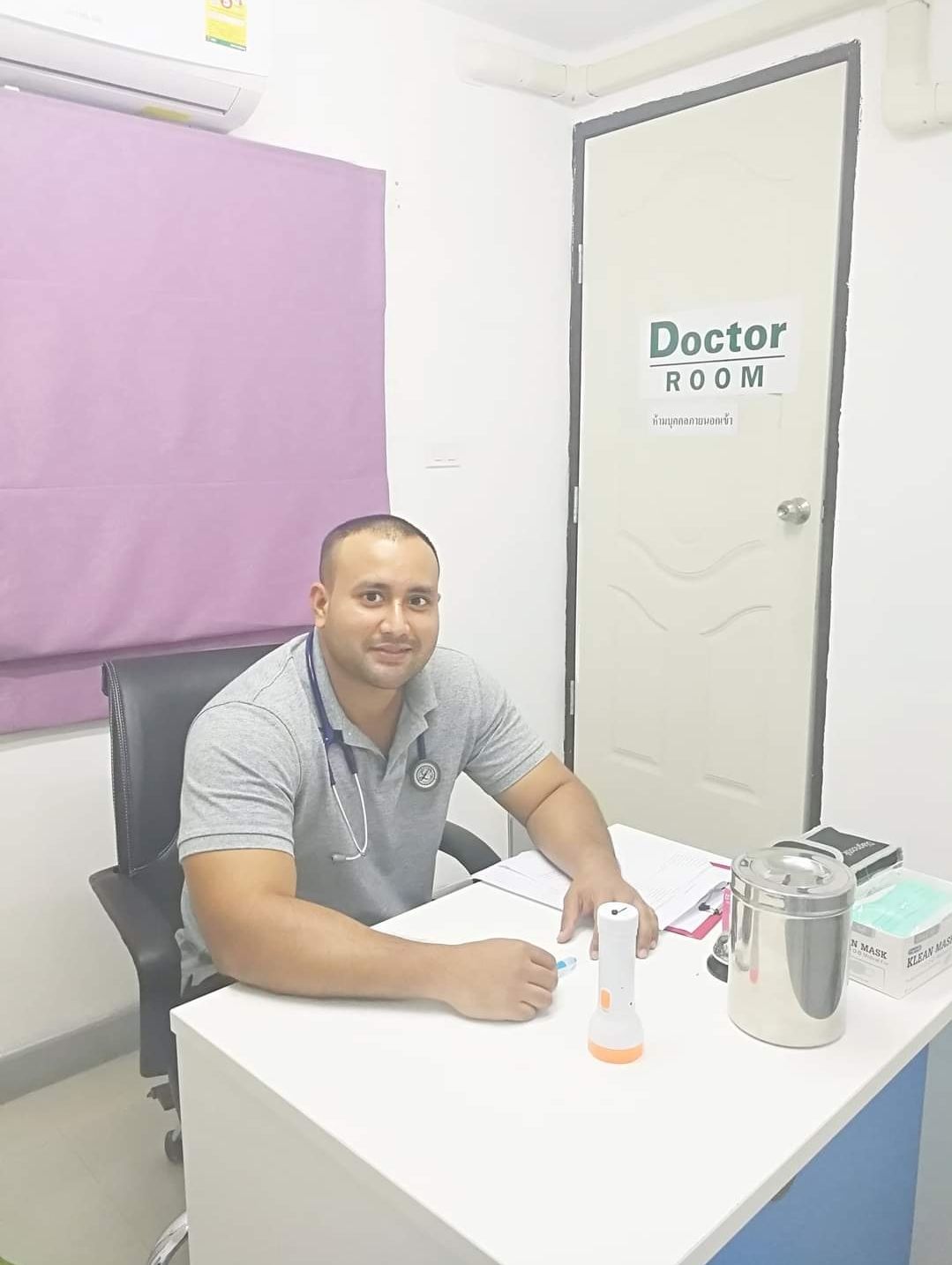
Dr. Ponlawat Pitsuwan is a physician at Doctor Bangkok, a private clinic in central Bangkok. He sees expats, residents, and medical tourists for general medicine, wellness consultations, and IV therapy. His focus is straightforward, evidence-based care delivered in plain language.