

Clinically reviewed by Dr. Ponlawat Pitsuwan, Physician, Doctor Bangkok. Last reviewed: September 2026
Stem cell injections for arthritis may reduce joint pain and improve function in patients with mild to moderate osteoarthritis, but reliable cartilage regrowth on imaging has not been consistently proven in large trials. Results vary by cell type, disease severity, and provider quality. A consultation with a physician before committing to any protocol is the right first step.
Most patients who ask me about stem cell injections have already been through the standard options. Physio. Anti-inflammatories. Corticosteroid injections that worked for a few months, then stopped. They are not looking for a sales pitch. They want a straight answer about whether this is worth it.
The honest answer is: it depends, and not in a vague way. There is real science here, some of it encouraging. There is also a lot of hype, and Bangkok’s medical tourism market produces more than its share of it. This article gives you both sides so you can make a sensible decision before spending serious money.

How Stem Cell Injections for Arthritis Actually Work
The most common misconception I hear is that these injections simply become new cartilage. They do not. The type most often used for arthritis, mesenchymal stem cells (MSCs), release signals that change the joint environment. In plain terms, the cells prompt surrounding tissue to reduce inflammation and, in some cases, trigger local repair activity.
Whether that results in meaningful cartilage rebuilding is where the science gets complicated. Some small studies using MRI have shown cartilage-like tissue forming, particularly when fat-derived stem cells are combined with platelet-rich plasma (PRP). But these findings have not been replicated consistently in large controlled trials. What patients more reliably report is reduced pain and better joint function, not structural rebuilding on imaging.
What the Clinical Evidence Actually Says
This is the part most Bangkok clinic websites skip. A major 2024 study, the MILES trial published in Nature, compared MSC injections directly against corticosteroid injections in knee osteoarthritis patients. At one year, there was no significant difference in pain or function between the two groups. Corticosteroids cost a fraction of the price.
That does not mean stem cell injections do not work. It means the evidence is not yet strong enough to call them a proven treatment. Some patients do report improvements in pain and mobility that last beyond what corticosteroids typically provide. For now, stem cell therapy for arthritis sits in the category of promising rather than definitively established. A clinic that shows you only success stories is not giving you the full picture.

Who Is a Good Candidate, and Who Should Think Twice
Arthritis severity matters more than almost any other factor here. Doctors use the Kellgren-Lawrence scale to grade arthritis on X-ray, from Grade 1 (minimal changes) to Grade 4 (bone on bone). Patients with Grade 2 or Grade 3 disease tend to respond best. There is still enough cartilage structure remaining for the cells to work with.
Grade 4 patients, where the joint has largely collapsed, are generally better served by considering joint replacement. Stem cells cannot rebuild a joint that no longer has a scaffold to work from. Younger patients, non-smokers, and people without significant other health conditions also tend to do better. None of this can be assessed without a proper clinical review of your X-rays or MRI. Anyone offering a treatment package without seeing your imaging first is cutting corners.
Types of Stem Cells Used for Arthritis in Bangkok
There are three main options you will encounter at private clinics here. Bone marrow aspirate concentrate (BMAC) uses cells taken from your own hip bone. Adipose-derived stem cells come from your own fat tissue, usually via a small liposuction procedure. Both of these are autologous, meaning from your own body, which removes immune rejection risk but does require a harvesting procedure.
Umbilical cord tissue stem cells are the most common option at Bangkok private clinics. They are ready-to-use, require no harvesting from you, and have shown anti-inflammatory effects in studies. The trade-off is that you are relying entirely on the quality of the external cell bank. GMP-certified sourcing, meaning cells produced under strict pharmaceutical-grade manufacturing standards, is non-negotiable when choosing a provider. Ask for it explicitly. If a clinic cannot confirm it, walk away.
Where Stem Cell Injections Fit in the Treatment Hierarchy
I see patients jump straight to stem cells after two or three months of joint pain. That is usually too early. The standard progression for knee or hip osteoarthritis moves from exercise and physio, to anti-inflammatory medications, to corticosteroid injections, to hyaluronic acid injections, and sometimes to PRP. Stem cells come after these options have been tried and found insufficient.
Stem cell injections are not a first-line treatment. They are not a replacement for surgery in severe disease. They sit in a specific window: after conservative treatments have plateaued, before the joint has deteriorated beyond the point where regenerative approaches can still add value. Knowing whether you are in that window requires an honest clinical assessment, not a booking form.
Risks, Red Flags, and How to Vet a Bangkok Provider
Serious adverse events from stem cell injections are uncommon in properly conducted clinical settings. The main risk from any injection directly into a joint is infection, and at reputable clinics using sterile technique and ultrasound guidance, that risk is very low.
The bigger risk in Bangkok’s less regulated corners of the medical tourism market is provider quality. Documented cases across Southeast Asia have included infections, blood clots, and in rare instances tumour formation linked to unregulated cell therapies. The red flags are specific. A clinic that quotes a package price before reviewing your medical history. A clinic that cannot confirm GMP-certified cell sourcing. A clinic with no structured follow-up after the injection. Price is not a reliable safety guide. What matters is whether the provider can clearly answer questions about cell source, dose, preparation standards, and post-treatment monitoring.
Getting a Pre-Treatment Consultation in Bangkok
If you are an expat or coming to Bangkok as a medical tourist, the smartest move before booking any stem cell protocol is an independent physician consultation. Not with the clinic selling the treatment. With a doctor whose job is to tell you whether it is right for you.
At Doctor Bangkok, that is exactly what we offer. Bring your recent X-rays or MRI, your list of current medications, and any previous joint treatment history. We review your imaging, assess your candidacy against actual clinical criteria, and give you a clear opinion on whether stem cell therapy is likely to benefit you, which cell type and protocol makes sense for your case, and what to watch for in a provider. We do not push a protocol before understanding your situation.
For expats managing joint pain here long-term, or medical tourists planning a treatment trip, that independent starting point matters. Ultrasound-guided injection, where the needle is placed using real-time imaging to confirm exact positioning, is the standard we work to. Unguided injections are associated with lower precision and less predictable outcomes. If a clinic does not offer ultrasound guidance as standard, that is worth factoring into your decision.
If you are considering stem cell injections for arthritis in Bangkok, start with an independent medical consultation at Doctor Bangkok. We will review your imaging, assess whether you are a suitable candidate, and give you a clear clinical opinion before any treatment is booked. English-speaking physicians, central Bangkok, BTS-accessible. Book through doctorbangkok.co.th.
FAQ
Dr. Ponlawat Pitsuwan
Physician, Doctor Bangkok
a private medical clinic in central Bangkok. He sees expats, residents, and medical tourists for regenerative medicine consultations, joint pain assessment, and pre-treatment evaluation for [stem cell injections for arthritis](https://doctorbangkok.co.th/stem-cell-therapy-bangkok/). His approach is straightforward and evidence-based, delivered in plain language.
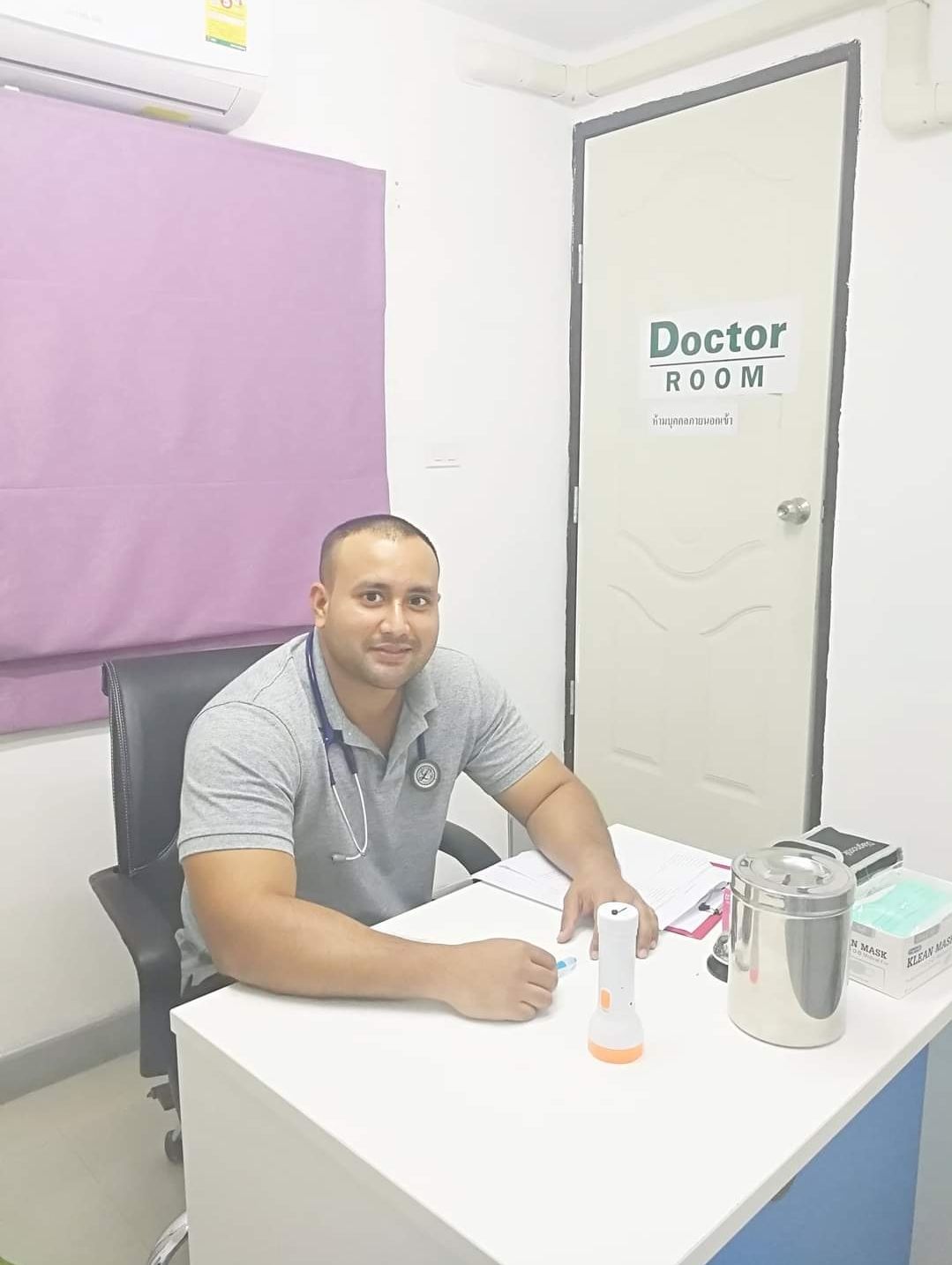
Dr. Ponlawat Pitsuwan is a physician at Doctor Bangkok, a private clinic in central Bangkok. He sees expats, residents, and medical tourists for general medicine, wellness consultations, and IV therapy. His focus is straightforward, evidence-based care delivered in plain language.