
Clinically reviewed by Dr. Ponlawat Pitsuwan, Physician, Doctor Bangkok. Last reviewed: September 2026
Stem cell hair restoration uses injected cells or cell-derived products to stimulate dormant hair follicles and slow hair thinning. It is not a surgical procedure and requires no donor strip. Results typically last 12 to 18 months and maintenance sessions are usually needed. It works best in patients who still have viable follicles, and it is not a replacement for a hair transplant in every case.
You noticed the thinning. Maybe it was a photo, or a bad angle in the bathroom mirror at the Asok serviced apartment. You searched, found the phrase "stem cell hair restoration," and now you want to know whether it is real medicine or clever marketing. That is a fair question, and the honest answer is: it depends on what is actually being offered and whether you are the right candidate.
Bangkok has become a practical base for non-surgical hair restoration. For expats and medical tourists here, understanding what you are walking into matters more than finding the cheapest package. The science is real and it is still growing. Major hair loss associations have not fully endorsed it outside of clinical trials, but peer-reviewed research does support its use in specific patients. This article tells you what it can do, what it cannot, and how to make a sensible decision.

What Actually Happens to Your Hair Follicles
Most hair loss, in men and women, comes down to a hormone called DHT. It shrinks hair follicles over time, a process called miniaturisation. The follicles do not die immediately. For a period, they go dormant. They are still present but no longer producing a visible hair.
That window, while the follicle is dormant rather than gone, is where treatments including stem cell therapy have the best chance of working. Once a follicle is completely lost, no injection will bring it back. This is the most important thing to understand before choosing any regenerative treatment.
How Stem Cell Hair Restoration Works
Certain cells, when introduced into the scalp, release signalling molecules that tell the follicle environment to switch back on. They do not replace the follicle. They change the conditions around it. This reduces inflammation and stimulates the follicle’s own stem cells to become active again.
Different clinics use different approaches. Some harvest fat tissue from your body, process it to extract a concentration of cells, and inject that into the scalp. Others use mesenchymal stem cells, sometimes from umbilical cord tissue, grown under certified laboratory conditions. A third category skips living cells entirely and uses exosomes, which carry signalling molecules without including any cells at all. Each approach has a different evidence base and a different risk profile.

Types of Stem Cells Used in Hair Restoration
What a clinic calls "stem cell therapy" can mean several different things. Knowing the difference helps you ask the right questions before committing to anything.
Autologous SVF treatments use your own fat tissue, usually from the abdomen or thigh under local anaesthetic. Because the cells come from your own body, rejection is not a concern. Allogeneic mesenchymal stem cells, often from umbilical cord tissue, are produced from a donor source under GMP-certified conditions. GMP stands for Good Manufacturing Practice, a set of standards that govern how biological products are prepared for safety and consistency.
Exosome products are cell-free, meaning no living cells are injected at all. The clinical evidence for exosomes in hair restoration is at an earlier stage than for cell-based approaches, but the field is moving quickly. Whichever type is offered, a legitimate clinic should be able to tell you exactly what it is and where it comes from.
Is Stem Cell Hair Restoration Better Than a Hair Transplant?
This is the question I get most often. The short answer is that they solve different problems, and for some patients, the best outcome comes from using both.
A hair transplant physically moves hair from a donor zone to a thinning area. The transplanted grafts are considered long-lasting, but the transplant does nothing to slow loss in surrounding areas. Stem cell therapy does not move hair. It works to slow miniaturisation and reactivate dormant follicles in existing thinning zones. Results are not permanent in the way transplanted grafts are, and most patients need maintenance every 12 to 18 months.
The combination approach is where things get clinically interesting. Research supports using stem cell therapy before or alongside FUE to improve graft survival, particularly in scalp tissue that has been previously treated or is affected by scarring. Some patients use it after a transplant to support donor area recovery and improve density in surrounding zones. This approach is not yet standard, but the evidence is building.
| Stem Cell Hair Restoration | Hair Transplant (FUE) | |
|---|---|---|
| Surgical? | No | Yes |
| Downtime | 1 to 2 days | 7 to 14 days |
| Results duration | 12 to 18 months, maintenance needed | Long-term for transplanted grafts |
| Requires donor hair | No | Yes |
| Works on complete follicle loss | No | Yes |
| Can be combined | Yes | Yes |
| Evidence level | Moderate and growing | Strong, well-established |
You can review our stem cell therapy service at Doctor Bangkok to understand how we approach the comparison and which patients benefit most from each option.
Who Is and Who Is Not a Good Candidate
Stem cell hair restoration works best in patients with early to moderate thinning who still have dormant follicles present. A scalp assessment using trichoscopy will show whether those follicles are still there to be stimulated. Without that assessment, no one can honestly tell you this treatment will work for you.
Patients with complete follicular loss in the treatment area are not good candidates. Neither are patients with active scalp infections, inflammatory skin conditions, or certain autoimmune conditions that affect outcomes. If you are hoping to restore the hairline you had at twenty, no treatment will do that, and any clinic claiming otherwise is not being straight with you.
Be careful about any provider in Bangkok that gives you a protocol and a price before assessing your scalp. That is a red flag. An honest clinical approach assesses first.
What to Expect: Procedure, Recovery, and Timeline
The procedure is delivered by injection into the scalp under local anaesthetic or topical numbing. Most sessions take 30 to 60 minutes. There is some redness and mild swelling for 24 to 48 hours. Most patients return to normal activity the same day or the day after.
Results do not appear overnight. Most patients notice early improvements in hair texture and reduced shedding within six to eight weeks. Visible increases in density typically appear from three to four months, with the full result assessed at six months. Many patients require two to three initial sessions, followed by maintenance every 12 to 18 months depending on how the scalp responds.
How to Choose a Stem Cell Hair Clinic in Bangkok
Bangkok has no shortage of clinics marketing stem cell treatments, and the quality varies significantly. Before you commit to anything, ask what type of cells or cell-derived product is being used and where it comes from. Ask whether the cell source is GMP-certified. Ask whether a doctor assesses your scalp before any protocol is recommended.
A clinic that cannot answer these questions clearly, or that leads with a package price before reviewing your history, is not the right place. The hair restoration consultation at Doctor Bangkok starts with a clinical assessment. We explain exactly what we are offering, what the evidence supports, and what realistic outcomes look like for your specific scalp, before any treatment is discussed.
Bangkok as a Practical Base for Stem Cell Hair Restoration
For expats already living here and for medical tourists coming specifically for treatment, Bangkok offers a real practical advantage. Equivalent regenerative therapies are either unavailable outside clinical trials in the UK and US, or priced significantly higher when they are accessible. The cost difference is meaningful.
That said, cost alone is not the right reason to choose a provider. Cell source quality, GMP certification, physician oversight, and aftercare all affect both safety and outcomes. Bangkok done well is genuine value. Bangkok done cheaply is neither safe nor effective. The clinic matters more than the city.
Considering stem cell hair restoration in Bangkok? At Doctor Bangkok, we start with a proper scalp assessment before recommending any protocol. Our physicians are English-speaking, BTS-accessible, and experienced in regenerative treatments for expats and medical tourists. Whether you are weighing stem cell therapy against a hair transplant or exploring a combined approach, we will give you an honest clinical opinion, not a package price. Book a consultation at Doctor Bangkok to find out where you actually stand.
FAQ
Dr. Ponlawat Pitsuwan
Physician, Doctor Bangkok
a private medical clinic in central Bangkok. He sees expats, residents, and medical tourists for regenerative treatments, hair loss assessment, and general medical care. His focus is straightforward, evidence-based care delivered in plain language.
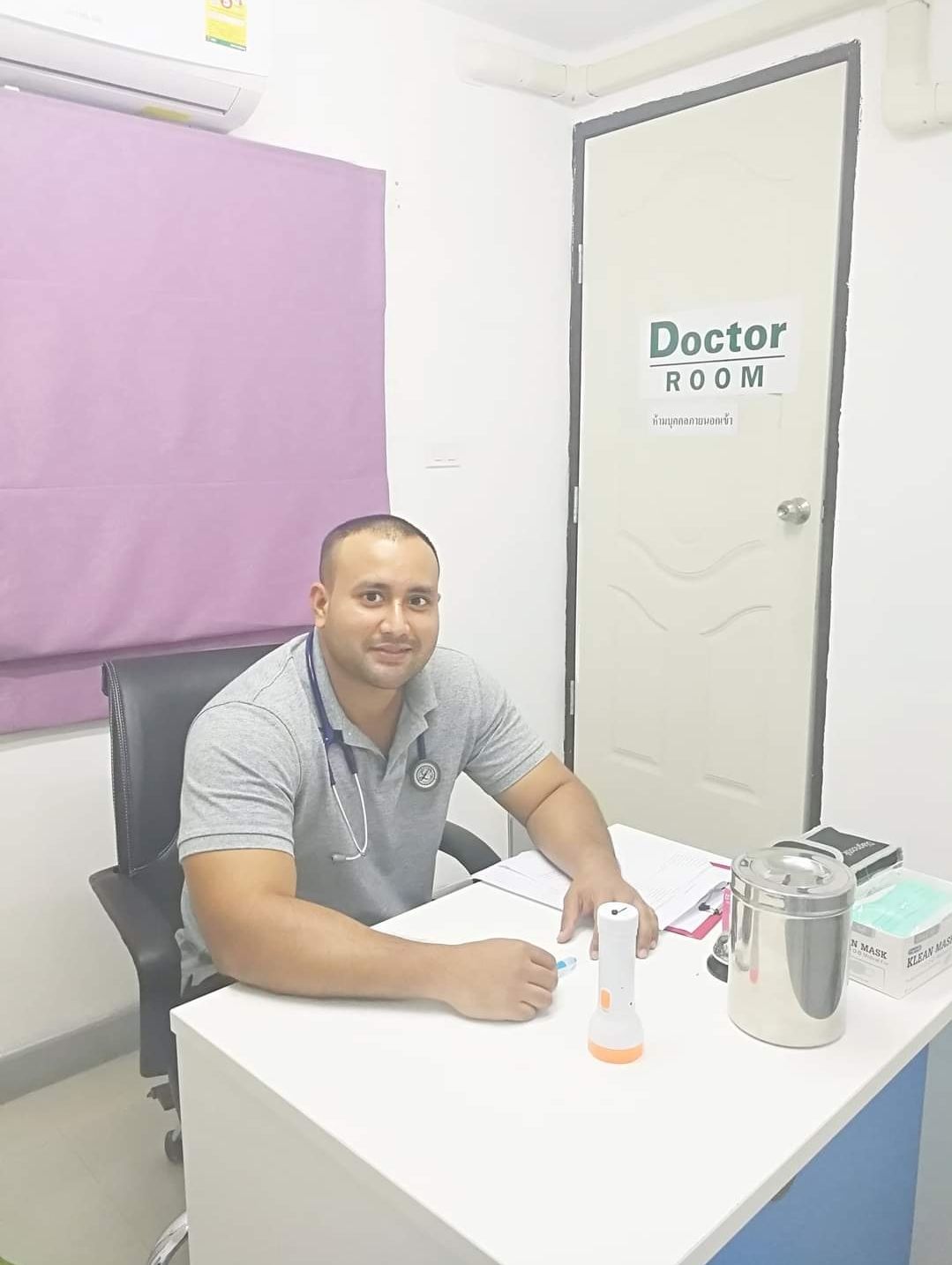
Dr. Ponlawat Pitsuwan is a physician at Doctor Bangkok, a private clinic in central Bangkok. He sees expats, residents, and medical tourists for general medicine, wellness consultations, and IV therapy. His focus is straightforward, evidence-based care delivered in plain language.