
Clinically reviewed by Dr. Ponlawat Pitsuwan, Physician, Doctor Bangkok. Last reviewed: September 2026
Mesenchymal stem cells are being studied in over 1,500 registered clinical trials worldwide. The safety record is strong. But completed Phase 3 trials with published results remain very few. Most MSC therapy offered in Bangkok private clinics operates outside formal trials, under physician supervision. Here is what the evidence actually shows, and what that means if you are considering treatment.
I get asked about stem cell therapy at least a few times a month. Usually it is expats who have done a lot of reading and are trying to separate the real science from the sales pitch. That is a smart instinct. The gap between what the research actually shows and what some clinics claim is wider than most patients realise.
The short answer: mesenchymal stem cells, or MSCs, are one of the most studied cell therapies in regenerative medicine right now. The safety data is genuinely encouraging. The efficacy data is more complicated. If you are considering MSC therapy in Bangkok, you deserve a straight explanation of where the science stands, not a highlight reel.

What the Mesenchymal Stem Cells Clinical Trials Numbers Actually Show
There are over 1,500 registered MSC trials on ClinicalTrials.gov as of late 2024. That sounds like a lot of evidence. It is actually a lot of research in progress. Completed Phase 3 trials with published results number only a handful. Most registered trials are Phase 1 or Phase 2, meaning they are still testing safety and early signs of benefit.
MSCs have shown a consistent safety profile across studies. Serious adverse events have been rare. That is genuinely good news. But safety and efficacy are different questions, and the efficacy data is still catching up.
The one clear landmark is an FDA-approved MSC-based therapy called remestemcel-L, approved for steroid-resistant graft-versus-host disease in children. That approval went through the full regulatory process. Everything else in the MSC space remains investigational to varying degrees.
What Trial Phases Mean for You as a Patient
Phase 1 trials ask one question: is this safe? They use small groups, watch for problems, and do not yet try to prove the treatment works. Phase 2 starts to look at whether the therapy does anything useful. Phase 3 is the large, randomised, placebo-controlled study that regulators use to approve a therapy. Very few MSC therapies have completed Phase 3.
Why does this matter if you are sitting in Bangkok weighing your options? Because when a private clinic says "clinically proven," you need to ask: proven at what phase, for what condition, in how many patients? Those are fair questions. Any physician worth their time will answer them directly.

Which Conditions Have the Strongest Evidence Right Now
Graft-versus-host disease has the strongest MSC evidence. That FDA-approved therapy is real, peer-reviewed, and regulatory-grade. If you or a family member has GvHD, this is the area where MSC therapy has crossed from investigational to established.
Knee osteoarthritis is the next most studied area. Multiple Phase 1 and Phase 2 trials show safety and some functional improvement in pain and mobility. The results are promising but not yet at the level where most international guidelines recommend MSCs as standard care.
Autoimmune conditions, liver disease, and certain neurological conditions all have active trials. Early data is interesting. But interesting early data is not the same as proof that something works. That distinction matters when you are making decisions about your own body.
Allogeneic vs Autologous MSC Therapy
Autologous MSC therapy uses your own cells, usually drawn from bone marrow or fat tissue. The advantage is low rejection risk. The drawback is that cell quality depends on your age and health, and the process takes longer.
Allogeneic therapy uses donor cells. In Bangkok, umbilical cord-derived MSCs are the most common source. These are harvested from consented donors after healthy births, processed in certified laboratories, and banked for clinical use. The cells are ready without waiting for individual harvest. Rigorous donor screening and sterility testing matter enormously here. This is one of the first questions to ask any clinic.
Thailand’s Regulatory Framework
Thailand has a regulatory pathway for cell therapy through the Thai FDA under the Ministry of Public Health. Clinics offering MSC therapy legally in Thailand must operate under physician supervision, with cells processed in GMP-certified laboratories. GMP, which stands for good manufacturing practice, sets quality and safety standards for how cells are grown, tested, and stored.
This is not the same as FDA or EMA approval of the therapy itself. A clinic can be legally licensed to administer MSC therapy in Thailand without that therapy having passed Phase 3 trials. That is not inherently wrong, but you need to understand what you are consenting to. A physician who explains this clearly is a green flag. One who glosses over it is not.
Clinical Trial Enrolment vs Private Clinic Access in Bangkok
Many expats ask me how to join an MSC clinical trial in Bangkok. Formal clinical trial enrolment in Thailand is uncommon for foreign nationals. Trials have strict eligibility criteria, specific disease targets, and are not set up as general wellness programmes. Joining one as a visiting expat is usually not practical.
What does exist in Bangkok is physician-supervised private access to MSC therapy under TFDA-compliant protocols. This is legal, documented, and comes with informed consent, pre-treatment assessment, and follow-up. It is not a clinical trial. It does not generate trial-grade evidence. But it is how most international patients in Bangkok access this therapy, and when done properly, it is structured care.
At Doctor Bangkok, the conversation always starts with a thorough medical consultation. We review your history, your reasons for considering MSC therapy, and whether the current evidence supports your goals. That conversation is the most important part of the process.
Red Flags and Green Flags When Evaluating Any MSC Clinic
A clinic worth trusting will give you a written informed consent document that describes the therapy, its investigational status, and known risks. They will conduct a pre-treatment medical workup. They will tell you where the cells come from, how they are tested, and what GMP certification the laboratory holds. They will have a clear follow-up plan.
Walk away if a clinic promises specific outcomes, uses the word "cure" for chronic conditions, cannot tell you the cell source or testing protocol, or discourages questions about the evidence. Those are not minor concerns. The biggest mistakes I see happen when patients skip due diligence because they want to believe the therapy will work.
If you want a second opinion before committing to any MSC protocol, a general medical consultation at Doctor Bangkok is a straightforward starting point. You get an honest read from a physician who is not selling you the therapy itself.
Beyond MSCs: Exosomes and Extracellular Vesicles
A growing number of clinics in Bangkok now offer exosome therapy alongside or instead of traditional MSC therapy. Exosomes are tiny particles released by MSCs that carry signalling molecules. Some researchers believe they deliver much of the benefit without the complexity of live cell delivery.
The evidence here is at an earlier stage than MSC trials. Exosome therapy is being actively studied, but presenting it as equivalent in evidence to MSC therapy overstates where the research currently sits. Ask the same questions you would ask about any cell therapy: what phase are the supporting trials, what condition was studied, and what were the outcomes?
Thinking about MSC therapy in Bangkok and want a straight clinical opinion before you commit? Doctor Bangkok offers medical consultations with English-speaking physicians in central Bangkok, BTS accessible. We review your history, go through the current evidence with you, and give you an honest assessment. Book a consultation at doctorbangkok.co.th.
FAQ
Dr. Ponlawat Pitsuwan
Physician, Doctor Bangkok
a private medical clinic in central Bangkok. He sees expats, residents, and medical tourists for general medical consultations, health assessments, and questions about emerging therapies including regenerative medicine. His focus is straightforward, evidence-based care delivered in plain language.
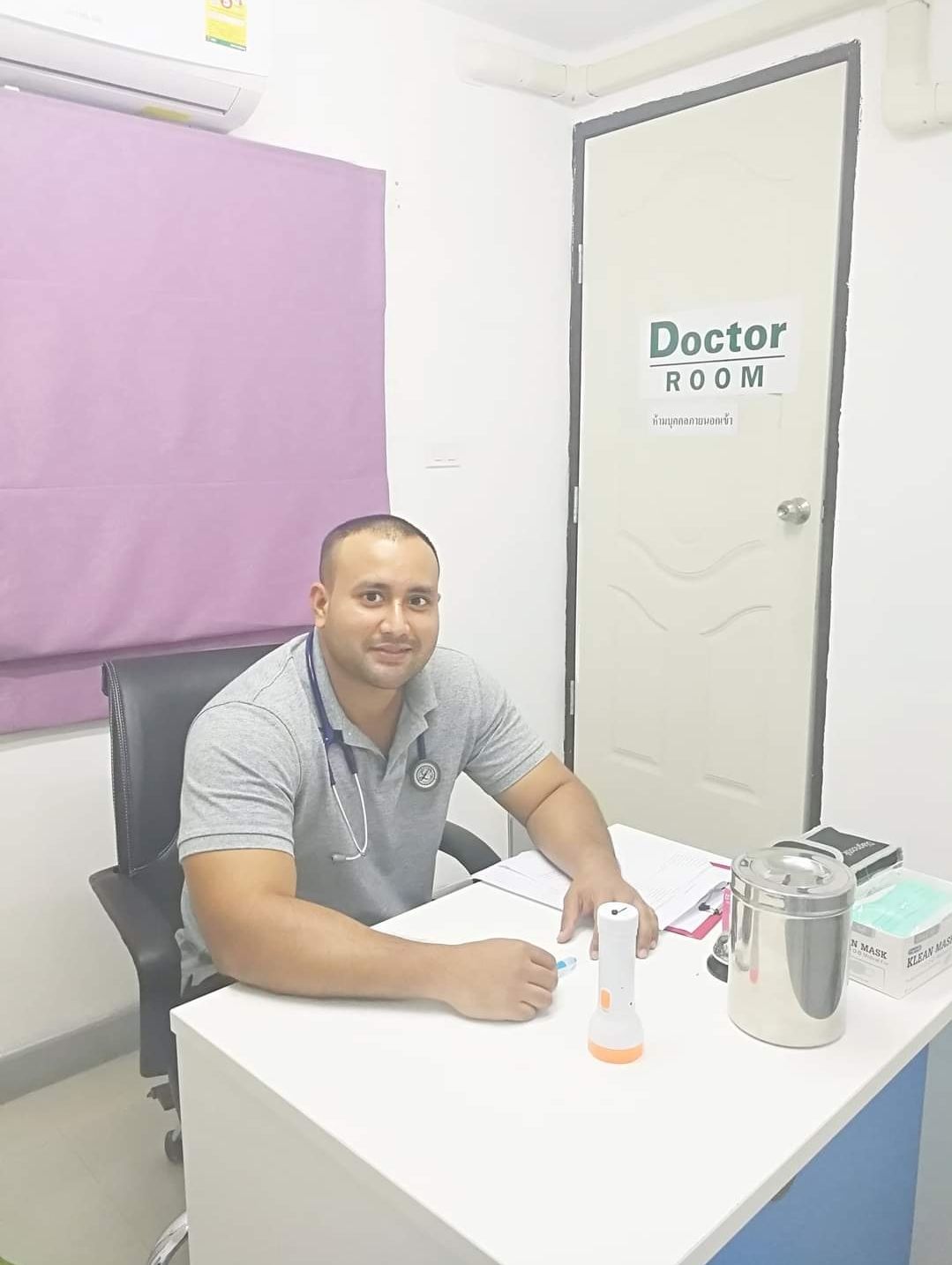
Dr. Ponlawat Pitsuwan is a physician at Doctor Bangkok, a private clinic in central Bangkok. He sees expats, residents, and medical tourists for general medicine, wellness consultations, and IV therapy. His focus is straightforward, evidence-based care delivered in plain language.