
Clinically reviewed by Dr. Ponlawat Pitsuwan, Physician, Doctor Bangkok.
Last reviewed: September 2026
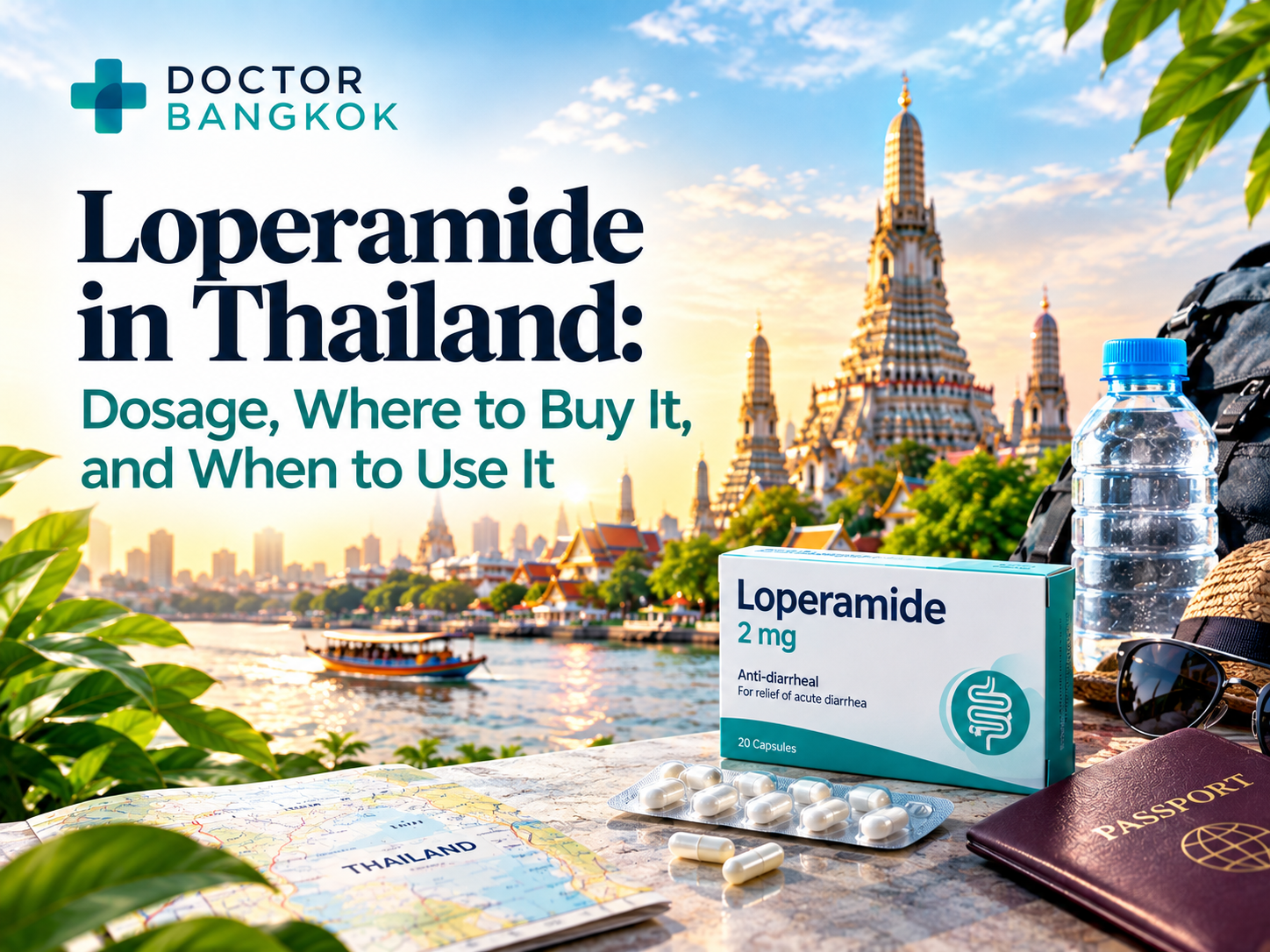
Loperamide is available over the counter at Thai pharmacies without a prescription, typically sold as 2mg capsules under the generic name rather than the Imodium brand. The standard adult dose is 4mg to start, then 2mg after each loose stool, up to 16mg per day. Do not use it if you have a fever above 38°C or any blood in your stool. If diarrhea continues beyond 48 hours, see a doctor.
Most people buy loperamide at a Bangkok pharmacy, take it, and move on with their trip. That works a good percentage of the time. But I also see patients who took it for three days while a bacterial infection quietly got worse behind it. Knowing which situation you are in is what actually matters, and it is the part most people skip.
This article tells you exactly when loperamide helps, when to put it down, and what Bangkok-specific factors change the calculation.
What Loperamide Does
Loperamide slows your gut down. It reduces the wave-like movement that pushes food through, so your body absorbs more fluid and your stool firms up. That is all it does.
It does not kill bacteria. It does not fight infection. It does not treat the cause of anything. It buys you time and reduces the urgency, which is genuinely useful on a long flight or in a full-day meeting, but only when the underlying cause is mild and self-limiting.
Buying Loperamide in Bangkok: Brand Names, Generics, and Price
If you walk into a Thai pharmacy and ask for Imodium, you may get a blank look. The Imodium brand is not standard across Thai pharmacies. Ask for loperamide by name, or show the pharmacist the Thai: โลเพอราไมด์.
The generic version, loperamide hydrochloride 2mg, is what most independent pharmacies carry. It costs as little as 1 to 2 baht per capsule. Boots and Watsons at BTS-adjacent malls stock branded strip packs for around 25 to 40 baht. Both contain the same active ingredient at the same dose, and you do not need a prescription for either.
Independent pharmacies with a blue-cross sign are found in most Bangkok neighbourhoods. They are a reliable option if you are not near a chain.
Loperamide Dosage for Adults
The standard adult dose is two capsules (4mg) at the start, then one capsule (2mg) after every loose stool. The maximum is eight capsules (16mg) in a 24-hour period. Do not exceed that. Most mild cases settle within one to two days at the correct dose.
Do not give loperamide to children under two years old. For children aged two to eleven, dosing is weight-based. Check with a pharmacist or doctor before giving it to a child.
When Loperamide Is Appropriate for Bangkok Belly
Loperamide is a reasonable choice when your diarrhea is watery and frequent but you otherwise feel okay. No fever. No blood. No mucus. No severe cramping that comes in waves. You are uncomfortable and inconvenienced, not unwell in a more serious sense.
This pattern is typical of what we see after a meal that did not agree with you in Bangkok. Your gut is reacting, but nothing is invading the gut lining. Slowing things down with loperamide while keeping your fluids up is a sensible short-term approach. Pair it with oral rehydration salts and you are managing the situation well.
When Loperamide Is Not Appropriate: Bangkok’s Pathogen Picture Changes Things
The standard warning, avoid loperamide with fever or bloody stool, appears everywhere. But in Bangkok, the reason behind that warning is specific.
Bangkok belly is not always a simple gut reaction. Campylobacter, Shigella, and Salmonella are common here. All three are invasive bacteria, meaning they get into your gut lining rather than just passing through in the fluid. When you slow your gut with loperamide during one of these infections, you are trapping those bacteria and their toxins inside longer. That prolongs the infection and raises the risk of serious complications.
If you have diarrhea and a fever above 38°C, or any blood or mucus in your stool, loperamide is the wrong call. Fever with diarrhea needs clinical assessment, not an anti-motility drug.
The Risk Nobody Warns You About: Loperamide and Antibiotics Together
This is the gap in almost every article on this topic. Some expats pick up both loperamide and antibiotics from a Thai pharmacy at the same time without seeing a doctor. Evidence from peer-reviewed research shows this combination raises the risk of becoming colonised with ESBL-producing bacteria, organisms that are resistant to a wide range of common antibiotics. Colonisation rates in travelers who combine the two drugs are significantly higher than in those who use loperamide alone.
If your symptoms are bad enough that you feel you need antibiotics, they are bad enough to see a doctor first. A stool test identifies which pathogen you have and which antibiotic is appropriate. Self-prescribing both drugs together carries real antibiotic resistance risk and is not something I recommend.
Rehydration Comes First: What to Use in Bangkok
Before you reach for loperamide, reach for fluids. Bangkok’s heat means you can lose fluid faster than you realise, especially if you have been walking around or are new to the climate. Dehydration is the immediate danger with most diarrhea, not the frequency itself.
Oral rehydration salts are the right first move. Electral sachets are available at Boots and Watsons. Pocari Sweat from any 7-Eleven is a widely used and accessible option. It is not identical to medical ORS but it is far better than water alone for replacing electrolytes. Aim for clear, frequent sips rather than large amounts at once.
If you cannot keep fluids down at all, that is the point to come in for IV rehydration rather than continuing to manage at home.
Loperamide Safety: High Doses and Cardiac Risk
At the doses on the packet, loperamide is safe for most healthy adults. The cardiac risk you may have read about comes from people taking far more than the recommended amount, sometimes many times the therapeutic dose. At those levels, loperamide has been linked to serious heart rhythm problems. This is not a concern when you follow standard dosing.
The practical point is simple: do not take more than 16mg in a day. More loperamide will not work faster. If the standard dose is not controlling your symptoms, that is a sign to see a doctor, not to increase the amount.
When Loperamide Is Not Working: When to See a Doctor in Bangkok
If your diarrhea has not improved within 48 hours of starting loperamide at the correct dose, stop managing it at home. The same applies if you develop a fever at any point, see blood or mucus in your stool, or feel dizzy, confused, or very weak.
At the clinic, we run a stool test to identify the pathogen, check your hydration, and assess whether antibiotics are appropriate. Azithromycin is the antibiotic of choice for most bacterial causes of traveler’s diarrhea in Thailand. Campylobacter in particular is resistant to ciprofloxacin, which is still commonly sold and used here, so getting the right drug matters. If you are too unwell to travel, Doctor Bangkok offers 24/7 hotel visits across Bangkok.
If loperamide is not working, you have a fever, or you see blood in your stool, stop self-treating. Doctor Bangkok is a private English-speaking clinic in central Bangkok, BTS accessible, with same-day appointments and 24/7 hotel visits available. We run stool tests, assess hydration, and prescribe the right antibiotic when you need one. Walk in or contact us to book.
Frequently Asked Questions
Dr. Ponlawat Pitsuwan
Physician, Doctor Bangkok
a private medical clinic in central Bangkok. He sees expats, residents, and medical tourists for general consultations, diarrhea and food-related illness, fever assessment, and travel health. His focus is straightforward, evidence-based care delivered in plain language.
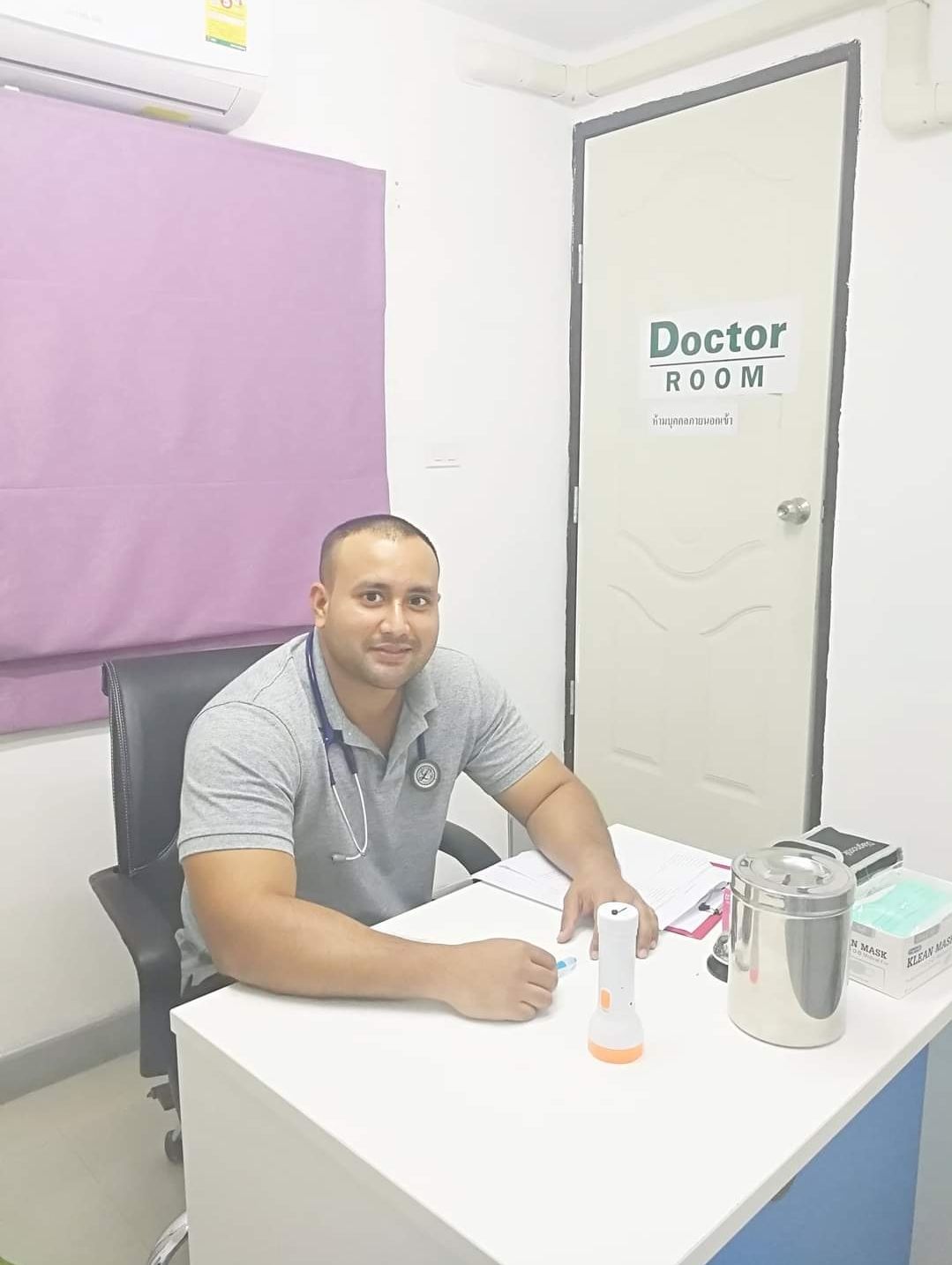
Dr. Ponlawat Pitsuwan is a physician at Doctor Bangkok, a private clinic in central Bangkok. He sees expats, residents, and medical tourists for general medicine, wellness consultations, and IV therapy. His focus is straightforward, evidence-based care delivered in plain language.