
Clinically reviewed by Dr. Ponlawat Pitsuwan, Physician, Doctor Bangkok. Last reviewed: July 2026
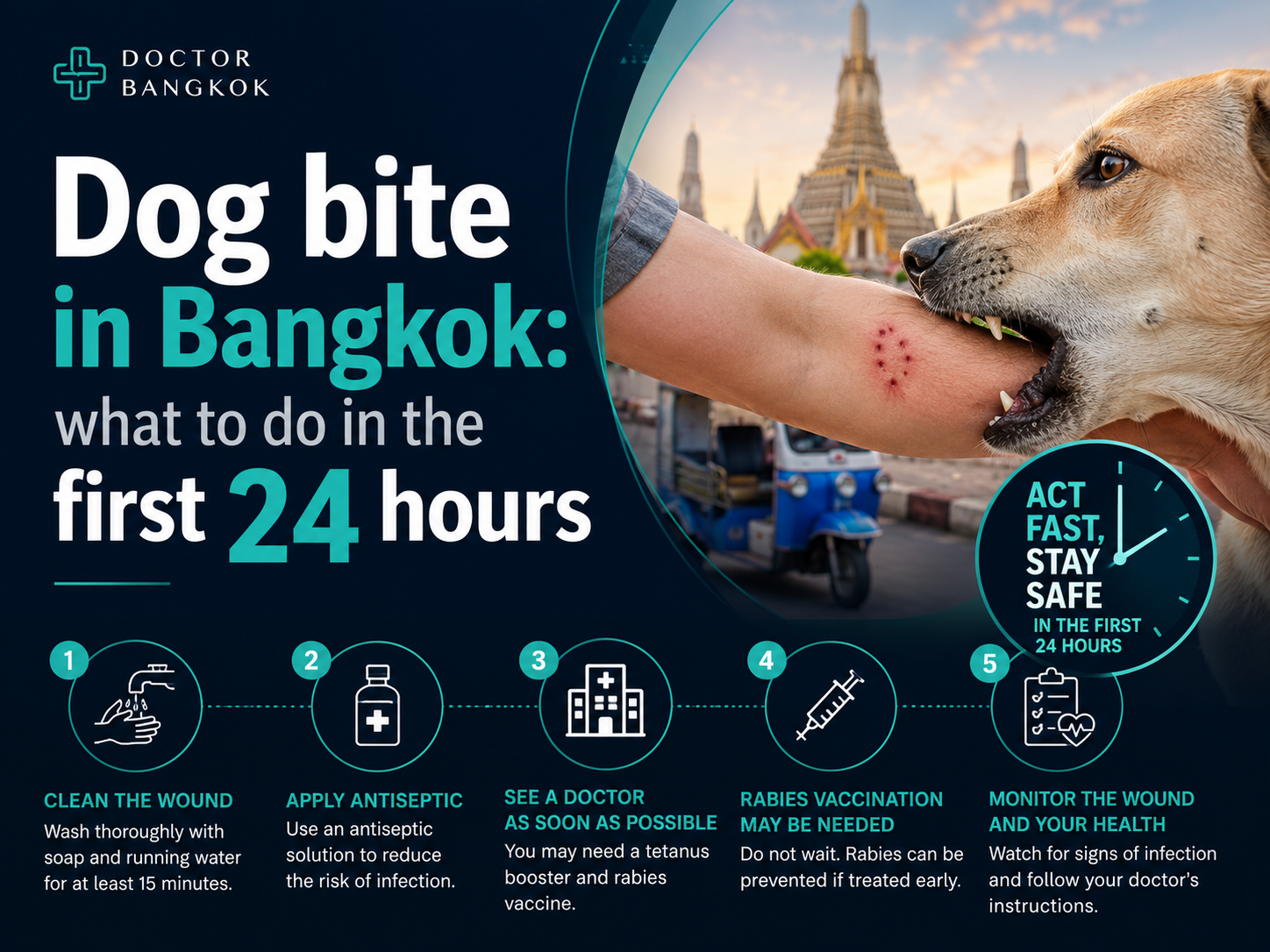
If a dog bites you in Bangkok, wash the wound with soap and water for 15 minutes and go to a clinic the same day. Thailand is a rabies-endemic country, which means any bite or scratch from an unknown or unvaccinated animal carries real risk. Rabies is almost always fatal once symptoms start, but it is completely preventable if you act fast.
If you are reading this after being bitten, stop and wash the wound right now. Fifteen minutes, soap and water, running tap. Do that first, then come back. That single step genuinely reduces your risk while you figure out the next move.
Bangkok has an estimated 300,000 stray dogs. You probably knew that before today, but knowing it and sitting on a street with blood on your hand are two very different things. Here is exactly what you need to do, what treatment looks like, and why you cannot wait and see on this one.

Wash the wound first. Right now.
This is not optional and it is not just good hygiene. Soap destroys the rabies virus on contact. Fifteen minutes under running water with soap is your single most effective first action. It matters more than anything else you do in the next hour.
After washing, apply an antiseptic if you have one. Povidone-iodine or alcohol both work. Then go to a clinic. Do not try to seal the wound with tape or bandages. Do not wait until tomorrow to see if it gets better.
The real rabies risk in Bangkok right now
Some expats assume rabies is a rural problem. It is not. In 2025, Bangkok’s Prawet district was placed under a formal rabies alert following confirmed cases. Urban transmission is a real part of Thailand’s current picture.
Thailand is classified as rabies-endemic. The virus is present in the animal population here. A dog does not have to be foaming at the mouth to be infected. Many infected animals look completely normal early on. You cannot tell by looking.
One thing I want to address directly: a collar does not mean a dog is vaccinated. In Bangkok, many street dogs wear collars placed by local residents who feed them. That says nothing about vaccination history. Unless you can see an official, stamped veterinary booklet showing a current rabies shot, treat the animal as unvaccinated and get assessed today.

Understanding your risk category
The WHO classifies bite exposures into three categories. This determines what treatment you need.
| Category | What happened | What you need |
|---|---|---|
| Category I | Touching or feeding the animal, licks on intact skin | No treatment required |
| Category II | Minor scratches or abrasions, licks on broken skin | Wound care plus rabies vaccine series |
| Category III | Bite that breaks the skin, scratch with bleeding, contact with mucous membranes | Wound care plus rabies immunoglobulin plus vaccine series |
Most bite wounds that bring patients to my clinic are Category III. If a dog’s teeth broke your skin, that is Category III. Do not try to downgrade your own exposure to avoid treatment. I see this happen regularly, and it is the most dangerous decision a patient can make.
What happens at the clinic
When you come in after a dog bite, we look at the wound first. We clean it properly and assess the depth. Bite wounds are almost never closed immediately. This surprises a lot of patients. Sealing a bite traps bacteria inside and raises infection risk sharply. We leave wounds open or partially open to drain.
For rabies, your treatment depends on your exposure category and whether you have had pre-exposure vaccination before. A full post-exposure course for someone with no prior rabies vaccine involves immunoglobulin on day one, then vaccine doses on days zero, three, seven, and fourteen. The immunoglobulin is injected into and around the wound. It gives short-term protection while your body builds its own response to the vaccine.
At Doctor Bangkok, we use cell-culture rabies vaccine, which is the WHO-recommended standard. We also carry equine rabies immunoglobulin for Category III exposures. It is dosed by body weight, so the cost varies by person.
We also check your tetanus status. If you are not up to date, you get a booster.
Bacterial infection — the risk most people forget
Everyone worries about rabies, and rightly so. But dog bites also carry bacteria that can cause serious infection within hours. Two common ones are Pasteurella multocida and Capnocytophaga canimorsus. Both can spread quickly through soft tissue. Capnocytophaga can be especially dangerous if you are immunocompromised or have had your spleen removed.
Watch for increasing redness, warmth, swelling, pus, or red streaks spreading from the wound. A fever after a bite needs urgent attention.
For most bite wounds, we prescribe antibiotics as a precaution on the same day. The usual choice is Amoxicillin-Clavulanate. If you are allergic to penicillin, tell us and we will use something appropriate.
Already vaccinated? What pre-exposure vaccination changes for you
If you have had a full pre-exposure vaccine course before the bite, treatment is much simpler. No immunoglobulin. Just two booster doses on days zero and three.
This is one of the strongest reasons to get pre-exposure rabies vaccination if you are living in Bangkok long-term. It does not mean you skip the clinic after a bite, but it removes the most complicated and expensive part of treatment. It also removes the time pressure around finding immunoglobulin, which is not always available at every clinic.
I recommend it to every expat who asks. If you have not had it yet, you can arrange your rabies vaccine series at Doctor Bangkok before anything happens.
What to tell the doctor — bring this information
When you come in, we will ask questions that affect your treatment plan. Try to note the following at the scene.
What time the bite happened. Whether it was provoked or unprovoked. A description of the dog, its size, coat, and behaviour. Whether it wore a collar, and whether there was any vaccination tag or owner nearby. The dog’s last known location.
An unprovoked attack is a red flag. A dog that bites without warning and then acts strangely, staggers, or runs off raises the clinical concern level. Tell us everything you remember.
Cost and insurance
A full Category III treatment at a private Bangkok clinic includes wound care, immunoglobulin, vaccine doses, antibiotics, and a tetanus check. ERIG is the most variable cost because it is calculated by body weight.
Travel insurance almost always covers dog bite treatment under emergency medical care. Keep every receipt. Photograph the wound. Note the date, time, and location. If you are uninsured, the Queen Saovabha Memorial Institute at the Thai Red Cross in central Bangkok offers rabies post-exposure treatment at government rates. It is busier than a private clinic, but it is a real option.
At Doctor Bangkok, we see uninsured patients regularly and walk you through realistic costs before treatment starts.
Bitten by a dog in Bangkok? Doctor Bangkok is located in central Bangkok and is BTS accessible, with English-speaking physicians available for same-day consultations. We carry cell-culture rabies vaccine and equine rabies immunoglobulin on-site. We also offer pre-exposure rabies vaccination for expats and long-term residents who want to get ahead of the risk. Visit doctorbangkok.co.th or walk in today.
FAQ
I was bitten by a stray dog in Bangkok — do I need the rabies vaccine even if the wound looks minor?
Yes. Any bite that breaks the skin from an unknown or unvaccinated animal is at minimum WHO Category II, and most skin-breaking bites are Category III. You cannot assess rabies risk by how serious the wound looks. Come in the same day.
What is the difference between rabies pre-exposure vaccination and post-exposure treatment?
Pre-exposure vaccination is a course you take before any bite happens. Post-exposure treatment is what you need after a bite. If you have already had pre-exposure vaccination, post-bite treatment is just two booster doses with no immunoglobulin required. If you live in Bangkok and have not had it yet, now is a good time to arrange it.
How much does dog bite treatment cost at a private clinic in Bangkok?
A full Category III course including wound care, immunoglobulin, vaccines, antibiotics, and a tetanus check runs into several thousand baht in total. Immunoglobulin is the biggest variable because it is dosed by body weight. Travel insurance typically covers this under emergency medical care, so keep all receipts.
Can a dog bite cause an infection other than rabies?
Yes, and many patients do not think about this. Dog bites carry bacteria that can cause serious infection within hours. We assess wound depth, prescribe antibiotics on the same visit, check your tetanus status, and leave the wound open to drain rather than sealing it closed.
The dog that bit me was wearing a collar — does that mean it is vaccinated?
No. Many community dogs in Bangkok wear collars placed by local feeders, not registered owners. A collar tells you nothing about vaccination history. Unless you have an official, stamped veterinary record showing a current rabies shot, treat the animal as unvaccinated and seek same-day assessment.
Do I need to go to the emergency room, or can a private clinic handle this?
For most dog bite cases, a private clinic is appropriate and faster than a public emergency room. You need a clinic that carries cell-culture rabies vaccine and rabies immunoglobulin on-site. If you have severe bleeding that will not stop, go to an emergency room first.
What if I cannot remember whether my tetanus vaccination is up to date?
Tell the doctor and we will check. If there is any doubt, we give a booster. A tetanus shot after a dog bite is low-risk and straightforward. Not knowing your status is not a reason to skip this step.
Dr. Ponlawat Pitsuwan
Physician, Doctor Bangkok
a private medical clinic in central Bangkok. He sees expats, residents, and medical tourists for travel medicine, post-exposure treatment, vaccinations, and general medical care. His approach is evidence-based care delivered in plain language.
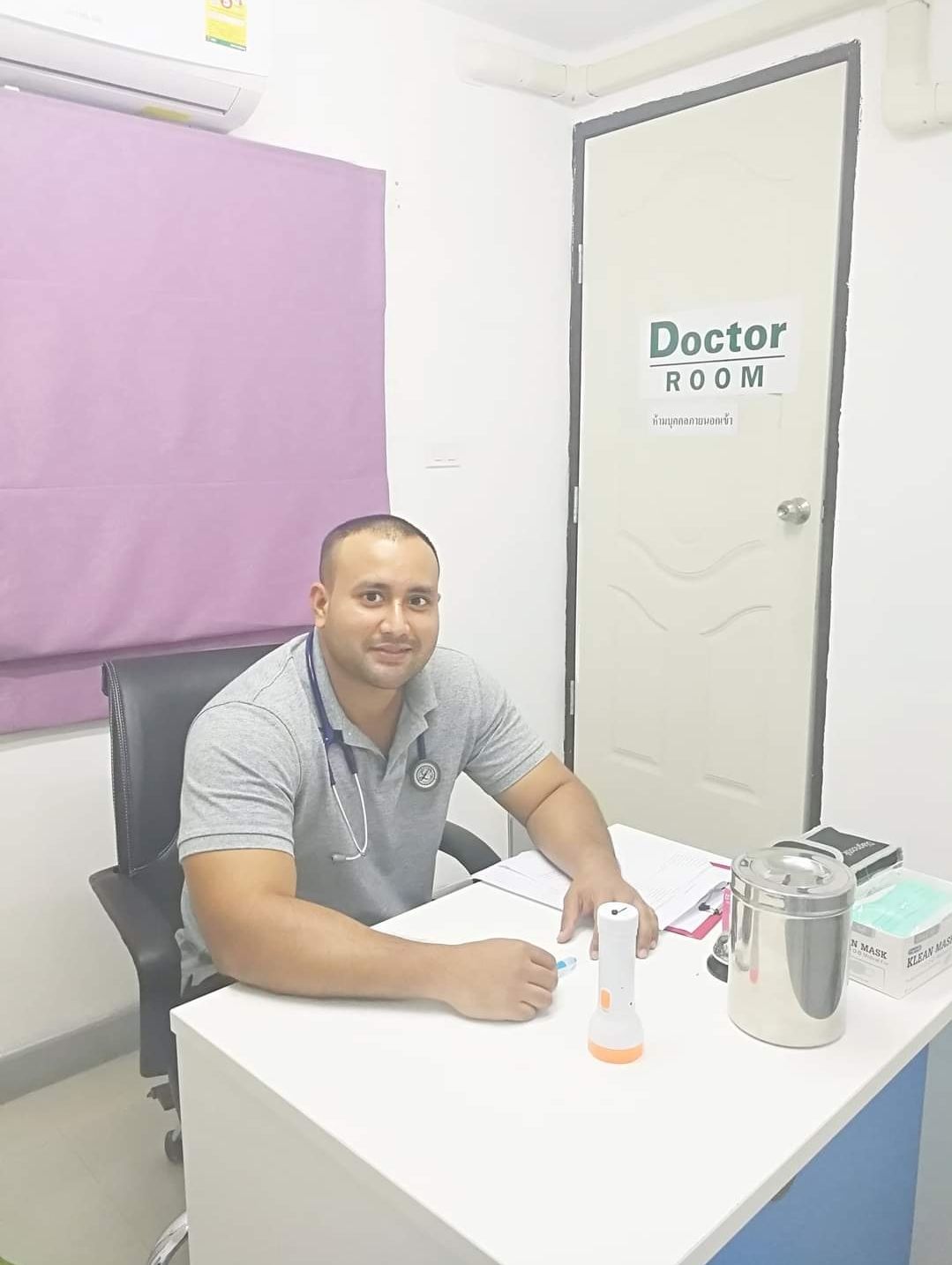
Dr. Ponlawat Pitsuwan is a physician at Doctor Bangkok, a private clinic in central Bangkok. He sees expats, residents, and medical tourists for general medicine, wellness consultations, and IV therapy. His focus is straightforward, evidence-based care delivered in plain language.