

Clinically reviewed by Dr. Ponlawat Pitsuwan, Physician, Doctor Bangkok. Last reviewed: July 2026
In adults, a temperature above 39.4°C (103°F) means you should see a doctor. Above 40°C (104°F), you need urgent care. Above 41°C (105.8°F) is a medical emergency. These numbers apply whether you measure in Celsius or Fahrenheit, but in Bangkok every pharmacy and clinic works in Celsius, so that is the number to know.
If you are lying in your Bangkok apartment at midnight watching your thermometer climb, you are probably asking one question: how worried should I be right now? That is exactly what this article answers. Not a textbook explanation. Just the thresholds, the red flags, and what to do next.
Fever in Bangkok is not the same as fever back home. Dengue is real here. The heat can mask or mimic infection. The thermometer you bought at a Thai pharmacy may be reading lower than your actual temperature. These are things that matter every week in clinic, and they are the things most online fever guides miss entirely.

The Fever Temperature Scale You Actually Need
Here is where the numbers sit. Every doctor uses these thresholds, and they translate directly into what you should do.
| Temperature (°C) | Temperature (°F) | What it means | What to do |
|---|---|---|---|
| 37.0–37.9°C | 98.6–100.2°F | Normal to borderline | Monitor |
| 38.0–39.3°C | 100.4–102.7°F | Fever | Rest, fluids, paracetamol |
| 39.4–39.9°C | 103–103.8°F | High fever | See a doctor today |
| 40.0–40.9°C | 104–105.6°F | Very high fever | Seek urgent care |
| 41°C and above | 105.8°F and above | Hyperpyrexia — medical emergency | Go immediately |
Hyperpyrexia means your temperature has gone above 41°C. At that level, the fever itself becomes dangerous, not just whatever is causing it. Do not wait to see if it comes down on its own.
Your Thermometer Might Be Lying to You
Most expats do not realise this. The forehead and armpit thermometers sold at Boots and Watsons across Bangkok can read 0.5 to 1°C lower than your actual core temperature. A reading of 38.5°C on a forehead thermometer could be a true 39.4°C orally. That gap matters when you are deciding whether to sleep it off or come in.
For the most reliable result, use a digital oral thermometer. Hold it under your tongue for the full measurement time with your mouth closed. If all you have is a forehead thermometer, add roughly 0.5°C to your reading before using the table above to decide what to do.

Fever vs Heat Illness in Bangkok’s Climate
Bangkok regularly sits above 35°C. That creates a problem most fever guides never mention: heat exhaustion and infectious fever can feel almost identical at first.
Infectious fever usually comes with chills, sweating, body aches, and a reason to suspect illness, such as something you ate, a mosquito bite, or contact with someone who was sick. Heat exhaustion comes after time in the sun or a hot environment, and it often brings dizziness, headache, and nausea.
The one you must not miss is heat stroke. If someone’s skin is hot and dry with no sweating, and they are confused or cannot stand properly, that is a medical emergency. Get to cool air and get help immediately. Heat stroke above 40°C is not managed the same way as an infectious fever, and treating it incorrectly wastes critical time.
Fever in Bangkok: When the Cause Matters as Much as the Number
A temperature of 39°C means something different depending on where you have been and what else is happening.
Dengue fever is endemic in Bangkok. It peaks during the rainy season from May to October, but cases turn up year-round. The typical picture is a sudden high fever, severe headache, pain behind the eyes, and muscle and joint pain. A rash sometimes appears a few days in. If that sounds like you, there is one critical point: do not take ibuprofen. In suspected dengue, ibuprofen raises the risk of bleeding. Stick to paracetamol only until you have been tested.
A dengue NS1 antigen blood test can give results quickly. If your fever came on suddenly and you have any of the symptoms above, come in and get tested rather than guessing. Getting this one wrong has real consequences.
High-Risk Groups Who Should Act Sooner
If you are over 65, pregnant, or immunocompromised due to illness or medication, the standard thresholds do not fully apply to you. See a doctor at 38.5°C, not at 39.4°C. Your body may not mount the same fever response as a healthy adult, which means a lower reading can still signal serious infection.
The same applies if you have had your spleen removed, are receiving chemotherapy, or take immunosuppressant drugs. A modest fever in these situations can escalate quickly. If you are in this group and your temperature is climbing, do not wait it out at home.
Red-Flag Symptoms That Need Immediate Attention
The number on the thermometer is not the only thing that matters. These symptoms need urgent care regardless of the exact temperature reading.
A stiff neck with fever, where you cannot touch your chin to your chest, can be a sign of meningitis. Confusion, slurred speech, or inability to stay awake alongside a fever suggests the infection may be affecting the brain or blood. Difficulty breathing or chest pain with fever needs same-day assessment. A fever with a rash that does not fade when you press a glass against it requires emergency evaluation.
Fever without any sweating after heat exposure, as noted above, is heat stroke until proven otherwise.
Managing Fever at Home in Bangkok: and Knowing When to Stop
For a fever between 38°C and 39.3°C in a healthy adult, home management is a reasonable starting point. Paracetamol, sold as Panadol at every pharmacy in Bangkok, is your first choice. Take it at the correct dose for your weight and do not exceed the daily limit on the packet.
If dengue is possible, do not use ibuprofen. If dengue has been ruled out and your fever is not responding to paracetamol, ibuprofen can help but should be taken with food. Oral rehydration salts are available cheaply at any Thai pharmacy and are worth using. You lose fluid faster in Bangkok’s heat than in a cooler climate, and staying hydrated supports recovery.
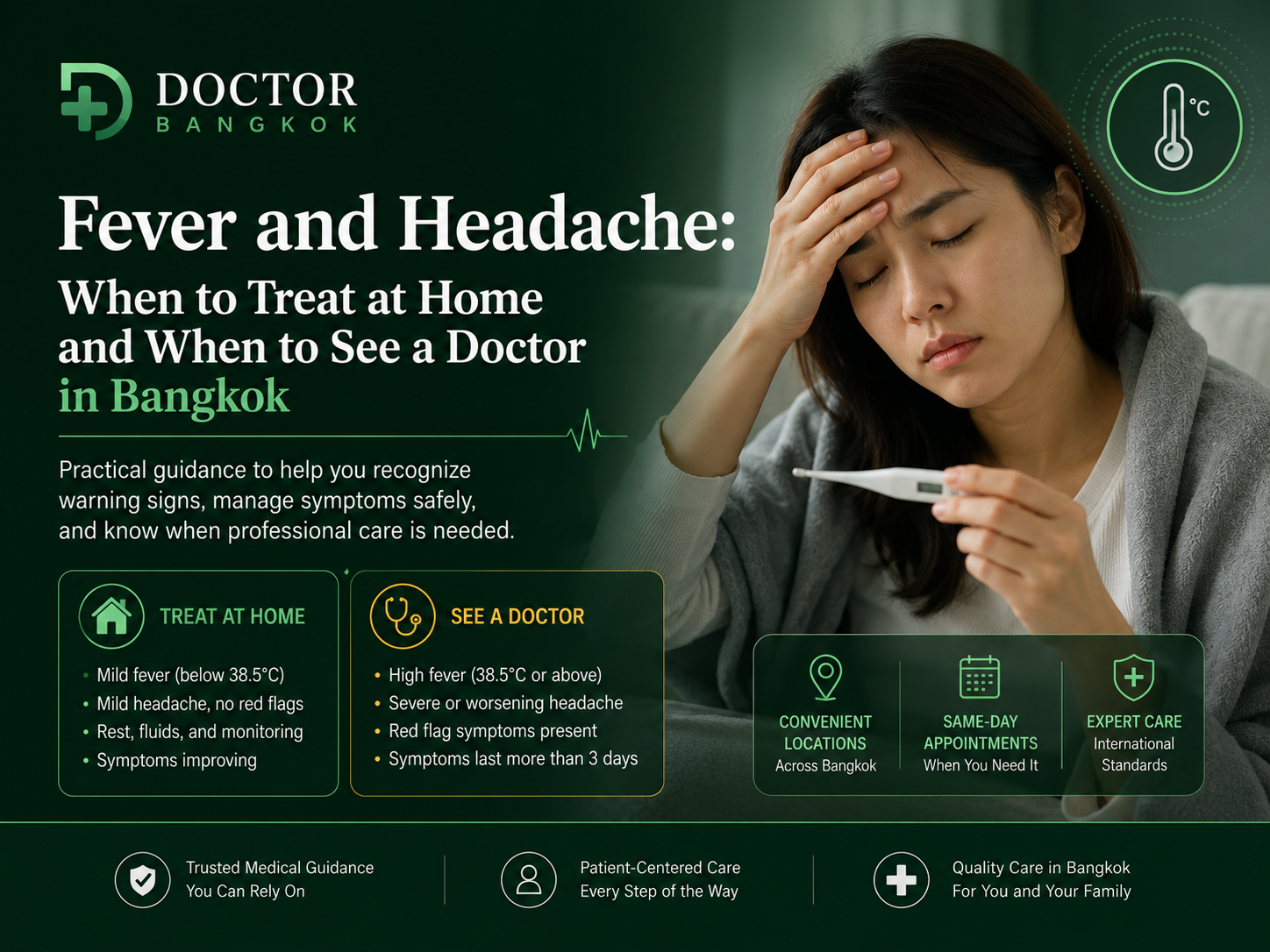
Stop home management and see a doctor if your fever exceeds 39.4°C, has lasted more than three days, or is not coming down with medication. If anything on the red-flag list above applies, stop immediately and seek care.
Fever is one of the most common reasons expats and travellers visit Doctor Bangkok. We offer same-day fever assessment, dengue NS1 testing, and blood tests to find the cause. Our English-speaking doctors are available daily, we are BTS accessible, and you do not need a referral. If your temperature is climbing and you are unsure what is behind it, book a fever assessment at Doctor Bangkok today.
What temperature is considered too high for a fever in adults?
In adults, a temperature at or above 39.4°C (103°F) means you should see a doctor that day. Above 40°C (104°F) is urgent, and above 41°C (105.8°F) is a medical emergency. In Bangkok, every clinic and pharmacy uses Celsius, so that is the number to watch.
Could my high fever in Bangkok be dengue rather than a regular infection?
It is possible, especially during the rainy season from May to October. Dengue typically causes sudden high fever, severe headache, muscle and joint pain, and sometimes a rash. If you have any of these symptoms, avoid ibuprofen and come in for a dengue NS1 antigen test. Doctor Bangkok can run this test with same-day results.
Does Bangkok’s heat affect how I should read my thermometer?
Yes. Forehead and armpit thermometers, the most common type sold at Thai pharmacies, can read 0.5 to 1°C lower than your true temperature. If you are using one of these, add about 0.5°C to your reading before deciding what to do. A digital oral thermometer gives you the most reliable result.
When should I stop managing a fever at home and go to a clinic?
Go to a clinic if your temperature exceeds 39.4°C, if the fever has lasted more than three days, or if it is not coming down with paracetamol. Also come in straight away if you have a rash, stiff neck, confusion, difficulty breathing, or no sweating after heat exposure. These symptoms need assessment, not another dose of medication.
How do I tell the difference between heat exhaustion and a real fever in Bangkok?
Infectious fever usually comes with chills, sweating, and body aches. Heat exhaustion comes after sun or heat exposure and can include dizziness, nausea, and headache. Heat stroke, which is an emergency, presents with hot dry skin and no sweating. If you are unsure, come in rather than guess. Getting it wrong is a risk not worth taking in Bangkok’s climate.
Should elderly or immunocompromised people use the same fever thresholds?
No. If you are over 65, pregnant, or immunocompromised, see a doctor at 38.5°C rather than waiting for 39.4°C. Your body may not produce a strong fever even with serious infection, so a lower reading still warrants clinical review. Do not apply the standard adult thresholds to yourself if you fall into this group.
Is paracetamol or ibuprofen better for fever in Bangkok?
Start with paracetamol. It is safe, widely available, and appropriate whether or not dengue is suspected. Ibuprofen is effective but must be avoided if dengue is a possibility, because it raises the risk of serious bleeding. Once dengue has been ruled out, ibuprofen is a reasonable option if paracetamol alone is not controlling your symptoms.
Dr. Ponlawat Pitsuwan
Physician, Doctor Bangkok
a private medical clinic in central Bangkok. He sees expats, residents, and medical tourists for fever assessment, tropical illness evaluation, and general medical consultations. His focus is straightforward, evidence-based care delivered in plain language.
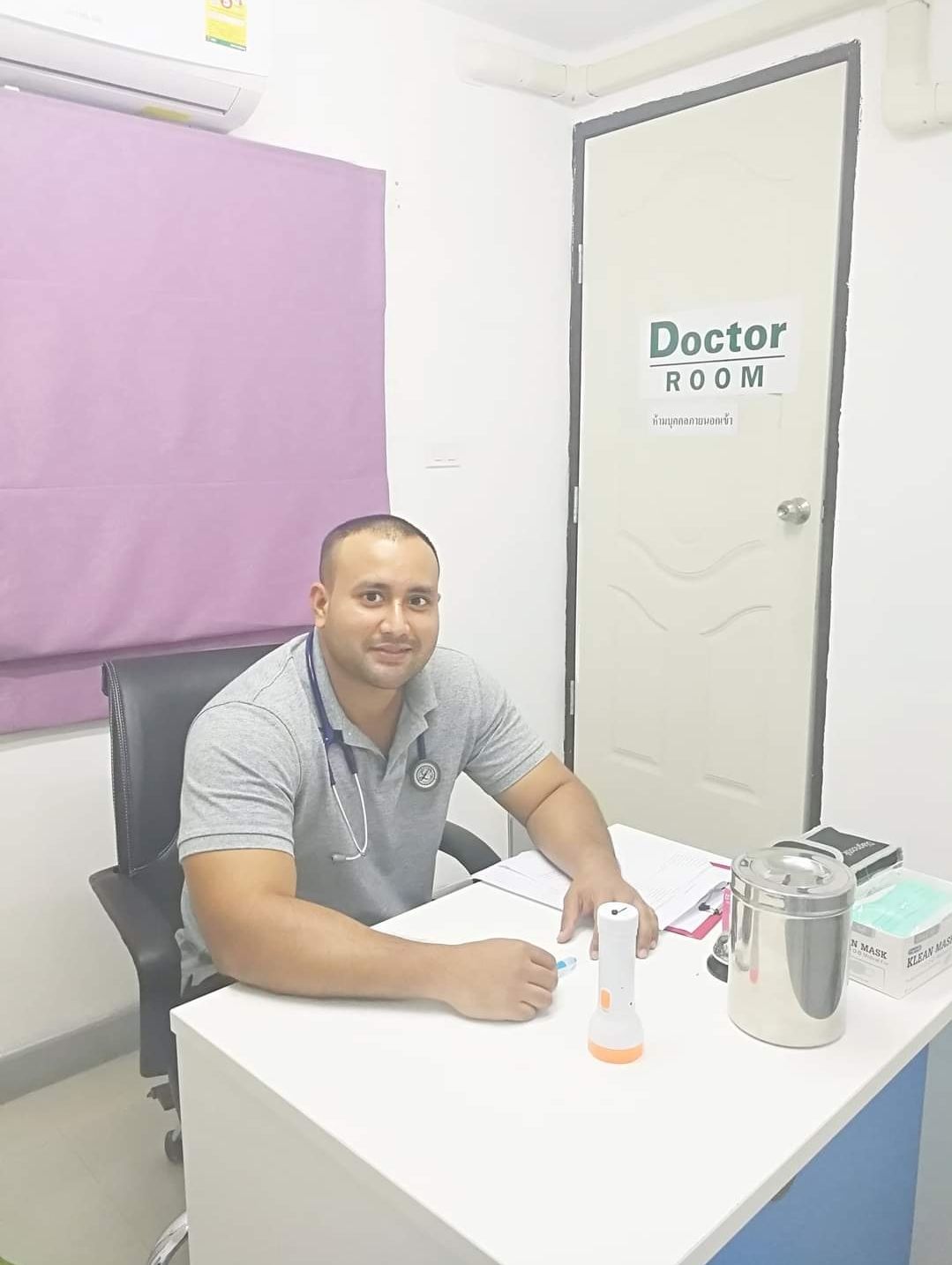
Dr. Ponlawat Pitsuwan is a physician at Doctor Bangkok, a private clinic in central Bangkok. He sees expats, residents, and medical tourists for general medicine, wellness consultations, and IV therapy. His focus is straightforward, evidence-based care delivered in plain language.