

Clinically reviewed by Dr. Ponlawat Pitsuwan, Physician, Doctor Bangkok.
Last reviewed: July 2026
In Bangkok, fever with a rash is dengue until proven otherwise. Dengue is the most common cause of undifferentiated febrile illness in the city, and the rash can appear at any point during the illness. Other causes include chikungunya, Zika, scrub typhus, and drug reactions. If you have a fever above 38.5°C with a rash, get assessed the same day. Do not take ibuprofen until dengue has been ruled out.
If you are in Bangkok with a fever and a rash, the situation is different from being sick back home. In Europe or Australia, you might wait a day or two and see how things go. In Thailand, that is not the right call.
Bangkok has a different disease profile. Dengue, chikungunya, and scrub typhus are common here, not rare textbook conditions. Most causes are manageable when caught early. The part that matters is not waiting too long to find out what you are dealing with.

Bangkok is different — and that changes everything
Most fever-and-rash articles online are written for a Western audience. They mention dengue once, then move on to chickenpox and rubella. That is not the reality in Bangkok.
Dengue accounts for a large share of undifferentiated fever cases at Bangkok hospitals. When I see an expat or traveller with fever and a rash, dengue is the first thing on my list, not the last. Chikungunya and Zika circulate in the same areas, carried by the same Aedes mosquito. Scrub typhus and murine typhus, spread through mites and fleas, are common in Thailand and frequently missed.
The other thing that makes Bangkok different: you can walk into most pharmacies here and buy antibiotics, ibuprofen, or antihistamines without a prescription. I see patients who have already taken several of these before they come in. That history matters, because some of those drugs can cause the rash themselves.
How to read your rash — what it looks like matters
Not all rashes are the same, and the appearance gives us a lot of information before any blood test comes back.
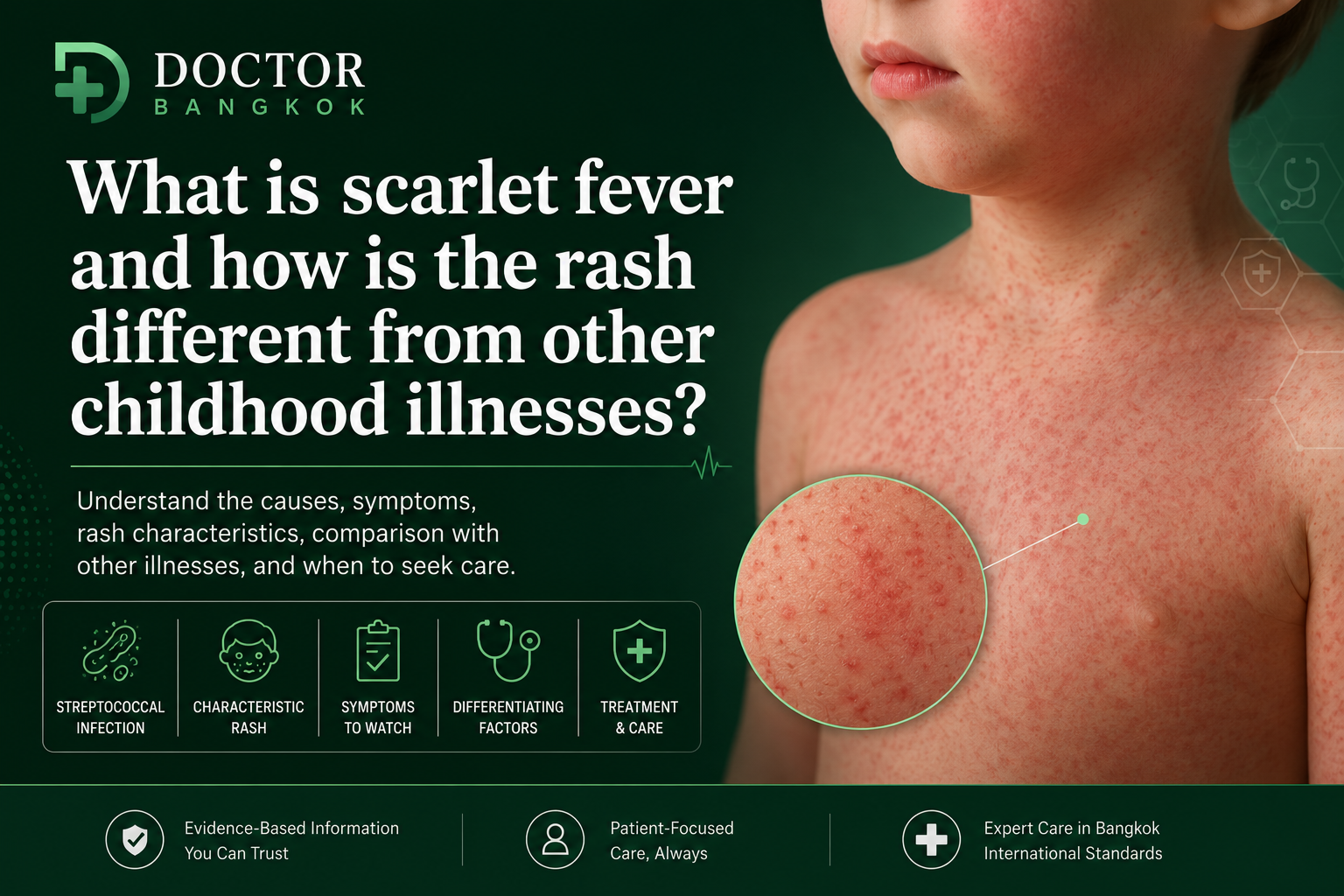
A maculopapular rash is flat pink or red spots that may raise slightly from the skin. This is the most common type we see with dengue, chikungunya, Zika, and drug reactions. A petechial rash looks like tiny pinprick red or purple dots that do not fade when you press on them.
Press a glass or your finger firmly onto the rash for a few seconds. If the spots go pale under pressure, the rash is blanching. If they stay red or purple, it is non-blanching. A non-blanching rash is a red flag. It can mean bleeding under the skin, which happens in severe dengue or, rarely, meningococcal infection. Fever plus a non-blanching rash means go to hospital now, not in the morning.

Dengue fever — the most common cause in Bangkok
Most expats who come to me with fever and a rash in Bangkok end up testing positive for dengue. The rash often appears as the fever is breaking, sometimes around day three to five. It can look like a sunburn with small pale islands of normal skin inside the red areas.
What makes dengue dangerous is what it does to your platelet count. Platelets help your blood clot. When they fall too low, there is a risk of internal bleeding. This is why ibuprofen and aspirin are off the table when dengue is possible. Both increase bleeding risk. Paracetamol is the only safe option until dengue is ruled out.
We test for dengue using an NS1 antigen test in the first few days, and antibody tests from around day five onwards. A full blood count showing a falling platelet count and low white cell count also points strongly toward dengue. At Doctor Bangkok, we can run these tests and have results back the same day so you are not left guessing.
Chikungunya and Zika — the other mosquito-borne causes
Chikungunya and Zika look almost identical to dengue in the first day or two. All three cause fever, a maculopapular rash, and general misery. The differences become clearer over time.
Chikungunya hits your joints hard. The pain can be intense, sometimes lasting weeks after the fever is gone. If your joints are swollen and aching alongside the fever and rash, chikungunya moves up the list. Zika is generally a milder illness, but testing is not optional if there is any chance of pregnancy, because of the risk to the developing baby.
Blood tests can confirm which one you have, but your symptoms give us important clues while we wait for results.
Scrub typhus and murine typhus — underdiagnosed and often missed
These are the ones I think about when someone has had a fever for more than a week and is not improving, or when they have spent time in rural Thailand, parks, or grassy areas.
Scrub typhus is spread through infected mite bites. The classic sign is a small black scab at the bite site, often hidden in a skin fold. Not everyone gets it, and not everyone notices it. The rash is usually a faint maculopapular rash across the trunk. Murine typhus, spread by fleas, causes a similar picture. Both respond well to doxycycline, but only if the diagnosis is made. These are frequently called a viral illness because they look so similar.
Leptospirosis, spread through water contaminated with infected animal urine, can also cause fever with a rash. Risk rises during and after Bangkok’s rainy season, and flooding makes it significantly more likely.
Drug reactions — the non-infectious cause people miss
If you started a new medication in the days before the rash appeared, that belongs high on the list.
Drug reactions typically cause a widespread maculopapular rash that starts on the trunk and spreads outward, usually within one to two weeks of starting a new drug. Common culprits include amoxicillin and other antibiotics, NSAIDs, and some anticonvulsants. In Bangkok, this is especially relevant because many drugs are sold over the counter, and patients often do not connect the pill they bought at the pharmacy to the rash that appeared a week later.
Most drug reactions resolve when the drug is stopped. Some do not. Stevens-Johnson syndrome is a rare but severe reaction where the skin blisters and peels, often starting around the mouth and eyes. Blistering skin, a peeling rash, or sores in your mouth alongside a fever is a medical emergency. Go to hospital immediately.
Red flags — when fever with a rash needs immediate attention
Most cases of fever with a rash can be assessed at a clinic rather than an emergency room. But some signs change that entirely.
Go immediately to the nearest hospital if you have a rash that does not blanch under pressure, blisters or peeling skin anywhere, a fever above 39.5°C not responding to paracetamol, confusion, difficulty breathing, or a severe headache with neck stiffness. These can indicate severe dengue, meningococcal disease, or Stevens-Johnson syndrome. All of them need emergency care.
If your rash is blanching, your fever is manageable, and you are still drinking fluids, a same-day clinic appointment is the right next step. In Bangkok’s heat, these conditions can move fast. Do not leave it for tomorrow.
What to do right now
Take paracetamol for the fever. Not ibuprofen. Not aspirin. Paracetamol only, until dengue is ruled out.
Drink fluids steadily. Dengue and most viral febrile illnesses cause significant fluid loss, and dehydration accelerates in Bangkok’s heat. Book a same-day appointment if your fever is above 38.5°C with a rash. At Doctor Bangkok, we run NS1 antigen testing, full blood counts, and targeted tropical disease panels based on your clinical picture. We will tell you what you are dealing with and what to do next. You can find out more on our fever treatment page.
Fever with a rash in Bangkok? Do not self-diagnose and do not wait. At Doctor Bangkok, our English-speaking physicians assess fever and rash presentations the same day, including NS1 antigen testing for dengue, full blood counts, and tropical disease panels. We are BTS-accessible and serve expats, residents, and medical tourists. Visit our fever assessment page to book or walk in today.
Could my fever and rash be dengue fever in Bangkok?
Yes, and it is the first thing we consider. Dengue is the most common cause of fever with a rash in Bangkok, and the rash often appears as the fever begins to break, around day three to five. Get an NS1 antigen test done early and avoid ibuprofen until dengue is ruled out by a doctor.
What does a dangerous rash with fever look like, and when is it an emergency?
Press a glass firmly against the rash. If the spots do not fade, that is a non-blanching rash and it needs immediate assessment. Other emergency signs include blistering skin, a rapidly spreading rash, neck stiffness, confusion, or difficulty breathing. Do not wait for any of these to resolve on their own.
Can I take ibuprofen if I have a fever and rash in Thailand?
No. When dengue is possible, ibuprofen and aspirin increase bleeding risk as platelet counts fall. Use paracetamol only for fever and pain. Once a doctor has confirmed dengue is negative, that guidance may change, but do not make that call yourself.
Can a rash with fever be caused by medication rather than infection?
Absolutely. If you started a new medication within the past two weeks, a drug reaction belongs on the list. This is especially common in Bangkok because many medications are sold over the counter, and patients often do not connect the drug to the rash that appeared days later. Tell your doctor everything you have taken, including pharmacy purchases.
Is fever with a rash more common at certain times of year in Bangkok?
Yes. Dengue, chikungunya, and leptospirosis cases rise significantly during and after the rainy season, roughly June through October. Flooding increases leptospirosis risk in particular. If you develop fever with a rash during these months, tropical causes are even more likely than at other times of year.
Dr. Ponlawat Pitsuwan
Physician, Doctor Bangkok
a private medical clinic in central Bangkok. He sees expats, residents, and medical tourists for fever assessment, tropical disease diagnosis, dengue testing, and general medical consultations. His focus is straightforward, evidence-based care delivered in plain language.
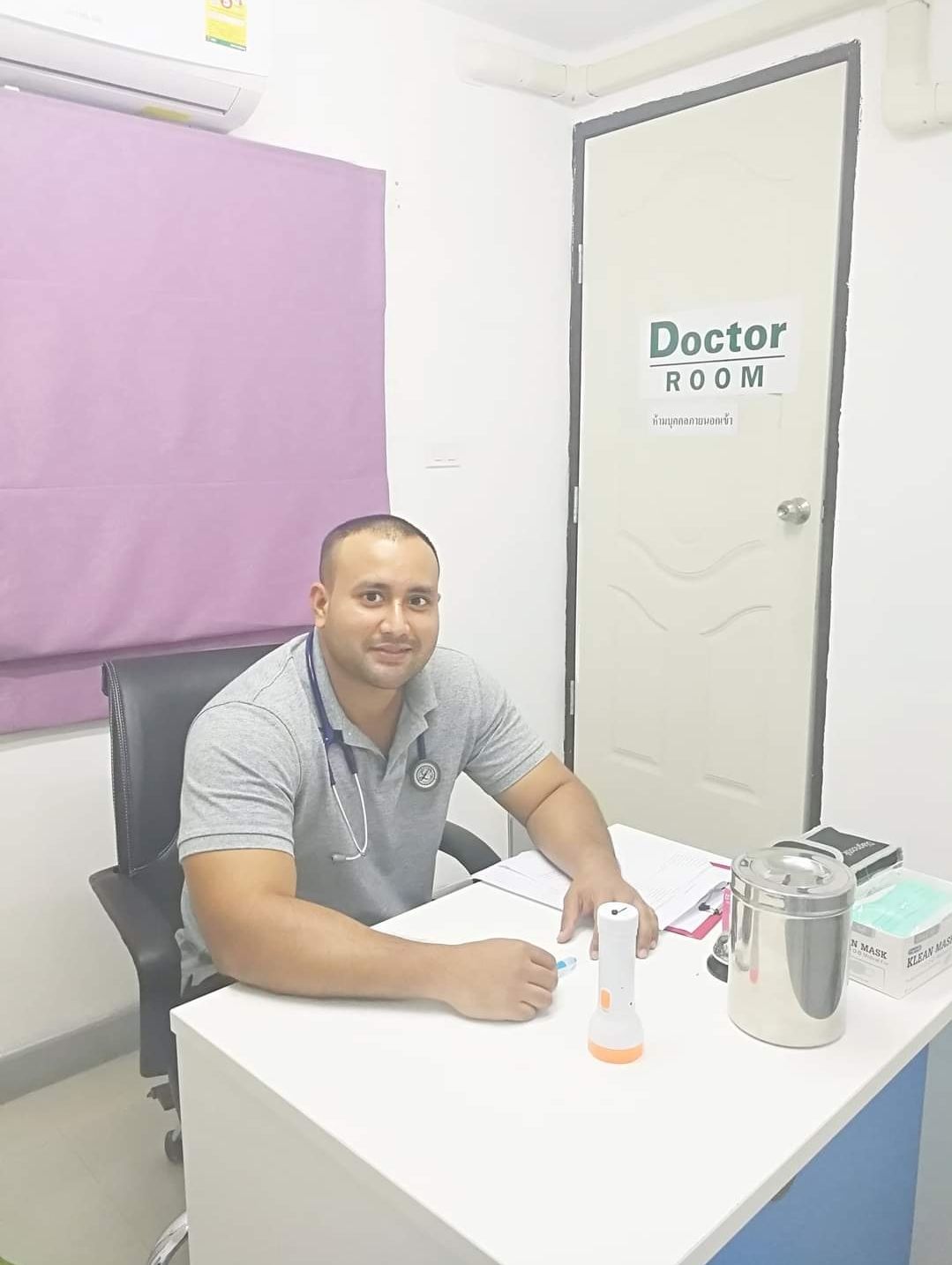
Dr. Ponlawat Pitsuwan is a physician at Doctor Bangkok, a private clinic in central Bangkok. He sees expats, residents, and medical tourists for general medicine, wellness consultations, and IV therapy. His focus is straightforward, evidence-based care delivered in plain language.