

Clinically reviewed by Dr. Ponlawat Pitsuwan, Physician, Doctor Bangkok. Last reviewed: July 2026
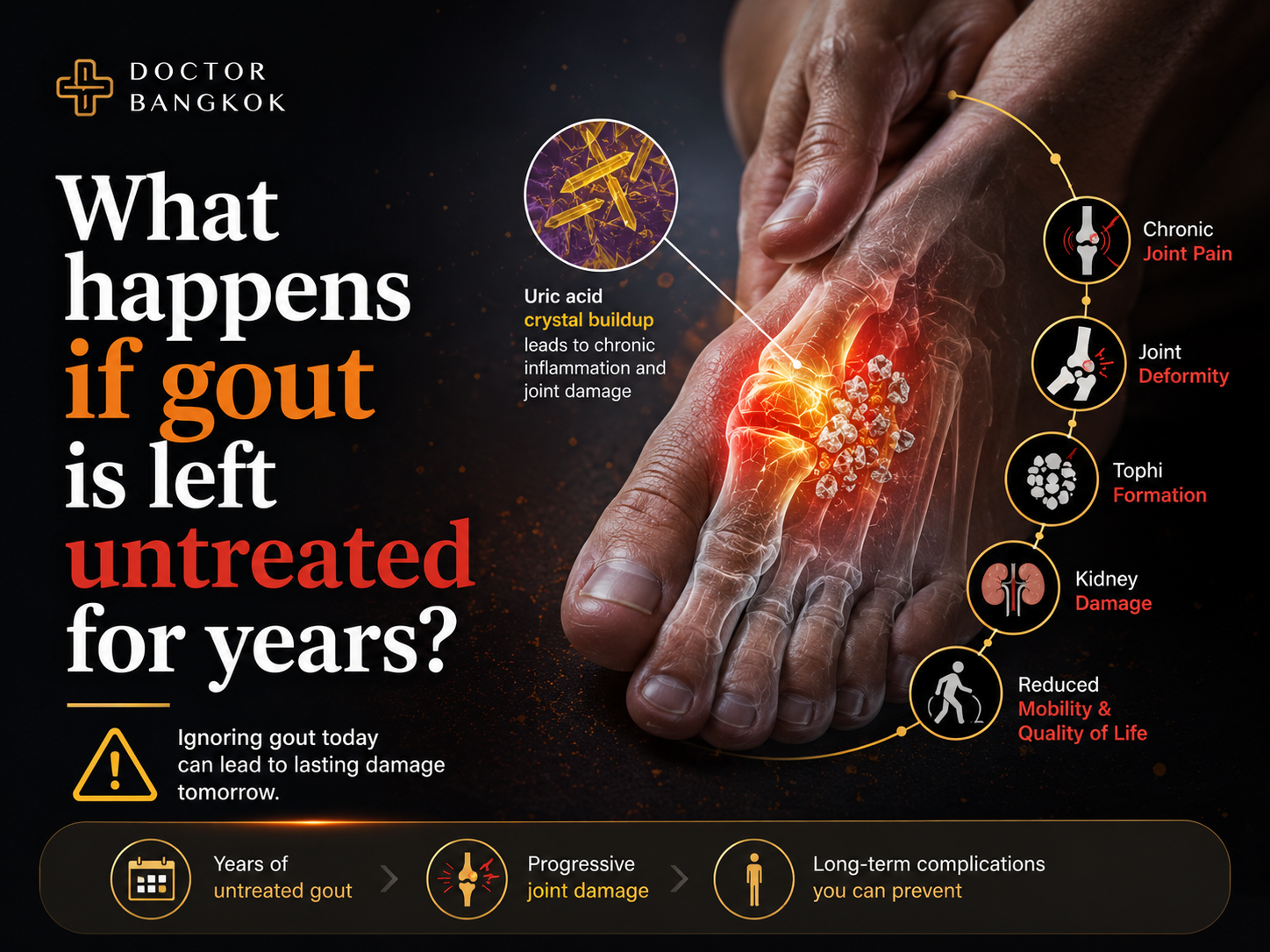
If gout is left untreated, the pain does not just come back more often. Uric acid crystals build up silently in your joints, kidneys, and soft tissue, causing permanent damage that medication cannot fully reverse. The pain-free gaps between attacks are not recovery. They are the window where the real harm happens.
You had one bad attack. The pain was brutal, you could barely walk, and then it faded on its own after a week or two. You told yourself it was a one-off. Maybe you changed your diet a little, drank less beer, and moved on. I hear this story every week.
The problem is that gout does not work the way most people think. The absence of pain is not the absence of disease. Every month without proper treatment, uric acid crystals are building up in your joints, sometimes in your kidneys, sometimes in soft tissue under the skin. By the time the damage becomes obvious, some of it cannot be undone.

How Gout Progresses Over Time
Gout moves through four recognisable stages, and where you are matters a lot for what treatment can still achieve.
The first stage is raised uric acid in your blood with no symptoms. You would not know without a blood test. The second stage is the acute flare: sudden, severe joint pain, usually in the big toe, ankle, or knee, peaking within hours and fading over days to two weeks.
The third stage is the part most patients miss entirely. Between attacks, you feel normal. No pain, no swelling. Crystals are still there. Inflammation is still happening at a low level. The joint is still being damaged.
The fourth stage is chronic tophaceous gout. Hard lumps of crystallised uric acid, called tophi, appear under the skin around joints, in the ears, or in the hands. At this point, joint erosion is often visible on imaging, and some of that damage is permanent.
The Dangerous Myth of the Pain-Free Gap
Most patients I see who have had gout for years without treatment share one belief: no pain means no problem. This is the single most damaging misconception I deal with.
Between flares, uric acid crystals do not dissolve on their own. They sit inside the joint and in surrounding tissue. The body keeps reacting to them at a low level. That slow, chronic inflammation erodes cartilage and bone over months and years.
Expats in Bangkok are particularly prone to this pattern. They have a severe attack, recover, and delay follow-up because they feel fine and life gets busy. By the time they come back, the flares are more frequent, affecting multiple joints, and lasting longer.

Permanent Joint and Bone Damage
This is the consequence that concerns me most in patients who delay care. Bone erosion from gout is real, and once it happens, it does not heal.
When tophi form inside a joint or in the tissue around it, they physically destroy the bone surface. This is not inflammation that settles down with treatment. Structural loss is permanent. Patients at this stage often have chronic pain even between attacks, reduced movement, and visible joint deformity.
The joints most commonly affected are the big toe, ankle, knee, wrist, and fingers. I have seen patients in their fifties with hands that look like they belong to someone twenty years older, purely because they ignored gout for a decade.
What Happens to Your Kidneys
Gout is not just a joint disease. Uric acid crystals can deposit in the kidneys and form kidney stones. Stones are acutely painful and can block the urinary tract.
The longer-term risk is kidney scarring from years of crystal deposition and chronic inflammation. This can reduce kidney function and, in serious cases, lead to chronic kidney disease. If you already have high blood pressure or diabetes, this risk compounds further.
The Heart Risk Nobody Talks About
This is the one most patients have not heard of, and it matters.
Chronic high uric acid and the inflammation that comes with untreated gout are both linked to raised cardiovascular risk. That includes higher rates of heart attack, heart failure, and stroke. The inflammation is not limited to your joints. It affects blood vessels too.
If you are a middle-aged expat in Bangkok with untreated gout and a desk job, this risk is worth knowing about. It is not theoretical.
Bangkok-Specific Triggers That Make Untreated Gout Worse
Bangkok presents a particular set of challenges, and I see the consequences regularly.
Thai cuisine is rich in purines, the compounds your body breaks down into uric acid. Organ meats, shellfish, anchovies in pad thai sauce, rich bone broths, and fermented seafood pastes are all high on the list. Beer is especially problematic because it contains purines and also blocks your kidneys from clearing uric acid properly.
Bangkok’s heat causes higher sweat losses and dehydration, which concentrates uric acid in the blood. Many expats do not drink enough water, particularly during long evenings out. Long-haul flights back to Europe or Australia disrupt sleep, medication schedules, and hydration further. It all adds up.
The Mental Health Toll of Chronic Untreated Gout
This rarely comes up in a consultation unless I ask directly. But it should.
Chronic pain changes how you live. Patients with recurring gout attacks often stop making plans, avoid long walks, decline social events, and feel anxious every time they eat something they enjoy. Over months and years, that restriction takes a real toll.
Living abroad makes this harder. Without a regular GP who knows your history, gout management often becomes reactive rather than preventive. Every flare becomes a crisis rather than a managed event.
How Gout Is Actually Treated
The good news is that gout is one of the most treatable chronic conditions in medicine.
For an acute attack, the goal is to reduce inflammation fast. Colchicine, anti-inflammatory drugs, or a short course of steroids can usually bring pain under control within a day or two. That handles the immediate flare.
The more important step is long-term urate-lowering therapy. Allopurinol is the most commonly used option, taken daily to bring serum uric acid down to a level where crystals stop forming and existing deposits gradually dissolve. Febuxostat is an alternative for patients who cannot tolerate allopurinol. Most patients on proper treatment see their flares reduce significantly within six to twelve months. With good control over several years, even tophi can shrink.
What to Do Right Now If You Are in Bangkok With Gout
If you are having an attack right now, here is what I would tell you.
Rest the joint and keep it elevated if you can. Ice helps with the pain. Stay well hydrated. Avoid alcohol completely until the flare resolves. If you have colchicine or anti-inflammatories from a previous prescription, start them as directed. If you do not, see a doctor today, not in a week.
At Doctor Bangkok on Sukhumvit Soi 13, we see gout patients around the clock, seven days a week. No appointment is needed. An English-speaking doctor will assess you, check your uric acid level with a blood test, manage the acute pain, and set up a plan for the longer term. If you cannot come in, we offer doctor home visits across central Bangkok, with arrival in 45 to 75 minutes.
Do not wait for the pain to go away and assume you are fine. That is exactly how this gets worse.
Gout attack in Bangkok, or due for a follow-up you have been putting off? Doctor Bangkok on Sukhumvit Soi 13 is open 24 hours, seven days a week. Walk in anytime for a gout consultation with an English-speaking physician. Blood testing, acute treatment, and urate-lowering management are all available on the same visit. If you cannot travel, a doctor can come to you across central Bangkok. Visit doctorbangkok.co.th to learn more or call us directly.
Can a gout attack go away on its own without treatment?
Yes, a single acute flare can resolve on its own within ten to fourteen days. But the underlying disease has not gone. Uric acid crystals remain in the joint, and each untreated cycle raises the risk of permanent erosion, tophi, and kidney and heart complications. Resolution of pain is not resolution of disease.
How quickly can untreated gout cause permanent joint damage?
There is no fixed timeline, but bone erosion can begin earlier than most patients expect and is often painless in its early stages. Joint destruction becomes more likely after years of uncontrolled uric acid, particularly without urate-lowering treatment. Damage continues even during pain-free periods, which is why managing your uric acid level matters, not just the symptoms.
Is gout linked to kidney failure and heart disease?
Yes, both links are well established. Crystal deposition in the kidneys can cause stones and long-term scarring that reduces kidney function. The systemic inflammation from chronic gout also raises the risk of heart attack, heart failure, and stroke. Both risks are preventable with early, consistent urate-lowering treatment.
Can I get gout treatment in Bangkok as an expat without going to a Thai public hospital?
Yes. Doctor Bangkok provides walk-in gout consultations at Sukhumvit Soi 13, 24 hours a day, seven days a week, with English-speaking doctors and no appointment needed. Uric acid testing, acute attack management, and longer-term treatment planning are all available in a single visit. A doctor can also come to your hotel or home across central Bangkok.
Does Bangkok’s food and lifestyle make gout worse?
It can, significantly. Thai cuisine is rich in purines from organ meats, shellfish, and fermented seafood. Beer is especially problematic for uric acid levels. Add Bangkok’s heat, which drives dehydration and concentrates uric acid in the blood, and many expats find their gout is harder to control here than it was at home.
What uric acid level should I be aiming for with treatment?
Most guidelines recommend a serum uric acid level below 360 micromoles per litre, or below 6 milligrams per decilitre, for most gout patients. For those with tophi or frequent flares, a lower target is often advised. Your doctor will check this with a blood test and adjust your medication accordingly.
Dr. Ponlawat Pitsuwan
Physician, Doctor Bangkok
a private medical clinic in central Bangkok. He sees expats, residents, and medical tourists for gout, joint conditions, metabolic health, and general medical consultations. His focus is straightforward, evidence-based care delivered in plain language.
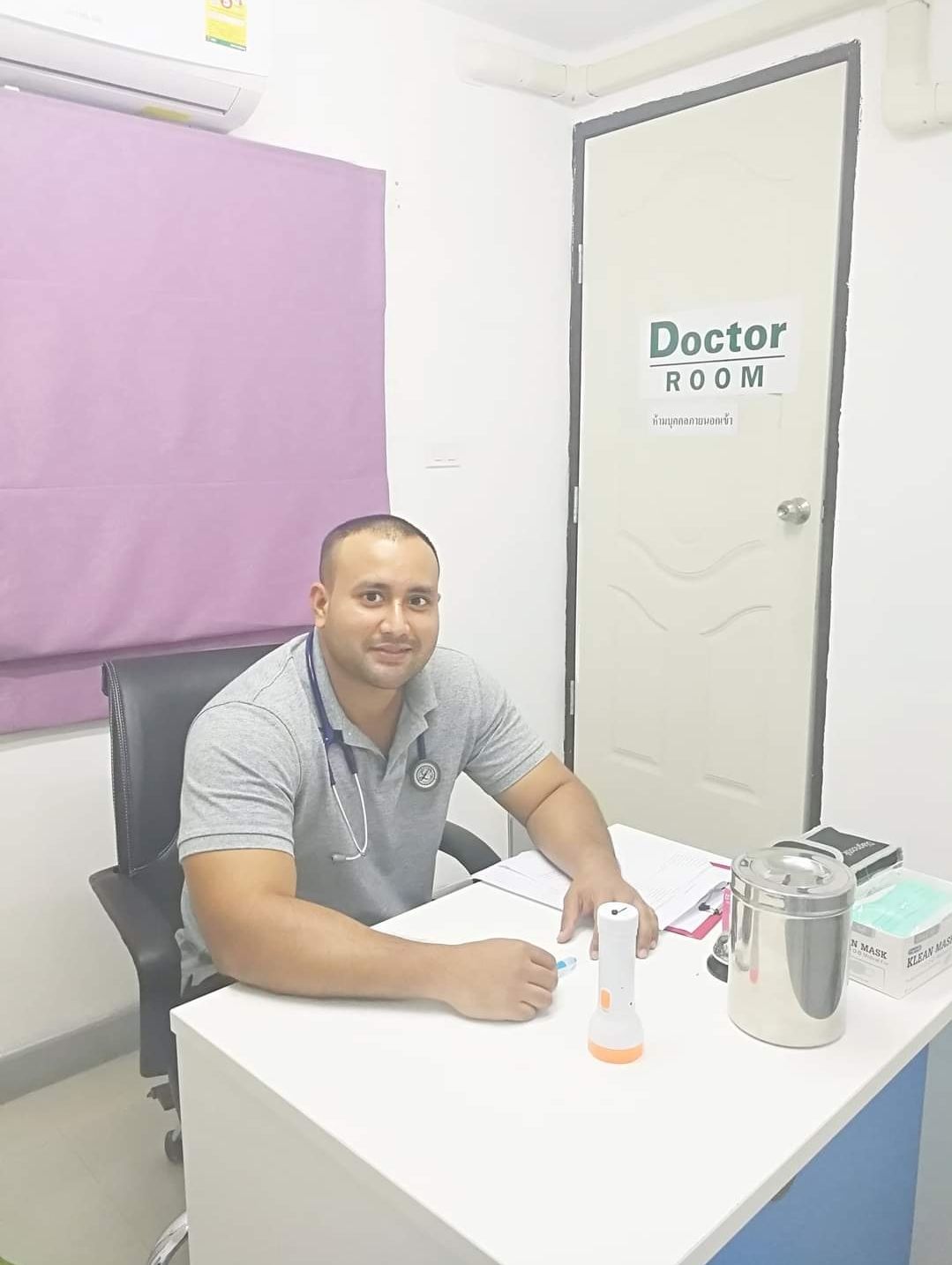
Dr. Ponlawat Pitsuwan is a physician at Doctor Bangkok, a private clinic in central Bangkok. He sees expats, residents, and medical tourists for general medicine, wellness consultations, and IV therapy. His focus is straightforward, evidence-based care delivered in plain language.