

Clinically reviewed by Dr. Ponlawat Pitsuwan, Physician, Doctor Bangkok. Last reviewed: June 2026
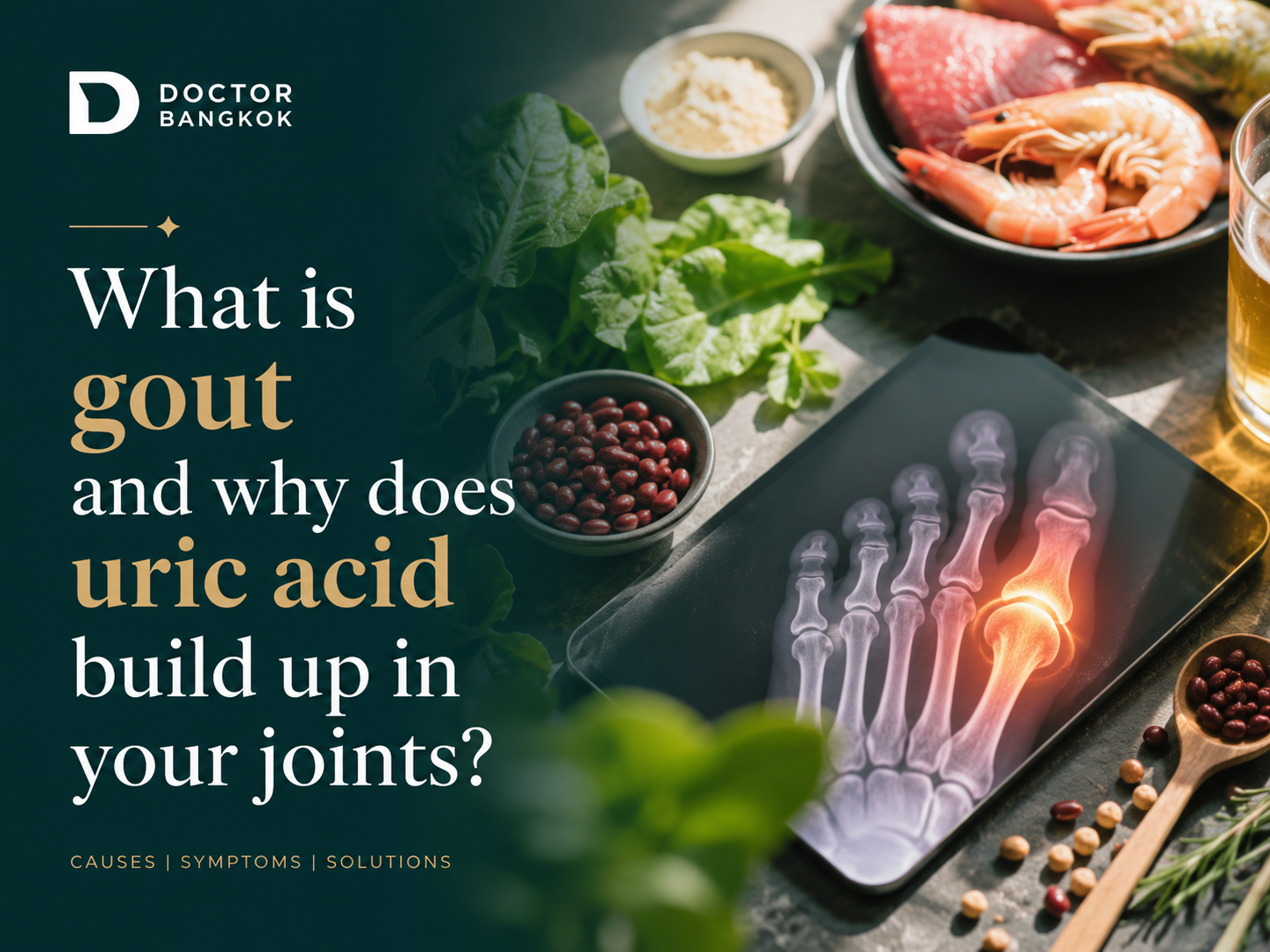
Gout is a type of joint inflammation caused by uric acid crystals that form inside the joint. It causes sudden, severe pain, most often in the big toe. Not everyone with high uric acid gets gout, and the two things are not the same. A blood test and clinical assessment can tell you where you stand.
If you woke up in the middle of the night with your big toe feeling like it is on fire, you are probably Googling gout right now. That pain is real, and it is one of the most recognisable things I see in clinic. The good news is that it is very treatable once we know what we are dealing with.
Gout happens when uric acid in your blood reaches a level where it starts forming tiny crystals inside your joints. Those crystals trigger a severe inflammatory response. That is why the pain comes on so fast and feels so extreme. Knowing what is actually happening helps you make the right call about when to come in, what tests you need, and what treatment looks like.

Gout symptoms: what a gout attack actually feels like
Most patients describe their first attack as the worst joint pain of their life. It comes on fast, often overnight, and the joint becomes red, hot, swollen, and intensely tender. The big toe is the classic site, but gout can also hit the ankle, knee, midfoot, or wrist.
The night-onset pattern is a useful clue. Your body temperature drops while you sleep, which makes uric acid less soluble in the joint fluid. Mild dehydration from a night without fluids also concentrates uric acid in your blood. These two things together make nighttime the most common trigger for a flare.
One thing that catches people out: the pain is usually at its worst within 12 to 24 hours, then starts to ease on its own over the following days. Some people assume that because it went away, it is not serious. It is. Untreated gout comes back, and each attack tends to be harder to manage than the last.
If you are living in Bangkok, the dietary triggers are everywhere. Offal dishes, fermented fish products, anchovies, oily fish, and beer are all high in purines, the compounds your body breaks down into uric acid. Beer deserves a specific mention because it raises uric acid in two ways at once: it increases production and reduces how well your kidneys clear it. The sweet iced teas and fruit smoothies you find on every corner do the same. That said, diet accounts for only around 10 to 12 percent of your uric acid level. Genetics and kidney function matter far more.
What urate crystals are and why they cause such extreme pain
When uric acid concentration in the joint fluid gets high enough, it forms crystals. These crystals cause your immune system to launch an attack inside the joint, which is why gout pain can go from nothing to debilitating within a few hours. It is not slow inflammation. Think of it as an internal alarm going off at full volume.
If attacks keep happening without treatment, crystals can build up over years into firm lumps called tophi. You might notice them around joints, on the ears, or on tendons. This stage means the disease has been running without control for a long time, and the joints can become permanently damaged. This is the stage we want to prevent, and we can, with the right treatment started early enough.
Between attacks there is often a period with no symptoms at all. The crystals are still there and the uric acid is still high, you are just not flaring. Some people stop treatment during this quiet phase, then wonder why their next attack is worse.

Hyperuricemia and gout: why high uric acid does not always mean gout
Hyperuricemia means your blood uric acid level is above the normal range. Having it does not mean you have gout. A significant number of people carry a high uric acid level their whole lives without ever having a flare.
Why do some people get gout and others do not? Crystal formation depends on more than just the uric acid level. Joint temperature, local chemistry, and genetics all play a role. Some people’s joints are simply more likely to form crystals at a given uric acid concentration than others.
What this means in practice: if your uric acid is high but you have never had a gout attack, medication is not automatically the answer. The decision to start urate-lowering therapy, most commonly with a tablet called allopurinol, depends on how often you are flaring, whether you have tophi, and whether you have had kidney stones related to urate. In general, two or more attacks per year is a clear signal that medication is needed. The target is to bring uric acid below 6 mg/dL, which prevents new crystals from forming. In more advanced disease the target is below 5 mg/dL.
If your uric acid is borderline and you have had one mild attack, diet and lifestyle changes may be enough for now. But please get a proper assessment. Managing gout on the basis of one blood number alone, without the full picture, is how patients end up with joint damage that could have been prevented.
Gout vs pseudogout: how to tell the difference
Not all crystal-induced joint inflammation is gout. There is another condition called pseudogout, or CPPD, that looks very similar but involves different crystals and needs a different treatment approach. I see this cause real confusion in clinic.
Both conditions cause sudden, painful, swollen joints. Both are more common in men and become more likely with age. The key difference is where the pain tends to strike. Gout almost always starts in the smaller joints of the foot, especially the big toe. Pseudogout more often affects larger joints, with the knee being the classic site, followed by the wrist and elbow. Pseudogout also tends to occur in older adults and is more strongly linked to other metabolic conditions.
The only reliable way to tell them apart is to examine fluid taken from the affected joint under a microscope. Without that test, you are making an educated guess, not a diagnosis. This matters most if it is your first attack or the joint involved is not the typical gout site.
At Doctor Bangkok we can assess acute joint pain, run a uric acid blood test, and refer for joint fluid analysis when it is clinically needed. If you are unsure whether what you have is gout, pseudogout, a skin infection, or something else entirely, that uncertainty is exactly what a clinical assessment is for. You can find out more about gout treatment in Bangkok on our clinic page.
Woke up with a swollen, painful joint and not sure what it is? Doctor Bangkok offers same-day general medical consultations and uric acid blood testing at our central Bangkok clinic. Our English-speaking physicians assess acute joint pain, review your results in context, and guide you through next steps for managing gout in Bangkok. We are BTS accessible and open seven days a week. Book at doctorbangkok.co.th or walk in.
FAQ
Can I have gout even if my uric acid blood test comes back normal?
Yes, and this catches a lot of people off guard. During an active flare, uric acid can temporarily drop in the blood as crystals form inside the joint, so a normal result during an attack does not rule gout out. Your doctor may retest a few weeks after the flare settles, or recommend joint fluid analysis as the more reliable step.
What is the difference between gout and pseudogout?
Both cause sudden, painful joint swelling, but they involve different crystals and often affect different joints. Gout typically hits the big toe and small foot joints, while pseudogout more often affects the knee or wrist and tends to occur in older adults. You cannot reliably tell them apart from symptoms alone, which is why a clinical assessment matters.
Why do gout attacks so often start in the middle of the night?
Your body temperature falls during sleep, which makes uric acid less soluble in the joint fluid and more likely to crystallise. Mild overnight dehydration raises uric acid concentration at the same time. The 3am onset is actually a useful clinical clue pointing toward gout rather than something like a joint infection.
Does eating Thai food increase my risk of a gout attack?
Some Thai dishes are genuinely high in purines: offal, fermented fish products, anchovies, and oily fish like mackerel and sardines. Beer is a strong trigger because it raises uric acid in two ways at once. That said, diet accounts for only around 10 to 12 percent of your uric acid level, so food changes alone are rarely enough if your uric acid is significantly elevated.
How do I know if I need medication or just diet changes?
If you have had two or more flares in a year, have tophi, or have had kidney stones related to urate, medication is usually the right call. One mild attack with a borderline uric acid level is a different situation. The decision depends on your full picture, not just one number, so a proper clinical assessment will give you a clear answer.
Is gout dangerous if I leave it untreated?
Repeated untreated attacks lead to progressive joint damage and eventually tophi, which are deposits of crystals in the soft tissue around joints. Gout is also associated with kidney disease and cardiovascular risk. It is very manageable with treatment. The risk comes from ignoring it or stopping medication between attacks when things feel fine.
Dr. Ponlawat Pitsuwan
Physician, Doctor Bangkok
a private medical clinic in central Bangkok. He sees expats, residents, and visitors for joint pain assessment, uric acid testing, and [gout treatment in Bangkok](https://doctorbangkok.co.th/gout-treatment-bangkok/). His focus is straightforward, evidence-based care delivered in plain language.
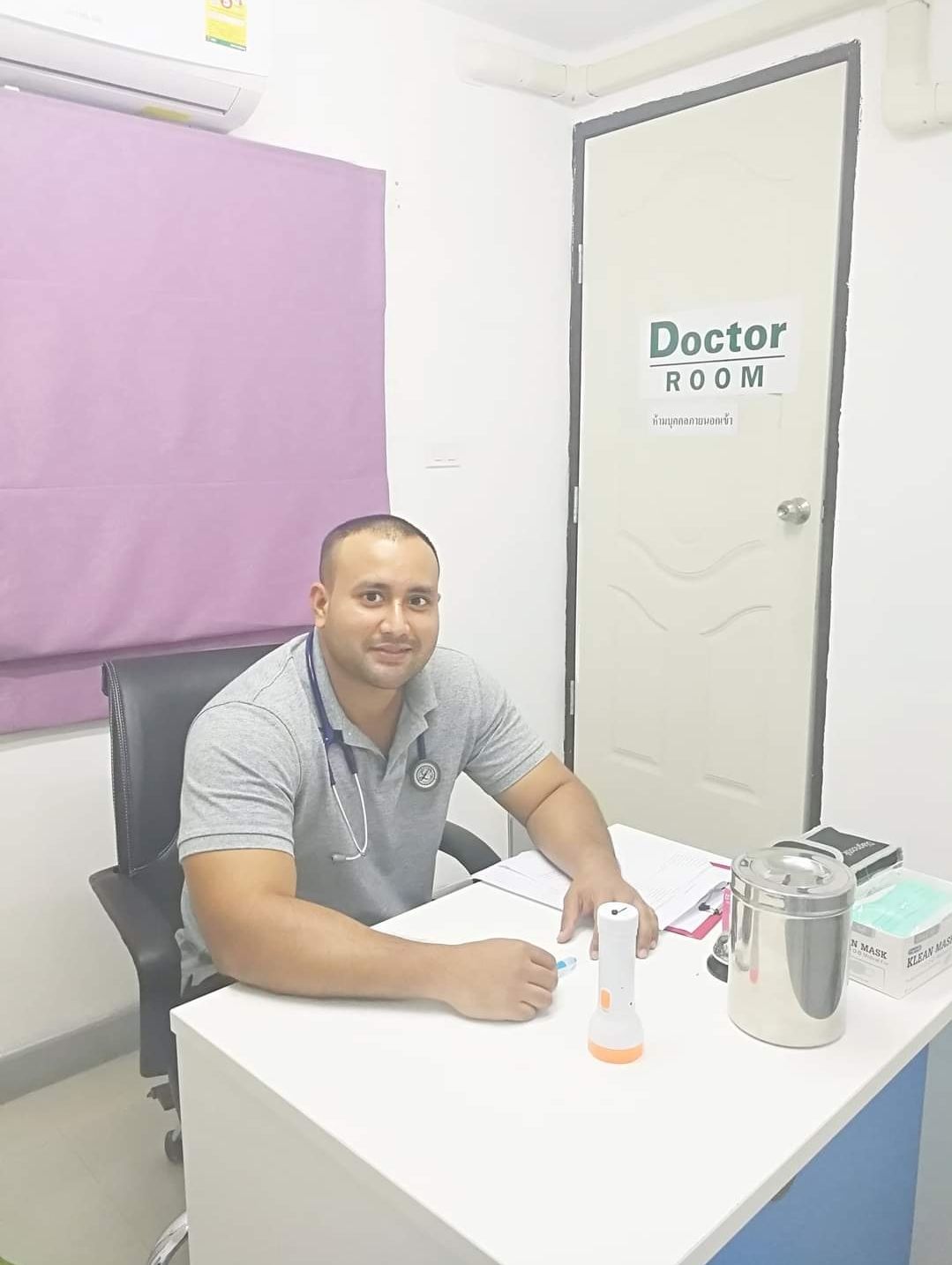
Dr. Ponlawat Pitsuwan is a physician at Doctor Bangkok, a private clinic in central Bangkok. He sees expats, residents, and medical tourists for general medicine, wellness consultations, and IV therapy. His focus is straightforward, evidence-based care delivered in plain language.