
Clinically reviewed by Dr. Ponlawat Pitsuwan, Physician, Doctor Bangkok. Last reviewed: August 2026
Gallstone treatment depends on whether your stones are causing symptoms. Silent gallstones found on a routine scan often need no immediate treatment. Symptomatic gallstones, especially those causing repeated attacks or complications, are usually managed with laparoscopic surgery to remove the gallbladder. ERCP is used when a stone has moved into the bile duct. Your first step is an abdominal ultrasound and a clinical assessment to work out exactly where you stand.
A lot of expats discover they have gallstones not because they felt anything, but because a routine health check in Bangkok flagged them on ultrasound. Then they start Googling, and suddenly they are reading about surgery, bile ducts, and worst-case scenarios. Most of the time, there is no emergency. But ignoring them entirely is not always the right call.
What I tell patients who come in with that news is this: the scan found the stones, but it does not tell us the whole story. We need to know whether you have symptoms, how big the stones are, and whether your bile duct looks clear. That assessment shapes everything. Some people walk out with a plan to watch and wait. Others need a surgical referral that same week.

Do Asymptomatic Gallstones Actually Need Treatment?
This is the question I get most often, and the answer surprises a lot of people: usually, no.
If your stones were found incidentally and you have had no pain, no nausea, and no yellowing of the skin, watchful waiting is the standard approach. Most people with silent gallstones never develop significant symptoms.
That said, watchful waiting is not the same as ignoring them. Follow-up every six to twelve months makes sense, especially if you are over fifty, diabetic, or have a family history of gallbladder disease. If symptoms start, you come back in. We do not wait for a complication.
There are situations where I lean toward earlier referral even without symptoms. Very large stones carry a higher complication risk over time. A calcified gallbladder wall can occasionally raise cancer risk, though the evidence on this continues to evolve. If you are on immunosuppressants or planning to travel long-term to areas with limited medical access, the calculation changes.
What a Gallbladder Attack Actually Feels Like
Most patients describe it the same way. Sudden, severe pain in the upper right abdomen, often coming on thirty to ninety minutes after a fatty meal. The pain can radiate to the right shoulder blade. It comes in waves and does not respond to antacids the way heartburn does.
Fatty food intolerance is one of the earliest patterns I see. Rich meals, fried food, or heavy sauces leave you feeling nauseated in a way that has started to feel predictable. That pattern is worth paying attention to.
This type of pain, called biliary colic, usually resolves within a few hours once the stone shifts. But if the pain does not ease after six hours, or you develop a fever, or your skin or eyes start looking yellow, you need to be seen urgently. That is a different situation entirely.

How Gallstones Are Diagnosed in Bangkok
The starting point is almost always an abdominal ultrasound. It is non-invasive, quick, and gives a clear picture of the gallbladder and any stones inside it. Most Bangkok hospitals and many clinics can arrange this within a day or two.
Blood tests matter too. Liver function tests can pick up early signs that a stone has caused a blockage. A raised bilirubin, elevated liver enzymes, or an abnormal alkaline phosphatase are all signals we take seriously.
During a physical exam, I check for Murphy’s sign, which means applying gentle pressure under the right rib cage while you breathe in. If you feel pain and catch your breath involuntarily, that suggests gallbladder inflammation. It is a quick but useful clinical sign.
If we suspect a stone has moved into the common bile duct, we may recommend an MRCP scan. That is a non-invasive MRI of the bile and pancreatic ducts. It gives us a detailed map before deciding on any procedure.
Gallstone Treatment Options: From Conservative to Surgical
Not everyone with gallstones needs surgery. The right approach depends on your symptoms, your stone characteristics, your overall health, and whether complications have developed.
Watchful Waiting
For asymptomatic gallstones, this is often the right first step. You are monitored, not treated. If symptoms develop, the plan is revisited.
Ursodeoxycholic Acid
This is an oral medication that can slowly dissolve small cholesterol gallstones over several months. It only works on a specific type of stone, it takes time, and stones can return after stopping treatment. It is most relevant for patients who cannot have surgery for medical reasons. It is not the first choice for most people with symptomatic stones.
Laparoscopic Cholecystectomy
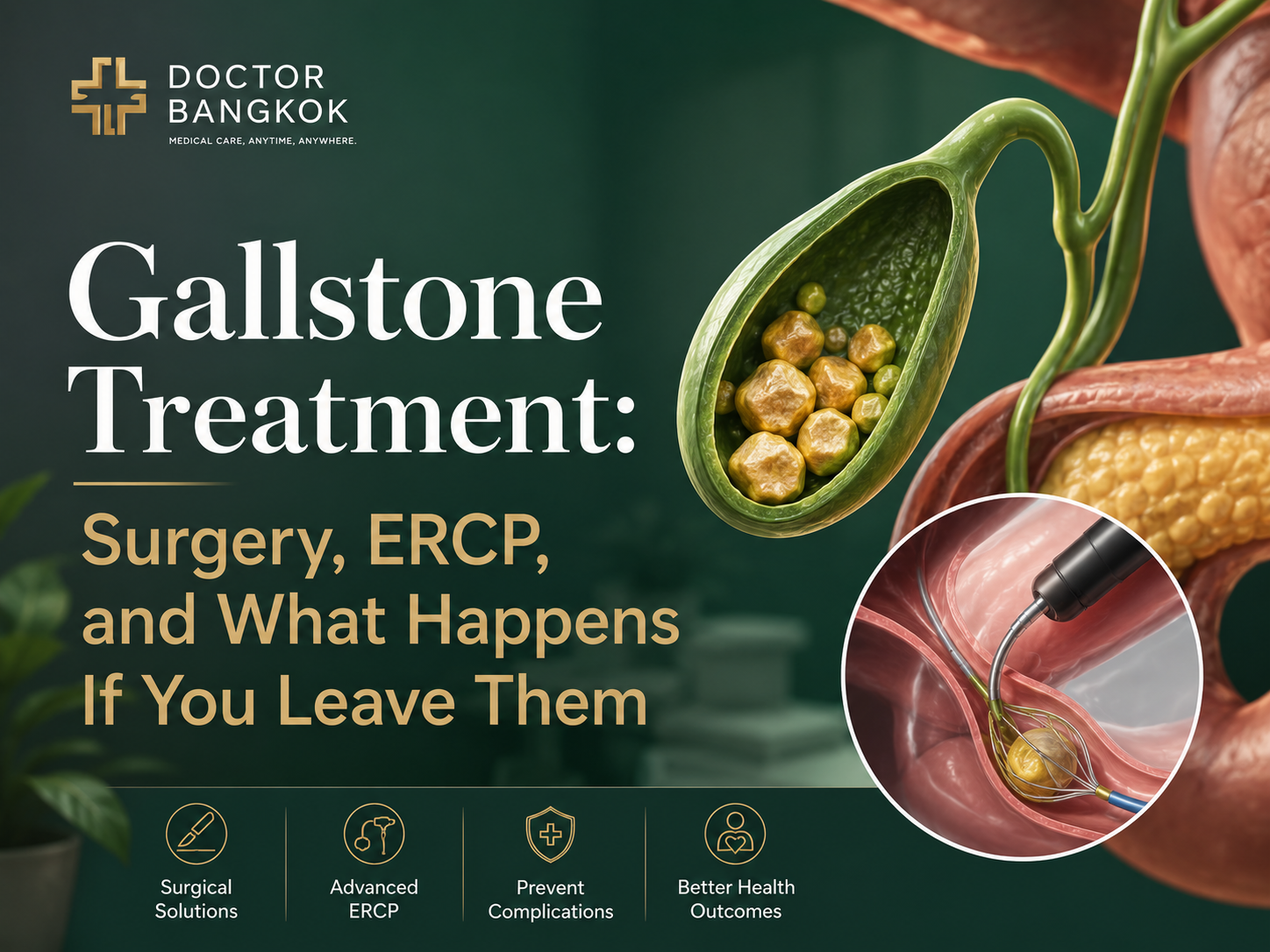
This is the main gallstone treatment and the surgical gold standard. The gallbladder is removed through small keyhole incisions under general anaesthetic. Most patients stay one night in hospital and return to light daily activity within a week to ten days.
The gallbladder is removed, not just the stones. This is intentional. Leaving the gallbladder in place after clearing the stones carries a high recurrence rate.
ERCP
ERCP is used when a stone has lodged in the common bile duct rather than sitting in the gallbladder. A flexible camera is passed through the mouth into the small intestine, and the stone is extracted. It is not a substitute for cholecystectomy if the gallbladder itself is the source of the problem. Most patients who need ERCP also need gallbladder removal at a later stage.
ESWL and Other Non-Surgical Options
Shock wave lithotripsy uses sound waves to break stones apart. It is rarely used now in routine practice because laparoscopic surgery is safer and more definitive. Its role is limited to specific cases where surgery is not an option.
What Happens If You Leave Gallstones Alone
This is where delaying care can become a real problem.
Acute cholecystitis happens when a stone blocks the neck of the gallbladder and it becomes inflamed and infected. The pain is more persistent than a typical biliary colic attack, and you will likely have a fever. This is a hospital admission, often leading to emergency surgery.
Choledocholithiasis means a stone has moved into the common bile duct. This causes obstructive jaundice. Your skin and eyes turn yellow, your urine goes dark, and your stools go pale. If the infection spreads, it becomes cholangitis, which is a serious systemic illness requiring urgent hospital care.
Biliary pancreatitis happens when a stone blocks the opening of the pancreatic duct, causing the pancreas to become inflamed. This is painful, serious, and can result in a prolonged hospital stay. It is the complication that tends to get missed in early planning.
These are not rare outcomes from years of neglect. They can happen after one bad attack. Most patients who come in after a complication tell me they had warning signs they put off for months.
Life After Gallbladder Removal
People worry about this more than they need to. You can live a full, normal life without a gallbladder. Your liver still produces bile. After removal, it flows continuously into the small intestine rather than being stored and released in bursts.
In the first few weeks, some patients notice looser stools or sensitivity to very fatty meals. Keeping saturated fat low during this adjustment period helps. For most people, things settle within four to eight weeks.
Recovery from laparoscopic surgery is faster than most people expect. Light activity within a week, driving within two weeks, and a return to most normal routines within two to four weeks depending on your work type.
For medical tourists, this matters. Most patients can fly home five to seven days after uncomplicated laparoscopic cholecystectomy, once wound healing has been checked and there are no signs of complications. Your surgeon will confirm fitness to fly before discharge. Carry your surgical summary in English.
Getting Your Assessment at Doctor Bangkok
If you have right upper quadrant pain after meals, found gallstones on a scan, or you are not sure what your symptoms mean, the right move is a clinical assessment before a surgical referral. Showing up at a large Thai hospital without knowing what you need can slow things down considerably.
At Doctor Bangkok, we see patients for initial assessment and diagnostic coordination, including ultrasound referrals, blood work, and specialist referral letters in English. We are in central Bangkok, BTS accessible at Nana Station, with English-speaking physicians available for same-day appointments.
If your situation turns out to be straightforward, we will tell you that. If it needs a surgeon, we will connect you to one quickly. Book a general medical consultation and bring any existing scan reports or blood results you have.
If you have gallstone symptoms, a recent scan showing gallstones, or right-sided abdominal pain after eating, come in for an assessment at Doctor Bangkok. We will review your results, arrange any additional tests needed, and give you a clear plan. We are in central Bangkok, BTS accessible at Nana Station, with English-speaking physicians available for same-day appointments. Contact us to book your consultation.
Frequently Asked Questions
Dr. Ponlawat Pitsuwan
Physician, Doctor Bangkok
a private medical clinic in central Bangkok. He sees expats, residents, and medical tourists for general medicine, abdominal complaints, and the coordination of specialist referrals including gastrointestinal and surgical care. His focus is straightforward, evidence-based care delivered in plain language.
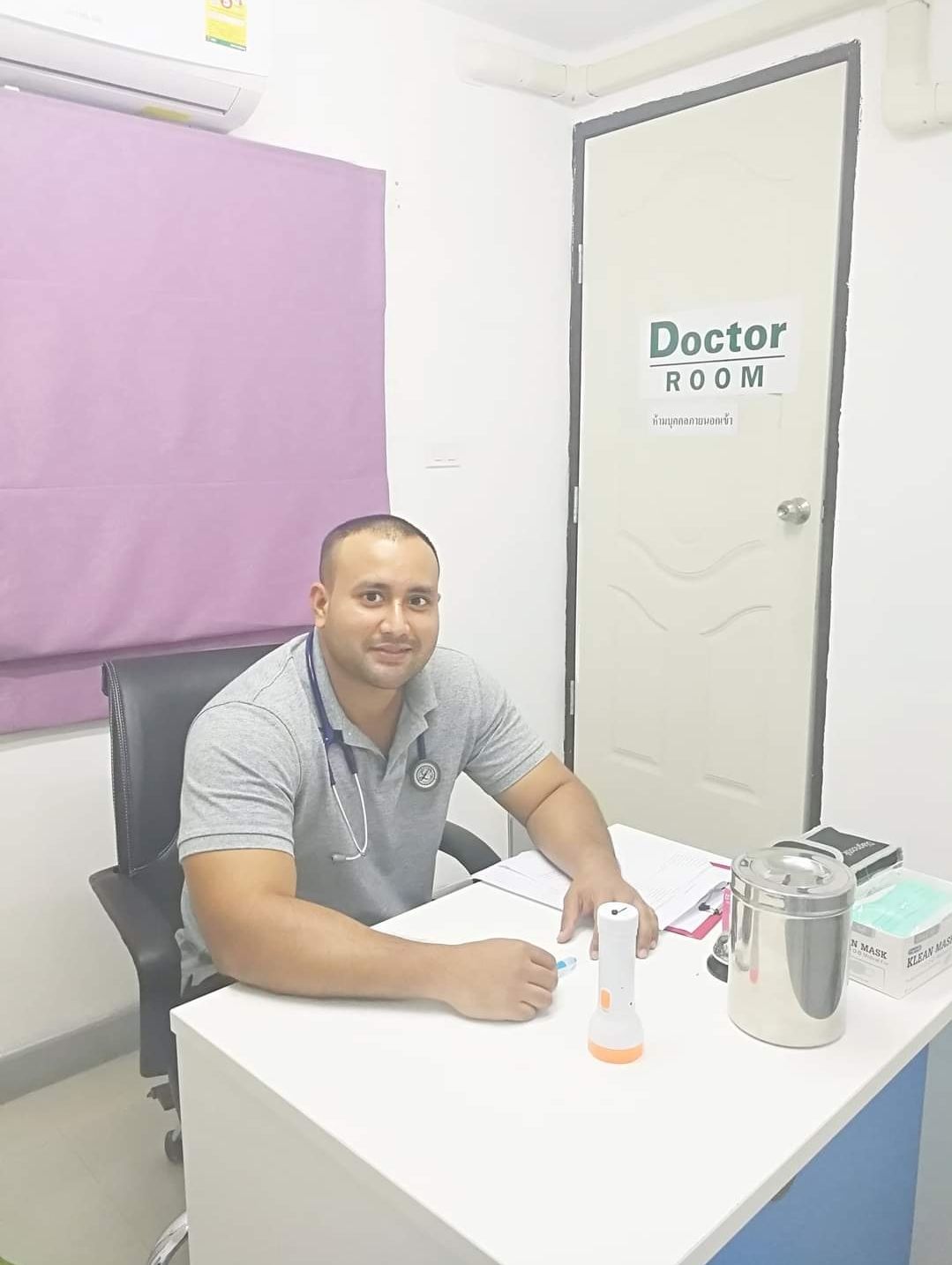
Dr. Ponlawat Pitsuwan is a physician at Doctor Bangkok, a private clinic in central Bangkok. He sees expats, residents, and medical tourists for general medicine, wellness consultations, and IV therapy. His focus is straightforward, evidence-based care delivered in plain language.