Clinically reviewed by Dr. Ponlawat Pitsuwan, Physician, Doctor Bangkok. Last reviewed: July 2026
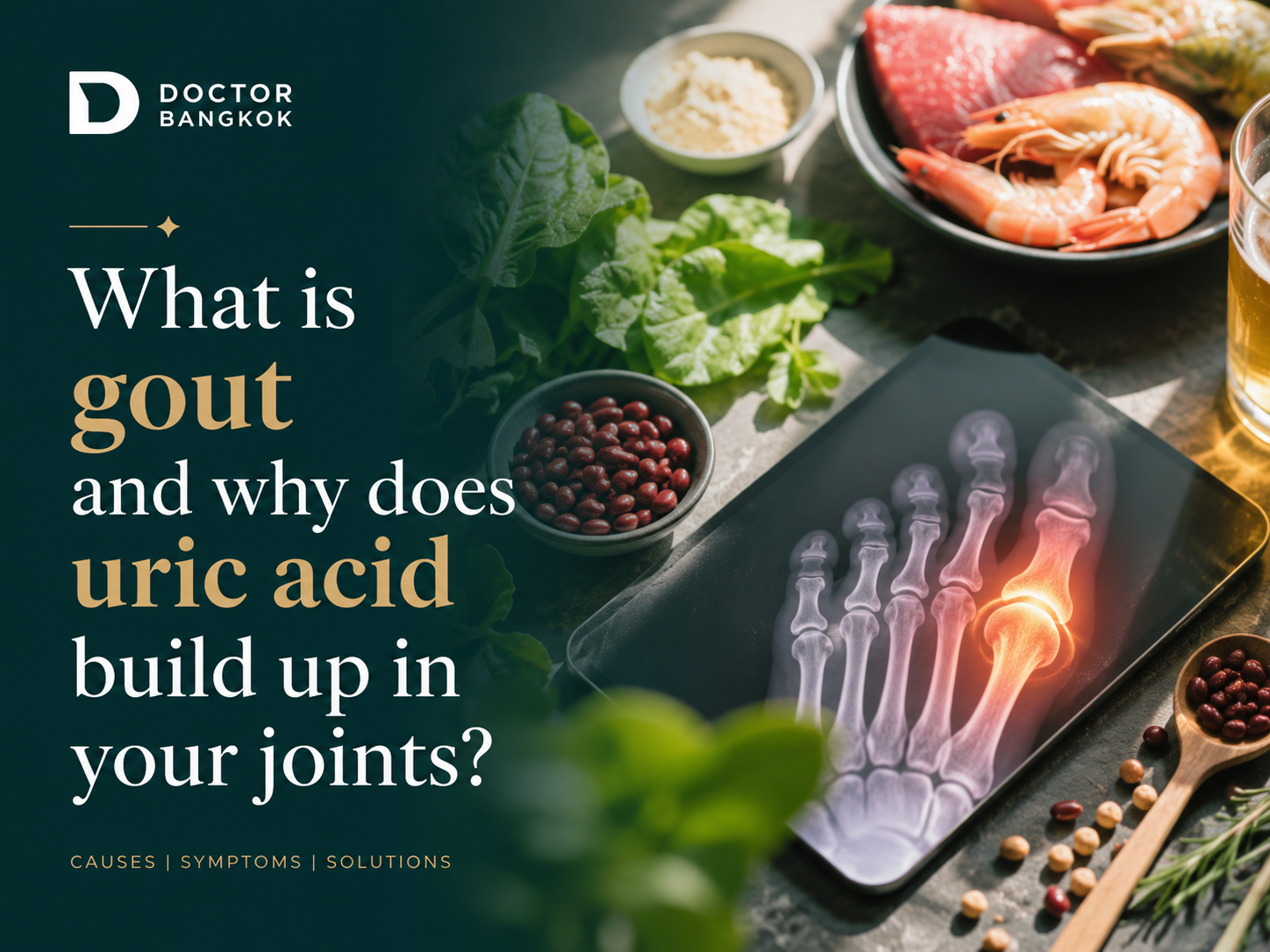
The foods highest in purines are organ meats, anchovies, sardines, shellfish, and red meat. When you eat them, your body breaks purines down into uric acid. Too much uric acid forms sharp crystals in your joints, causing the intense pain of a gout attack. Alcohol, especially beer, makes this worse by blocking your kidneys from clearing uric acid properly.
If you woke up at 3am with a big toe that felt like it was on fire, you already know what a gout flare feels like. Or maybe you have just been told your uric acid is high and you are trying to figure out what you can and cannot eat, especially living in Bangkok where every meal seems to involve seafood broth, fish sauce, or shellfish.
The honest answer is that food matters, but it is not the whole story. What you eat accounts for roughly 30% of the uric acid in your blood. The rest your body makes on its own. That means diet helps, but for many people it is not enough alone. Below, I will walk you through which foods are the real problem, what the Thai diet looks like through a gout lens, and when it is time to see a doctor rather than just change what you order.

What Purines Do in Your Body
When your body breaks down purines, the end product is uric acid. Most of the time your kidneys filter it out and you excrete it in your urine. The problem starts when there is too much uric acid in your blood, or when your kidneys are not clearing it efficiently.
When uric acid levels stay high long enough, needle-shaped crystals form in your joints. Your immune system attacks those crystals. The joint becomes red, swollen, and so tender that even a bedsheet touching it is agony.
Purine Tiers — A Simple Reference Table
This is the most useful thing I can give you. Foods fall into three rough categories based on their purine content per 100 grams.
| Tier | Purine Content (per 100g) | Foods |
|---|---|---|
| High — avoid or limit strictly | Above 200 mg | Liver, kidney, heart, anchovies, sardines, mussels, scallops, shrimp, crab, yeast extract, game meat |
| Moderate — eat in small amounts | 100–200 mg | Beef, pork, lamb, chicken, duck, tuna, salmon, canned fish, lentils, asparagus |
| Low — generally safe | Below 100 mg | Rice, bread, pasta, eggs, low-fat dairy, most vegetables, tofu, coffee, fruit |
These figures are approximations. Cooking method matters too. Boiling meat reduces its purine content because purines leach into the water. That means a broth or soup stock actually concentrates purines, while the meat in it has slightly less.

High-Purine Foods in a Thai Diet — What Expats Need to Know
This is the section no Western gout article ever covers, and it is the one that actually matters if you are eating in Bangkok.
Fish sauce is in almost everything here. It is fermented from small fish that are already high in purines, then concentrated. A few tablespoons add a meaningful purine load to a dish. Shrimp paste, used as a base for curries and dipping sauces, is similar.
Pla ra is fermented freshwater fish, common in Isan cooking. It has a very high purine concentration and is often hidden inside laab, spicy salads, and regional curries. If you eat a lot of northeastern Thai food, this is worth knowing about.
Bone broth soups are another hidden source. Tom yum, boat noodle soup, and many street food dishes are built on long-cooked broth. The broth concentrates everything that leached out during cooking, so the liquid is actually the high-purine part.
Durian is the one fruit worth flagging. It is higher in purines than most other fruits. If you are managing active gout or raised uric acid, keep portions small. Cha-om, a Thai acacia vegetable, appears on some local clinical guidance as a moderate-purine food. It is not in the danger zone, but worth knowing if you eat it daily.
Not All Seafood Is Equal
Most guides tell you to avoid all seafood. That is too blunt. Shellfish, anchovies, sardines, and mussels are the main offenders. Salmon and mackerel are a different story.
They are still moderate in purines, but evidence suggests they carry meaningfully lower gout risk than shellfish. The omega-3 fatty acids in these fish appear to reduce inflammation, which may partly offset the purine load. Salmon is not a free food if your uric acid is very high, but it is not in the same category as a plate of oysters.
If you rely on fish as your main protein, choosing salmon or larger fish over shellfish and small oily fish is a reasonable compromise. Talk to your doctor about what works for your specific uric acid level.
Plant Purines vs Animal Purines — Why the Source Matters
I tell every patient with gout the same thing: do not cut out your vegetables because you are scared of purines.
Spinach, asparagus, mushrooms, and lentils all contain moderate amounts of purines. But eating plant-based purines does not raise gout risk the way animal purines do. Tofu is a good example. It contains purines, but soy-based foods are actually associated with lower uric acid levels in research.
The rule of thumb is simple. If the high-purine food came from an animal, limit it. If it came from a plant, you almost certainly do not need to cut it out.
Alcohol, Fructose, and the Triggers That Are Not About Purines
Two things raise uric acid that have nothing to do with purine content directly.
Alcohol, especially beer, is the biggest lifestyle trigger for gout. Beer contains purines directly, and all alcohol blocks your kidneys from excreting uric acid. Levels rise regardless of what you ate. During a flare, cut out alcohol entirely.
Fructose is the other one. Sugary drinks sweetened with high-fructose corn syrup drive uric acid production in the liver. Whole fruit is much less of a concern because fibre slows absorption, though very sweet fruits in large quantities are worth moderating. In Bangkok, sugary drinks are everywhere and portions are generous. I raise this regularly with patients who are careful about seafood but still drinking two beers and a sweet iced coffee daily.
Diet Alone Is Not Always Enough
This is the part patients do not always want to hear. A careful low-purine diet can reduce your uric acid by roughly 10 to 15%. That is real and worthwhile. But if your uric acid is significantly elevated, or if you are getting repeated flares, diet changes alone will not get you to where your joints need to be.
Most patients with established gout need urate-lowering medication alongside dietary changes. The goal is to bring serum uric acid below 6 mg/dL, and for patients with frequent flares, even lower. At Doctor Bangkok, we check uric acid with a simple blood test and have results back quickly. If your levels are high, we put together a plan that combines realistic dietary changes with medication if you need it.
Got gout or a high uric acid result? Doctor Bangkok offers uric acid blood testing and gout treatment in Bangkok at our central clinic, a short walk from BTS. Our English-speaking doctors see expats and visitors regularly for exactly this. We will check your levels, explain what they mean, and put together a plan that fits your life here. Book at doctorbangkok.co.th.
FAQ
Is Thai food bad for gout?
It depends on what you order. Many Thai dishes are built around high-purine ingredients: fish sauce, shrimp paste, bone broth soups, shellfish, and fermented fish products. But Thai cuisine also includes plenty of safe foods including rice, most vegetables, tofu, and fresh fruit. The key is knowing which dishes to limit, not avoiding Thai food entirely.
Are purines in vegetables as harmful as purines in meat?
No. Research consistently shows that plant-based purines in spinach, mushrooms, asparagus, and lentils do not raise gout risk the way animal purines do. You do not need to cut out vegetables to manage gout. A vegetable-rich diet is still a good idea even with a gout diagnosis.
How much purine is too much per day?
The general clinical target for people with gout or raised uric acid is to keep dietary purine intake below 400 mg per day. A single serving of organ meat can exceed that in one meal. Keep in mind that diet accounts for only about 30% of your uric acid, so medical assessment matters if diet changes alone are not controlling your levels.
Can I drink beer or alcohol if I have gout?
Beer is the worst choice for gout because it contains purines directly and also blocks your kidneys from clearing uric acid. All alcohol raises gout risk to some degree, but beer carries the highest. During a flare, avoid alcohol completely. If you want to drink socially, talk it through with your doctor rather than guessing.
Does diet alone control gout, or do I need medication?
Diet helps, but for most people with established gout it is not enough on its own. Careful eating can reduce uric acid by roughly 10 to 15%, which matters, but it rarely brings levels into the safe range without medication. If you are getting flares or your blood test shows persistently high uric acid, come in and we will talk through your options including urate-lowering therapy.
Can I eat shrimp and fish sauce if I have gout?
Shrimp is high in purines and a known gout trigger, so it is worth limiting significantly. Fish sauce is harder to avoid entirely when eating in Thailand, but reducing the amount you use and choosing dishes that are not built around it will help. These are practical questions worth raising with a doctor who understands the Bangkok food environment.
Dr. Ponlawat Pitsuwan
Physician, Doctor Bangkok
a private medical clinic in central Bangkok. He sees expats, residents, and medical tourists for gout assessment, uric acid testing, and general medical consultations. His focus is straightforward, evidence-based care delivered in plain language.

Dr. Ponlawat Pitsuwan is a physician at Doctor Bangkok, a private clinic in central Bangkok. He sees expats, residents, and medical tourists for general medicine, wellness consultations, and IV therapy. His focus is straightforward, evidence-based care delivered in plain language.