

Clinically reviewed by Dr. Ponlawat Pitsuwan, Physician, Doctor Bangkok. Last reviewed: June 2026
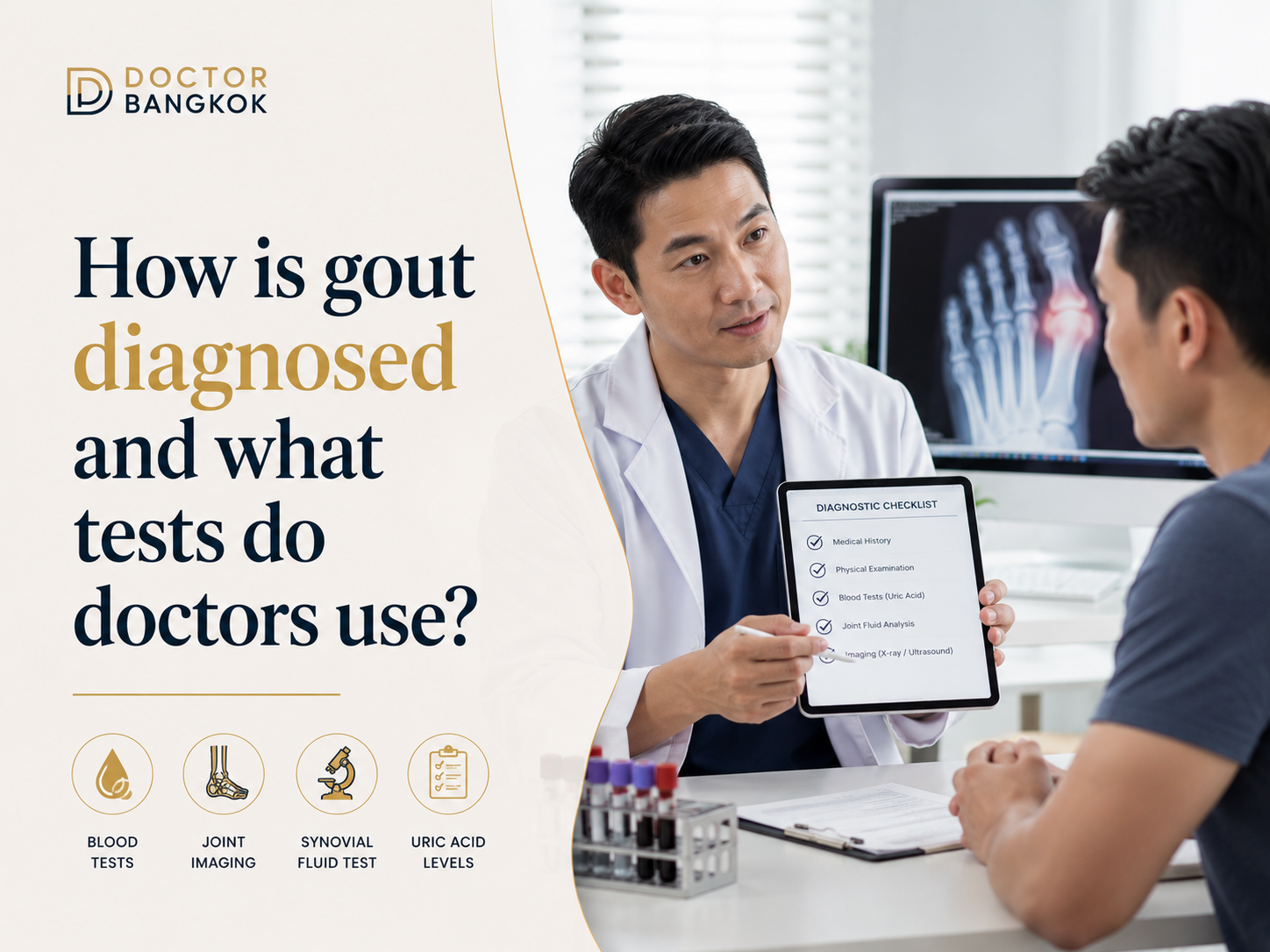
Gout is diagnosed through your symptoms, a uric acid blood test, and in many cases, a joint fluid test. Blood tests alone can miss it. The only way to confirm gout with certainty is to look for crystals in fluid taken from the affected joint. At Doctor Bangkok, same-day blood results are available, and joint aspiration can be done on the same visit.
If you woke up in Bangkok with a swollen, burning joint you cannot bear to touch, you are probably searching for answers at full panic. Maybe it is your big toe. Maybe it is your ankle or knee. The pain came out of nowhere, it is severe, and you want to know what is happening. Gout is high on the list, and diagnosing it properly matters more than most people realise.
The mistake I see most often is patients assuming a blood test tells the whole story. It does not. A uric acid test is one piece of the puzzle, and a normal result does not mean gout is off the table. Here is what actually goes into getting the right diagnosis, and what to expect when you come in.

What the doctor looks for before any test is ordered
Your history and your symptoms do a lot of the diagnostic work before we even draw blood. I ask where the pain started, how fast it came on, whether you have had anything like this before, and what your diet and alcohol intake have been like. A high-purine diet, heavy drinking, certain blood pressure medications, and conditions like metabolic syndrome all raise your risk significantly.
I also look at the joint itself. Gout flares produce a very specific picture: intense redness, warmth, swelling, and pain so severe that even a bedsheet touching the joint is unbearable. No other condition reliably looks quite like that, though a few come close. That is exactly why we test rather than guess.
The uric acid blood test and why it can mislead you
This is the test most people expect, and it is useful, but it has a real limitation. Uric acid levels can actually drop during an active flare. Your body shifts it out of the bloodstream and into the joint. That means a blood test taken while you are in pain can come back completely normal, and yet gout is still the cause.
The reverse is also true. Plenty of people have high uric acid and never get gout. So a raised result does not confirm the diagnosis on its own. I always tell patients: do not read too much into a single result taken during an attack. Testing your uric acid again four to six weeks after the flare settles gives a far more reliable picture.
When I run bloodwork for a suspected gout case, I look at more than just uric acid. I also check kidney function, because the kidneys regulate uric acid and gout and kidney disease often travel together. A full panel on day one gives us the complete picture.

Joint aspiration — the test that actually confirms it
This is the gold standard. Joint aspiration means taking a small sample of fluid from the swollen joint using a needle. We look at that fluid under a microscope and check for uric acid crystals. If they are there, the diagnosis is confirmed.
The procedure sounds worse than it is. We numb the skin first with local anaesthetic. Most patients say the numbing injection is the worst part, and even that is brief. The whole thing takes a few minutes. At Doctor Bangkok, we can do this on the same day as your consultation if it is clinically needed.
There is another reason this test matters. It also rules out septic arthritis, which is a joint infection that looks nearly identical to a gout flare: hot, swollen, severely painful. Septic arthritis requires urgent antibiotic treatment. Missing it would be a serious problem. Joint aspiration is the only way to tell the two apart with certainty, and that is not a distinction you want to leave to guesswork.
Imaging — what X-rays, ultrasound, and advanced scans add
Imaging is not always needed for a first attack, but it adds useful information in certain situations. A plain X-ray will not show early crystals, but it can reveal tophi, which are uric acid deposits that build up in joints and tissues after years of uncontrolled gout. X-ray also picks up calcification in cartilage, which points more toward pseudogout than gout.
Ultrasound is more sensitive for early disease. Doctors who know what to look for will check for the double contour sign, a thin bright line of crystals coating the joint cartilage surface. This is a strong indicator of gout even before anything shows on X-ray.
The most advanced option is dual-energy CT, or DECT. It can detect uric acid crystal deposits non-invasively and with strong accuracy based on current evidence. We do not use it routinely for a clear first presentation, but it is a useful option when the diagnosis is genuinely unclear or joint aspiration is not possible.
Pseudogout vs gout — same pain, different crystal, different treatment
Pseudogout is the condition most commonly confused with gout, and the mix-up is completely understandable. Both cause sudden, severe joint inflammation and can look identical. The first clinical clue is often which joint is affected. Gout most commonly hits the big toe joint first. Pseudogout more often targets the knee or wrist.
The definitive distinction comes from joint fluid analysis. Gout produces needle-shaped crystals and pseudogout produces rhomboid-shaped crystals, and the two have opposite properties under polarised light microscopy. The treatment paths are different, so getting this right matters.
X-ray is also helpful here. Pseudogout often causes calcification inside the cartilage itself. When I see that finding, I also consider testing for conditions that can trigger pseudogout, including an overactive parathyroid gland and hemochromatosis, which is a condition where iron builds up in the body. Pseudogout can sometimes be the first sign of one of these underlying problems.
When joint aspiration is not immediately available, a structured scoring system from the American College of Rheumatology and EULAR helps clinicians put all of this together. It weighs your symptom pattern, joint location, uric acid levels, and imaging findings to give a probability score. It is a useful tool for reaching a working diagnosis while you await confirmatory testing.
What to expect when you come in for gout diagnosis in Bangkok
Coming to a clinic in a country where you did not grow up is stressful, especially when you are in pain. At Doctor Bangkok, all our physicians speak English fluently, and consultations are unhurried. You will not be handed a lab form and told to come back in three days.
On your first visit, we take your history, examine the joint, and run blood tests including uric acid and kidney function. Results are available the same day. If joint aspiration is indicated, we can perform it during that same visit. You will leave with a clear diagnosis or a clear next step, not a vague instruction to wait and see.
If you want to read more about what ongoing care looks like after diagnosis, our gout treatment page covers management options in detail.
Sudden joint pain in Bangkok? Do not wait it out. Doctor Bangkok offers same-day gout diagnosis including uric acid blood tests and joint aspiration, performed by English-speaking physicians in central Bangkok. BTS accessible, walk-in welcome. Visit doctorbangkok.co.th or book online to see a doctor today.
Frequently Asked Questions
Can my uric acid levels be normal even if I have gout?
Yes, and this catches a lot of patients off guard. Uric acid levels can fall during an active flare because crystals are moving into the joint rather than staying in the blood. The most reliable way to confirm the diagnosis is joint fluid analysis, and re-testing uric acid four to six weeks after the flare settles gives a more accurate baseline.
How do doctors tell the difference between gout and pseudogout?
Both conditions look nearly identical on the surface, but joint fluid analysis under polarised light microscopy tells them apart definitively. Gout produces needle-shaped crystals and pseudogout produces rhomboid-shaped crystals with opposite optical properties under the microscope. The treatment paths are different, so getting this distinction right matters.
Do I need a joint aspiration, or is a blood test enough?
A blood test alone is not enough to confirm gout with certainty. Joint aspiration is the gold-standard test, and it also serves a second important purpose: ruling out septic arthritis, a joint infection that looks almost identical but requires urgent treatment. The procedure is done with local anaesthetic and is well tolerated by most patients.
How quickly can gout be diagnosed at a private clinic in Bangkok?
At Doctor Bangkok, uric acid blood results are available the same day, and joint aspiration can be performed during your first visit if it is needed. You will not leave without answers. This is quite different from the longer waits common at large public hospitals, and having an English-speaking doctor removes the communication barrier that can complicate care elsewhere.
Can gout affect joints other than the big toe?
Absolutely. Around half of first attacks involve the big toe joint, but gout also commonly affects the ankle, knee, wrist, and elbow, especially in people with recurrent or longstanding disease. When the big toe is not involved, the diagnosis can be less obvious, which is one reason imaging and fluid analysis become more important.
Can gout be diagnosed between attacks when the joint is not swollen?
Yes. The period between flares is called intercritical gout, and diagnosis is still possible through uric acid blood testing, ultrasound looking for the double contour sign, and in some cases DECT scanning, which can detect crystal deposits in a joint that looks completely normal. Coming in between attacks is actually a good time for a full metabolic review.
Dr. Ponlawat Pitsuwan
Physician, Doctor Bangkok
a private medical clinic in central Bangkok. He sees expats, residents, and medical tourists for acute joint conditions, gout diagnosis and management, and general medical care. His focus is straightforward, evidence-based care delivered in plain language.
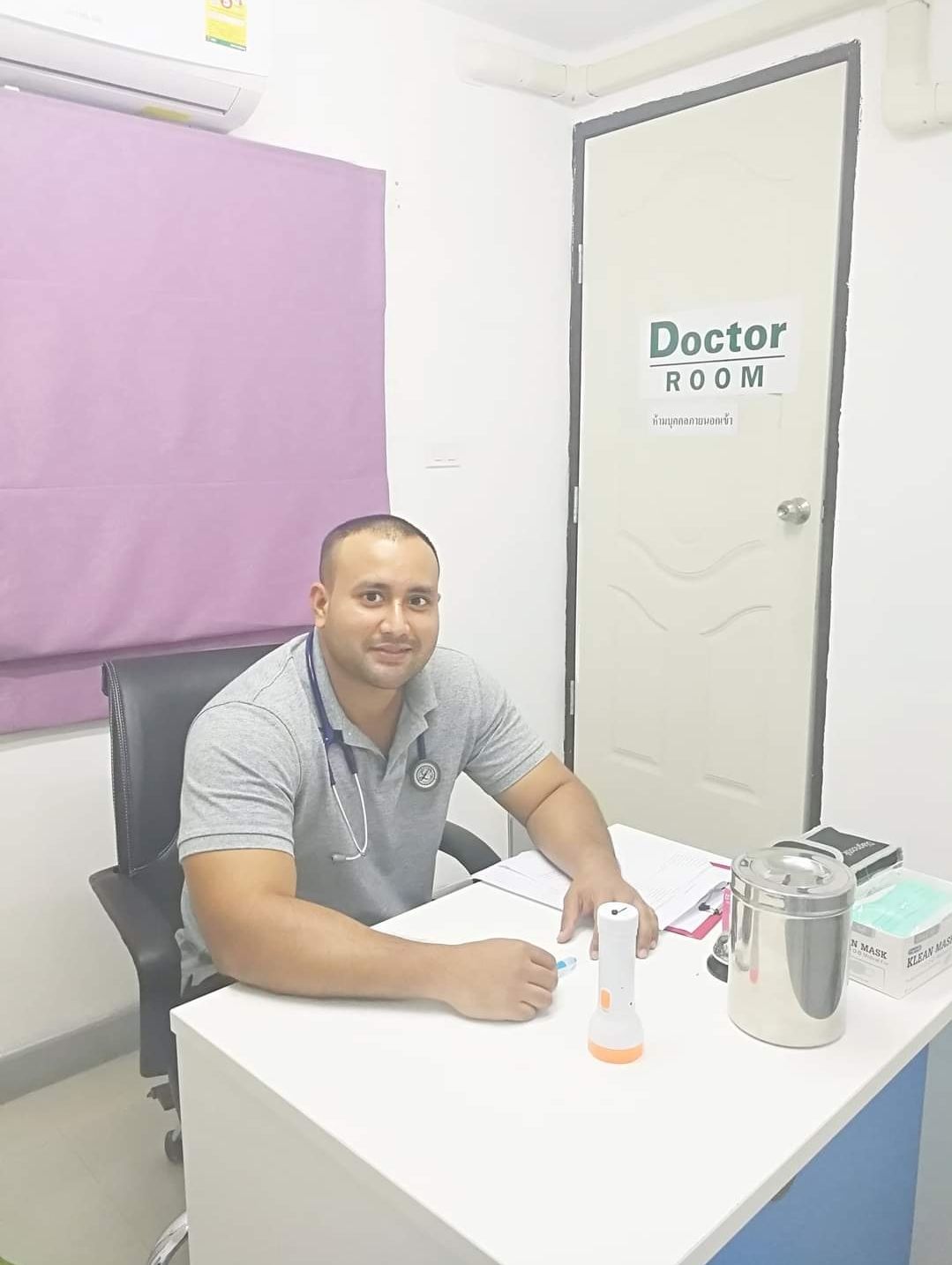
Dr. Ponlawat Pitsuwan is a physician at Doctor Bangkok, a private clinic in central Bangkok. He sees expats, residents, and medical tourists for general medicine, wellness consultations, and IV therapy. His focus is straightforward, evidence-based care delivered in plain language.