
Clinically reviewed by Dr. Ponlawat Pitsuwan, Physician, Doctor Bangkok. Last reviewed: July 2026
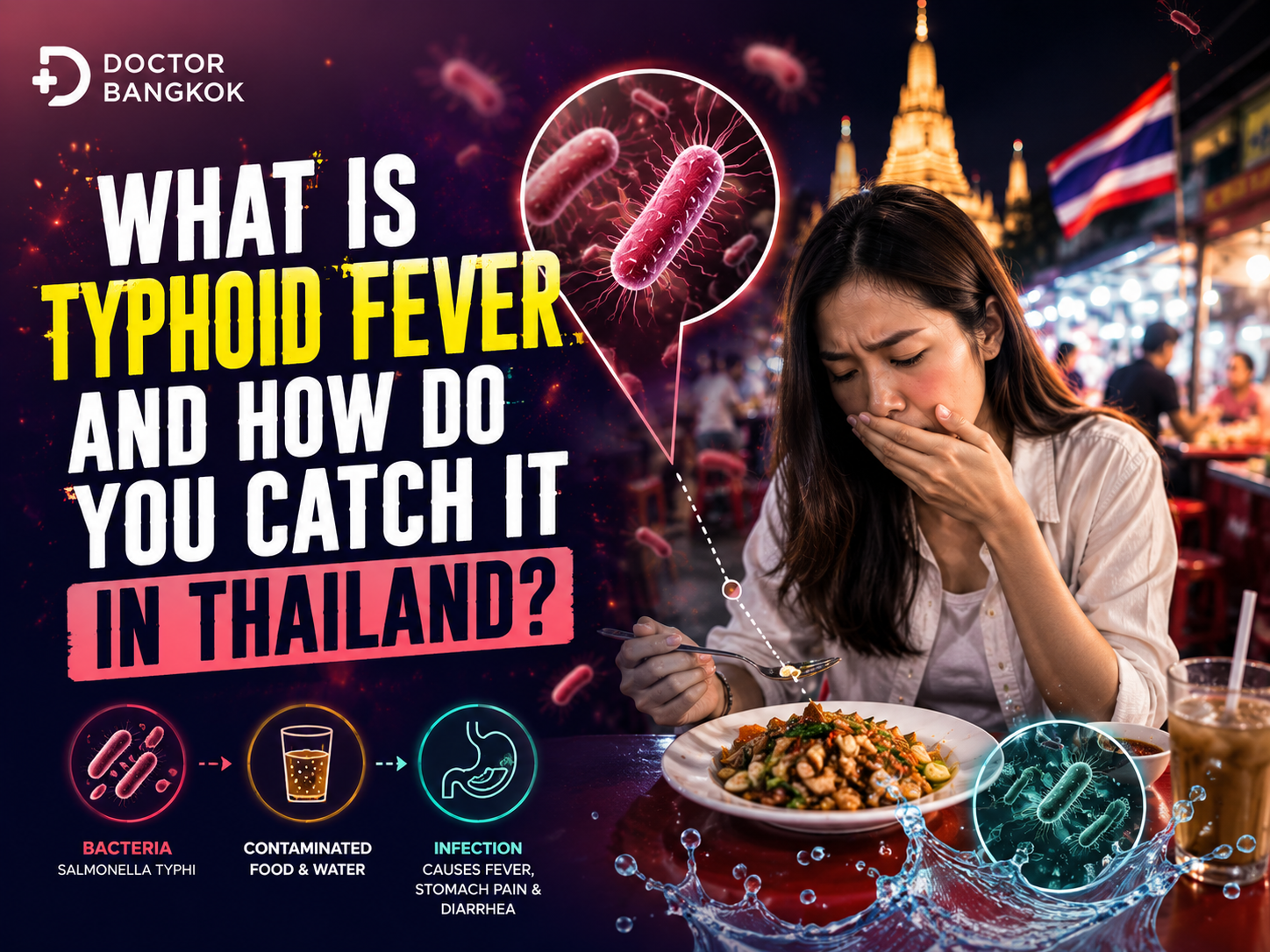
Typhoid fever is a bacterial infection caused by Salmonella Typhi. You catch it by swallowing contaminated food or water. In Bangkok, the risk is real but often underestimated. Left untreated, typhoid can become serious. If you have had a persistent fever for more than three days, get tested today.
If you are running a fever in Bangkok that just will not break, you are probably doing what most people do: Googling symptoms at midnight. Typhoid crosses a lot of minds, usually because of street food or a friend’s warning. The good news is that typhoid is treatable. What matters is catching it early and getting the right antibiotic.
Typhoid is not as rare in Bangkok as people assume. Most expats think it only happens upcountry or in places with no running water. That is not quite right. You can pick it up in central Bangkok from contaminated ice, undercooked food, or a food handler who is an undetected carrier. If your fever has been climbing for several days, with headache, stomach discomfort, or a general feeling that this is worse than a regular flu, get a blood test. Not tomorrow. Today.

How Typhoid Spreads — and Why Bangkok Is Not as Safe as You Think
The bacteria behind typhoid travel from an infected person’s stool into food or water, and then into your mouth. This happens more easily than most people expect.
In Bangkok, the routes I see most often are ice made from tap water, street food where the vendor’s hands are the weak link, raw vegetables washed in unfiltered water, and shellfish. Flooding during the rainy season can push contaminated water into local food supply chains. Most Bangkok street food is fine. But the risk is real, and cases do come through the clinic because of it.
You also do not have to eat anything unusual. Some people are chronic carriers, meaning they had typhoid in the past and recovered but still shed the bacteria without knowing. If they prepare your food, that is a genuine exposure risk.
Symptoms — What Typhoid Actually Feels Like
Most patients who come in with typhoid tell me the same thing: they thought it was a bad flu that was not getting better.
The fever builds gradually over the first few days, starting mild and climbing. You feel rough, with persistent headache, fatigue, and often a dry cough. Early on, you may be constipated rather than having diarrhoea, which surprises people. Your appetite disappears.
After about a week, the fever is higher and more sustained, typically around 39 to 40 degrees Celsius. Some patients develop a faint pink rash on the chest and abdomen. The abdomen may feel tender or bloated. This is usually when patients finally come in, but I would prefer to see them at day four or five rather than day ten.
Without treatment, the risks become serious. The infection can perforate the intestinal wall, which is a surgical emergency. I am not saying this to frighten you. I am saying it because waiting two weeks to get a blood test is not worth it.

How Typhoid Is Diagnosed
When you come in with a fever lasting more than three days, we run blood tests. For typhoid, we look at a blood culture and a full blood count. A blood culture checks whether the bacteria are present in your blood. It is the most reliable test we have, and results take around 48 hours.
You may have heard of the Widal test. It is widely available in Thailand and gives results quickly, but it produces a fair number of false results, particularly in people who have been vaccinated or had typhoid before. I use it as supporting information, not as a standalone diagnosis.
At Doctor Bangkok, we assess you the same day, run your bloods, and give you a clear picture within 48 to 72 hours. We do not leave you without guidance while you wait for results.
Antibiotic Treatment and the Drug Resistance Problem
Here is the part most online articles skip, and it matters if you are in Southeast Asia.
Typhoid is treated with antibiotics, but the choice matters enormously right now. Fluoroquinolones like ciprofloxacin, once the standard treatment, are no longer reliable across much of Southeast Asia, including Thailand. Resistance rates are high. If you self-medicate with leftover cipro from a pharmacy, you may feel slightly better and then much worse when a resistant strain keeps going.
The preferred treatment for uncomplicated typhoid is now azithromycin. For more severe cases, we use ceftriaxone by injection. The choice depends on your test results and how unwell you are. Extensively drug-resistant strains are also emerging globally and are resistant to most oral antibiotics. These are not yet common in Bangkok, but they are on the radar.
If you think you have typhoid, do not self-treat. Come in, get tested, and let your doctor choose the right antibiotic for your specific case.
Typhoid Risk in Bangkok — What Expats and Residents Need to Know
Thailand’s overall typhoid incidence has dropped significantly over the past two decades, but it has not reached zero. Urban Bangkok still sees cases. The risk is lower here than in rural northern Thailand or neighbouring countries, but it is not absent.
The patients I see who catch typhoid in Bangkok are usually those who drink tap water, eat from certain street stalls repeatedly, or who have been travelling to Myanmar, Cambodia, or Laos and return with an infection already developing. The rainy season raises the risk slightly, as flooding can affect local water sources.
Drinking bottled water, avoiding ice of unknown origin, and washing hands before eating genuinely reduce your risk. They are not guarantees, but they are the most practical protection you have day to day.
Typhoid Vaccination in Bangkok
The most practical protection before any exposure is the vaccine. At private clinics in Bangkok, the standard option is the injectable Vi polysaccharide vaccine. It provides solid protection and lasts around two to three years before you need a booster.
The oral typhoid vaccine, taken as capsules over several days, is not reliably stocked in Thailand. Do not count on finding it here. If you want it, get it before you arrive.
For expats who also need hepatitis A protection, I often recommend the combination hepatitis A and typhoid injection. You get both in one shot, which is convenient, and both are relevant for people living in or travelling through Southeast Asia. Doctor Bangkok carries this combination vaccine.
Get vaccinated at least two weeks before you need protection. The vaccine does not work overnight. And even with the vaccine, food and water hygiene still matters, because no vaccine is 100 percent effective.
When to See a Doctor — Red Flags That Mean Do Not Wait
If your fever has lasted more than three days, come in. That is the simple rule.
Come in the same day if your fever is above 39.5 and climbing, you have severe abdominal pain, you feel confused or very drowsy, you cannot keep fluids down, or you notice blood in your stool. These are not symptoms to watch from home.
If you are not sure whether your fever is typhoid, dengue, or something else, that uncertainty is exactly the right reason to get assessed. Our fever assessment and treatment service is built for this. Getting the diagnosis right early makes a real difference to how quickly you recover.
Persistent fever in Bangkok? Doctor Bangkok is a private, English-speaking clinic in central Bangkok, BTS accessible. We offer same-day fever consultations, blood testing for typhoid and dengue, and travel vaccinations including the typhoid and hepatitis A combination. Visit doctorbangkok.co.th or book your appointment online. Do not wait until week two.
FAQ
Can I catch typhoid fever in central Bangkok, or is it mainly a rural risk?
You can catch it in central Bangkok. The risk is lower than in rural areas, but it is real. Ice from tap water, food handlers who are undetected carriers, and rainy-season flooding can all create exposure. Living in the city does not make you immune.
How do I know if my Bangkok fever is typhoid or dengue?
They can look similar early on, which is why we test rather than guess. Typhoid tends to build slowly with headache and constipation. Dengue usually hits faster, with severe joint pain, eye pain, and a distinct rash pattern. Both need a blood test to confirm, so come in early rather than waiting to see which way it goes.
Which typhoid vaccine is available in Bangkok?
The injectable Vi polysaccharide vaccine is the standard option at Bangkok private clinics, including Doctor Bangkok. The oral capsule vaccine is not reliably available in Thailand. If you also need hepatitis A protection, we can give both in a single combination injection during the same visit.
What antibiotics treat typhoid fever in Thailand?
Azithromycin is currently preferred for most uncomplicated cases. For severe cases, ceftriaxone is used by injection. Fluoroquinolones like ciprofloxacin are not reliable here because resistance is widespread across Southeast Asia. Your antibiotic should always be chosen by a doctor based on your test results, not picked up from a pharmacy.
I finished my antibiotics for typhoid. Am I cured and no longer contagious?
Probably, but not necessarily. Some people continue to shed typhoid bacteria for weeks or months after they feel better, particularly if the bacteria have settled in the gallbladder. If you live with others or handle food, a follow-up stool test makes sense. Your doctor will advise you based on your individual case.
Do expats living long-term in Bangkok need the typhoid vaccine, or is it just for travellers?
I recommend it for long-term residents too. Living in Bangkok does not make you immune, and the risk of exposure through food and water is ongoing. The booster lasts two to three years, so it is a low-effort, sensible precaution. If you have never had it, one visit to Doctor Bangkok covers it.
Dr. Ponlawat Pitsuwan
Physician, Doctor Bangkok
a private medical clinic in central Bangkok. He sees expats, residents, and medical tourists for fever assessment, infectious disease concerns, travel medicine, and general consultations. His focus is straightforward, evidence-based care delivered in plain language.
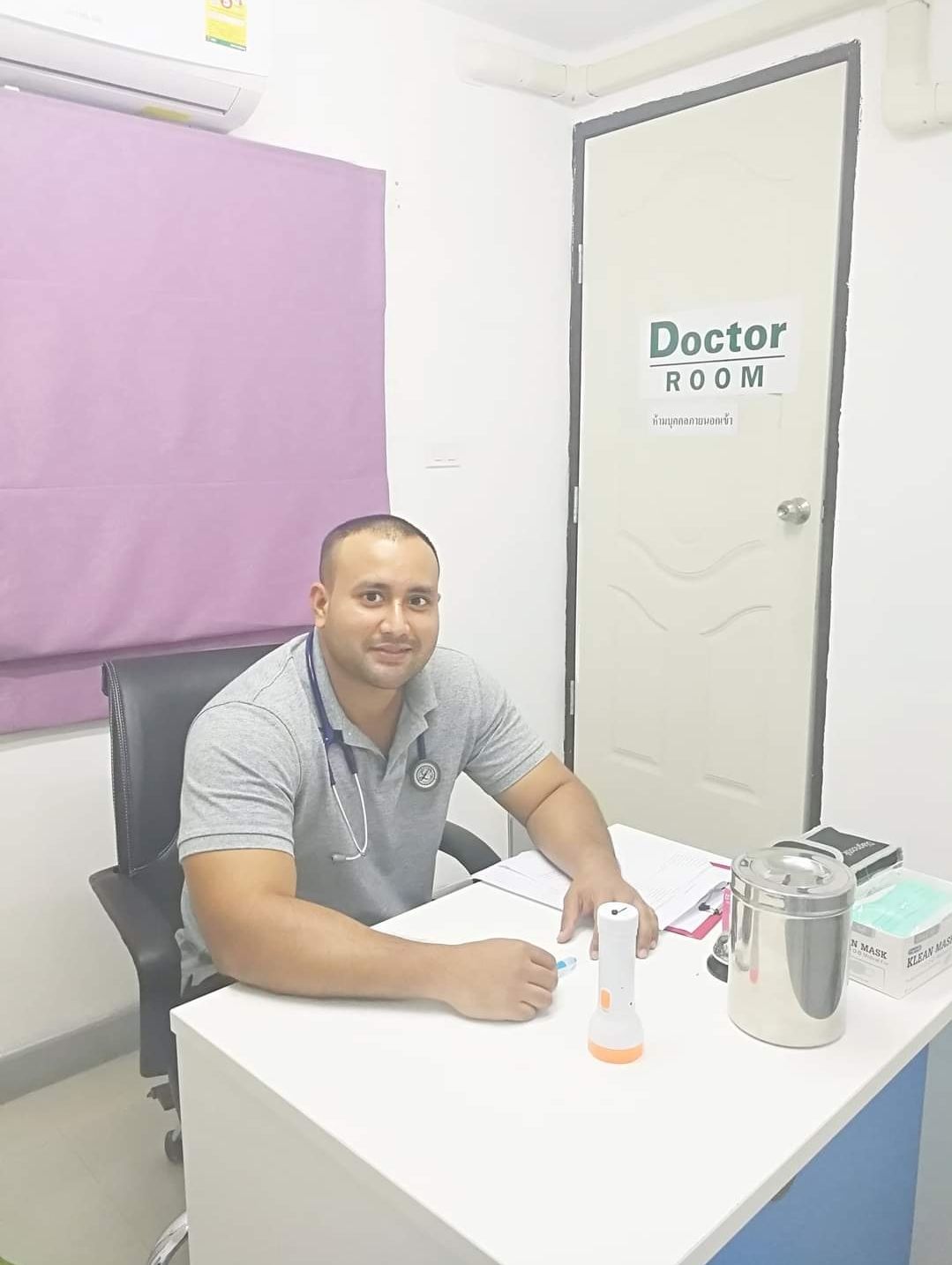
Dr. Ponlawat Pitsuwan is a physician at Doctor Bangkok, a private clinic in central Bangkok. He sees expats, residents, and medical tourists for general medicine, wellness consultations, and IV therapy. His focus is straightforward, evidence-based care delivered in plain language.