

Clinically reviewed by Dr. Ponlawat Pitsuwan, Physician, Doctor Bangkok. Last reviewed: July 2026
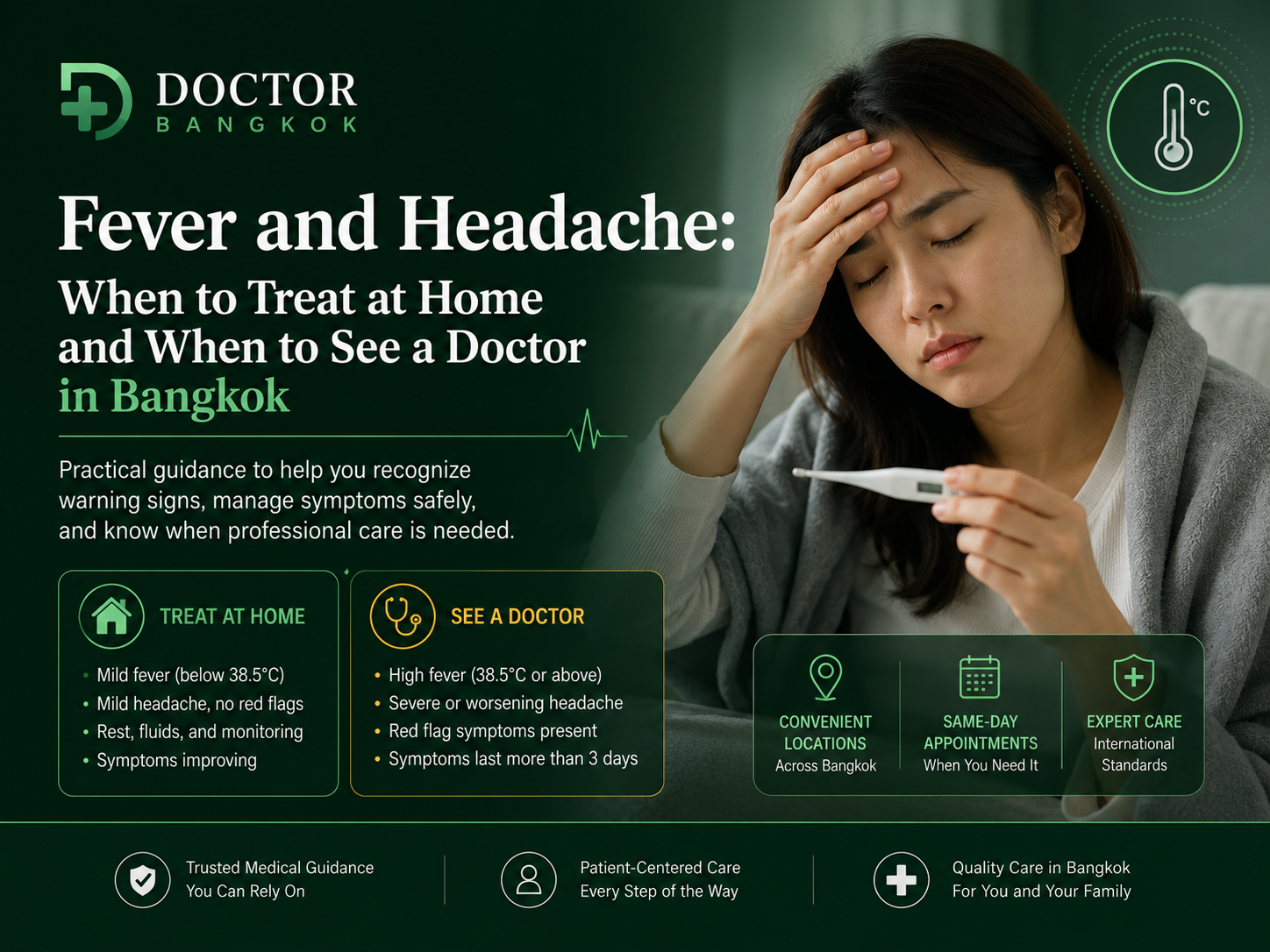
For most adults, a fever of 38°C (100.4°F) or above warrants monitoring. See a doctor if your temperature reaches 39.4°C (103°F) or has lasted more than three days. Go to the emergency room immediately if your fever hits 40°C (104°F) and comes with confusion, a stiff neck, difficulty breathing, or a rash that does not fade when pressed. In Bangkok, dengue fever is a common cause of high fever and needs testing early.
You are in Bangkok, your thermometer says something alarming, and you are trying to decide whether to call a taxi at midnight or wait until morning. I get this question constantly from expats, tourists, and long-term residents who are not sure how things work here. The answer is not always obvious, and getting it wrong in either direction has real consequences.
Most fevers in healthy adults do not need an emergency room. That said, Bangkok has fever causes your home country probably does not, and the heat here means things can worsen faster than you expect. This guide gives you a clear, practical answer to when you stay home, when you see a clinic, and when you go straight to the ER.

What Counts as a Fever and How Serious Is It?
A fever starts at 38°C (100.4°F). Below that is normal variation. Above that, your body is fighting something.
| Temperature (°C) | Temperature (°F) | What It Means |
|---|---|---|
| Below 38°C | Below 100.4°F | Not a fever |
| 38.0 to 38.9°C | 100.4 to 102°F | Low-grade fever. Monitor. Rest and fluids. |
| 39.0 to 39.4°C | 102 to 103°F | Moderate fever. See a doctor if it persists or worsens. |
| 39.5 to 40°C | 103 to 104°F | High fever. Contact a doctor today. |
| Above 40°C | Above 104°F | Medical emergency. Go to the ER or call for help now. |
The number matters, but it is not the whole picture. A 38.5°C fever with a stiff neck is more serious than a 40°C fever in an otherwise alert, well-hydrated adult. Always look at the symptoms alongside the temperature.
Red Flag Symptoms That Mean Go Now
These symptoms mean the ER. Not the clinic tomorrow. Not wait and see. Now.
A stiff neck with fever and a severe headache can be meningitis, an infection around the brain that gets worse by the hour. A rash that does not fade when you press a glass against it can signal a life-threatening blood infection. Confusion, slurred speech, or difficulty waking someone up alongside a fever means the brain may be affected.
Difficulty breathing or chest pain with a fever needs emergency assessment. Seizures triggered by fever require immediate care. If someone has a fever and cannot hold a conversation, call 1669 for the Thai emergency ambulance service, or take a taxi directly to the nearest hospital ER.

Bangkok-Specific Fever Risks You Need to Know
This is where Bangkok is genuinely different from what you are used to.
Dengue fever is common here, especially from May through October, though I see cases year-round. It hits hard and fast: sudden high fever, a severe headache, deep pain behind the eyes, and aching muscles and joints. A rash often appears after day three. If you have had a fever for more than two days in Bangkok, dengue should be on your radar. Bleeding gums, blood in your urine or stool, or bruising easily are warning signs of severe dengue and need immediate attention.
Typhoid is another risk for anyone eating street food or drinking unfiltered water. It builds more slowly than dengue, with a persistent fever that climbs over several days. Heat exhaustion is also worth knowing about: Bangkok’s climate can push your body temperature up from exertion or sun exposure without any infection at all. A clinic assessment sorts the two out quickly.
Bangkok’s heat and humidity also mean you lose fluids faster when you have a fever. Dehydration sets in more quickly than it would in a cooler climate. If you are also vomiting or have diarrhoea on top of a fever, that combination needs prompt attention here specifically.
High-Risk Groups Who Need to Act Sooner
If you fall into one of these groups, the thresholds above do not apply. Act earlier.
If you are on chemotherapy or have a condition that suppresses your immune system, any fever of 38°C or above is a potential emergency. Go to the ER the same day. Do not wait for the temperature to climb higher.
Older adults often run lower baseline temperatures, so a reading that looks mild may actually represent a significant fever for their body. Pregnant women with a fever above 38°C should be assessed promptly, as some infections pose risks to the pregnancy beyond the fever itself. Infants under three months with any fever need same-day emergency assessment, always. Infants between three and six months with a fever above 39°C should also be seen urgently.
What a Clinic Can Do That You Might Not Expect
Most people think their only options are tough it out at home or spend four hours in a Thai hospital ER. There is a better option for most fevers in Bangkok.
At Doctor Bangkok, we can run a dengue rapid antigen test and give you a result the same visit. If you are dehydrated, we can give you IV fluids on the spot, which often makes a real difference in how quickly you recover. If your fever is bacterial, we can prescribe the right antibiotic after assessing you. For dengue specifically, we can monitor your platelet count across visits to catch any drop before it becomes dangerous.
You can walk in or book a same-day appointment. For patients who genuinely cannot leave their hotel room, our doctors can come to you. A fever assessment at a private clinic is often the right first step for any fever that is not already showing the red-flag symptoms listed above.
The Three-Way Decision
Here is the simple version.
Manage at home if your fever is below 39°C, you are alert, you can drink fluids, and you have no red-flag symptoms. Take paracetamol every four to six hours and drink plenty of water. Ibuprofen can also help, but avoid it if dengue is a possibility, as it can increase bleeding risk.
See a clinic or call a doctor if your fever is above 39°C, has lasted more than two to three days, or keeps returning after appearing to settle. This is also the right call if your symptoms suggest dengue, typhoid, or another infection that needs testing. Booking a same-day fever consultation is straightforward at Doctor Bangkok.
Go to the ER if you have any red-flag symptoms, if your fever is above 40°C, if you are in a high-risk group with any significant fever, or if the situation is getting worse and you cannot reach a doctor fast enough. Bangkok’s main international hospital ERs are at Bumrungrad, Bangkok Hospital, and Samitivej Sukhumvit. The Thai emergency number is 1669.
Not sure whether your fever needs urgent care? Doctor Bangkok offers same-day fever assessments by English-speaking physicians, including dengue rapid testing and IV rehydration. We are located near BTS and open for walk-ins. Book online or come in directly at doctorbangkok.co.th/fever-treatment.
FAQ
What temperature is considered a fever in adults, and when is it an emergency?
A fever starts at 38°C (100.4°F). You should contact a doctor if your temperature reaches 39.4°C (103°F) or you have concerning symptoms alongside it. Above 40°C (104°F), especially with confusion, a stiff neck, or a rash that does not fade when pressed, is a medical emergency that needs the ER immediately.
Can dengue fever cause a high temperature, and how do I know if my Bangkok fever could be dengue?
Yes, dengue is one of the most common causes of sudden high fever in Bangkok. Watch for fever that comes on fast, a severe headache, pain behind the eyes, and deep muscle or joint ache. A dengue NS1 antigen test, done within the first five days of fever, can confirm or rule it out at Doctor Bangkok the same day you come in.
Is it better to go to a hospital ER or see a private clinic for a fever in Bangkok?
For most fevers without red-flag symptoms, a private clinic visit is faster, less stressful, and clinically appropriate. A clinic can test for dengue, provide IV fluids, and prescribe treatment without the wait you would face in a hospital ER. The ER is for fevers above 40°C, seizures, altered consciousness, difficulty breathing, or fever in very young infants.
How does Bangkok’s climate make a fever more dangerous?
The heat and humidity here mean you lose fluids much faster than in a cooler climate. Add a fever on top, and dehydration can become serious within hours, especially if vomiting or diarrhoea are also present. I often recommend IV rehydration sooner for fever patients in Bangkok than I would elsewhere.
My fever went away and then came back. Do I still need to see a doctor?
Yes, come in. A fever that returns after appearing to settle can mean the infection has not resolved. In dengue specifically, it may signal entry into a more serious phase. Any recurring fever, or one that has lasted more than three days, needs assessment even if the temperature does not look alarming.
I am on chemotherapy and have a fever of 38°C. Should I go to the ER?
Yes, go now. For anyone on chemotherapy or with a significantly weakened immune system, a fever of 38°C is potentially life-threatening and should be treated as an emergency. Do not wait to see if it climbs higher. Go directly to the nearest hospital ER and tell them your medical history immediately.
Dr. Ponlawat Pitsuwan
Physician, Doctor Bangkok
a private medical clinic in central Bangkok. He sees expats, residents, and medical tourists for fever assessment, dengue testing, travel-related illness, and general medical care. His focus is straightforward, evidence-based care delivered in plain language.
Dr. Ponlawat Pitsuwan is a physician at Doctor Bangkok, a private clinic in central Bangkok. He sees expats, residents, and medical tourists for general medicine, wellness consultations, and IV therapy. His focus is straightforward, evidence-based care delivered in plain language.