
Clinically reviewed by Dr. Ponlawat Pitsuwan, Physician, Doctor Bangkok. Last reviewed: July 2026
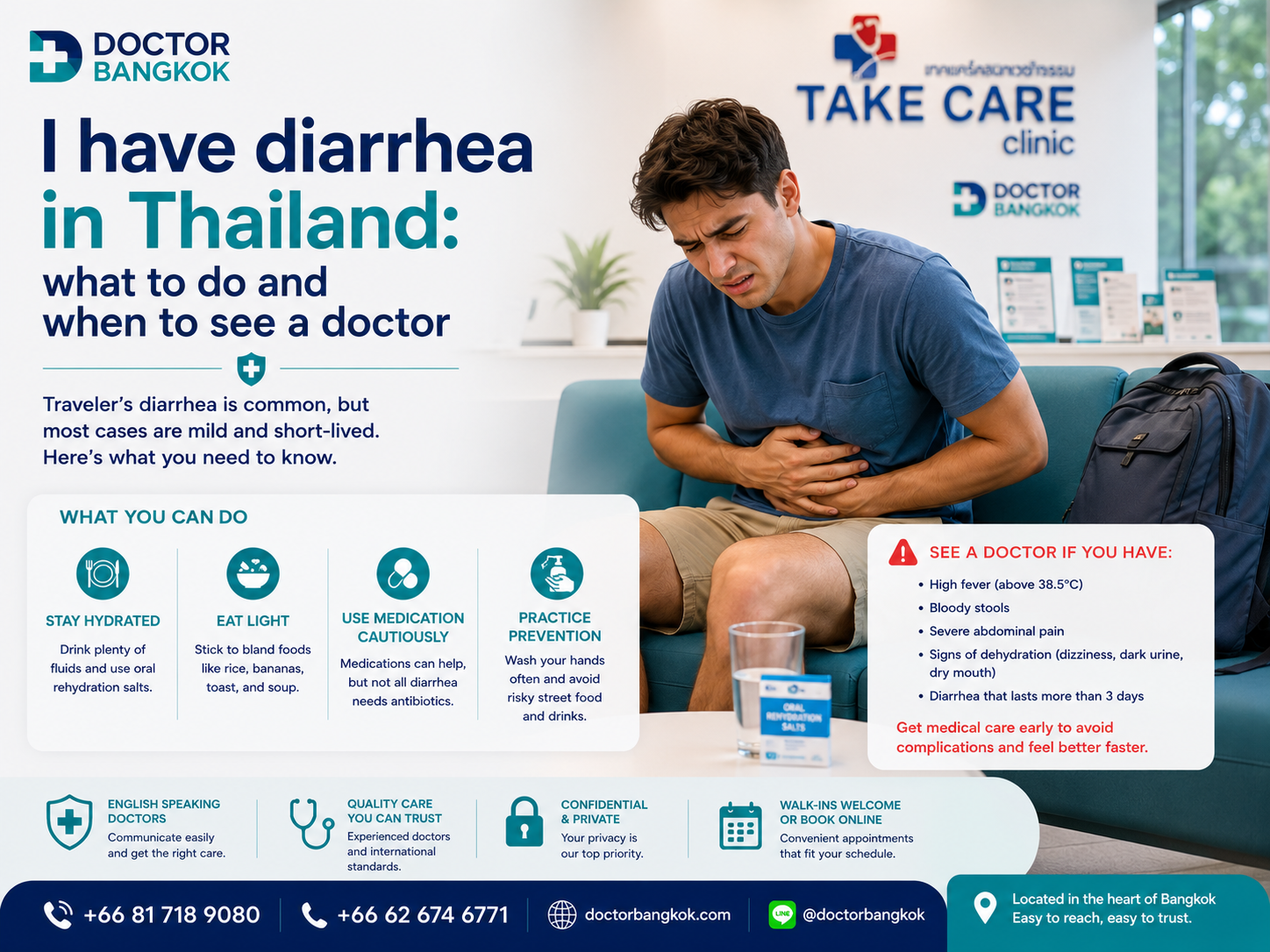
When diarrhea hits, the priority is fluids first, then bland food. Start with oral rehydration salts or coconut water, then move to plain rice, bananas, or toast. Avoid spicy food, dairy, caffeine, and anything fatty until your gut settles. If symptoms last more than 48 hours, or you see blood in your stool, see a doctor.
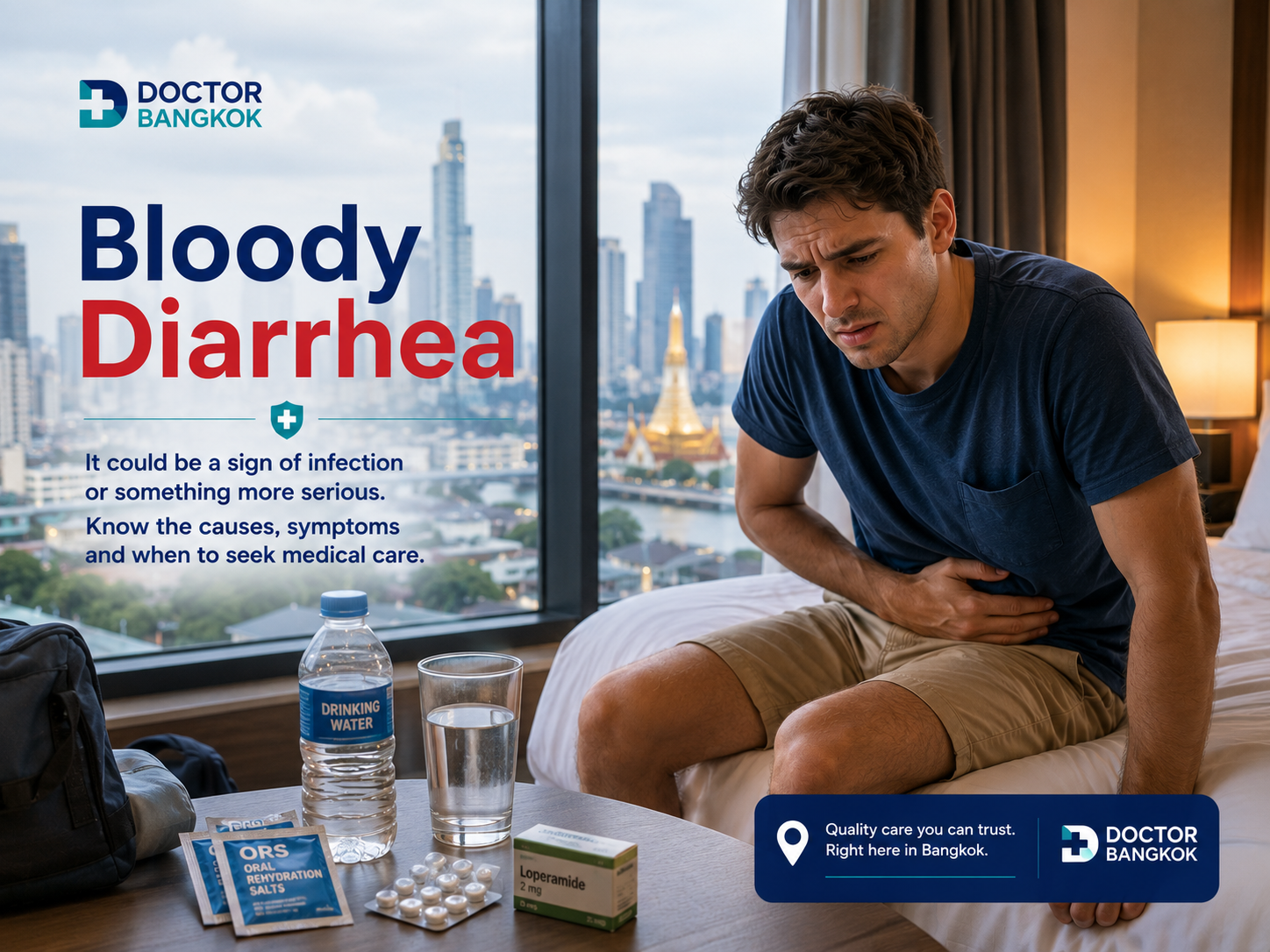
You are probably reading this from a hotel room in Bangkok, or maybe your apartment, feeling like your body has turned against you. Diarrhea here is not just uncomfortable. The heat, the unfamiliar food, and the bacteria your gut has never encountered can knock you flat faster than you expect. The good news is that most cases get better with the right food, the right fluids, and a bit of patience.
What you eat in the next 24 to 48 hours genuinely matters. The wrong food makes things worse. The right food gives your gut a chance to recover. This guide is built specifically for people in Bangkok, so the advice maps onto what you can actually find here.

Why Bangkok Belly Hits Differently
The diarrhea you pick up in Bangkok often comes from contaminated food or water, and your gut simply is not used to the local bacteria. The other factor is the heat. Bangkok regularly hits 35 degrees Celsius or higher. When you are losing fluid through diarrhea and sweating at the same time, you dehydrate faster than you would at home. Most patients who come in to Doctor Bangkok after a bad bout of Bangkok belly are more dehydrated than they realise.
If you have recently taken antibiotics for another reason, that can also disrupt your gut and cause diarrhea on its own. Recovery in that case often takes a bit longer, and probiotic-rich foods can help once your gut starts to settle.
Fluids and Electrolytes Come First
Before food, drink. This is the most important thing I tell every patient who comes in with diarrhea.
Your body is losing water and electrolytes with every loose stool. Plain water replaces fluid but not electrolytes, so oral rehydration salts (ORS) are better. You can buy ORS sachets, commonly branded as Oralyte, at every pharmacy in Bangkok and at most 7-Elevens. Mix one sachet with 200ml of bottled water and drink at least one cup after every loose bowel movement.
Coconut water is a solid natural alternative. It is cheap, widely available across Bangkok, and has reasonable potassium content. Avoid fizzy drinks, juice, and sports drinks with high sugar. They can pull more water into the gut and make diarrhea worse.
Aim for small sips constantly rather than large amounts at once. If you are vomiting as well and cannot keep anything down, see the red flags section below.

The Best Foods to Eat When You Have Diarrhea
The BRAT Approach, and Its Limits
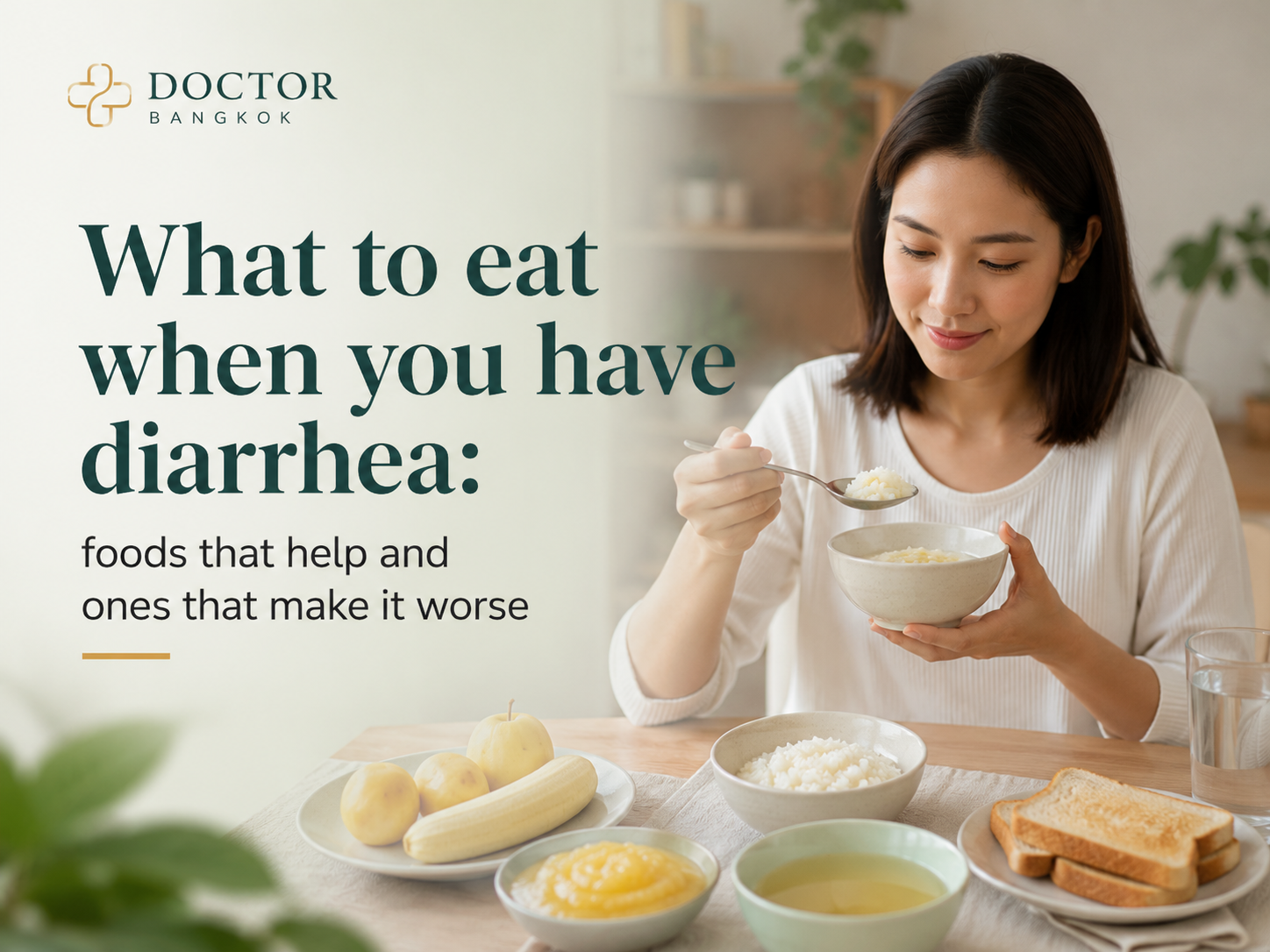
BRAT stands for bananas, rice, applesauce, and toast. It works because these foods are easy to digest, low in fibre, and help firm up stools. Bananas and applesauce contain pectin, a type of soluble fibre that helps bind loose stools. Plain white rice is one of the most gut-friendly foods you can eat.
BRAT is a useful starting point, but do not stay on it for more than a day or two. It is low in protein and nutrients, so your gut needs more than this to properly heal.
What to Eat in Bangkok Specifically
Here is where the Bangkok context matters. You are not going to find applesauce easily in a convenience store on Sukhumvit, but you will find khao tom.
Khao tom is plain Thai rice soup, usually served with minimal seasoning, and it is one of the best foods you can eat when you have diarrhea. It gives you fluid and starchy carbohydrates in one bowl. Ask for it without chili and without strong seasoning. Most hotels and nearby restaurants can make this.
Plain steamed jasmine rice is available everywhere. A soft boiled egg gives you protein without stressing your gut. Steamed or boiled chicken with no sauce is another good option once you can tolerate solids.
| Food | Why it helps | Where to find it in Bangkok |
|---|---|---|
| Khao tom (plain rice soup) | Easy to digest, fluid and starch in one | Most restaurants, hotel room service |
| Plain steamed jasmine rice | Binding, gentle on the gut | Everywhere |
| Bananas | Helps firm stools, replenishes potassium | 7-Eleven, any market |
| Soft boiled egg | Protein without fat or spice | Convenience stores, restaurants |
| Plain toast or white bread | Low fibre, starchy, easy to digest | Hotel breakfast, bakeries |
| Steamed or boiled chicken | Lean protein, easy to digest | Most restaurants on request |
| ORS in water | Replaces sodium and potassium | Every pharmacy, most 7-Elevens |
| Coconut water (no added sugar) | Natural electrolytes, widely available | 7-Eleven, Family Mart, restaurants |
Foods to Avoid When You Have Diarrhea in Bangkok
This is where Bangkok makes things harder. A huge amount of Thai food falls into the avoid category when your gut is inflamed.
Spicy food, including anything with fresh chili, dried chili, or chili paste, irritates an already irritated gut. Coconut milk curries are fatty and can speed up gut movement, meaning more trips to the bathroom. Green papaya salad (som tum) is raw, high in fibre, and often very spicy. All of these are off the table until you recover.
Dairy is another problem. Milk, cheese, and ice cream can be harder to digest when your gut is inflamed. Caffeine from coffee speeds up gut movement. Alcohol makes everything worse. Artificial sweeteners, particularly sorbitol found in some sugar-free products, can actively worsen diarrhea.
How to Get Back to Normal Eating
Most patients make the mistake of jumping back to regular food the moment they feel better. Then symptoms return and they are back to square one.
Start with clear fluids only: ORS, water, plain coconut water, weak tea without milk. Once you can tolerate that without symptoms worsening, move to bland solids: plain rice, toast, banana. Hold that for 24 to 48 hours after your last loose stool. Then slowly add soft protein: boiled egg, steamed chicken, plain fish. Add cooked vegetables next, and return to your normal diet last. Go gently with spicy food for at least a week.
When Food and Rest Are Not Enough
Most cases of diarrhea improve within 48 hours with good fluid management and a bland diet. Some do not, and those need medical attention.
See a doctor if your diarrhea has lasted more than 48 to 72 hours without improving. Go sooner if you have more than six loose stools in a day, blood or mucus in your stool, a fever above 38.5 degrees, or you cannot keep fluids down. Dizziness when you stand up, very dark urine, and a dry mouth are signs of significant dehydration.
Loperamide is available at Thai pharmacies without a prescription and can slow diarrhea in adults. It is not appropriate if you have blood in your stool or a high fever, and it does not treat the underlying cause. It buys time, nothing more.
When self-management is not working, IV rehydration replaces fluids and electrolytes directly into your bloodstream, faster than anything you can drink. Doctor Bangkok offers both clinic-based and hotel-room IV drip services for exactly this situation. You can read more about diarrhea treatment options in Bangkok on our website.
Still not feeling better after 48 hours? Struggling to keep fluids down, or running a fever? Doctor Bangkok is open 24 hours a day for walk-in consultations and offers IV rehydration at the clinic or in your hotel room. Our English-speaking doctors can assess whether you need antibiotics, stool testing, or IV fluids, and get you back on your feet faster. Visit our diarrhea treatment page or walk into our clinic near BTS. Same-day appointments available.
Frequently Asked Questions
Can I eat Thai food when I have diarrhea?
Most Thai dishes are spicy, fatty, or high in raw vegetables, all of which make diarrhea worse. The one Thai food that actually helps is khao tom, plain rice soup served without chili. Ask for it simply seasoned and it works as well as anything on the BRAT list. Most street food, curries, and som tum should wait until you are fully recovered.
Where can I buy oral rehydration salts in Bangkok?
Every pharmacy in Bangkok carries ORS sachets, including Boots and hospital pharmacies, and most 7-Eleven and Family Mart stores stock them too. Mix one sachet with 200ml of bottled water and drink a cup after every loose stool. Coconut water from any convenience store is a reasonable backup if you cannot find ORS immediately.
How long should I stick to a bland diet after diarrhea stops?
Continue bland eating for at least 24 to 48 hours after your last loose stool, then gradually reintroduce soft proteins and cooked vegetables before returning to normal food. The most common reason diarrhea comes back is returning to spicy or fatty food too soon. In Bangkok, that temptation is everywhere, so take it slow.
Should I stop eating completely when I have diarrhea?
No. Fasting does not help and actually slows recovery. Small, frequent bland meals throughout the day are better than skipping food entirely. Eating the right things gives your gut what it needs to repair. Complete fasting also makes electrolyte imbalance worse, especially in Bangkok’s heat.
What can I drink besides ORS when I have diarrhea?
Plain water, weak tea without milk, and plain coconut water are all good options. Avoid fizzy drinks, juice, alcohol, and caffeinated coffee. Sports drinks with high sugar content can draw more fluid into the gut and worsen symptoms, so read the label before reaching for an electrolyte drink at the convenience store.
When should I see a doctor for diarrhea in Bangkok rather than managing at home?
See a doctor if symptoms last more than 48 to 72 hours, if you have blood or mucus in your stool, a fever above 38.5 degrees, more than six loose stools in a day, or signs of dehydration like dizziness or very dark urine. Doctor Bangkok offers 24-hour consultations with IV rehydration available for cases that need more than rest and fluids. Learn more on our diarrhea treatment page.
Dr. Ponlawat Pitsuwan
Physician, Doctor Bangkok
a private medical clinic in central Bangkok. He regularly sees expats, residents, and medical tourists for traveler’s diarrhea, food poisoning, fever assessment, and dehydration management. His focus is straightforward, evidence-based care delivered in plain language.
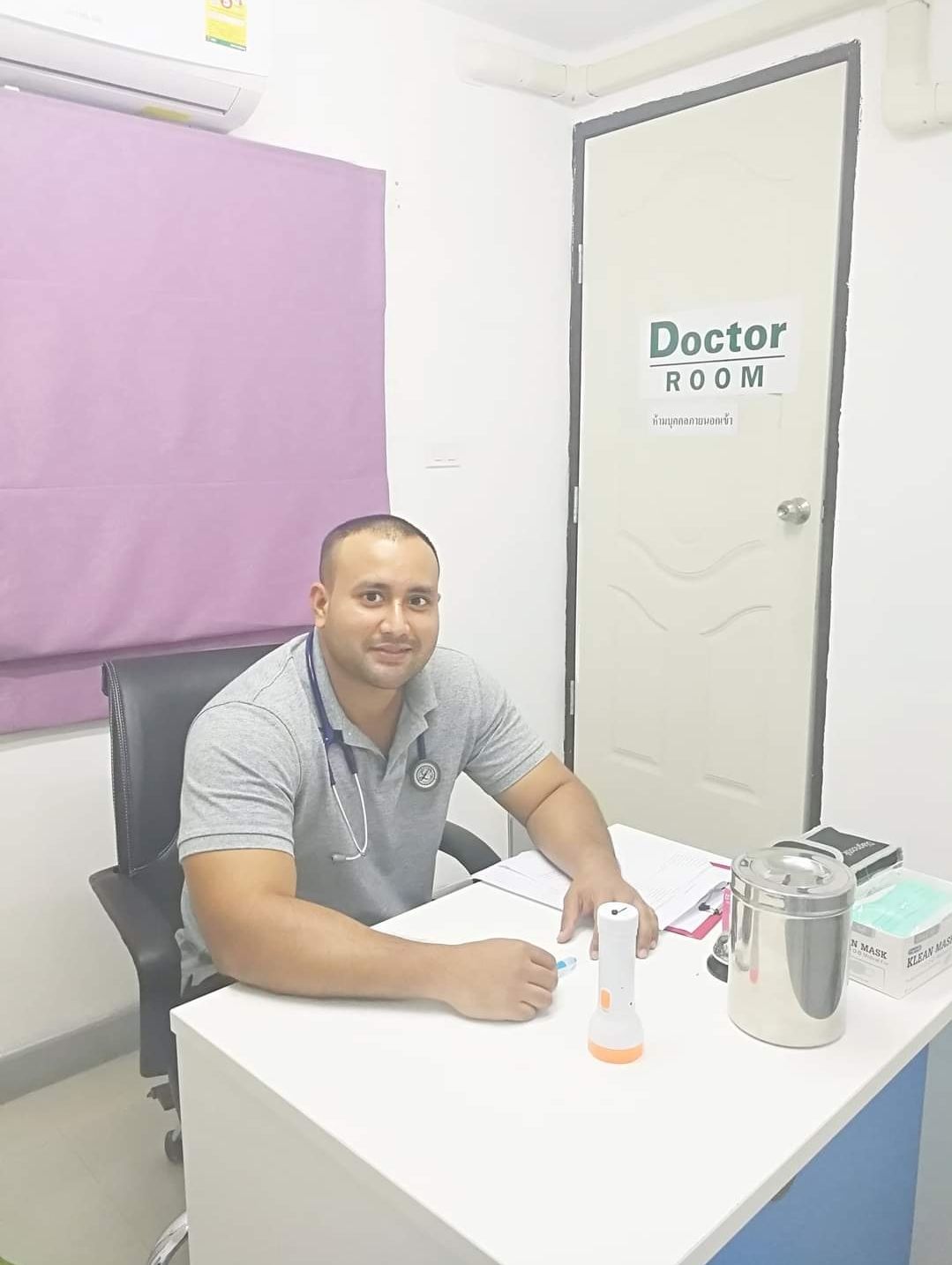
Dr. Ponlawat Pitsuwan is a physician at Doctor Bangkok, a private clinic in central Bangkok. He sees expats, residents, and medical tourists for general medicine, wellness consultations, and IV therapy. His focus is straightforward, evidence-based care delivered in plain language.