
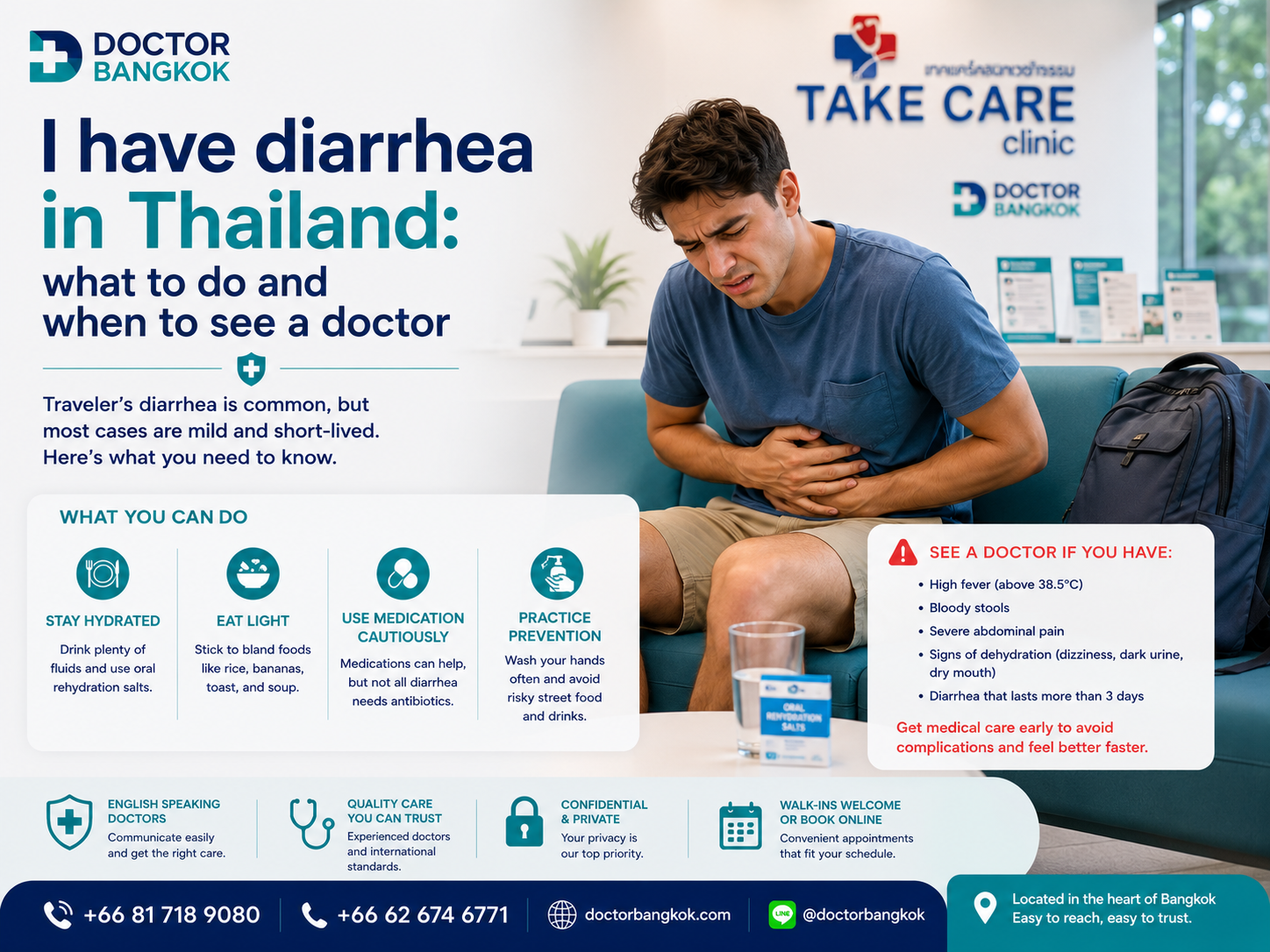
Most diarrhea in Thailand is mild traveller’s diarrhea caused by unfamiliar bacteria in food or water, and it usually improves within three to five days with oral rehydration salts and rest. Seek medical care promptly if you notice blood in the stool, a fever above 38.5 degrees Celsius, severe abdominal pain, or signs of dehydration such as dizziness, dark urine, or a dry mouth. Bangkok’s heat and humidity speed up fluid loss, so rehydration matters sooner here than it would at home.
Diarrhea is one of the most common reasons expats and travellers walk into this clinic in central Bangkok. The pattern is familiar: someone arrives feeling fine, eats from a street stall or drinks something with ice in it, and within a day or two they are searching for a doctor from a hotel room. For most people this resolves on its own with proper fluids. For some, it is the first sign of something that needs prompt assessment, and the line between the two is not always obvious to someone going through it for the first time.
Doctor Bangkok offers same-day consultations for acute illness including diarrhea and gastroenteritis, with English-speaking physicians who treat travellers and residents regularly. Walk-in and doctor hotel visit options are both available 24 hours a day.

I Have Diarrhea Right Now: What Should I Do First?
Start oral rehydration straight away. This means more than sipping water. In Thailand’s heat you are losing salt and minerals through sweat at the same time as through diarrhea, so plain water alone does not replace what your body is losing. Oral rehydration salts are sold at most 7-Eleven stores and pharmacies throughout Bangkok. If you cannot find a sachet, mix one teaspoon of salt and six teaspoons of sugar into one litre of clean water and sip it steadily rather than gulping large amounts at once, which can bring on more vomiting if your stomach is already unsettled.
Avoid dairy, alcohol, caffeine, and fatty food for the first day or two, as these can irritate a digestive tract that is already inflamed. Plain rice, bananas, and dry toast are usually well tolerated if you feel like eating, but in the first 24 hours hydration matters more than food.
See a doctor immediately if you have blood in the stool, fever above 38.5 degrees Celsius, severe abdominal pain, dizziness when standing, or have not been able to keep fluids down for more than 12 hours.
Traveller’s Diarrhea in Thailand: How Long Should It Last Before You Act?
Typical traveller’s diarrhea tends to peak within the first two days and starts settling by day three. Expect full resolution within three to five days. This timeline matters because it helps separate ordinary gastroenteritis, which clears on its own, from a bacterial infection that may need antibiotics chosen after proper testing.
Bacterial causes such as Salmonella and certain strains of E. coli are common in Bangkok and tend to follow a slightly different pattern from viral illness. They often start with cramping and loose stools that become more frequent and smaller in volume, sometimes with mucus. Viral gastroenteritis usually causes watery stools with vomiting that peaks quickly and then improves steadily over a day or two. If symptoms run past five days without improvement, or improve and then return, that pattern points toward a bacterial cause or a secondary problem worth having assessed.
One pattern seen often at this clinic is patients who bought antibiotics over the counter from a Thai pharmacy without a prescription, took them for a day or two for what was actually a viral illness, and ended up with a second problem on top of the first. Antibiotic-associated diarrhea from self-medication typically appears three to seven days after starting the medication and needs a different approach from the original illness. If you are unsure whether you are dealing with a virus or a bacterial infection, that uncertainty is itself a reason to get assessed rather than guess with antibiotics.
Traveller’s Diarrhea Treatment: What You Can Do Right Now
Oral rehydration solution is the most important treatment for almost everyone with diarrhea in Thailand. As a rough guide, replace each loose stool with an additional cup of rehydration solution on top of your normal fluid intake, and more if you are sweating heavily. Brands such as Electral are widely available at pharmacy chains including Boots and Watsons across Bangkok.
Loperamide, sold as Imodium, can reduce how often you need the bathroom and ease cramping, but it should be avoided if you have a fever above 38 degrees Celsius or any blood in your stool. In those situations, slowing down the gut can trap bacterial toxins and make things worse. Think of loperamide as something for comfort in milder cases without fever or blood, not as treatment for an underlying infection.
Probiotics may help restore normal gut bacteria, particularly if symptoms began after taking antibiotics, though the evidence for probiotics in acute traveller’s diarrhea is moderate at best and they work over days rather than hours. Choose a refrigerated product from a pharmacy and treat probiotics as a supplement to rehydration, not a replacement for it.

I Have Diarrhea and Vomiting in Thailand: Is It More Serious?
Vomiting combined with diarrhea usually points to a viral cause, which often feels more dramatic at first but tends to settle within a day or two once it runs its course. If vomiting starts before the diarrhea does, this often suggests food poisoning from a toxin already present in the food rather than a live infection, commonly from dairy, meat, or mayonnaise that has sat out too long in the heat. This type of reaction usually clears within twelve to twenty-four hours once the toxin has passed through your system.
The practical problem with combined vomiting and diarrhea is that it makes oral rehydration harder. Fluids may not stay down long enough to be absorbed, and meanwhile Bangkok’s heat means you are losing fluid through sweat on top of everything else. Noticeable dehydration can build within six to twelve hours when fluid is being lost through diarrhea and sweat at the same time. Warning signs include feeling dizzy when you stand up, passing little or dark urine, a dry mouth despite drinking, and skin that stays tented for a moment after being pinched.
If you cannot keep fluids down, IV rehydration is one of the services provided most often at Doctor Bangkok for exactly this situation. It allows the gut a chance to settle while fluid balance is restored through a drip rather than through a stomach that is still rejecting everything.
Vomiting and Diarrhea in Thailand: When to Stop Waiting
Stop waiting and seek medical care if you cannot keep fluids down for more than twelve hours. This threshold is shorter here than it might be in a cooler climate because environmental fluid loss through sweat continues even while you have stopped being able to drink anything. Twelve hours of no fluid intake in Bangkok’s heat is a meaningful dehydration risk.
Also seek care if vomiting is forceful and persistent rather than occasional, if there is blood in the vomit, if the abdominal pain is severe or localised to one area rather than generalised cramps, or if you have a high fever alongside the vomiting. These combinations, particularly fever with severe localised pain, raise the possibility of something beyond simple gastroenteritis that needs assessment on the same day.
Doctor Bangkok provides same-day assessment and IV rehydration for travellers with diarrhea and vomiting, at the clinic on Sukhumvit Soi 13 or with a doctor sent to your hotel. See the diarrhea treatment page for full details.
Stomach Cramps and Diarrhea in Thailand: What Is Causing It?
Abdominal cramps alongside diarrhea are the normal experience of the gut trying to expel an irritant or infection as quickly as possible. In most cases of traveller’s diarrhea the cramping is generalised, comes in waves before a bowel movement, and eases briefly afterward. This pattern is uncomfortable but not a sign of something more serious.
The cause in most Bangkok cases is one of a handful of bacteria: enterotoxigenic E. coli is the most common, producing watery diarrhea and cramping through toxins that stimulate fluid secretion in the gut. Campylobacter causes similar symptoms but often with more pronounced cramping and occasionally blood or mucus in the stool. Salmonella tends to produce more fever alongside the cramping and diarrhea. Viral causes, particularly norovirus, produce cramping alongside the more dramatic vomiting-and-diarrhea picture that peaks quickly and clears within a day or two.
A stool test at Doctor Bangkok identifies the specific pathogen and determines whether antibiotics are needed and, if so, which ones. Guessing at the cause and treating with a broad-spectrum antibiotic without testing is how resistant organisms develop, and it is one of the reasons certain bacterial infections in Thailand are becoming harder to treat.
Abdominal Pain with Diarrhea: When Is It Serious Enough to See a Doctor?
Cramping that comes and goes with bowel movements is the normal pattern of gastroenteritis. Pain that is constant, severe, or localised to a specific part of the abdomen rather than generalised is a different matter and needs clinical assessment.
The combination that deserves same-day attention is fever alongside severe pain localised to the lower right side of the abdomen. This is the area where the appendix sits, and appendicitis can present in its early stages with symptoms that closely mimic gastroenteritis, including loose stools, nausea, and cramping that gradually sharpens and moves to the lower right. Appendicitis does not produce the watery diarrhea typical of traveller’s gastroenteritis, but by the time someone is several days into Bangkok belly with ongoing pain, the distinction is not always obvious without a clinical assessment.
Blood mixed through the stool alongside cramping suggests mucosal irritation or infection deeper in the bowel. A small streak that looks like it could be from haemorrhoids is worth mentioning to a doctor but is lower urgency than blood consistently mixed through stool, which points toward a bacterial cause such as Shigella or Campylobacter that is more likely to need targeted treatment.
Seek immediate care for: constant severe pain in one area of the abdomen, lower right abdominal pain with fever, blood consistently mixed through stool, pain that is getting worse rather than staying the same over several hours.
If you are unsure whether your abdominal pain and diarrhea need a doctor today, Doctor Bangkok offers same-day walk-in assessment at Sukhumvit Soi 13. View the diarrhea treatment service page or walk in directly.
Frequently Asked Questions
How quickly can I get dehydrated with diarrhea in Bangkok’s heat?
Noticeable dehydration can build within six to twelve hours when fluid is being lost through diarrhea and sweat at the same time, which is faster than most people experience at home. If you are passing loose stools every few hours while spending time in Bangkok’s heat and humidity, daily fluid losses can run into several litres. Starting oral rehydration salts from the first loose stool rather than waiting to see how things develop makes a real practical difference.
Is it safe to take Imodium for diarrhea in Thailand?
Loperamide is generally fine for watery diarrhea without fever or blood, and many travellers use it for comfort during a journey or an important meeting. It should be avoided if you have a fever above 38 degrees Celsius or any blood in the stool, because slowing the gut down in those situations can trap bacterial toxins and prolong the illness. If you are unsure which category you fall into, that uncertainty is a reasonable reason to have it checked rather than guess.
Should I go to a hospital or a clinic for diarrhea in Bangkok?
For most cases, a private clinic such as Doctor Bangkok is a practical first step, with shorter waits and English-speaking staff who are used to treating travellers. Hospital emergency departments make sense for severe dehydration needing immediate IV fluids, suspected appendicitis, or signs of a serious systemic infection. Clinics can manage rehydration, stool testing, and antibiotics when genuinely indicated, without the wait or cost of a hospital emergency department.
Can I avoid getting traveller’s diarrhea altogether in Thailand?
There is no way to guarantee you will avoid it entirely, but the risk drops noticeably if you stick to bottled or properly boiled water, choose food that is freshly cooked and served hot, avoid raw vegetables or fruit you cannot peel yourself, and wash your hands regularly. Even careful travellers sometimes get symptoms anyway, because the bacteria common in local food and water are different from what your gut is used to, and that is a normal part of adjusting rather than a sign you did something wrong.
How long should I wait before seeing a doctor for diarrhea in Thailand?
Seek care promptly if you notice blood in the stool, a fever above 38.5 degrees Celsius, severe abdominal pain, or signs of dehydration. For ordinary watery diarrhea without those features, three to five days of home rehydration is a reasonable trial. If symptoms are still going past five days, or improve and then come back, it is worth getting assessed rather than continuing to wait. At that point a bacterial cause or another contributing problem becomes more likely.
What is the difference between food poisoning and traveller’s diarrhea?
Food poisoning from a bacterial toxin tends to come on fast, often within one to six hours of eating, with vomiting and diarrhea that usually settle within a day. Traveller’s diarrhea from an infection develops more gradually, typically over one to three days, and can last anywhere from three to seven days. Both respond to the same first step of steady rehydration, but an infection that drags on or comes with fever and blood is more likely to need antibiotics chosen after a stool test rather than guessed at.
Are oral rehydration salts and other diarrhea remedies easy to find in Bangkok?
Yes. Oral rehydration salt sachets are sold at convenience stores and pharmacies throughout the city, and loperamide is available at pharmacy chains such as Boots and Watsons. The harder part is usually not finding a remedy but working out whether your symptoms are in the category that simple remedies can handle, or whether they need a clinical assessment. If you would rather have that checked than guess, same-day appointments are available at Doctor Bangkok’s clinic in central Bangkok, accessible by BTS from Nana and Asok stations.
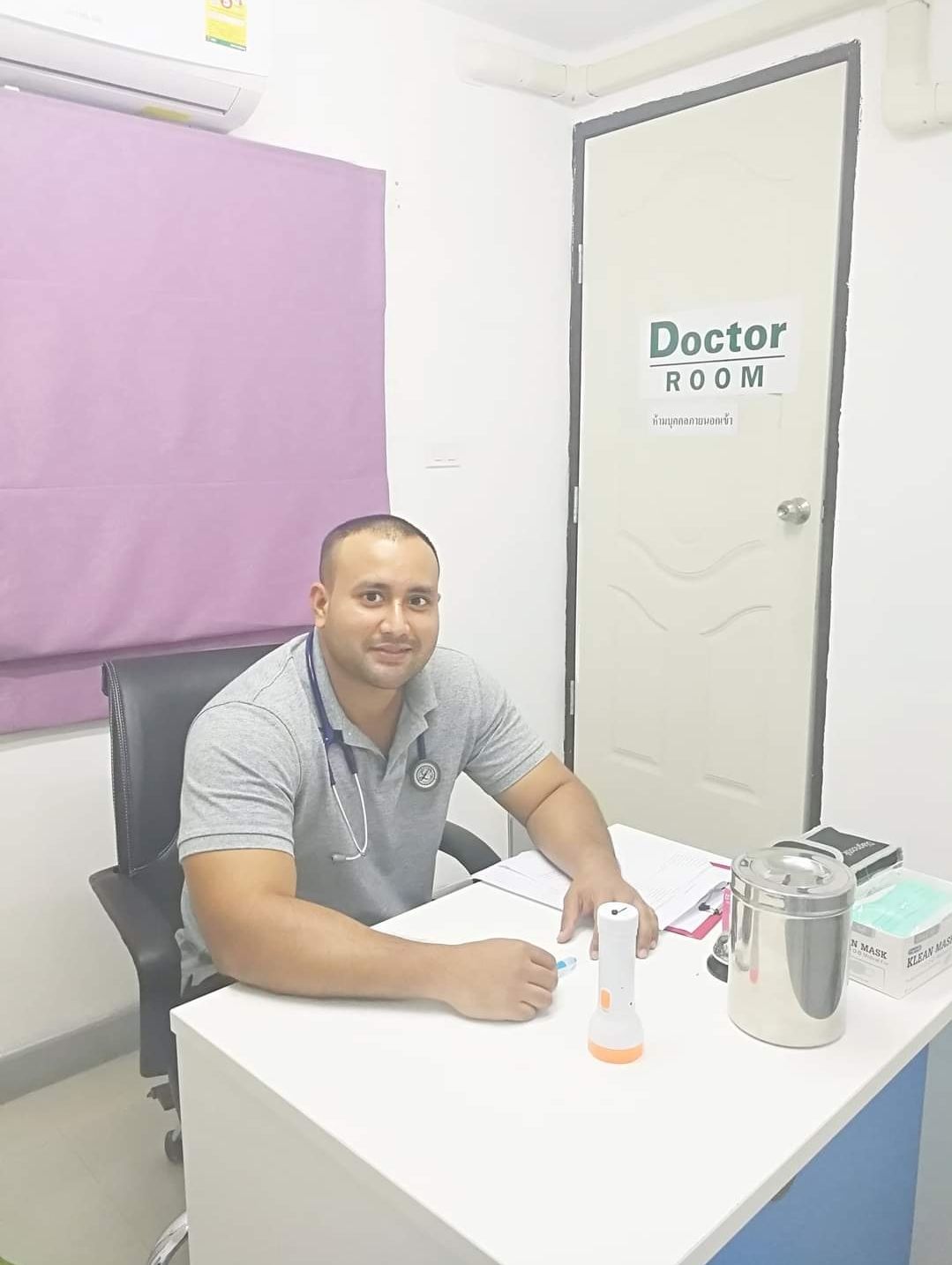
Dr. Ponlawat Pitsuwan is a physician at Doctor Bangkok, a private clinic in central Bangkok. He sees expats, residents, and medical tourists for general medicine, wellness consultations, and IV therapy. His focus is straightforward, evidence-based care delivered in plain language.