

Clinically reviewed by Dr. Ponlawat Pitsuwan, Physician, Doctor Bangkok. Last reviewed: July 2026
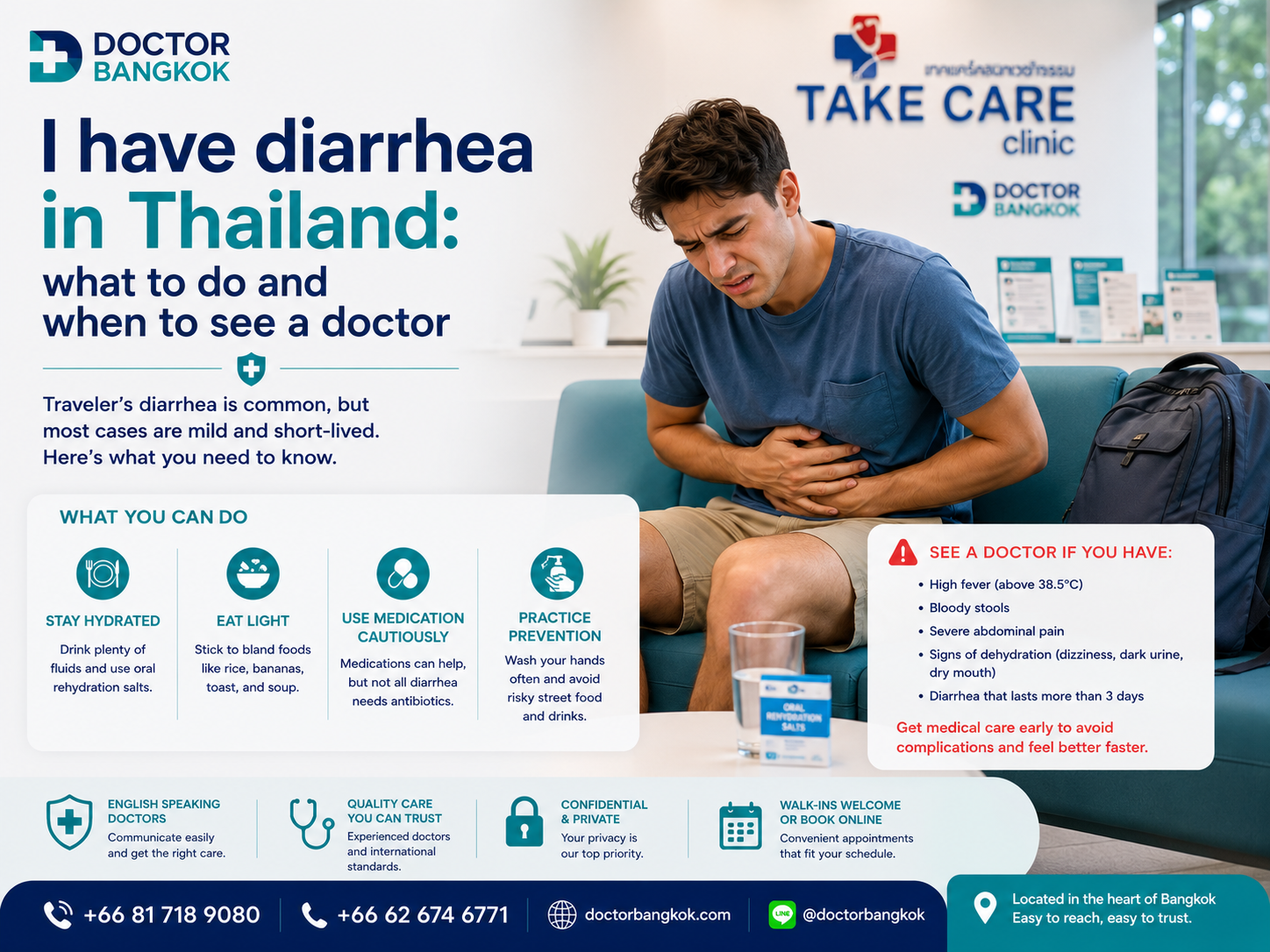
Most diarrhea in Bangkok does not need antibiotics. Mild cases, even from contaminated food or water, usually clear up in one to three days with rest and fluids. Antibiotics are needed when you have a high fever, blood in your stool, or symptoms that are not improving after 48 to 72 hours. If any of those apply, see a doctor before reaching for antibiotics at a pharmacy.
If you are sitting in your Bangkok apartment or hotel room, running to the bathroom every hour, wondering whether you need antibiotics, you are not alone. Bangkok belly is one of the most common things I see in expats and visitors. The question I get almost every day is the same: do I actually need antibiotics, or should I just wait it out?
The honest answer is: it depends on your symptoms, not just how bad you feel. Most diarrhea here is caused by viruses or mild bacterial infections that antibiotics cannot help with. Taking the wrong antibiotic, or taking one when you do not need it, can make things worse. This guide explains when antibiotics are genuinely needed, which ones work in Thailand, and what to do right now.

When Antibiotics Are Not Needed
Most diarrhea, even in Bangkok, gets better on its own. Watery diarrhea with no fever, no blood, and no severe cramping is usually caused by a virus or a mild food-borne bug. Your body will clear it without any antibiotics.
The goal in these cases is not to kill bacteria. The goal is to stop you getting dehydrated. Antibiotics will not shorten your illness, and they can cause nausea, rash, or gut disruption. I tell every patient with mild symptoms the same thing: start with fluids, not antibiotics.
What to Do First Before Any Antibiotic
Dehydration is the real danger with diarrhea, not the infection itself, in most cases. Replace what you are losing before deciding anything else. An oral rehydration solution, sold as ORS sachets at any Thai pharmacy, gives you the right balance of salts and sugar to absorb water properly. Sports drinks and plain water alone are not as effective.
Loperamide, the anti-diarrhoeal tablet sold as Imodium here, can slow things down and make you more comfortable. It is fine for mild watery diarrhea. Do not use it if you have a fever or blood in your stool. In those cases, slowing the gut down can trap bacteria and make the infection worse.

Signs Your Diarrhea Needs Antibiotics
There are clear signals that something more serious is going on. A fever above 38.5 degrees Celsius, blood or mucus in your stool, severe cramping, or more than eight loose stools in 24 hours all point to what doctors call invasive bacterial diarrhea. This is also called dysentery when blood is involved. These cases need a doctor, a stool test, and almost certainly antibiotics.
Diarrhea that is not improving after 48 to 72 hours is another signal. Signs of dehydration, including dizziness, no urination for eight or more hours, or extreme thirst with a dry mouth, also need prompt assessment. At Doctor Bangkok, we see these presentations regularly and can assess you the same day.
Why Bangkok Is Different: Antibiotic Resistance in Thailand
Here is something most clinic websites do not tell you. The antibiotic that works in Europe or North America for traveler’s diarrhea may not be the right choice in Bangkok.
Ciprofloxacin has been used for decades as the standard traveler’s diarrhea treatment. The problem is that Campylobacter, one of the most common causes of bacterial diarrhea in Thailand, is frequently resistant to it. Using ciprofloxacin for Campylobacter in Thailand often fails and delays recovery.
Azithromycin is generally the preferred first-line antibiotic for travelers to Thailand with bacterial diarrhea. It works against the pathogens most commonly found here, including quinolone-resistant Campylobacter. The right antibiotic choice for Bangkok is not the same as it is elsewhere.
Which Antibiotic Is Used for Diarrhea in Bangkok?
The main options I use in practice are azithromycin and, in some situations, ciprofloxacin. As above, azithromycin is generally the better choice in Thailand, especially when Campylobacter is possible.
Rifaximin is another option used for traveler’s diarrhea in some countries. It works only in the gut and is not absorbed into the bloodstream. It is reasonable for mild watery diarrhea caused by E. coli, but it does not work for infections with fever or bloody stool, and it is less widely available here than azithromycin.
No antibiotic should be chosen without considering your symptoms, your medical history, and ideally your stool test results. This is not something to guess at a pharmacy counter.
| Antibiotic | Best Used For | Avoid If |
|---|---|---|
| Azithromycin | Bacterial diarrhea in Thailand, Campylobacter, pregnant women, children | Allergy to macrolides |
| Ciprofloxacin | Some E. coli infections, lower resistance contexts | Campylobacter suspected in Thailand, pregnancy, children |
| Rifaximin | Mild watery traveler’s diarrhea (E. coli) | Fever present, bloody stool, invasive infection |
| Metronidazole | Giardia, amoebic dysentery (parasites) | Bacterial diarrhea (it will not help) |
Stool Testing in Bangkok: When It Changes Everything
If you go to a Bangkok pharmacy, describe your symptoms, and walk out with antibiotics, you have no idea whether the cause is bacterial, viral, or parasitic. All three cause diarrhea. Only one responds to antibiotics.
A stool test tells us exactly what is causing your illness and which antibiotic it responds to. That guides targeted treatment rather than broad-spectrum guessing. At Doctor Bangkok, we offer same-visit stool testing so we can start you on the right treatment quickly. You can find out what to expect on our diarrhea treatment page.
Parasitic infections like Giardia and amoebic dysentery are common causes of persistent diarrhea in Bangkok. They need completely different treatment, typically metronidazole, not antibiotics for bacteria. A stool test is what separates these diagnoses.
Risks of Taking Antibiotics Unnecessarily
Bangkok pharmacies will often sell antibiotics with minimal questioning. I understand why people do it: you feel terrible, there is a pharmacy on every corner, and you want to feel better fast. But unnecessary antibiotics cause real problems.
Antibiotics disrupt your gut bacteria, sometimes for weeks after a single course. This can cause its own diarrhea, bloating, and discomfort. In some cases, antibiotic use leads to Clostridioides difficile, a bacterial infection that causes severe diarrhea and is much harder to treat. It is uncommon but not rare, and it is almost always triggered by antibiotic exposure.
Beyond your own health, unnecessary antibiotic use feeds resistance. Bangkok already has a documented resistance problem with Campylobacter. Every unnecessary course makes that worse for everyone.
Special Cases: Children, Pregnant Women, and Immunocompromised Patients
Antibiotic choice changes significantly for certain groups. For children and pregnant women, azithromycin is the first-line choice. Ciprofloxacin is not recommended in either group.
If you are immunocompromised, such as HIV with a low CD4 count, on long-term steroids, or post-transplant, bacterial diarrhea can escalate quickly. Self-treating at a pharmacy is not appropriate. Come in early.
People who take regular acid-suppressing tablets for reflux are also at higher risk of more severe infection. Stomach acid normally kills many pathogens before they reach the gut. If this is you and you develop significant diarrhea in Bangkok, come in rather than waiting.
When to See a Doctor in Bangkok
Come in if you have any of these: fever above 38.5 degrees Celsius, blood or mucus in your stool, diarrhea lasting more than 72 hours, signs of dehydration, or more than eight stools in a day. Also come in if you are in one of the vulnerable groups above, or if you are not improving despite doing everything right.
Doctor Bangkok is BTS accessible in central Bangkok, with same-day appointments and on-site stool testing. Our diarrhea treatment service covers everything from initial assessment to prescription. Do not spend another three days guessing at a pharmacy.
Diarrhea in Bangkok and not sure if you need antibiotics? Doctor Bangkok offers same-day appointments, on-site stool testing, and antibiotic prescribing tailored to Thailand’s local resistance profile. English-speaking physicians, BTS accessible, no referral needed. Book at doctorbangkok.co.th or walk in.
FAQ
Should I take antibiotics for diarrhea in Bangkok or wait it out?
Most cases resolve within one to three days with fluids and rest. Antibiotics are needed when you have a fever, blood in your stool, or symptoms not improving after 48 to 72 hours. If none of those apply, hydrate first and see how you feel before reaching for antibiotics.
Which antibiotic is better for Bangkok belly, ciprofloxacin or azithromycin?
Azithromycin is generally the better choice for traveler’s diarrhea in Thailand. Ciprofloxacin is less reliable here because quinolone-resistant Campylobacter is a well-documented problem across Southeast Asia. A doctor at Doctor Bangkok can confirm the right choice based on your symptoms and stool results.
Can I buy antibiotics for diarrhea at a Bangkok pharmacy without a prescription?
Many pharmacies will sell them, but without knowing whether the cause is bacterial, viral, or parasitic, you may be taking something that does nothing, or that makes things worse. Viral diarrhea does not respond to antibiotics at all, and parasitic infections need a completely different drug.
What are the warning signs that diarrhea needs urgent attention?
Fever above 38.5 degrees Celsius, blood or mucus in stool, dizziness or very little urination, diarrhea lasting more than 72 hours, or more than eight loose stools in a day all warrant clinical assessment. These symptoms suggest a more serious infection rather than a mild self-limiting illness.
Do I need a stool test before taking antibiotics for diarrhea?
For mild cases, a doctor may start treatment based on symptoms alone. But a stool test confirms the exact cause and which antibiotic it responds to, which prevents mismatched treatment and reduces side effects. Doctor Bangkok offers same-visit stool testing so results guide your care from the start.
Can diarrhea in Bangkok be caused by parasites rather than bacteria?
Yes, and this matters because parasites like Giardia and amoeba need different treatment entirely, usually metronidazole, not the antibiotics used for bacterial diarrhea. Persistent diarrhea lasting more than a week, or diarrhea with significant bloating and gas, is sometimes parasitic. A stool test is the only way to confirm this.
Is it safe to use loperamide (Imodium) for diarrhea in Bangkok?
Loperamide is safe for mild watery diarrhea with no fever and no blood in the stool. Do not use it if you have a fever or bloody diarrhea, as slowing gut movement can be harmful when there is a serious bacterial infection. Use it for comfort in mild cases while focusing on staying hydrated.
Dr. Ponlawat Pitsuwan
Physician, Doctor Bangkok
a private medical clinic in central Bangkok. He regularly sees expats, residents, and medical tourists with acute gastrointestinal illness, traveler’s diarrhea, and infections related to food and water exposure in Thailand. His focus is straightforward, evidence-based care delivered in plain language.
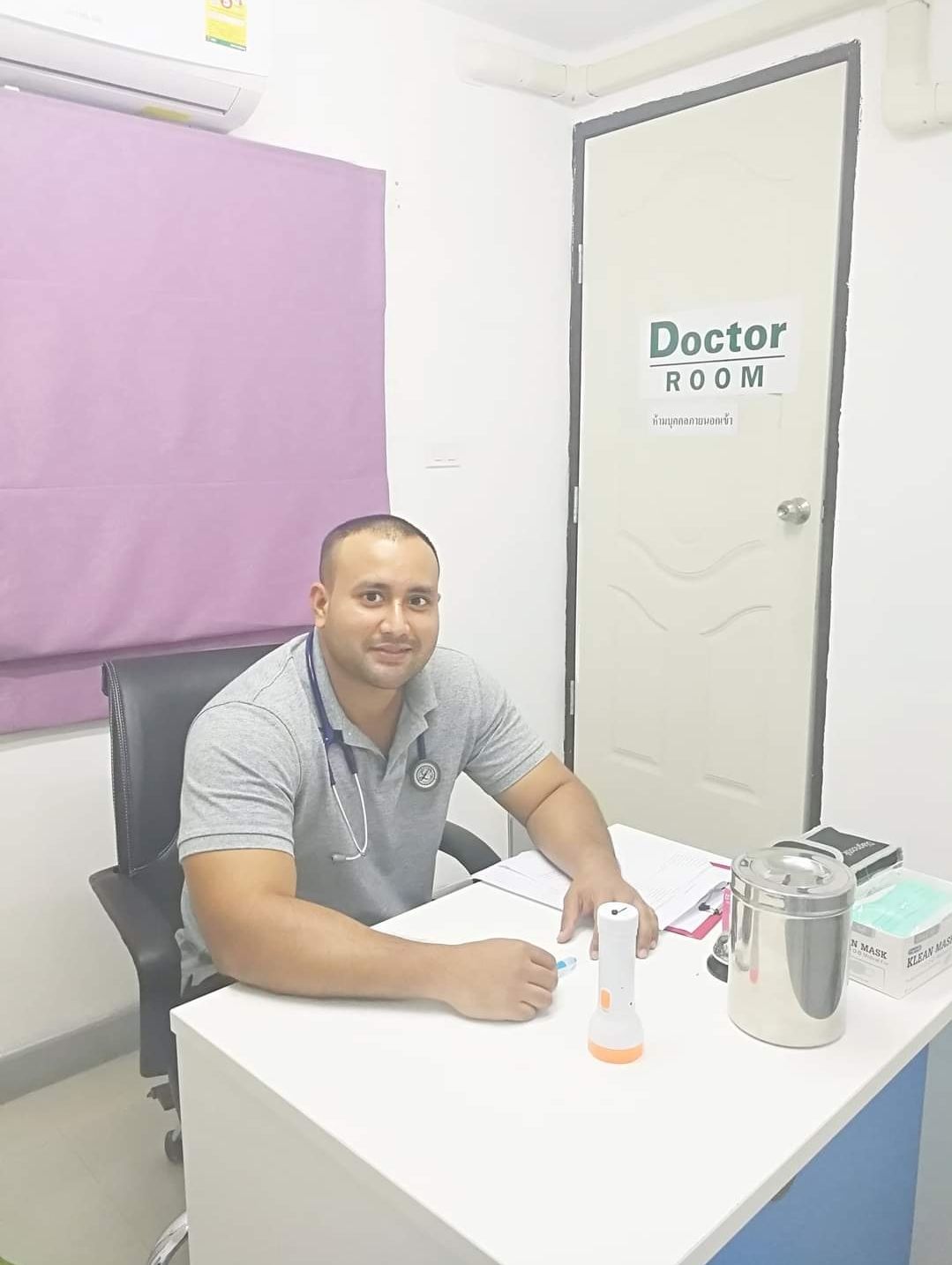
Dr. Ponlawat Pitsuwan is a physician at Doctor Bangkok, a private clinic in central Bangkok. He sees expats, residents, and medical tourists for general medicine, wellness consultations, and IV therapy. His focus is straightforward, evidence-based care delivered in plain language.