
Clinically reviewed by Dr. Ponlawat Pitsuwan, Physician, Doctor Bangkok. Last reviewed: July 2026
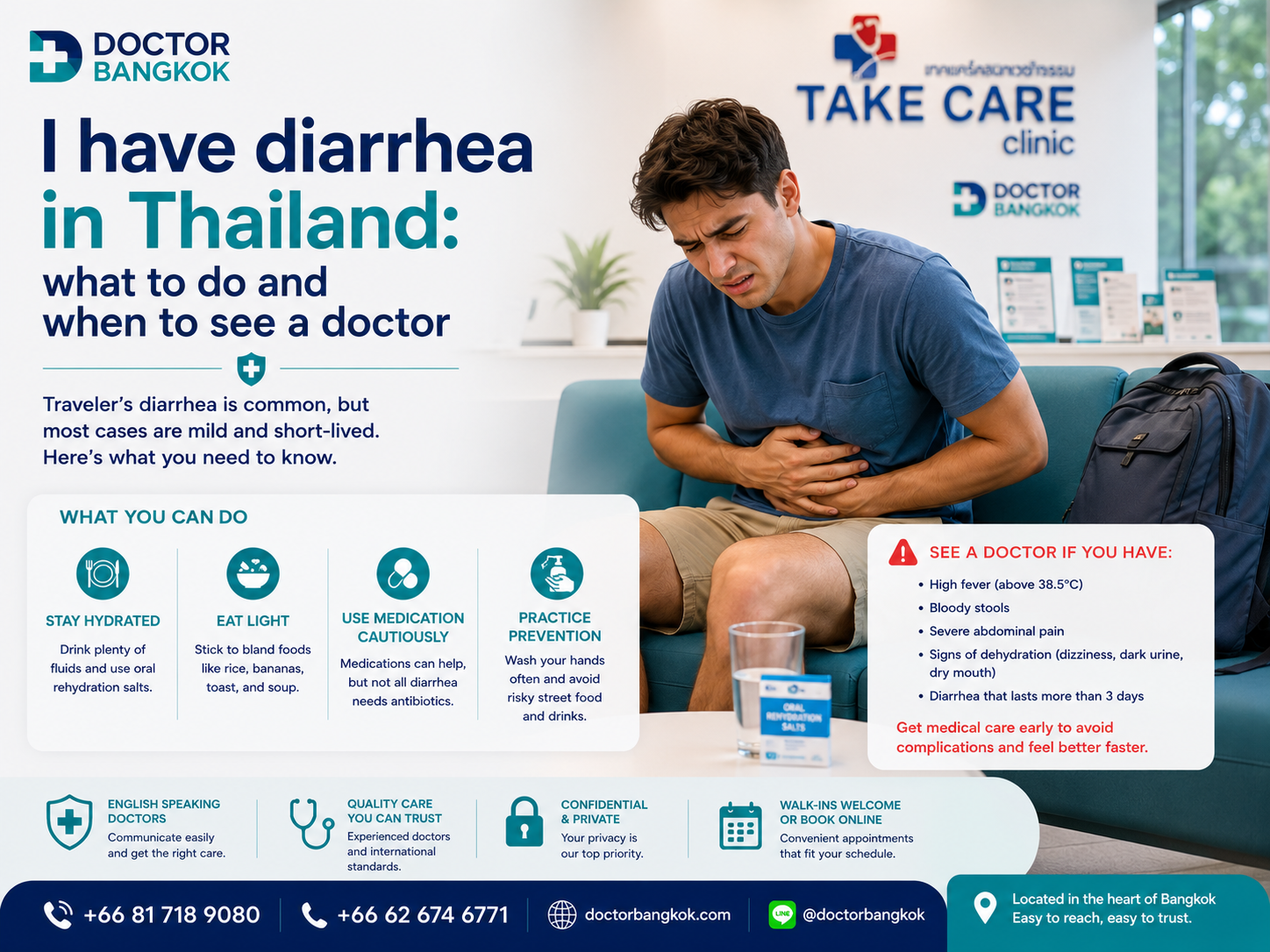
For most healthy adults in Bangkok, diarrhea caused by food or a stomach bug settles within 24 to 48 hours with fluids, rest, and oral rehydration salts. If you have had more than four or five loose stools in a day, cannot keep fluids down, or see blood in your stool, stop self-treating and see a doctor. Bangkok belly often looks mild at first but can turn serious faster in the heat.
If you are reading this after a night of street food and a rough morning, you are not alone. Bangkok belly is one of the most common reasons expats and visitors walk into a clinic here. The heat, the food, the water, the change in routine: it all adds up fast, especially in your first few months in the city. The good news is that most cases are manageable at home if you act quickly and hydrate well. But some need a doctor, a stool test, or prescription antibiotics. This guide covers what to do right now, what to buy at the pharmacy, what to eat, and when to stop waiting and come in.

What Causes Diarrhea in Bangkok and Why It Hits Expats Hard
The most common culprit here is a bacteria called ETEC, or enterotoxigenic E. coli. It spreads through contaminated food and water, and Bangkok’s heat makes that easier. Street food stalls, raw vegetables washed in tap water, and ice from unknown sources are the usual suspects. Most locals have built up tolerance over years. Most new arrivals have not.
Bacterial cases spike during rainy season, roughly May through October. Food sits out longer in the humidity, and cross-contamination happens more easily. If you just arrived in Thailand, changed your diet significantly, or ate something that sat out too long, that is usually all it takes.
Other causes include viruses, Salmonella, Giardia, and occasionally Campylobacter. That is exactly why a stool test matters if your symptoms are not clearing up within two days.
Bangkok Belly vs. Ordinary Diarrhea: How to Tell the Difference
Bangkok belly usually starts within one to three days of eating something off. It tends to be watery and crampy and comes in waves. Most people feel rough for a day or two and then improve.
What does not fit that pattern: blood or pus in your stool, a fever above 38 degrees Celsius, severe stomach pain, or symptoms that are getting worse after two days. Those signs point toward something more serious, like dysentery or a parasitic infection. Home remedies will not fix those.

Hydration First — This Is the Part That Actually Matters
Most people focus on stopping the diarrhea. What they should focus on first is replacing what they are losing. Dehydration is what lands people in hospital, not the loose stools themselves.
Oral rehydration solution, or ORS, is the best thing you can take. You can buy ORS sachets at any pharmacy in Bangkok. Mix one sachet in bottled or filtered water and sip it steadily throughout the day. Coconut water is a reasonable backup if ORS is not available. Sports drinks work in a pinch but have more sugar and less of the right salts.
Signs you are getting dehydrated: your urine is dark yellow, your mouth is dry, or you feel dizzy when you stand up. If you cannot keep fluids down at all, you need IV fluids. That means coming in to see us.
What to Eat While You Recover
Plain jasmine rice is your best friend here. Khao tom, the Thai rice porridge you can get almost anywhere, is gentle on your gut and easy to eat when you have no appetite. Plain boiled potatoes, plain crackers, and clear broths are all fine.
Avoid spicy food, street food during recovery, dairy, alcohol, and caffeine. Do not eat anything fried. Even if you feel better by day two, eat bland for at least another day before going back to normal.
Medications You Can Buy at a Bangkok Pharmacy
Bangkok pharmacies are well stocked, and you do not need a prescription for the basics.
Loperamide slows down your gut and reduces stool frequency. It works well for watery diarrhea when you need to function: a flight, a work meeting, a long journey. Do not use it if you have blood in your stool or a fever above 38 degrees. In those cases, the infection needs to clear, not be slowed down.
Racecadotril is another option available in Thailand, though less well known to expats. It reduces fluid loss from the gut without slowing movement. Ask for it by name at the pharmacy. ORS sachets are everywhere. Buy them and use them.
Antibiotics are not available over the counter in Thailand, and you should not be taking them without a diagnosis. Using antibiotics for diarrhea without knowing the cause can make things worse, especially if the infection turns out to be viral.
Do Probiotics Help?
Possibly, but it depends on the situation. For diarrhea caused by taking antibiotics, probiotics have reasonable evidence behind them. For traveler’s diarrhea caused by bacteria, the evidence is weaker.
If you want to take them, they are unlikely to cause harm. Just do not use them instead of proper hydration, and do not skip seeing a doctor when red flags are present.
Warning Signs — When to Stop Self-Treating
Most diarrhea in Bangkok is self-limiting. But some of it is not, and that is where people get into trouble.
Come in to see a doctor if your symptoms have not improved after 48 hours, you are passing more than four or five loose stools a day, you see blood or pus in your stool, you have a fever above 38 degrees, or you cannot keep fluids down. Do not wait until you feel severely dehydrated.
At Doctor Bangkok, we run a stool test to find out what is causing your symptoms. If it is bacterial, we treat it with the right antibiotic. If it is parasitic, the treatment is different. Getting the right answer early matters.
Prevention: How to Avoid Getting Here Again
Never drink tap water in Bangkok. Use bottled or filtered water for drinking, mixing ORS, and cooking at home. Be careful with ice: reputable restaurants use commercial ice, but not everywhere does.
Choose street food that is cooked fresh in front of you and served hot. Avoid raw vegetables from street stalls unless you know they are washed with purified water. Wash your hands before eating. In a city where you are eating on the go constantly, it is easy to skip.
If you are new to Bangkok, ease into the local food and give your gut a few weeks to adjust. Your system will adapt, but it needs time.
If your diarrhea is not getting better, you have a fever, or you see blood in your stool, do not keep waiting. Doctor Bangkok offers same-day consultations for diarrhea and food poisoning, stool testing, oral rehydration support, and IV fluids if needed. Our doctors speak English and the clinic is BTS accessible in central Bangkok. Book online or walk in at doctorbangkok.co.th/diarrhea-treatment-bangkok/.
FAQ
Is Bangkok tap water safe if I have diarrhea?
No. Bangkok tap water is treated but not reliably safe to drink, and your gut is already vulnerable when you are sick. Use bottled or filtered water for drinking and for mixing ORS sachets. Be careful with ice from unknown sources too.
How do I know if my diarrhea is Bangkok belly or something more serious?
Bangkok belly is usually watery, starts within a day or two of eating something off, and improves within 48 hours. If you have blood in your stool, a fever, severe pain, or you are getting worse after two days, that points to something different. Come in for a stool test so we know what we are dealing with.
What can I buy at a Bangkok pharmacy to stop diarrhea?
Loperamide, ORS sachets, and racecadotril are all available without a prescription. Loperamide is useful for slowing things down when you need to function, but avoid it if you have a fever or blood in your stool. Antibiotics require a prescription in Thailand and should only be taken on medical advice.
When should I go to a clinic for diarrhea in Bangkok?
If your symptoms have lasted more than 48 hours, you have a high fever, you see blood in your stool, or you cannot keep fluids down, it is time to come in. Doctor Bangkok offers same-day consultations and can run a stool test on the same visit. Do not wait until you are severely dehydrated.
What foods and drinks actually help with diarrhea in Bangkok?
Plain jasmine rice, khao tom, boiled potatoes, and plain crackers are your best options. For fluids, use ORS sachets mixed in bottled water or try coconut water. Avoid spicy food, dairy, alcohol, and caffeine until you have been symptom-free for at least a day.
Do I need antibiotics for Bangkok belly?
Usually no. Most cases clear up on their own with rest and hydration. Antibiotics are needed when there is a confirmed bacterial infection, symptoms are severe, or you are not improving after 48 hours. A doctor at Doctor Bangkok can assess you and order a stool culture to guide the right treatment.
Dr. Ponlawat Pitsuwan
Physician, Doctor Bangkok
a private medical clinic in central Bangkok. He sees expats, residents, and medical tourists for diarrhea, food poisoning, travel-related illness, and general medical concerns. His focus is straightforward, evidence-based care delivered in plain language.
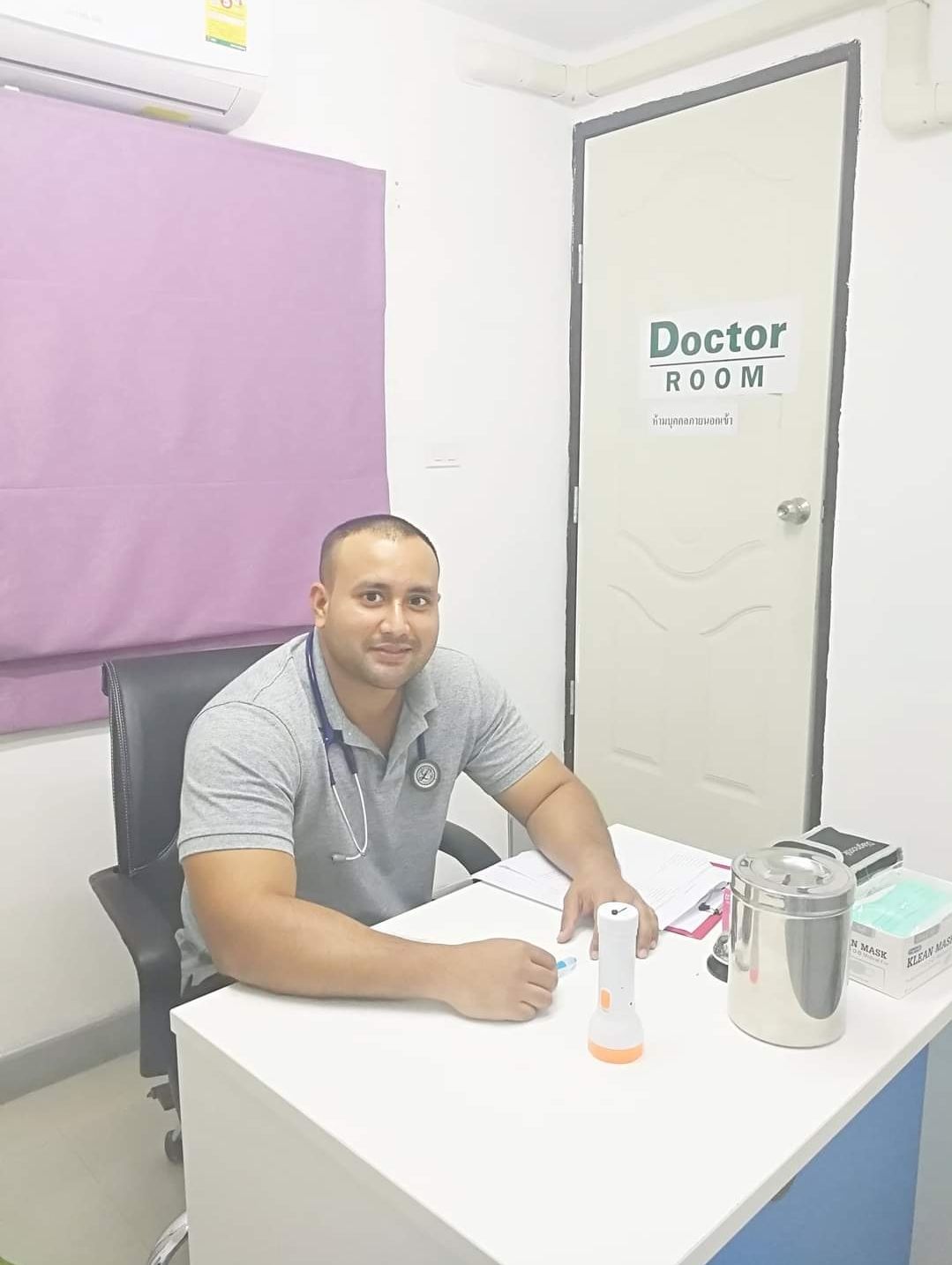
Dr. Ponlawat Pitsuwan is a physician at Doctor Bangkok, a private clinic in central Bangkok. He sees expats, residents, and medical tourists for general medicine, wellness consultations, and IV therapy. His focus is straightforward, evidence-based care delivered in plain language.