
Clinically reviewed by Dr. Ponlawat Pitsuwan, Physician, Doctor Bangkok. Last reviewed: July 2026
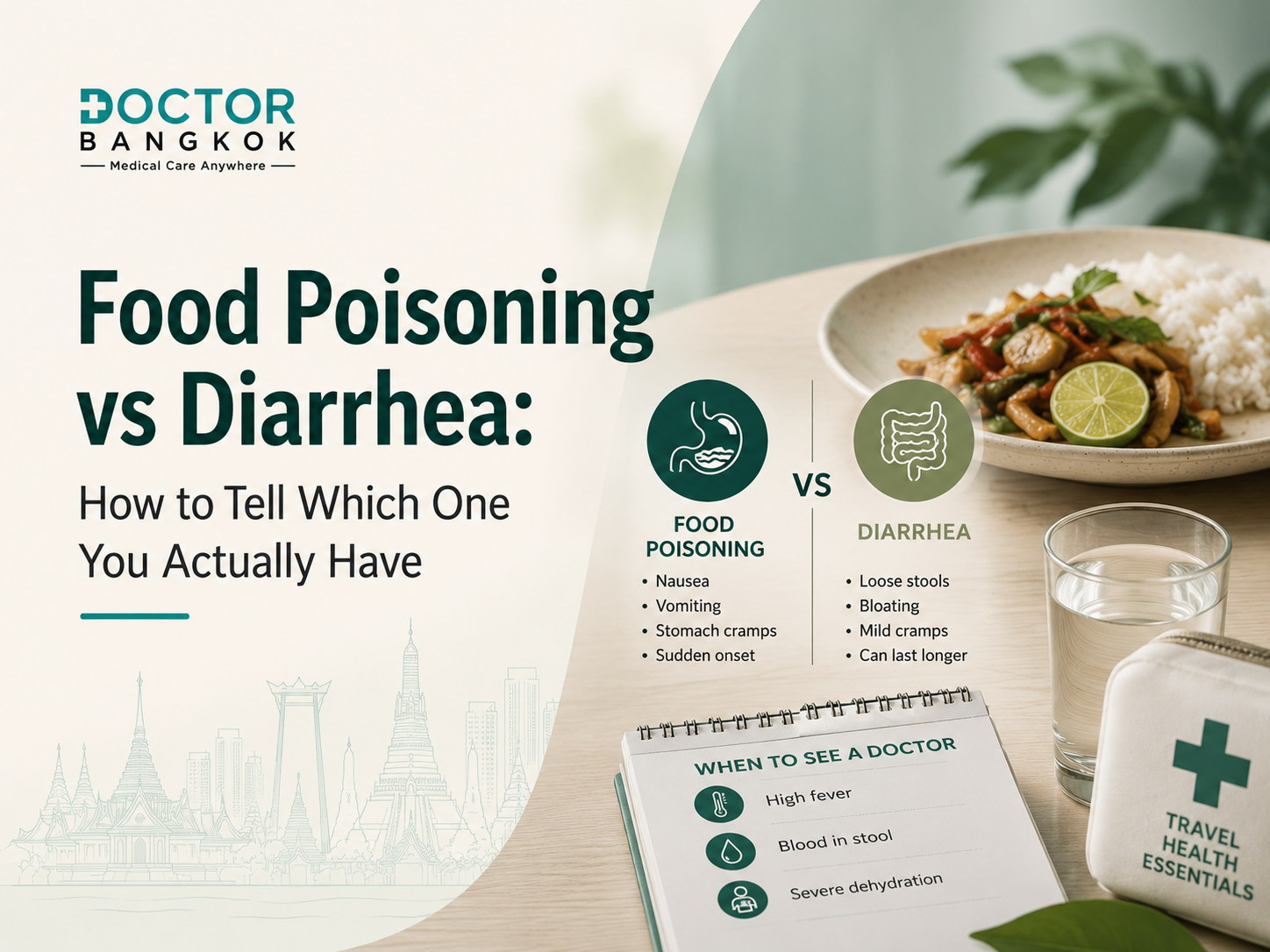
Food poisoning usually starts within hours of eating a specific meal and often affects everyone who ate it. Viral gastroenteritis spreads person to person and takes one to two days to develop. Traveler’s diarrhea, the condition most expats in Bangkok actually have, sits somewhere in between. Timing, fever, and who else is sick are the three fastest ways to tell them apart.
You are in Bangkok. You woke up at 3am running to the bathroom. Now you are lying in bed trying to figure out whether it was the street food last night, a bug you picked up somewhere, or just your gut reacting to a new country. All three are possible, and they feel almost identical in the first few hours.
Most cases get better on their own with rest and fluids. What matters is knowing when that is not going to be enough. If you are stuck in a city where you do not speak Thai and do not know the hospital system, two days of guessing wrong has real consequences.

The Three-Question Self-Triage Test
Before anything else, ask yourself three questions.
First: how fast did symptoms start? If you felt fine at dinner and were sick by midnight, that points strongly toward food poisoning. Viral gastroenteritis takes longer, usually one to two days after exposure.
Second: did anyone else who ate the same meal get sick? If your friend ordered the same pad kra pao and is now in the same condition, the food was likely the problem. Viral illness spreads person to person, not plate to plate.
Third: do you have a fever and body aches on top of the diarrhea? Fever with muscle pain suggests a viral infection or a more invasive bacterial one. Food poisoning from toxins often causes vomiting and diarrhea without much fever at all.
A Third Possibility Most People Miss
Most articles frame this as a simple choice between food poisoning and a stomach bug. If you are an expat or visitor in Bangkok, there is a third condition that is actually the most common one I see in clinic.
Traveler’s diarrhea, sometimes called Bangkok belly, comes from bacteria in food or water that your gut has never encountered before. It is not the same as classic food poisoning, which tends to hit fast and hard. It usually starts within the first one to two weeks of arrival and keeps going for longer than food poisoning typically does.
It does not usually come with high fever or blood in the stool. It is loose, frequent, uncomfortable, and disruptive. Most cases resolve in three to five days, but some do not, and that is when treatment is needed.

Bangkok-Specific Risks Worth Knowing
Bangkok has specific factors that shift the risk compared to home.
Street food is generally safe, but the food safety chain is harder to control than a restaurant kitchen. Ice is a common source of contamination. In Bangkok’s heat, food left out briefly can become a problem. The heat also means you dehydrate faster once symptoms start.
If you have been here longer than a few weeks and gut problems are still going, parasites like Giardia become worth considering. Giardia does not cause sudden violent illness. It causes persistent, greasy, foul-smelling diarrhea that lingers for weeks and will not clear on its own.
What Your Stool Is Actually Telling You
I know this is not a comfortable topic, but stool appearance gives real clinical information.
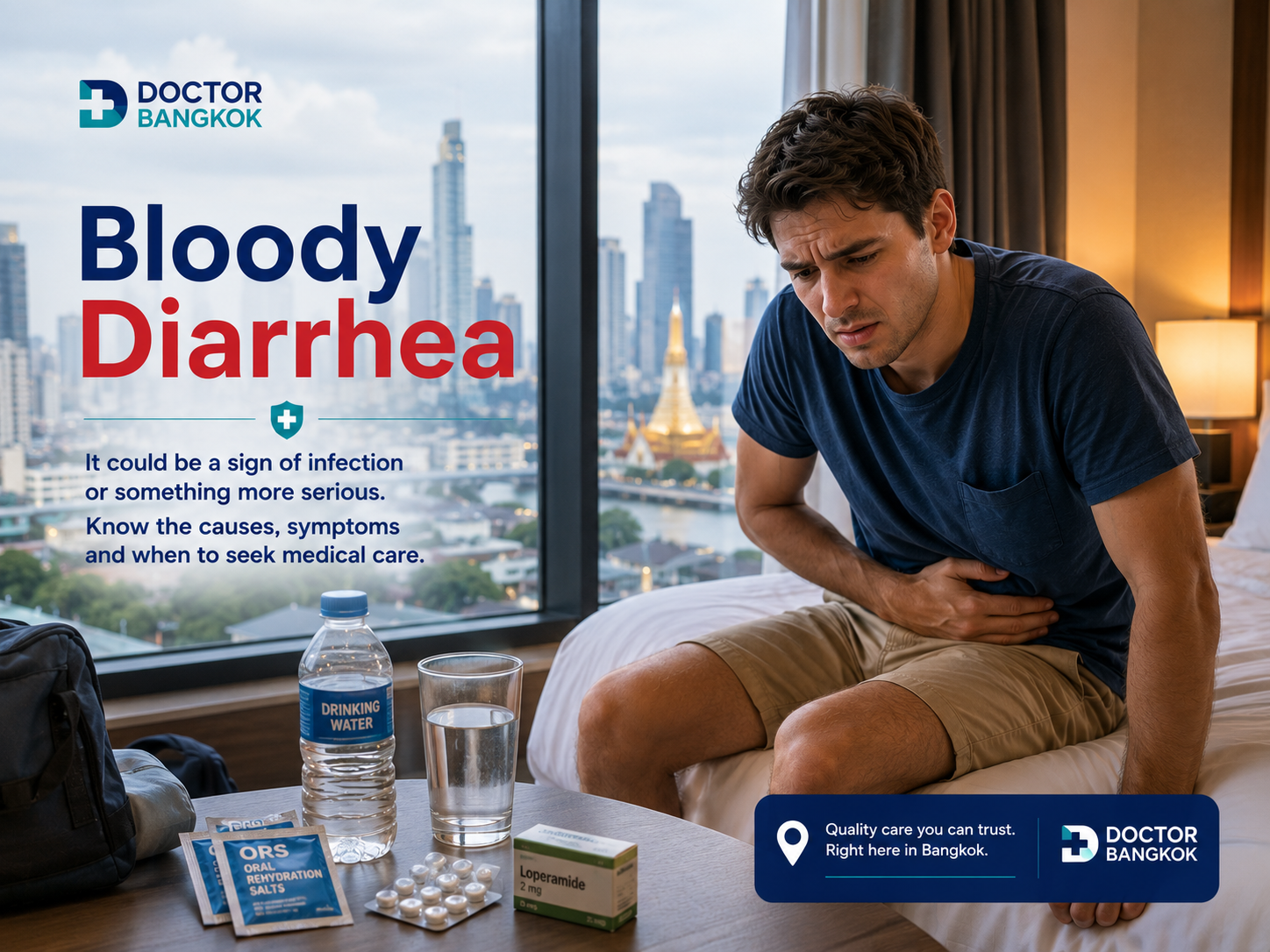
Watery, high-volume diarrhea with no blood points toward viral gastroenteritis or traveler’s diarrhea. Greasy, pale, foul-smelling stool that floats suggests a parasitic infection where fat absorption is disrupted. Blood or dark mucus in the stool should send you to a clinic the same day. It suggests a more invasive bacterial infection, and that is not something to manage at home.
Frequent small-volume stools with mucus and urgency, particularly with lower abdominal cramping, also warrant a proper assessment rather than waiting it out.
Comparison at a Glance
| Food Poisoning | Viral Gastroenteritis | Traveler’s Diarrhea | |
|---|---|---|---|
| Onset | 30 min to 48 hours after eating | 1 to 2 days after exposure | Within first 2 weeks of arrival |
| Fever | Mild or absent | Common | Mild or absent |
| Vomiting | Often prominent | Common | Less common |
| Duration | 1 to 3 days | 2 to 5 days | 3 to 7 days, sometimes longer |
| Who else is sick | Others who ate the same meal | Person-to-person spread | Common in new arrivals |
| Blood in stool | Possible with invasive bacteria | Rare | Rare |
What to Do at Home First
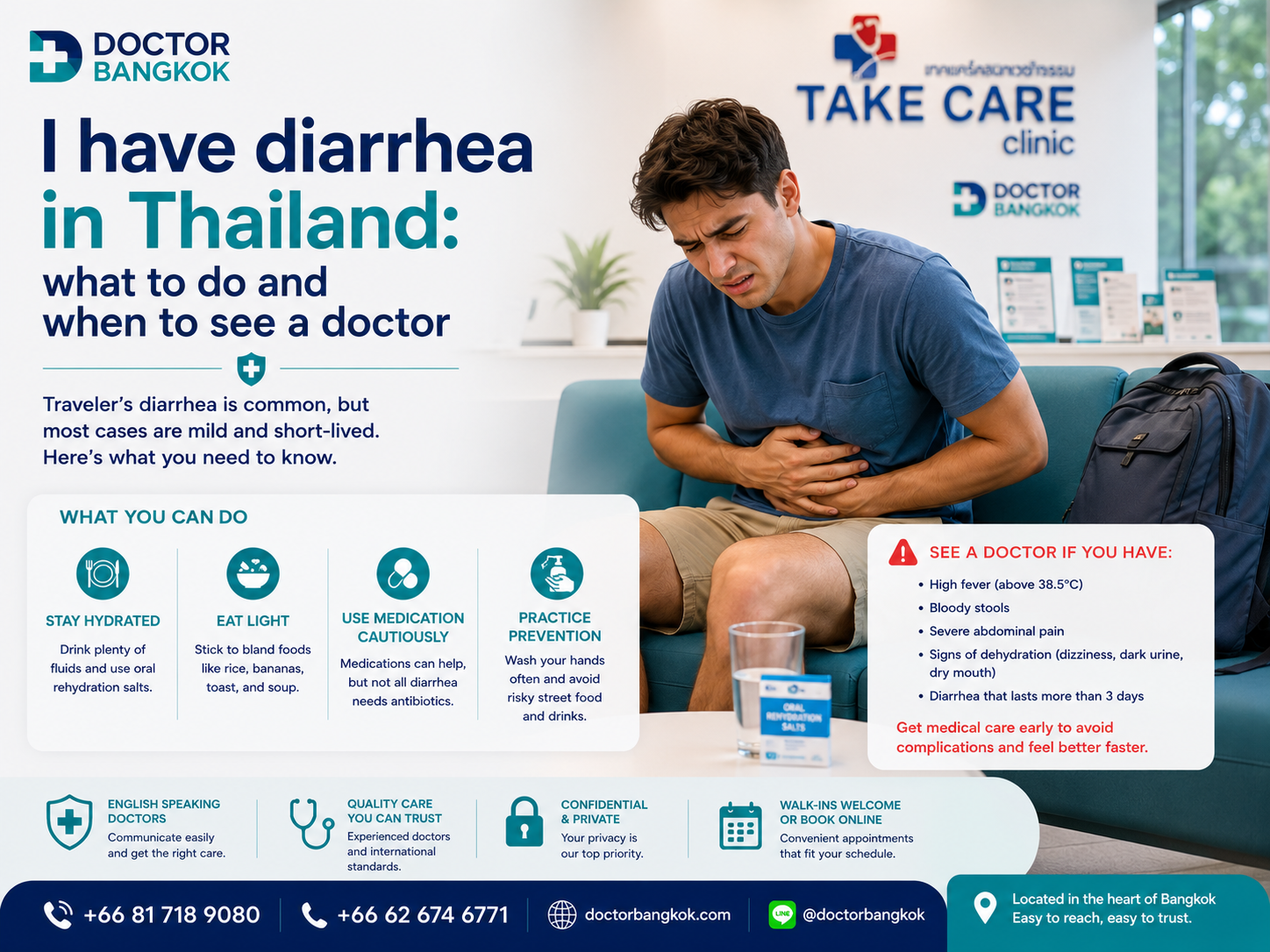
For mild to moderate cases, staying hydrated is the priority. Oral rehydration solution replaces both fluids and electrolytes lost through diarrhea and vomiting. It works better than water alone and is available at any pharmacy in Bangkok, including 24-hour ones near BTS stations.
Eat light. Plain rice, banana, and toast are safe. Avoid dairy, fatty food, and spicy food until things settle. Rest.
If you are vomiting and cannot keep fluids down at all, home care stops working. That is when IV rehydration becomes necessary. You can get that at a clinic, or through a doctor home visit if you cannot leave your room.
When Home Care Is Not Enough
These are the signs that tell me a patient needed to come in sooner than they did.
Blood or mucus in the stool. Fever above 38.5°C. Diarrhea more than six times in twenty-four hours. Inability to keep any fluids down. Signs of dehydration such as dark urine, dry mouth, or dizziness when standing. Symptoms not improving after forty-eight hours. If you are over sixty-five, have diabetes, or are immunocompromised, your threshold for coming in should be lower.
Bangkok’s heat makes dehydration happen faster than you expect. What feels manageable in a cool hotel room can become serious quickly.
Do You Actually Need Antibiotics?
Most cases of viral gastroenteritis do not need antibiotics. Most mild cases of traveler’s diarrhea do not either. The body clears them.
Bacterial infection with high fever, bloody stool, or no improvement after forty-eight hours is a different situation. A physician can make that call after assessing your symptoms and, in some cases, after a stool test. Self-medicating with antibiotics is not a good idea. Resistance patterns in Thailand differ from home, and the wrong antibiotic for the wrong infection can make things worse.
If your symptoms suggest parasites, antibiotics will not help at all. That requires a specific antiparasitic medication, which needs an accurate diagnosis first.
Getting Care in Bangkok When You Are Not Well Enough to Travel
If you are in a Bangkok hotel room and too unwell to reach a clinic, Doctor Bangkok offers physician home and hotel visits across central Bangkok. A doctor comes to you, assesses you, can give IV fluids on the spot, and provides an itemised receipt for travel insurance claims.
If you can travel, we are BTS accessible and offer same-day consultations for acute illness. Our physicians speak English and see this kind of situation regularly in visitors and expats. For more detail on how we approach gut illness, see our diarrhea treatment service. If you are also thinking about broader travel health preparation, our travel health service covers vaccinations and pre-travel advice too.
Sick in Bangkok and not sure what you have? Doctor Bangkok offers same-day consultations for food poisoning, traveler’s diarrhea, and acute gut illness. English-speaking physicians, BTS accessible, and doctor hotel visits available if you cannot leave your room. IV rehydration available in-clinic and at your hotel. Visit doctorbangkok.co.th or contact us to book.
FAQ
How quickly does food poisoning start after eating in Bangkok?
It depends on the cause. Bacterial toxins can cause symptoms within thirty minutes to two hours. Salmonella usually takes six to forty-eight hours. If symptoms started within a few hours of a specific meal, food poisoning is the most likely cause. Start rehydrating early, because Bangkok’s heat speeds up fluid loss once symptoms begin.
Is Bangkok belly the same as food poisoning?
Not exactly. Bangkok belly is traveler’s diarrhea, most often from bacteria in contaminated food or water. It builds more gradually than classic food poisoning and tends to last longer. They feel similar in the early stages, but the distinction matters for treatment.
Should I take antibiotics for food poisoning or diarrhea in Bangkok?
Most cases do not need them. But if you have a high fever, blood in your stool, or are not improving after forty-eight hours, see a physician before deciding. Taking the wrong antibiotic for the wrong infection can make things worse, and resistance patterns in Thailand differ from other countries.
When should I see a doctor for food poisoning or diarrhea in Bangkok?
Go to a clinic if you have blood or mucus in your stool, fever above 38.5°C, diarrhea more than six times in twenty-four hours, or you cannot keep fluids down. Also go if symptoms are not improving after forty-eight hours. In Bangkok’s heat, dehydration can turn serious faster than you expect.
Can I get IV fluids for food poisoning at my hotel in Bangkok?
Yes. Doctor Bangkok provides doctor-supervised IV rehydration at hotel rooms and residences across central Bangkok. This is useful when vomiting makes drinking impossible. Itemised receipts are provided for travel insurance reimbursement.
Could my diarrhea be a parasite rather than food poisoning?
If symptoms have lasted more than a week, or your stool is greasy and foul-smelling, a parasitic infection like Giardia is worth considering. It will not respond to standard antibiotics and will not clear on its own. A stool test can identify it, and treatment is straightforward once we know what we are dealing with.
Dr. Ponlawat Pitsuwan
Physician, Doctor Bangkok
a private medical clinic in central Bangkok. He sees expats, residents, and visitors for acute illness including food poisoning, traveler’s diarrhea, gut infections, and general medical concerns. His focus is practical, evidence-based care delivered in plain language.
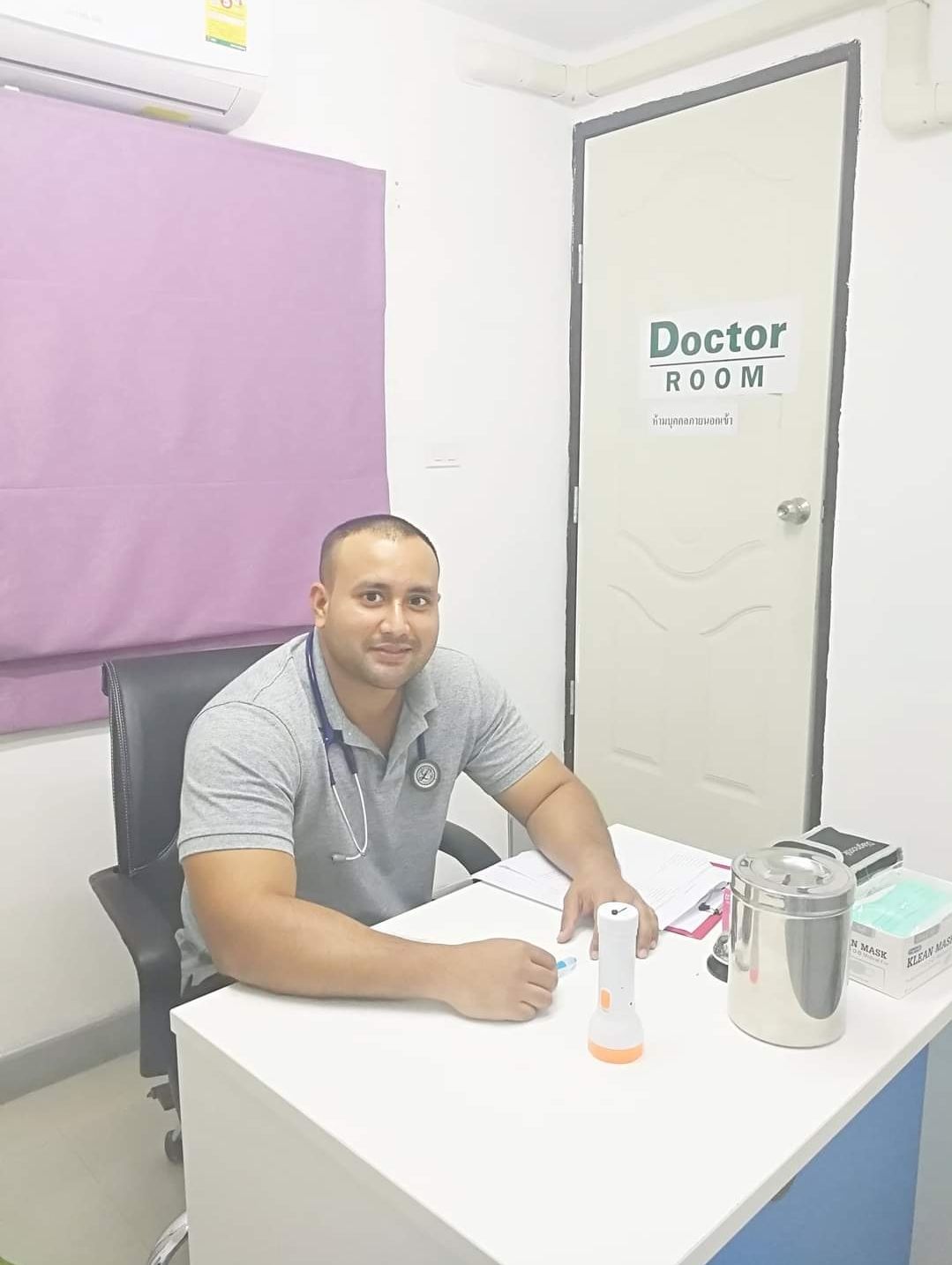
Dr. Ponlawat Pitsuwan is a physician at Doctor Bangkok, a private clinic in central Bangkok. He sees expats, residents, and medical tourists for general medicine, wellness consultations, and IV therapy. His focus is straightforward, evidence-based care delivered in plain language.