
Clinically reviewed by Dr. Ponlawat Pitsuwan, Physician, Doctor Bangkok.
Last reviewed: July 2026
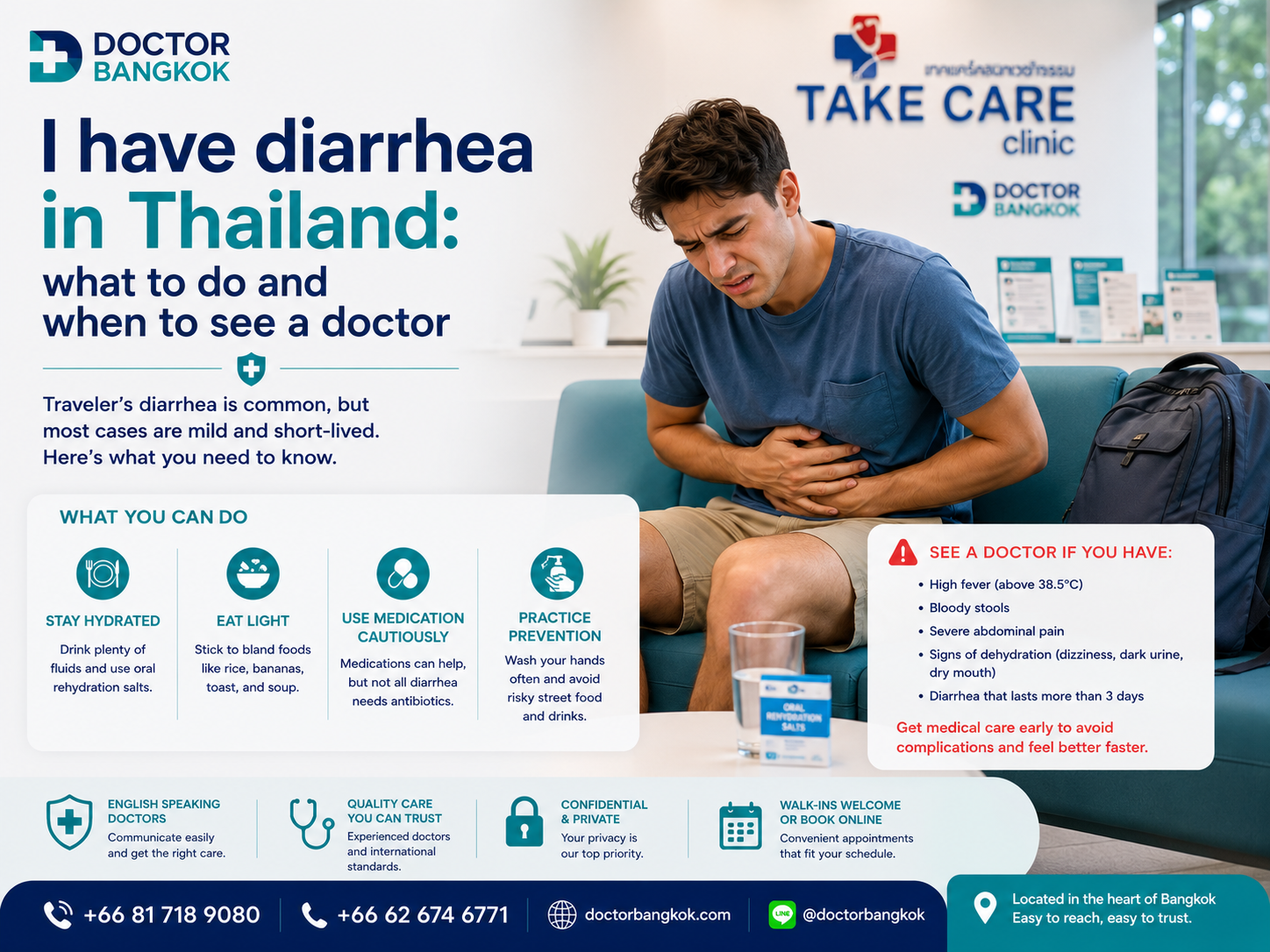
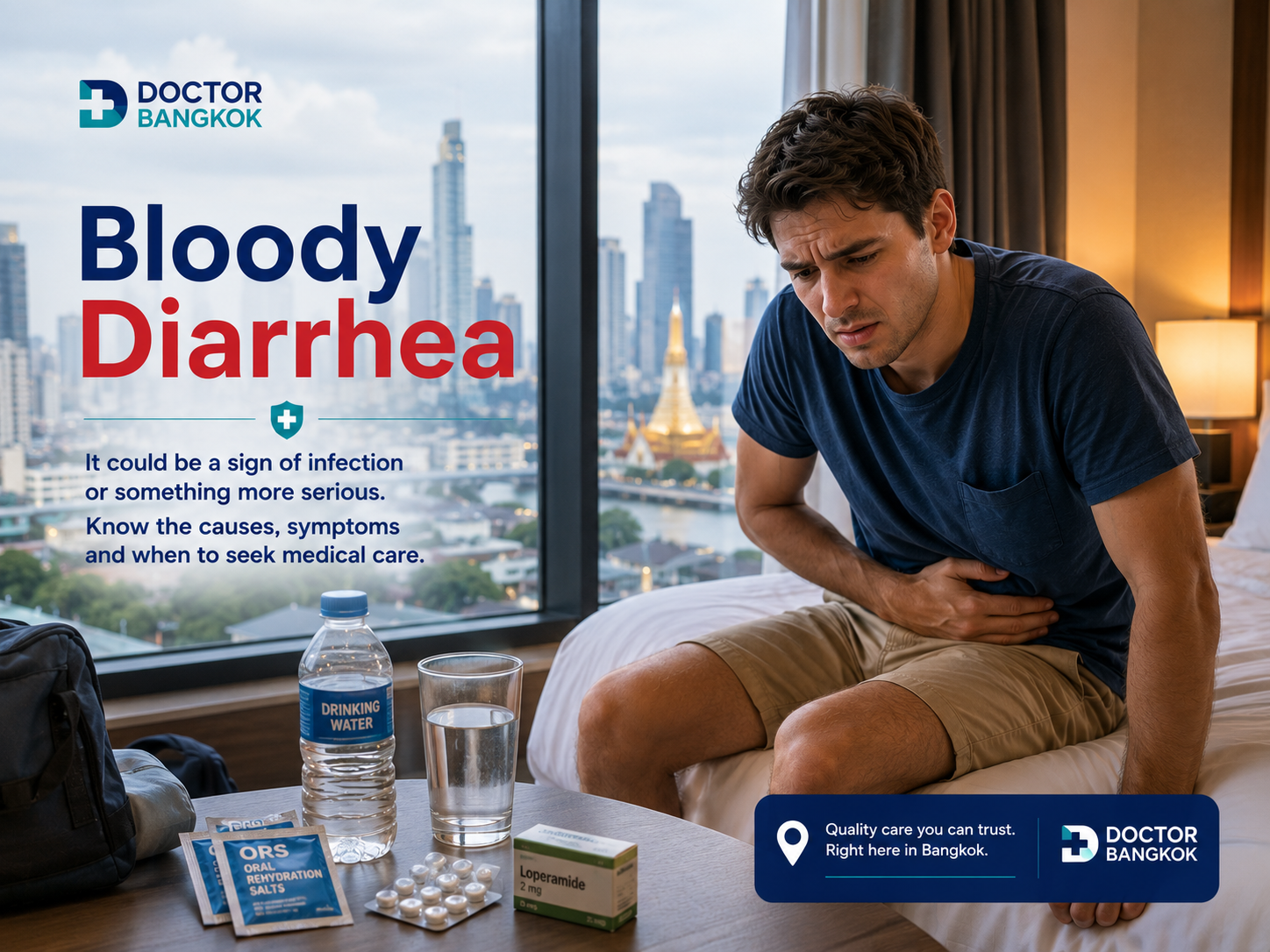
Food poisoning in Bangkok usually comes on fast, with nausea, vomiting, diarrhoea, and stomach cramps starting within hours of eating. Most cases settle within 24 to 48 hours with rest and fluids. See a doctor if you have a fever above 38.3°C, blood in your stool, or cannot keep any fluids down for more than two hours. Bangkok’s heat makes dehydration worse and faster than you might expect.
If you are reading this from a Bangkok hotel bathroom at midnight, you are not alone. Food poisoning is one of the most common reasons expats and travellers come through my clinic door. It can hit fast, it can hit hard, and when you are far from home, it is easy to make the wrong call.
The good news is that most cases are manageable. The key is knowing when to push through at home, when to walk into a clinic, and when you need a doctor right now. That is what this article is for.

Bangkok Belly, Traveller’s Diarrhea, or Food Poisoning — What Is the Difference?
People use these three terms as if they mean the same thing. They do not, and the difference matters for how you treat it.
Bangkok belly is a catch-all term for any gut upset you get here. It does not tell you the cause or the severity.
Traveller’s diarrhea typically starts six to seventy-two hours after exposure. It comes from contaminated food or water. It tends to produce loose, frequent stools with mild cramps. Most cases resolve on their own within two to four days.
True food poisoning often hits faster, sometimes within one to six hours of eating. This happens when you eat food that already contains a toxin. The vomiting tends to be more sudden and intense.
The honest answer is that you usually cannot tell which one you have without testing. What you can tell is how sick you are, and that is what should drive your decision to see a doctor.
Why Bangkok’s Heat Makes This More Dangerous
This is something I always raise with patients and almost nobody thinks about beforehand. Bangkok’s heat and humidity are intense, year-round. When you are vomiting and passing diarrhoea in this climate, you lose fluid much faster than you would in a cooler country.
Dehydration sets in quickly. You might feel fine at 9am and genuinely unwell by noon. Watch for a dry mouth, dizziness when you stand, very little urine, and a racing heart. These are not just uncomfortable. They are warning signs that your body is struggling.
Bangkok’s heat also speeds up bacterial growth in food. A dish left out for an hour here is far riskier than the same dish left out in a cooler kitchen. Freshly cooked food served hot is generally safe. Food sitting at room temperature is not.

Symptoms — What to Expect
Most cases follow a pattern I see almost every day. Nausea comes first, then vomiting, then diarrhoea and stomach cramps. You may have a mild fever. You will probably feel exhausted.
The vomiting usually peaks in the first few hours and then eases. The diarrhoea can last a day or two longer. Most healthy adults feel significantly better within 48 hours.
Do not ignore a fever above 38.3°C, blood or mucus in your stool, severe abdominal pain that does not ease between episodes, or signs of significant dehydration. These move this from "manage at home" to "see a doctor today."
Warning Signs That Require Medical Attention
Some symptoms mean you should not wait and see.
Bloody or mucus-streaked stool is a red flag. It suggests a more aggressive bacterial infection. This is also one situation where loperamide is actively dangerous, not just unhelpful. A fever above 38.3°C alongside diarrhoea suggests your body is fighting something more serious. If you cannot keep fluids down for two hours or more, dehydration will escalate fast in this heat.
Other situations where I want to see you in clinic: symptoms getting worse instead of better after 24 hours, any confusion or blurred vision after eating seafood or preserved foods, and anyone who is pregnant, elderly, or immunocompromised, regardless of how mild it seems.
If you are too unwell to get to a clinic, a doctor can come to you. Doctor Bangkok offers hotel and home visits for exactly this situation.
Over-the-Counter Options and Their Limits
The two things most people reach for are loperamide and oral rehydration sachets. One is almost always the right call. The other can cause real harm if used incorrectly.
Oral rehydration solution is always the right place to start. Sachets are available at any pharmacy in Bangkok. Mix with clean bottled water and sip steadily. This replaces the salts and fluids you are losing, which plain water alone does not fully do.
Loperamide slows gut movement and reduces diarrhoea frequency. It is reasonable for mild cases when you have no fever and no blood in your stool. If you have either of those, do not take it. It can trap the infection inside your gut and make you significantly worse. I see this mistake more often than I should.
Antiemetics for nausea are available at pharmacies, but if symptoms are severe, see a doctor before taking anything beyond oral rehydration. A pharmacist can advise on mild cases.
What a Doctor Actually Does
When a patient comes in with food poisoning, the first thing I am assessing is hydration. Are you dry? Do you need IV fluids, or can you manage with oral rehydration? That single decision drives almost everything else.
If you are mildly dehydrated and keeping fluids down, oral rehydration is usually enough. If you cannot keep anything down, or you are showing signs of significant dehydration, an IV drip will rehydrate you far faster.
The next question is whether antibiotics are needed. Most food poisoning does not need them. Your immune system handles it. But if I see a high fever, blood in stool, or symptoms pointing to a specific bacterial infection, I will consider a short course. I may also run a stool test if symptoms are not improving as expected. You can read more about what to expect on our diarrhoea treatment page.
Getting Treatment in Bangkok — Clinic or Hotel Visit?
This is the practical question most expats and travellers actually need answered.
Large hospital ERs in Bangkok are well-equipped but not always the fastest option for food poisoning. You may wait several hours and leave with a large bill. For straightforward food poisoning, a private walk-in clinic is faster, more comfortable, and fully capable of managing everything you need.
Doctor Bangkok is a walk-in clinic on Sukhumvit, accessible by BTS. English-speaking doctors, no appointment needed. If you are too unwell to leave your hotel room, we can send a doctor to you, including IV drip administration on-site.
The rule I give patients is simple. If you can get here, come in. If you cannot stand up without feeling faint, call us and we will come to you.
Preventing Food Poisoning in Bangkok
Street food is one of Bangkok’s genuine pleasures and I am not here to tell you to avoid it. I eat it myself. But a few habits cut your risk significantly.
Eat food that is freshly cooked and served hot. Avoid dishes that have been sitting out. Drink bottled or filtered water. Be cautious with raw salads, fresh-cut fruit from vendors, and shellfish.
Two vaccines are worth knowing about if you are spending time in Bangkok: Hepatitis A and Typhoid. Both spread through contaminated food and water, and both are present in Thailand. Both are preventable with vaccination. Doctor Bangkok provides both as part of our travel health service. One appointment covers your assessment and vaccination.
These vaccines will not prevent every case of Bangkok belly, but they protect against two of the more serious causes of foodborne illness here.
Feeling rough after a Bangkok meal? Doctor Bangkok is open for walk-in consultations on Sukhumvit, BTS accessible, with English-speaking doctors available now. We treat food poisoning with on-site IV drips, oral rehydration therapy, and antiemetic medication. Too unwell to travel? We do hotel visits with full IV drip service. Do not wait until it gets worse. Visit doctorbangkok.co.th or walk in today.
Frequently Asked Questions
What is the difference between Bangkok belly, traveller’s diarrhea, and food poisoning?
Bangkok belly is a catch-all term for any gut upset you get here. Traveller’s diarrhea typically starts six to seventy-two hours after exposure and comes from contaminated food or water. True food poisoning often hits within one to six hours from toxins already present in the food. The terms get used interchangeably, but the cause affects how you should be treated, which is why a clinical assessment matters if you are not improving.
When should I see a doctor for food poisoning in Bangkok?
See a doctor if you have a fever above 38.3°C, blood or mucus in your stool, or cannot keep fluids down for more than two hours. Also come in if symptoms are getting worse after 24 hours rather than better, or if you are pregnant, elderly, or have an underlying health condition. If you are too unwell to travel, Doctor Bangkok can send a doctor to your hotel.
Will I need antibiotics for food poisoning in Bangkok?
Most cases do not need antibiotics. Your body will clear it on its own within 48 hours. Antibiotics are only appropriate for specific bacterial infections confirmed or strongly suspected by a doctor, and taking them without proper assessment can make certain infections worse. A doctor will decide based on your symptoms, fever, and stool findings.
Can I take Imodium (loperamide) for food poisoning?
Yes, but only in the right situation. Loperamide is appropriate for mild diarrhoea with no fever and no blood in your stool. If you have either of those, do not take it. It slows gut movement, which can trap a harmful pathogen and make you significantly worse. When in doubt, check with a doctor before using it.
Is an IV drip necessary, and can I get one at my hotel in Bangkok?
IV rehydration is much faster than drinking fluids when you are moderately to severely dehydrated or cannot keep anything down. It is clinically the right call in those situations, not just a comfort measure. Doctor Bangkok provides IV drips both at the clinic and at your hotel, with a doctor assessing your hydration status first to confirm whether it is needed.
How long does food poisoning last in Bangkok?
Most cases resolve within 24 to 48 hours with proper rest and oral rehydration. Bangkok’s heat can speed up dehydration and make things feel worse than they are, so staying on top of fluids matters. If you are not clearly improving after 48 hours, come in to clinic rather than continuing to wait it out.
Dr. Ponlawat Pitsuwan
Physician, Doctor Bangkok
a private medical clinic in central Bangkok. He sees expats, residents, and medical tourists for food poisoning, traveller’s diarrhea, fever assessment, and general medical consultations. His focus is straightforward, evidence-based care delivered in plain language.
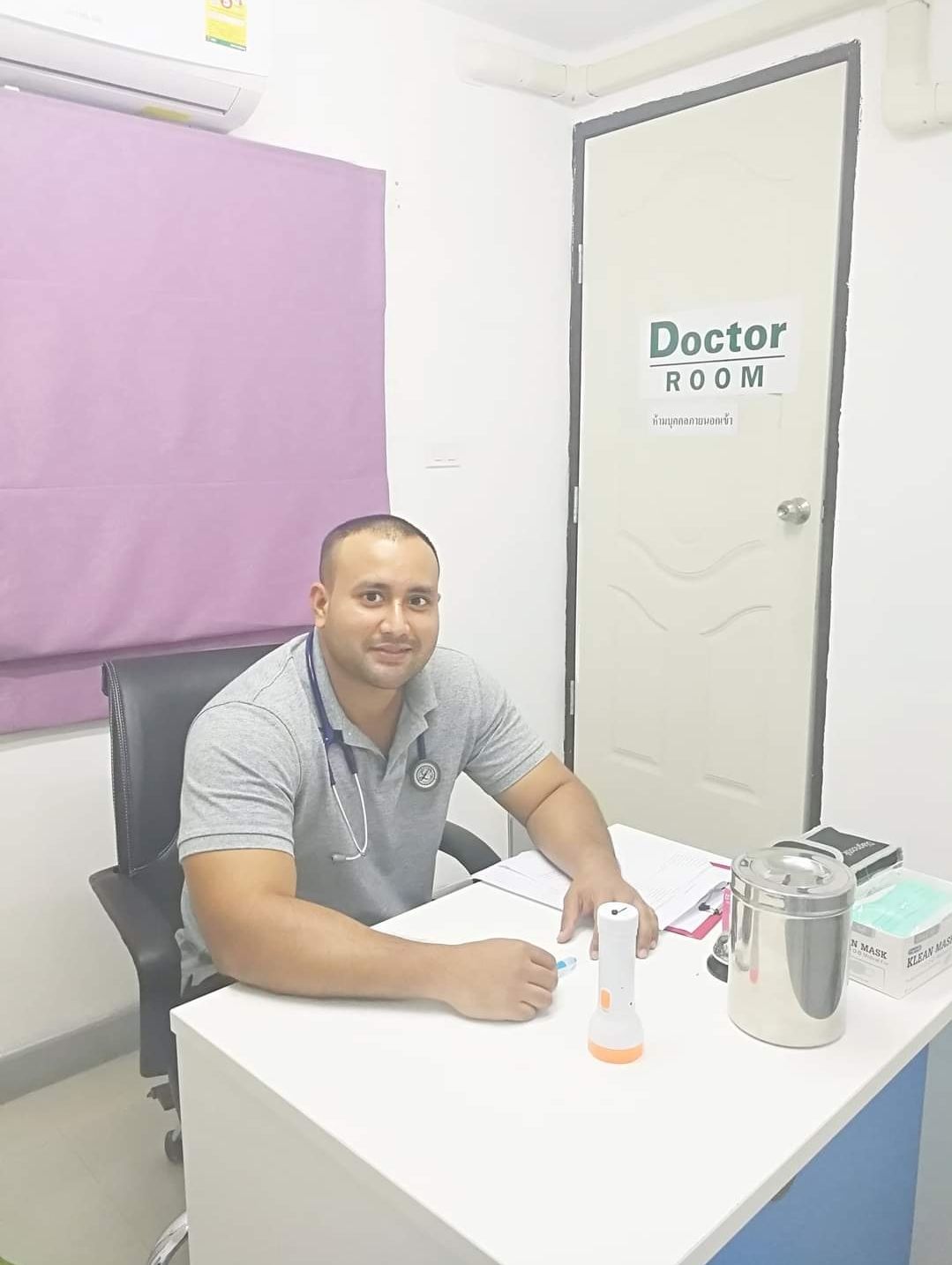
Dr. Ponlawat Pitsuwan is a physician at Doctor Bangkok, a private clinic in central Bangkok. He sees expats, residents, and medical tourists for general medicine, wellness consultations, and IV therapy. His focus is straightforward, evidence-based care delivered in plain language.